Share the post "First Test Ride of the Specialized Creo 2 E-Bike"
Four years after the Creo SL—available in road and gravel versions—Specialized is launching the Creo 2, which takes the hybrid bike concept even further with electric assist and wide tire clearance, offering both the bike and the rider a multitude of possibilities. Whether you’re on the road or rugged trails, the Creo 2 broadens your horizons, as seen here with the Expert model. By Guillaume Judas – Photos: ©Etienne Schoeman/Specialized
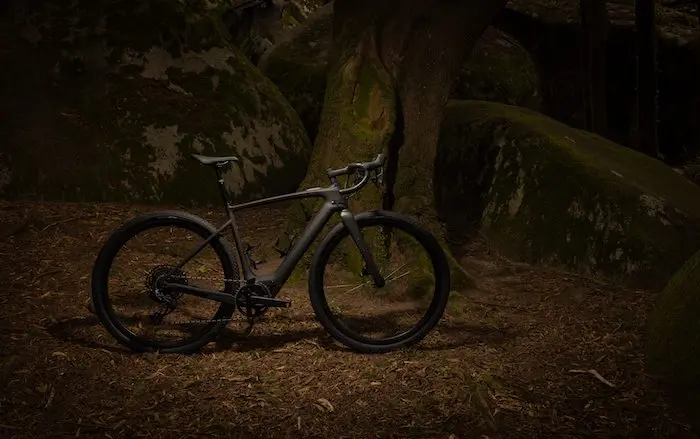
2023 is definitely a year full of new releases for Specialized, which is launching its third bike—the Creo 2—following the Tarmac SL8 and the Roubaix SL8. In fact, it was during the unveiling of the new Roubaix in Portugal in early September that we got our hands on the Creo 2—an e-bike, but not just that. Or perhaps I should have said: a gravel bike, but not just that. Because with the Creo 2, Specialized pushes the hybrid concept to the extreme—a label that fits both the drivetrain (the electric assist helps but still demands pedalling, so you have to put in some effort) and the bike’s broad capabilities.
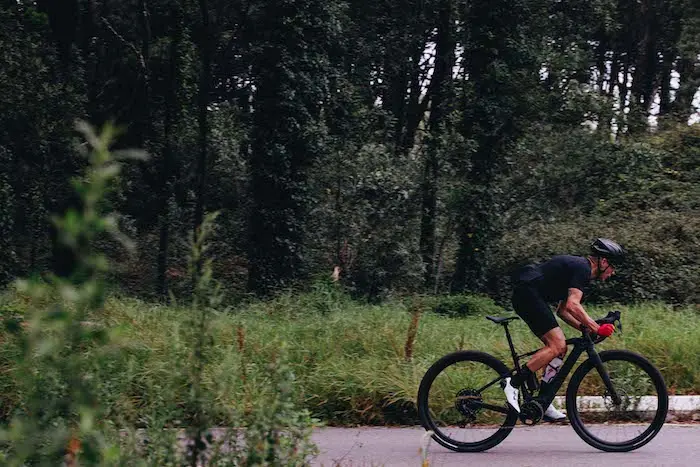
The American brand has indeed based its approach on the observation that electric assistance is most justified off-road, at least from the perspective of “exploratory” riding, since a little help from the motor makes many very difficult routes accessible even to less-trained riders. At the same time, European regulations still limit the operation of the assist to a speed of 25 km/h (with a tolerance of plus or minus 10%), which makes riding an e-bike on the road somewhat frustrating in many situations, particularly during group rides.
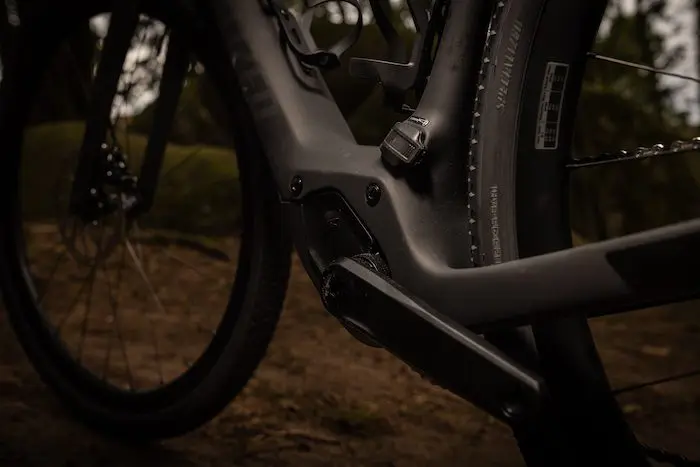
Thanks to the power and torque of the new motor (33% more power and 43% more torque compared to the Creo SL, according to Specialized), the Creo 2 is supposed to tackle certain challenges even more easily, while eliminating the “fat tire” effect on pavement. In short, the brand aims to offer the ultimate e-bike, capable of going almost anywhere, with increased range and geometry designed to provide handling comparable to a non-electric bike. Regarding the motor unit’s capabilities, note that the 25 km/h speed limit applies to Europe, but bikes sold elsewhere in the world are subject to each country’s specific regulations. And if you were to move to the United States with your Creo 2, you’d need to visit a local Specialized dealer to update the motor’s software so the speed limit can be adjusted to the 45 km/h allowed across the Atlantic.
 Increased Power
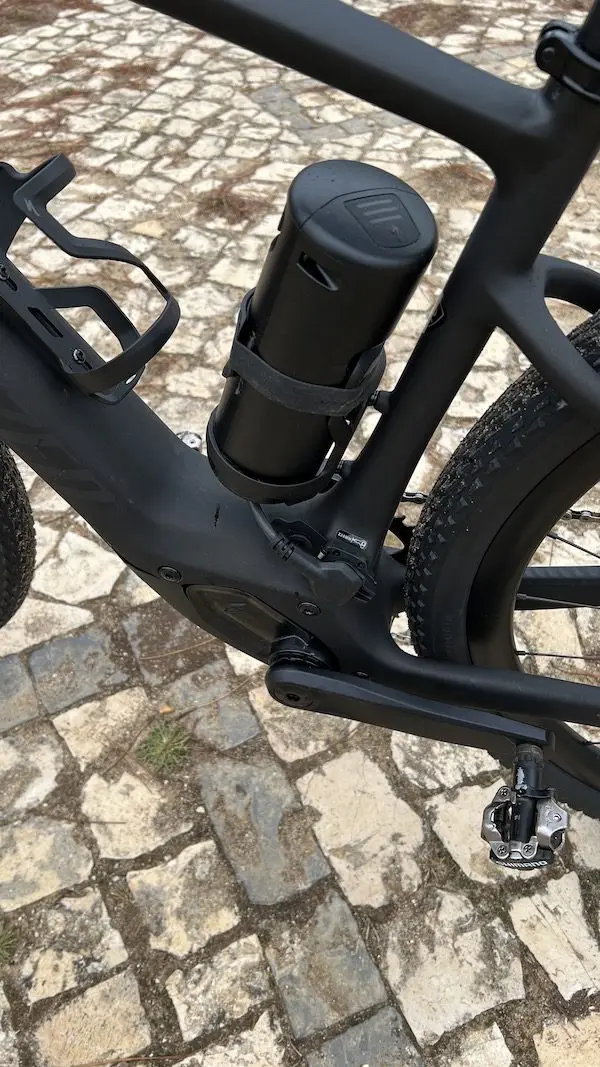
The Creo 2 now pumps out 320 watts—up from 240 watts on the Creo SL—and maximum torque is up to 50 Nm. Long-lasting battery life is ensured by the internal 320 Wh battery, which can be paired with an additional 160 Wh external battery, enough to cover up to 2,850 m of elevation gain and 112 km of continuous use in Eco mode, thanks to the motor’s claimed excellent efficiency. Eco mode provides 35% more power than the rider’s pedalling by default, while Sport mode offers 60% more assistance and Turbo mode 100%. In short, Turbo mode allows you to double your own capabilities in certain situations.
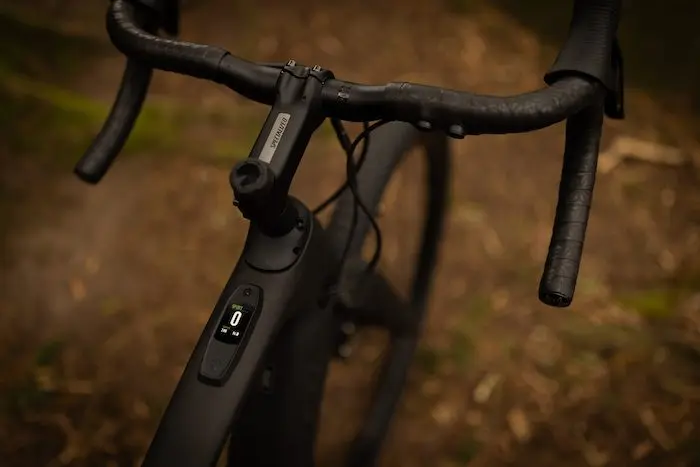
With the Creo 2, Specialized is also updating its Specialized App (as previously seen with the Turbo Levo SL mountain bike) to allow for full customization of assist mode settings and adjustments, as well as to provide on-the-go diagnostics and tips on how to optimize motor usage. Combined with the Turbo Operating System, the app can guide you in monitoring and comparing your power output and heart rate, or optimising your cadence to get the most out of the assistance. This is further proof of the Creo 2’s hybrid nature—it’s not just a bike that helps you pedal faster, but also one that helps you improve your physical fitness.
Enhanced Off-Road Capabilities Just like the new Roubaix, the Creo 2 is equipped with Future Shock 3.0, featuring 20 mm of travel that reduces impacts by more than 53% on the front end, according to Specialized. Located between the stem and the head tube, the system provides travel in the opposite direction of the impacts that strike the wheel and travel up the fork legs. It keeps the front end stiff for precise handling while significantly reducing impacts and vibrations at the handlebars. The Creo 2 S-Works and Expert models come equipped with the Future Shock 3.3, a hydraulic system that allows riders to adjust the preload by changing the spring stiffness, as well as compression while riding to adapt to the terrain. The Creo 2 Comp comes with the Future Shock 3.2, which is nearly identical except that you cannot adjust the compression while riding.
But the biggest improvement on the Creo 2 is the tire clearance, which now accommodates tires up to 47 mm wide—and even up to 2.2" on 650b wheels. Fitted with 700×47 Specialized Tracer mixed-terrain tyres at 1.5 bar, the Creo 2 becomes a genuine workhorse on both sandy and gravelly paths while retaining surprising efficiency on tarmac. Of course, we know that fitting very large tires isn’t an aerodynamic advantage, and that too-low tire pressure doesn’t help with the sharpest accelerations, but we have to admit that with the help of the drive unit—even in Eco mode— many of these drawbacks are eliminated. 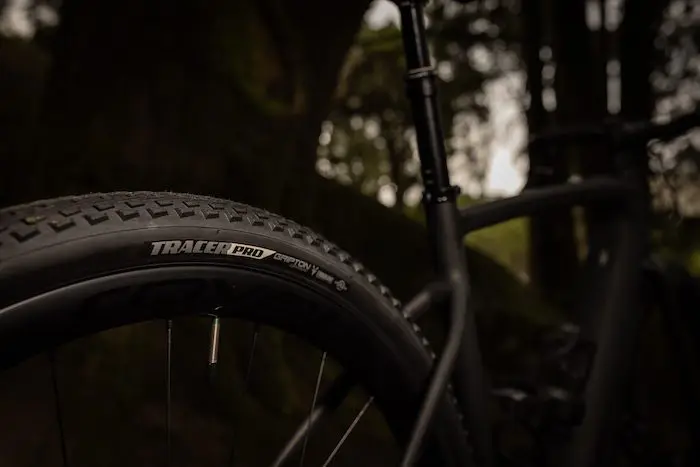
The Creo 2 is designed for both short rides and multi-day adventures, with a perfectly balanced geometry that combines stability, comfort, and precision, while being specifically engineered for wider tires than the previous model, featuring a lower bottom bracket, a longer top tube and a shorter stem, as well as a redesigned head tube. It also features a longer wheelbase, offering a more endurance-oriented riding position that takes the strain off the hands, neck, and shoulders. To improve comfort, Specialized has also managed to reduce the crankset’s Q-factor (the distance between the two cranks) by 12 mm compared to the previous Creo, bringing it to 169 mm despite the presence of a mid-drive motor.
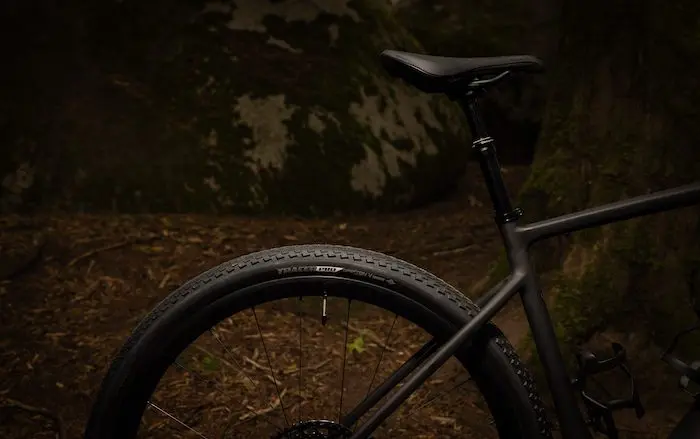
The Creo 2 is also equipped with a dropper seatpost to make it easier to handle the bike on technical descents. A lever located near the left brake/shift lever allows the seatpost to be unlocked while riding.
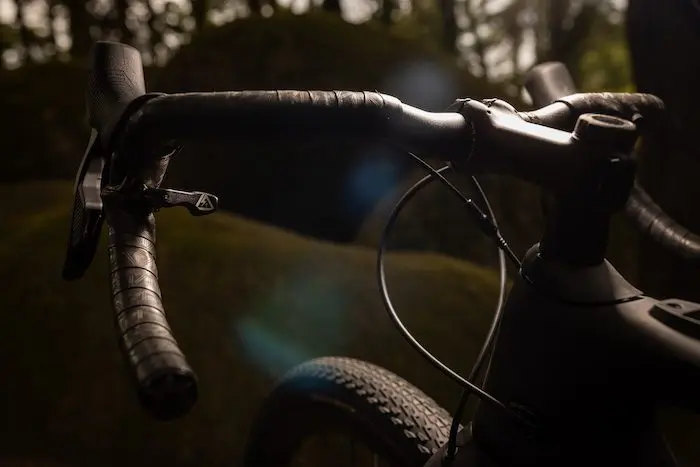
Finally, the lightweight Fact 11r carbon frame offers multiple mounting options for front and rear racks, a third bottle cage, or frame bags. This confirms the extreme versatility of this Creo 2. Fun Ahead
We put the bike through its paces on a 50-km ride with 1,200 m of elevation gain, including 45 km of dirt roads, firebreaks, ruts, and loose gravel. This demanding terrain let me assess the capabilities of the Creo 2—tested here in its Expert version—and, first and foremost, to estimate the system’s range. With an extra battery on top of the original one (adding about a kilo in weight), I set out with 150% battery range and returned with 90%, having used slightly more than the charge from the additional battery. By managing the assist level, it’s therefore possible to cover nearly 150 km under these challenging conditions, which is quite a plus.
 Honestly, I didn’t try riding without assistance for very long. The fully kitted-out bike tips the scales at nearly 15 kg, and the 47 mm tyres do introduce some rolling resistance on the road. As a result, the bike feels clunky and a bit sluggish when accelerating. However, Eco mode completely changes the game. The contact with the pavement is obviously very smooth thanks to the tires, and when standing up to pedal, it feels slightly as if the bike is floating sideways. But the assistance provides just the right boost to make the Creo 2 feel much lighter than it actually is. At the end of the ride, a paved climb followed by a long, gentle incline into the wind allows you to fully test the bike’s capabilities, combining the power provided by the motor with my effort at nearly full throttle at an ideal cadence of 90 revolutions per minute, the right combination for achieving the bike’s best efficiency. Up to 27 km/h, you can feel like you’re flying—or at least feel like you’re in really great shape. On the other hand, I find the cut-off of assistance a bit abrupt—more so, at any rate, than on some bikes with a rear hub motor. Without assistance, the Creo 2 makes you aware of its weight and the size of its tires.
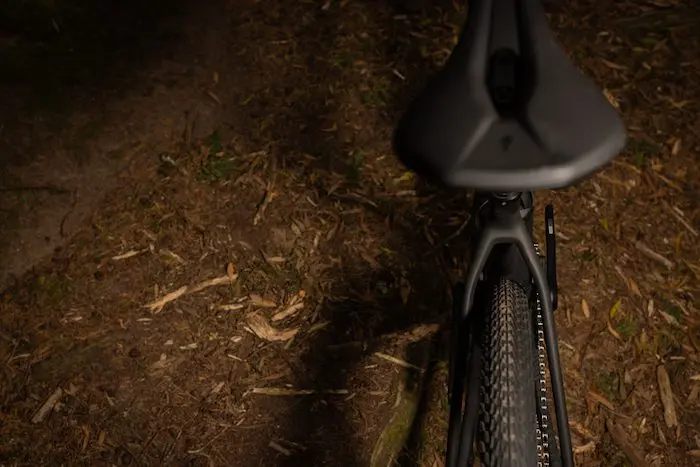
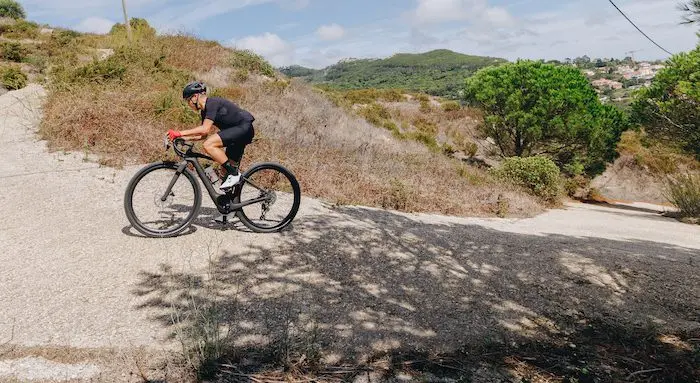
On trails, however, it’s very rare to exceed the speed limit for pedal assistance. Eco mode makes for an enjoyable ride here as well, making it easier to pick up speed again after sections that require a bit of skill. From that perspective, the Creo 2 actually performs quite well despite its weight, as the bike’s center of gravity is very low. This gives it a lot of stability on fast descents over rocks or loose terrain. The tire width, their inflation pressure, and the front suspension do the rest to make you feel safe most of the time.  On steep climbs, Turbo mode delivers plenty of torque—sometimes too much. If the ascent demands that you pick your line between ruts and rocks, the bike becomes hard to control. “Without control, power is nothing,” as an ad claimed a few years ago. To combine handling, efficiency, and the feeling of exertion, I much preferred Sport mode, which I found far more controllable and manageable. However, I could have customized the settings for each assist mode in the Specialized App so that they truly matched my riding style or the type of route I chose. In practice, the two additional buttons on the top of the handlebars are very convenient for switching between assist modes. I found myself preferring to switch modes on the fly based on the difficulty rather than shifting gears on the cassette, especially since the gear range from 10 to 50 teeth with a single chainring isn’t really progressive.
 In many situations, Sport mode is sufficient to provide the necessary boost without completely disconnecting you from the effort. Turbo mode feels a bit too superficial.Obviously very effective, Turbo mode lets you climb very steep smooth hills, or long, less steep climbs, with relative ease, simply by pedalling. Once again, the Creo 2 confirms its versatility and its role as a hybrid bike, since it appeals equally to athletic riders seeking the thrill of speed while still putting in physical effort, as well as to less-trained cyclists who want to reach peaks that would normally be out of their reach. In both cases, the bike runs very quietly, so it’s hard to tell that electric assistance is in use. In short, even though the market for road or gravel e-bikes isn’t yet very developed, there’s no doubt that with the Creo 2, Specialized offers an option likely to win over skeptics.
The Specialized Creo 2 in brief… Rating: ***** Pros: versatility, performance, range, customizable assistance settings, quiet operation, comfort, stability Cons: still heavy, somewhat superficial ride feel in Turbo mode Available models: Creo 2 S-Works: Fact 11r carbon frame SRAM Red/XX1 AXS 1x groupset; Roval Terra CLX II wheelset; Weight: 12.9 kg in size 56, without pedals or additional battery; Price: €13,000 Contact: specialized.com |
=> SEE ALSO: All our Equipment articles
Share the post "First Test Ride of the Specialized Creo 2 E-Bike"