Share the post "Short or Long Interval Training for Progress?"
Whether it’s to reach the summit of a legendary mountain pass, prepare for a cyclosportive, or achieve results in competition—each at their own level—in order to make progress and hope to perform well on the day of the event, we all need to follow a serious and well-tailored training program. And among the various workouts essential to building our future success is the famous interval training session. But what kind of interval training should you include in your program? Should you focus on short intervals or long intervals?
By Jean-François Tatard – Photos: DR
“Short interval training or long interval training?” you asked. Well, it all depends on your level. And it also depends on the type of goal you’re aiming for. Before I explain all of this in detail, let’s start with a quick definition.
What is interval training?
If you want to improve your fitness level—regardless of your age—and you’ve never done it before, know that interval training is one of the best investments you can make. What does it involve? Well, it consists of alternating between periods of effort and periods of rest (active rest). The effort is thus interspersed with recovery phases, and the goal is simple: to help you ride faster and longer than if you were to maintain a continuous intense pace, all while managing changes in pace. And for good reason: interval training allows you to increase your MAP (Maximal Aerobic Power) or your FTP (Functional Threshold Power) for those who measure in watts. During these sessions, your entire cardiorespiratory system is working; your body improves its respiratory capacity, and the air you breathe in is used more efficiently.
=> SEE ALSO: The Different Training Intensities
Who is interval training for?
The good news from this article is that it applies to everyone. In fact, anyone can do interval training, whether it’s short or long. However, it’s a form of exercise that requires endurance. It’s therefore best to build up your endurance before starting interval training. If you’re a beginner, start with one session per week. Finish your intervals with a short 15-minute cool-down. Ideally, take the next day off. You can alternate between short and long interval sessions; the sensations are different and they complement each other. However, it’s important to gradually increase the volume of your sets, and never forget the essentials: the warm-up! Start by doing a 30-minute low-intensity warm-up ride before beginning your workout.
Short Interval Training or Long Interval Training?
Short Intervals
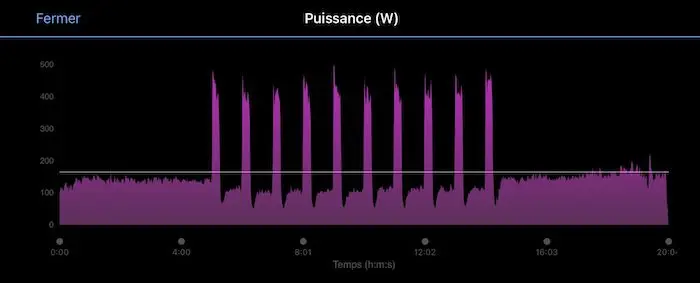
Short intervals—such as 30/30—involve alternating between 30-second all-out bursts (100% of your maximum aerobic threshold) and 30-second recovery periods (65% of your maximum aerobic threshold). Ideally, start with 8 to 10 sets of intervals and gradually increase the length of your sessions.
Depending on your fitness level, here are some different workout options:
- Beginner or returning to training: 8 to 10 intervals.
- Experienced cyclists: 20 to 30 intervals.
Short interval training will help you develop your maximum aerobic threshold (PMA) to ride more efficiently. This type of training is especially suited for riders who need explosive power and, more generally, those who compete in events with frequent changes in pace (races with many turns, as well as cyclocross, mountain biking, etc.).
Long Intervals
Long intervals involve riding for 2 to 4 minutes at a sustained pace, but not at 100% of your maximum aerobic threshold (PMA). You then recover for half the duration of the effort. It’s not always easy to find the right pace—it’s up to you to gauge your ability to ride fast, but not at full speed! Use a heart rate monitor if you like, and aim to stay around 90–95% of your maximum heart rate. Alternate between these intervals 6 to 8 times.
=> SEE ALSO: The Cyclist’s Training Log
How to Properly Perform the 30-30 Interval Workout?
Every experienced cyclist knows it—the 30-30 interval workout is a staple! However, although it seems simple to set up, the 30-30 session is often done incorrectly. Here are the best practices for 30-30 in detail, so you can reap all its benefits and improve your cycling.
Before explaining how to put 30-30 into practice, a quick refresher is in order. The 30-30 is classified as a PMA (maximum aerobic power) workout, with the goal of developing your PMA by alternating 30-second intervals. You must therefore know your PMA to get the most out of 30-30 interval training.
The most common mistake when doing the 30-30 is not riding at 100% of your MAP or VO2max. If you’re going too fast, you’ll tire out very quickly. Conversely, if you’re riding below your VO2max, the workout won’t be as effective as it could have been.
A good 30-30 session therefore depends on your pace. The key is figuring out the right pace to maintain. Since this is a very short session, you unfortunately won’t be able to rely on your heart rate monitor. Your heart won’t have time to adapt to the effort.
=> SEE ALSO: Power in Cycling
Here are a few tips:
- The first thing to do is calculate your FTP or your PMA if you’re using a power meter.
- Train on a short loop whose distance you know well—one that’s easy to ride and free of traffic, traffic lights, and stop signs. This will give you visual landmarks—such as signs or trees—in that environment, and you can calculate the distance to cover in 30 seconds, for example.
- Be reasonable: don’t forget that you need to maintain the same speed during the final sprints as you did during the first ones. Stay attuned to your body and its capabilities—the goal is to be able to complete several consecutive intervals without exhausting yourself during the very first set.
The Benefits of a 30-30 Interval Session
30-30 interval training will help you increase your maximum aerobic threshold (MAP). This will allow you to use oxygen more efficiently—to be more “fuel-efficient,” so to speak. This means you’ll be able to ride at a brisk pace for longer without running out of oxygen—in short, you’ll have greater endurance! 30-30 interval training is also good for your mental game; the sessions are short and fast, making them much more dynamic than a long interval workout!
Putting the 30-30 Interval Training into Practice
Of course, it all starts with a good warm-up: a light, easy 30-minute ride, and then you’re ready for your 30-30 session! 30-30 means 30 seconds at 100% of your maximum aerobic pace (MAP), followed by 30 seconds at a relaxed pace. So, before you start, keep your calculated pace firmly in mind—it’s always very tempting to start out too fast, and you risk feeling the consequences by the end of the session, if you even make it that far!
For your first session (beginner or returning rider): do two sets of 6 repetitions of 30-30, with 4 minutes of very easy riding between each set. To progress: add one repetition to each set over three weeks, at a rate of one per week. You’ll end up doing 2 sets of 8 repetitions of 30-30, still with 4 minutes of recovery. Take a week off, then start your 5th week with 8 or 10 intervals. For experienced cyclists: you can start directly with 8 intervals and follow the same progression. Finish with a 15-minute recovery phase.
What if you want to extend your interval training?
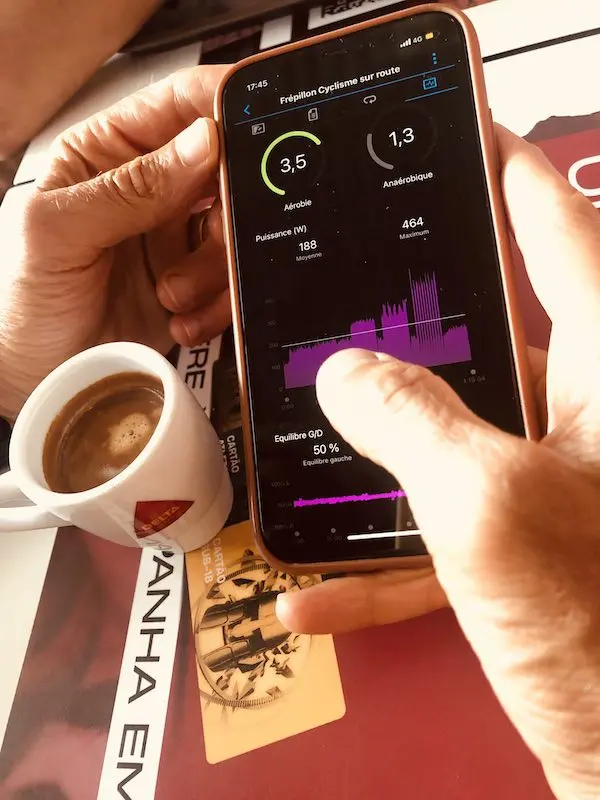
Although the principle behind long interval training is the same, it’s a bit more complicated to manage. For this type of session, a properly programmed GPS watch will be a real asset. Unlike short intervals, it will be difficult to give it your all in a sprint lasting 4, 6, or more minutes. You’ll therefore need to control your pace—often based on your maximum aerobic pace (MAP) or your FTP (expressed in watts)—while maintaining a pace faster than your usual training pace. You’ll find repetitions of 5 minutes at 90–95% of your FTP, for example, or 10 minutes at 85–90%. The first few sessions are a bit challenging—you’ll need to manage the duration of the intervals and your pace—but you’ll find that with practice, you’ll quickly find the right rhythm.
Long Rides to Build Endurance and Stamina
This session is one of the building blocks for improving endurance and, on a mental level, helps us experience the benefits of pushing beyond our limits.
Here are a few fundamentals:
- Intensity: around 90% of maximum aerobic power (MAP)
- Total session duration (excluding warm-up, cool-down, and recovery time): 10 to 30 min. This duration can even be increased for very experienced cyclists.
- Progressive increase in interval length (start with 2-minute intervals and gradually work up to intervals of up to 15 minutes).
- Progressive increase in duration: from 15 to 20 minutes at the start of the program, and 30 minutes or more by the end of the program.
- Always active recovery by pedaling lightly
Week after week, and with long rides without raising your heart rate separately, you’ll develop the ability to maintain the same level of effort for increasingly longer periods. Efficient pedaling, the ability to relax during exertion, and each rider’s level of physical fitness will also undoubtedly help you finish stronger in the final third of the race—where everything is decided. This is also the whole point of adding long interval training to your plan in addition to short intervals.
=> SEE ALSO: How to Plan Your Week
So, which workout should you choose?
Is it better to do short or long interval training? So that’s the question? Well, as we’ve said from the start, it’s neither one nor the other, my friend—it’s both. You need to vary your routine and use both types of workouts. In a typical week with four workouts, you should ideally include one short interval session and one long interval session. As you practice both, you’ll see that the sensations are completely different, but that the two are extremely complementary. There you have it—now you know all about the different ways to do interval training, so it’s up to you to put this into practice…
=> SEE ALSO: All our Coaching Articles
Share the post "Short or Long Interval Training for Progress?"