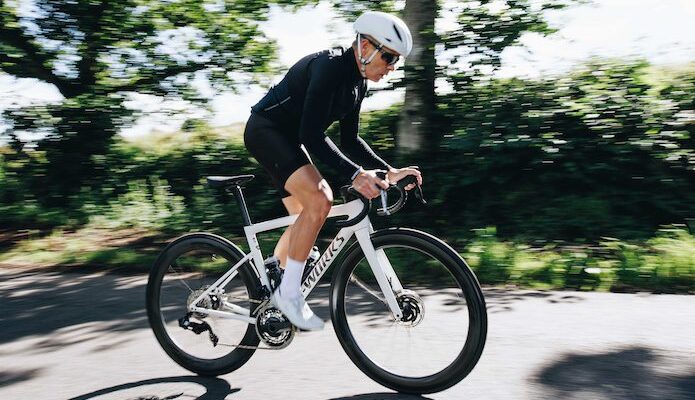
Share the post "Exclusive Test Ride of the New Specialized Tarmac SL8"
Just three years after the Tarmac SL7—the bike that won three consecutive world championship titles (2020, 2021, and 2022 with Julian Alaphilippe, twice, and Remco Evenepoel)— Specialized is already launching its successor, the SL8, which the brand has designed to be even lighter and even more aerodynamic. But the Tarmac SL8 is also—and above all—an easy-to-ride and versatile bike, equally at home on the steepest climbs, long straights, and technical descents. It’s hard to do without it once you’ve tried it.
By Guillaume Judas – Photos: ©Etienne Schoeman/Specialized – ©3bikes.fr
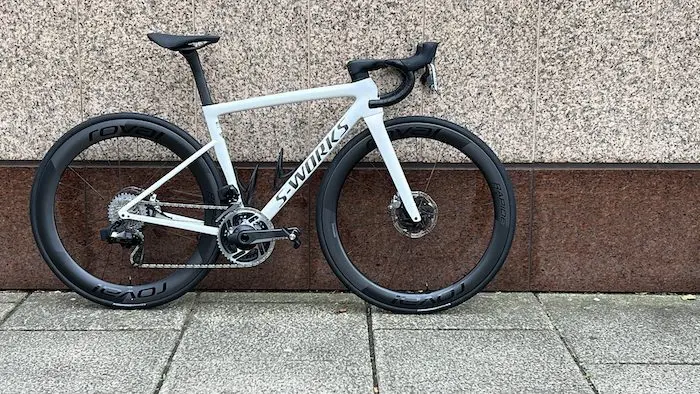
“But how did they do it?” That was the first thing one of my friends said when I told him that the Tarmac SL8 was 250 g lighter than its predecessor—just for the chassis alone—with 100 g saved on the frame, 50 on the cockpit, and another hundred on the fork and seatpost combined. That’s also the question I asked myself after riding it for a few kilometers, given how smooth and effortless it felt—yet without compromising its competitive spirit. It is indeed a road bike—undoubtedly one of the very best on the World Tour and quite simply one of the very best on the market—but many cyclists, regardless of their skill level, will appreciate it. I could almost say that the Tarmac SL8 rides itself, but that would undoubtedly be a huge exaggeration—after all, we’re still talking about a bike—or at least it would be misunderstood by those who don’t have the chance to test different bikes frequently.
 I can nevertheless say with certainty that the Tarmac SL8 is a highly successful bike. It’s a success because it seems to perfectly match the characteristics its designers at Specialized intended, offering significant weight savings and ride qualities similar to those of the Venge, while retaining the handling of the Tarmac SL7. Yet, on paper, this hybrid between a Venge and an Aethos was undoubtedly not easy to achieve.
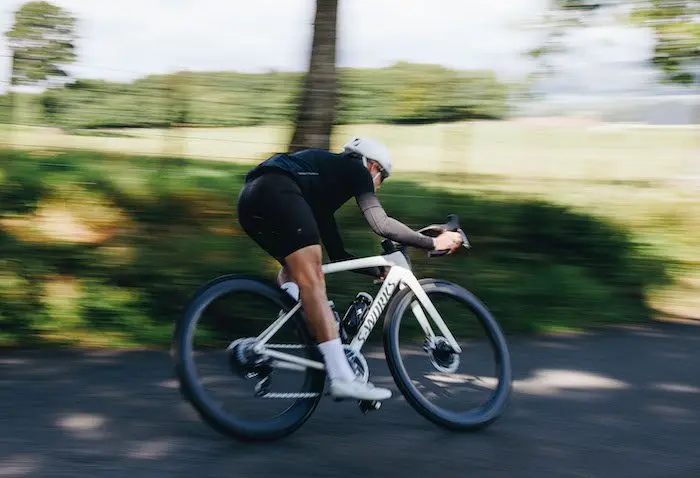 Fast in the real world For more details on the concept behind the Tarmac SL8, check out our overview of the bike, which admittedly draws on many elements from the brand’s press kit, but which itself explains the essentials: By focusing on the aerodynamics of the bike’s most exposed parts, Specialized’s engineers were able to prioritize weight savings for the less critical components, using more conventional tube shapes that are no less effective in terms of the weight-to-stiffness ratio.
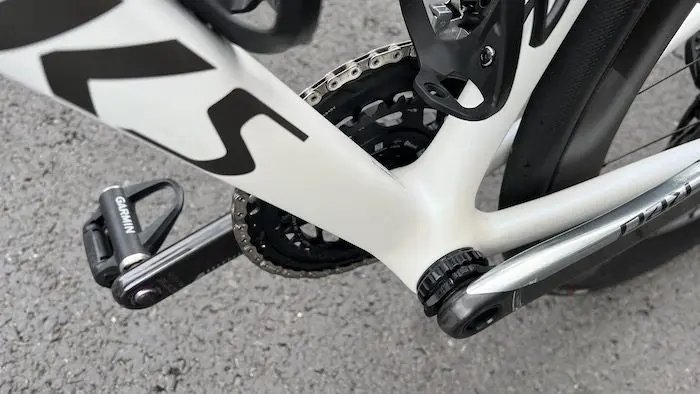
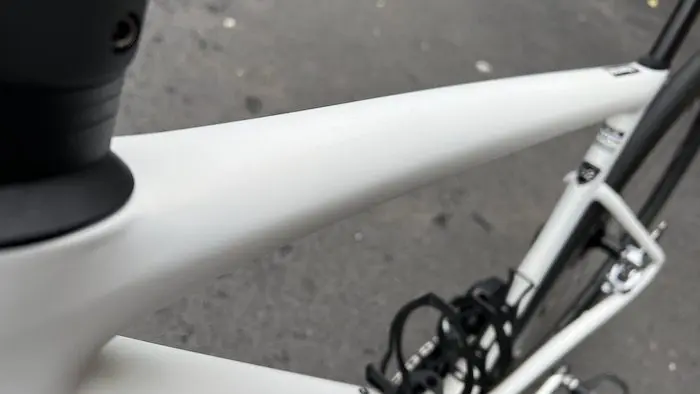
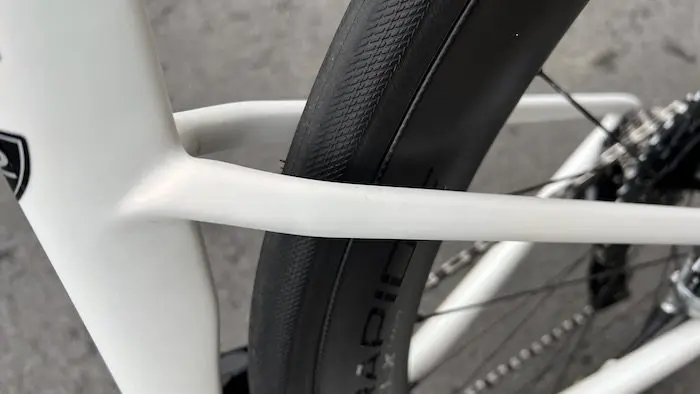
When you place the SL7 and SL8 frames side by side, you’ll notice significant differences in shape and volume, such as the head tube—which features a design called “Speed Sniffer” (literally: “Speed Sniffer”) on the new model, much thinner and lower-set seat stays, a less bulky bottom bracket shell, a down tube that’s slightly less imposing in its lower section, a top tube that’s a bit rounder, and a thinner seat tube.
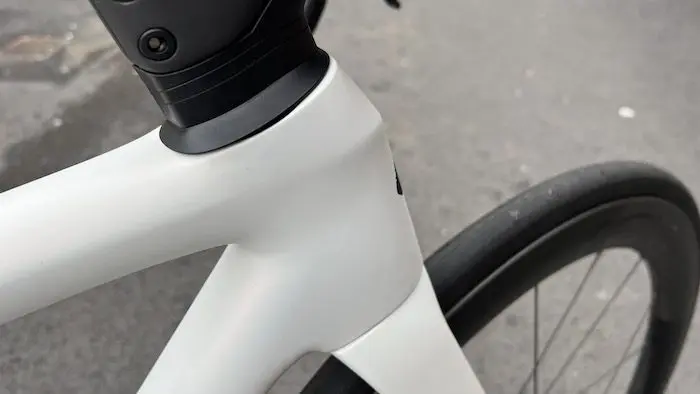
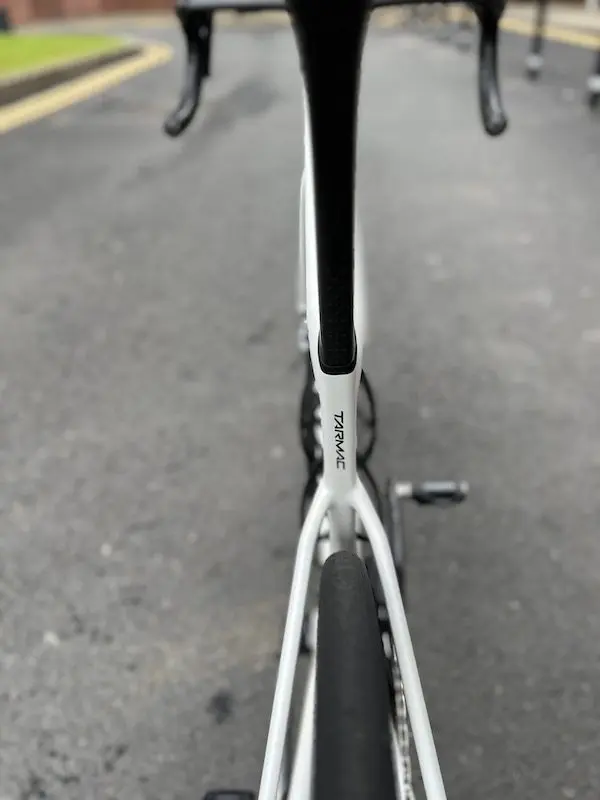
Specialized took advantage of the October 2021 update to the UCI regulations regarding tube dimensions to significantly slim down the seat tube, seatpost, and seatstays. As a result, the Tarmac SL8 looks less spectacular than expected—certainly much less so than the 2016 Venge VIAS or the 2018 Venge, at least when comparing the shapes of the tubes. However, according to Specialized, the Tarmac SL8 is more aerodynamic—at least under real-world riding conditions. 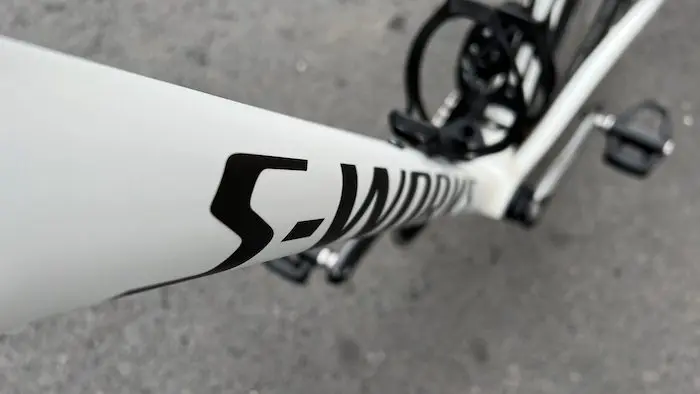
A Matter of Balance For several years now, the brand has been using new simulation methods to calculate, across the entirety of most routes, how a bike can become more efficient, with its Ride Science team, composed of about ten people (for road and mountain biking). And not just on flat, straight stretches or with a very light headwind or tailwind, as is often the case with wind tunnel simulations. The forces a cyclist must contend with consist mainly of air resistance (which increases as speed increases), weight—which must overcome gravity on climbs and inertia during changes in pace—and rolling resistance caused by friction from the tires and drivetrain. The balance between the bike’s stability and maneuverability, as well as comfort, also plays a role in the overall riding experience—and thus in a sense of confidence that ultimately allows for increased speed. Drawing on data collected from riders and users in real-world conditions, as well as simulations run using highly complex software, Specialized was able to determine the direction to take in order to improve the flagship model of its lineup. It’s worth noting that advances in the carbon fiber industry in recent years now make it possible to produce even more complex tube shapes with increasingly lighter weights, leading to results like those seen here with the SL8.
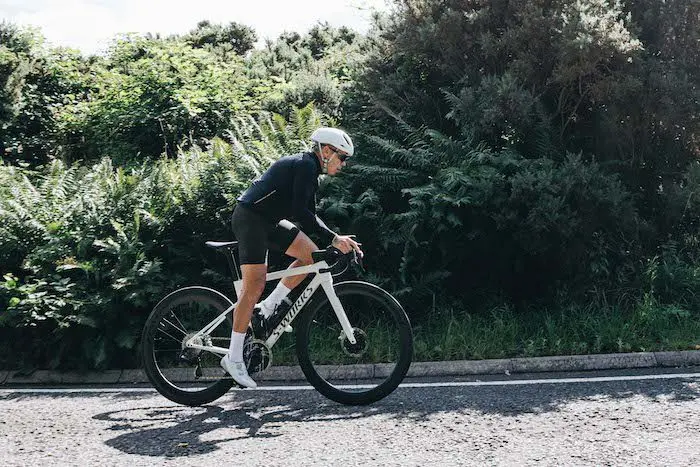
Significant weight savings While I obviously can’t verify Specialized’s claims regarding the time savings achieved by the SL8 compared to the SL7 on a route like Milan-Sanremo (128 seconds saved) or on the Tourmalet climb (20 seconds), I can, however, highlight the significant weight savings, which are easily verifiable. My test bike, equipped with an S-Works frame, a SRAM Red AXS groupset with a power meter, Roval Rapide CLX II wheels with tubeless tires and an integrated cockpit, pedals, two bottle cages, and a computer mount, weighs less than 7 kg, ready to ride. The S-Works Dura-Ace model in size 56, with the lightest paint finish, tips the scales at just 6.74 kg. This makes it the lightest aerodynamic bike on the market—and undoubtedly the lightest and most aerodynamic bike on the market as well. It’s also worth noting the performance of even the second-tier frame in the lineup, the Tarmac Pro in Fact 10r carbon, which weighs exactly the same as the Tarmac S-Works SL7, with a frame kit price that’s €1,200 lower. Speaking of pricing, even though Specialized products generally remain very high-end, the brand has not engaged in a price war following the excessive price hikes at the beginning of 2022. The S-Works SL8 frame kit is priced at €5,500 compared to €5,200 for the SL7, but the complete bikes are generally less expensive, with a top-of-the-line model at €14,000, a Pro model with Ultegra Di2 or Force AXS at €9,000, and an Expert model at €6,500.
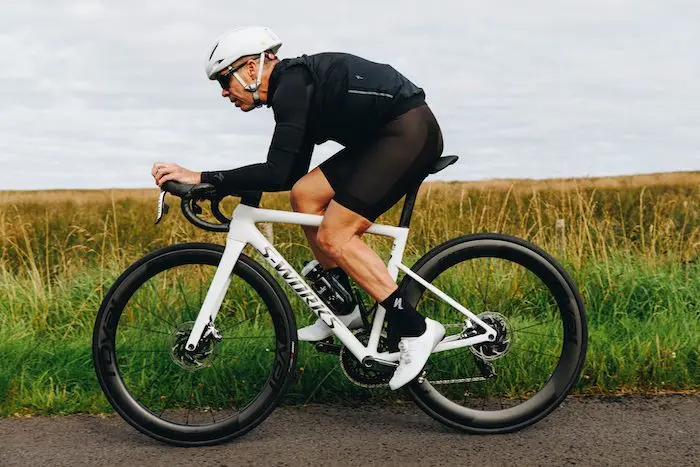
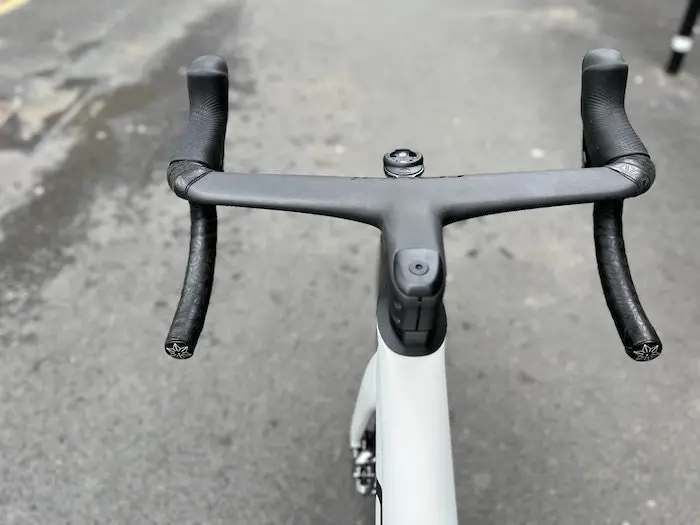
For the frame kit, you can add the cockpit for €580, which, according to Specialized, accounts for half of the SL8’s aerodynamic gains over the SL7. I admit I had some doubts about the comfort of this integrated cockpit—which, by its very nature, isn’t adjustable—especially with its wide, flattened top section. But in the end, I’m pleasantly surprised by how natural it feels to ride and, above all, by its stiffness—which is truly impressive even when sprinting with my hands on the bottom of the handlebars. Listed at just 310 g (verified at 320 g with a 135 mm stem length), it now seems essential to the SL8, even though it’s still possible to mount any handlebar or cockpit setup on this bike.
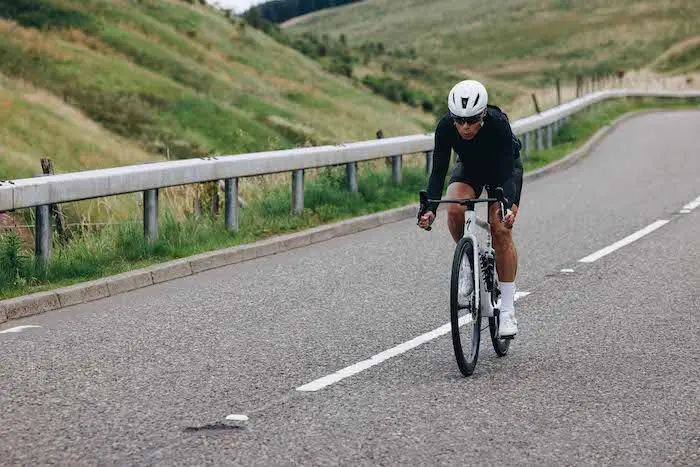
On Scottish roads with the new Specialized Tarmac SL8, I was able to test ride this Tarmac SL8 around the time of the World Championships in Glasgow in early August on two rides: one covering 47 km, and the other 90 km with 1,200 m of climbing, alongside about ten journalists from around the world. Since I usually ride a Tarmac SL7, it was easy for me to get the hang of the SL8—I quickly found my footing on it, as the geometry between the two bikes is exactly the same.
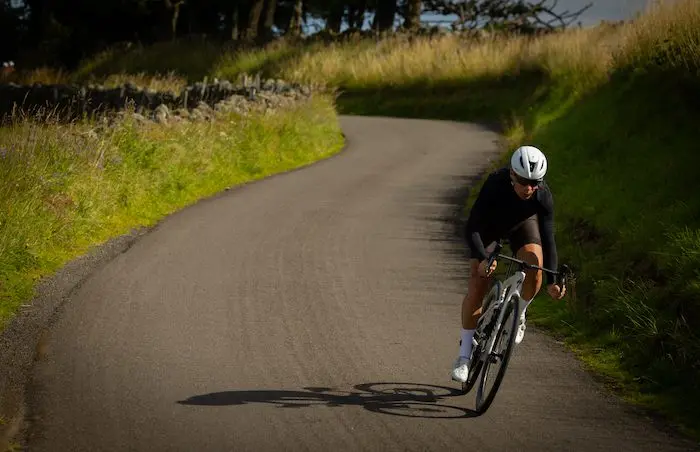
The difference in weight between the two bikes is remarkable, as a weight reduction of 250 g from one generation to the next—with identical components—is truly uncommon. However, beyond the initial impression of weighing the bike before getting on it, you have to tackle steep hills to truly get a feel for it in action. That said, I’m convinced that this lighter weight contributes to the sense of ease you feel while riding the SL8 throughout a ride, after a series of small bumps and false flats, and especially after the many accelerations inherent in riding regularly in traffic.
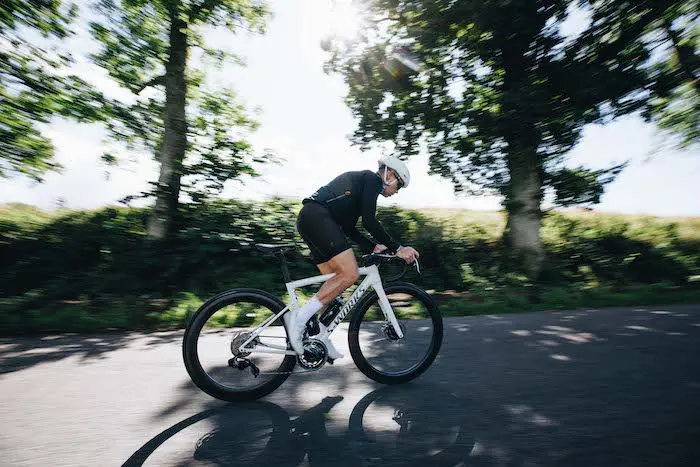
A long, gently sloping straight with a crosswind let me notice that the SL8’s stability was superior to the SL7’s. The front end is stiffer, and even though the bike is lighter, it feels a bit more planted on its two wheels, with the sensation of having a bit more weight on the handlebars. Tarmac bikes have always been renowned for their precision and handling, but they could sometimes be tricky to control in crosswinds, and the SL7 is no exception. The Tarmac SL8 seems to have improved in this regard, and I find it more reassuring in windy conditions, even with the same wheels.
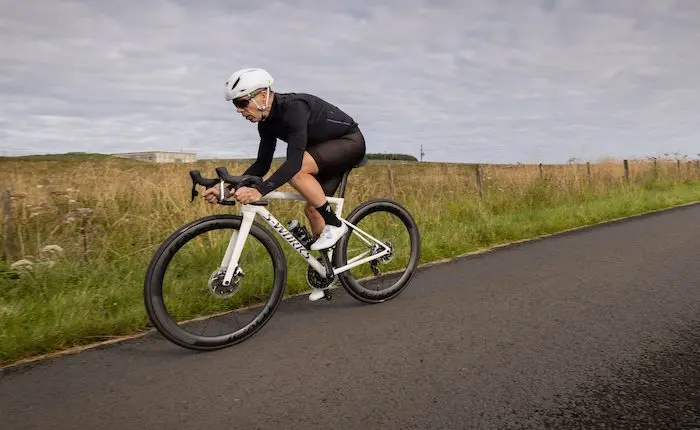
This first ride on a varied route took place on narrow, winding roads that weren’t always well-paved—as is common in Scotland—and, more importantly, sometimes on dry surfaces and sometimes on wet ones. It is therefore difficult to assess the comfort improvement claimed by Specialized for the SL8 compared to the SL7, since the advertised 6% improvement could very well be offset by tire size and pressure (both bikes accommodate tires up to 32 mm in width), or by the choice of thicker or thinner handlebar tape or a saddle. What is certain is that the SL8, in the test configuration—with Rapide wheels and 26-mm tubeless tyres—doesn’t bounce excessively on rough asphalt and always seems to maintain good traction. Even on wet forest trails, you’re never caught off guard by a lack of traction or any loss of control. The bike handles exceptionally well.
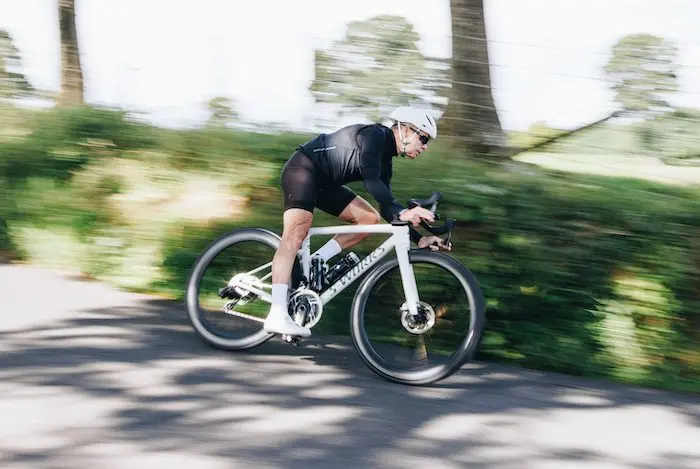
When tackling steep gradients out of the saddle, I found the front end of the bike to be very stiff, with a truly firm handling feel that perfectly matches the stiffness of the head tube. Everything feels perfectly cohesive, without the slightest hint of wobble. This trait pays off in sprints and explosive accelerations with no loss of efficiency. But once you sit back in the saddle, the bike feels more docile, a bit softer under the pedals, and more forgiving with tired or less-trained legs. It’s in this sense that I find the Tarmac SL8 easy to ride, because it demonstrates excellent balance in every aspect—it’s ready to respond to the most extreme demands, yet remains relatively docile when you’re in the mood for a more leisurely ride.
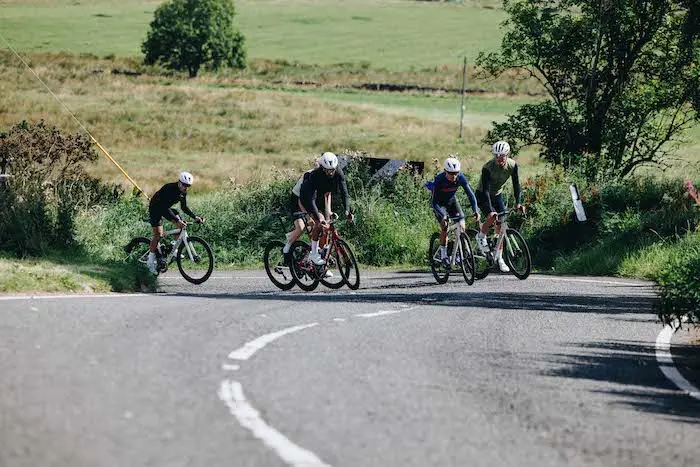
The second ride—longer, tougher and windier—reminded me, however, that the Tarmac SL8 is still a bike that requires you to keep pedalling. It’s certainly a highly efficient, light, comfortable and reassuring bike, but it can’t completely eliminate all the challenges of a route. On the Crow Road climb (tackled by pro riders just before entering the Glasgow city circuit during the World Championships)—with its 5 km of wind-exposed ascent on a gritty asphalt surface—the bike forced me to confront my own limits. It was on the descent, and then on the flat stretch back toward the hotel, that I was once again able to appreciate the SL8’s efficiency and smooth ride. It’s especially after taking a turn at the front of the group and then dropping back into the slipstream that you can really feel how effortless this bike is, and that’s why I think it’s suitable for a wide range of riders.
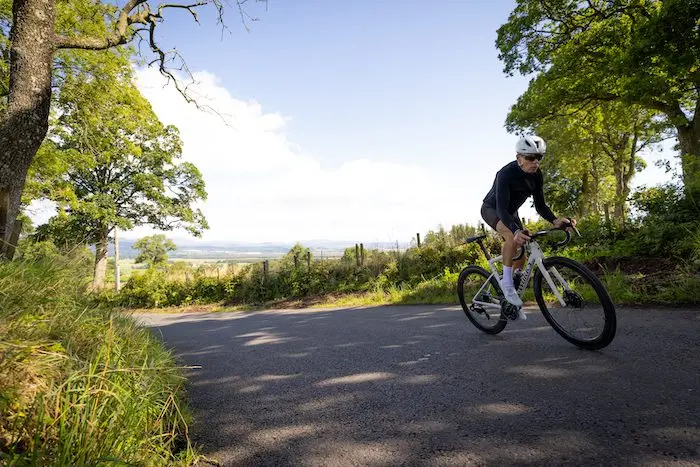 Absolute Versatility
With its light weight, overall efficiency, handling, and the ease it provides, the new Specialized Tarmac SL8 reaches new heights of versatility and balance and establishes itself as a new benchmark in the high-end segment, at least on par with the new Cannondale SuperSix. For those who already own a Tarmac SL7, upgrading isn’t absolutely necessary, in the sense that the SL8 isn’t radically different—even though it’s a bit lighter, more aerodynamic, more stable, and more comfortable. This new model simply optimizes all the widely recognized qualities of several generations of the Tarmac and Venge. And that’s quite an achievement!
| The new SPECIALIZED TARMAC S-WORKS SL8 at a glance… Rating: ***** Pros: weight, aerodynamic efficiency, ride quality, overall performance Cons: None Models and prices S-Works Di2 S-Works Tarmac SL8 FACT 12r Carbon frame Shimano Dura-Ace 12-speed groupset S-Works eTap S-Works Tarmac SL8 FACT 12r Carbon frame SRAM Red eTap AXS 12-speed groupset Pro eTap Tarmac SL8 FACT 10r Carbon frame SRAM Force eTap AXS 12-speed groupset Roval Rapide CL wheelset Pro Di2 Tarmac SL8 FACT 10r carbon frame Shimano Ultegra Di2 12-speed groupset Roval Rapide CL wheels Expert eTap Tarmac SL8 FACT 10r Carbon frame SRAM Rival eTap AXS 12-speed groupset S-Works Frame Kit: 5,500 € Pro Frame Kit: 4,000 € Number of sizes: 7 Contact: www.specialized.com |
=> SEE ALSO: All our Equipment articles
Share the post "Exclusive Test Ride of the New Specialized Tarmac SL8"