Share the post "Specialized launches the new Tarmac SL8"
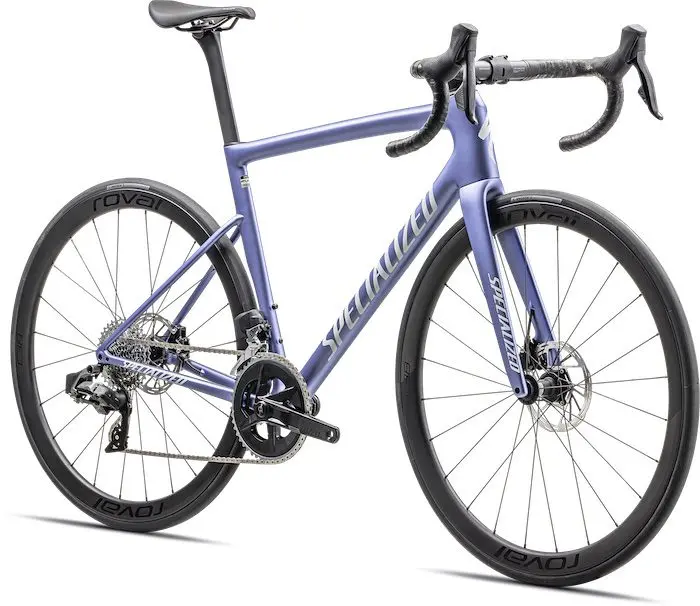
On the occasion of the Glasgow World Championships, Specialized is launching the new Tarmac SL8, a bike presented as lighter, more aerodynamic, and easier to ride than its predecessor, the Tarmac SL7, released three years ago. Only five riders are debuting this bike in the rainbow jersey race: Remco Evenepoel, Kasper Asgreen, Julian Alaphilippe, Peter Sagan, and Sam Bennett. The SL8 is a highly anticipated model, and 3bikes has already had the exclusive opportunity to test it.
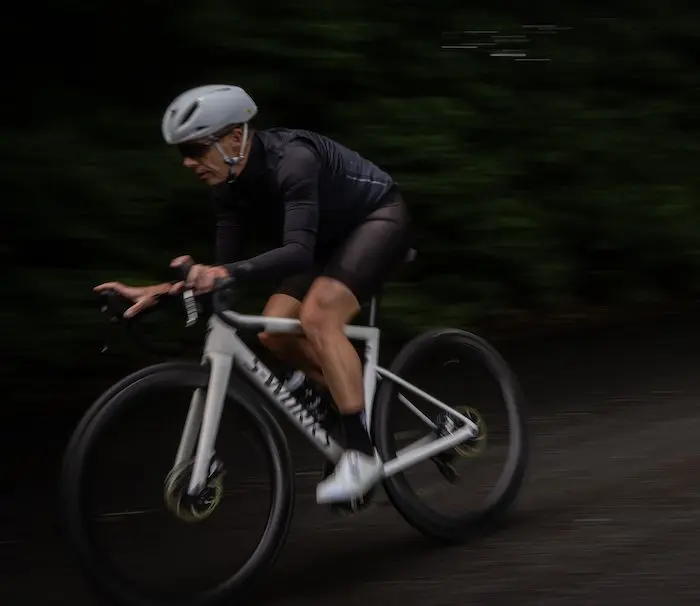
Aerodynamics or lightness alone are not enough to win races: overall efficiency is what counts. To achieve this speed, you need to create an uncompromising combination of aerodynamics, lightness, stiffness, and compliance. Through complex simulations using real-world data, Specialized’s Ride Science team claims the Tarmac SL8 is the fastest race bike ever designed for real-world conditions. Offering aerodynamics without lightness, or lightness without aerodynamics, or simply designing an uncomfortable bike that is unpleasant to ride, sacrifices efficiency and therefore speed.
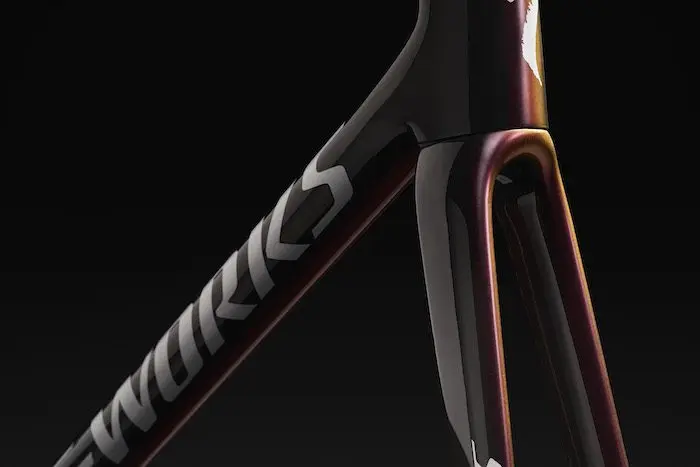
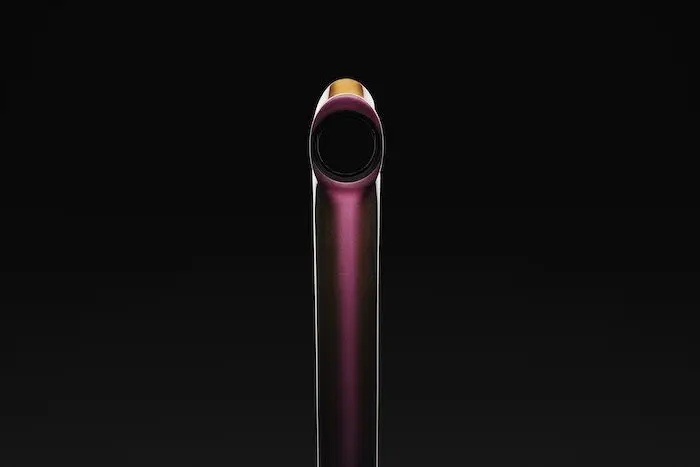
After a decade of work in its own Win Tunnel, Specialized engineers are using cutting-edge technologies to launch a new wave of aerodynamic design. The brand places aero where it matters, not just where it’s aesthetic. Specialized has thus developed a new head tube, called Speed Sniffer, to achieve aerodynamic gains that make the Tarmac SL8 more aero than the Venge. Surprising? The brand’s studies have shown that while deep aero-profiled seat tubes and down tubes may seem effective against the wind, they perform poorly in air turbulence, compromising weight and handling qualities. The result may be slightly more aerodynamic in the wind tunnel, but slower on the road. This explains why the Tarmac SL8 is not as visually spectacular as expected.
Key elements for aerodynamics
Specialized’s approach optimizes each shape relative to the airflow or on the leading edges to maximize aerodynamic advantage. By moving the steerer tube back from the head tube, a sharper leading edge is achieved, significantly reducing drag.
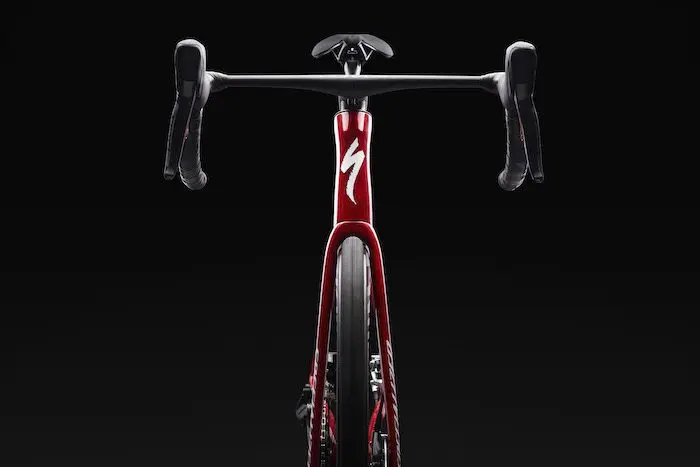
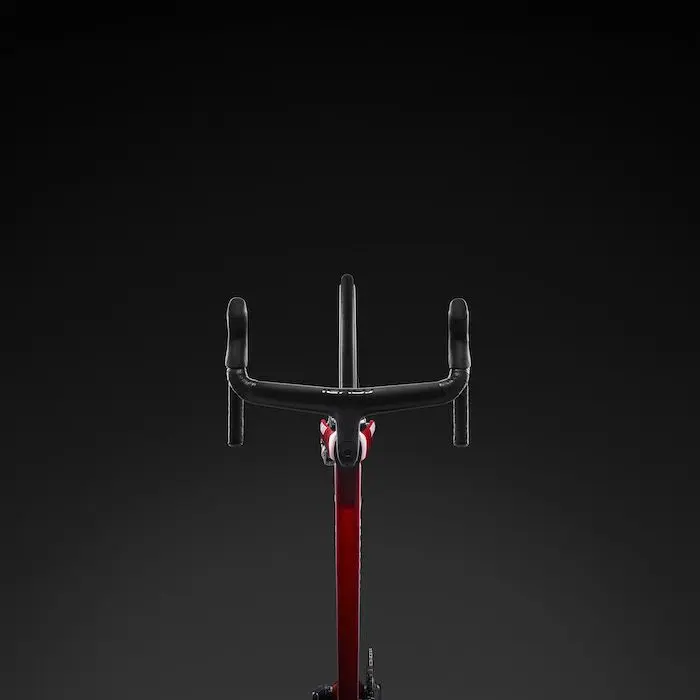
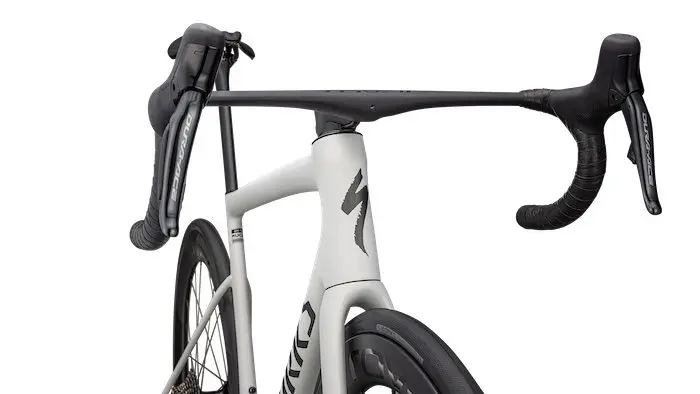
The Rapide cockpit (available on S-Works models and by order) reduces drag and saves four watts compared to the already efficient combination of the Tarmac stem and Rapide handlebar by eliminating all front-mounted hardware. It is available in 15 different width and stem length combinations, and it saves 50g compared to the Tarmac stem and Rapide handlebar. It sells for €580.
The Tarmac SL8 remains compatible with the Tarmac SL7 stem, with a slightly less integrated visual appearance, but which allows any handlebar to be mounted.
Beyond the front of the bike, the brand optimizes the tubes provided they contribute something in terms of aero. Thanks to the new relaxed UCI rules, the Tarmac SL8’s seat tube is the same size as the SL7’s seatpost. This results in a very narrow and very aerodynamic seatpost. This design ensures turbulence-free airflow around the legs. This slimness requires the Di2 battery to now be placed in the seat tube rather than in the seatpost. A placement that also has the advantage of lowering the bike’s center of gravity.
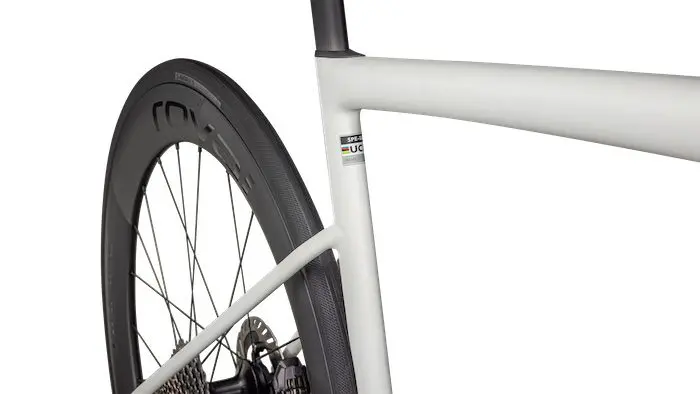
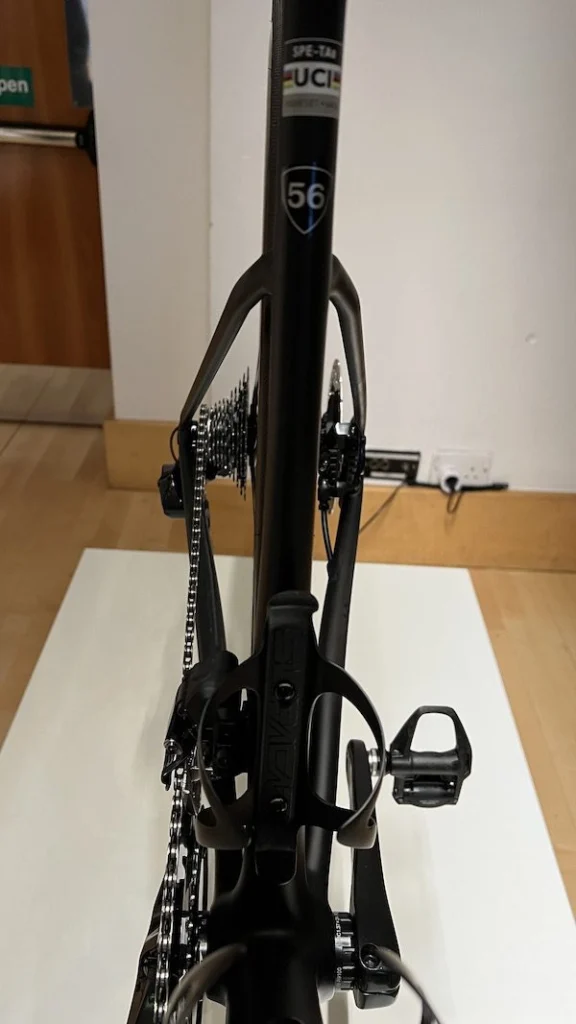
According to Specialized, these gains would make the Tarmac SL8 16.6 seconds faster than the SL7 over 40 km. Above all, they allowed the brand’s engineers to prioritize weight and ride quality over the rest of the bike.
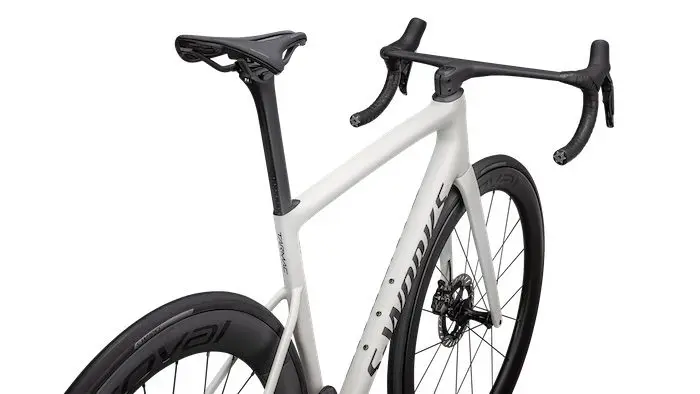
The lightest frame in the World Tour
With the Aethos, Specialized had already designed an extremely light frame, which combined explosive climbing with all-day rideability. Specialized is now able to quantify how much reduced weight can make a bike faster on demanding races. With the SL8, the goal was therefore to provide the most aerodynamic bike that could be easily assembled according to the UCI’s minimum requirements, with a power meter, pedals, and all other necessary elements for racing.
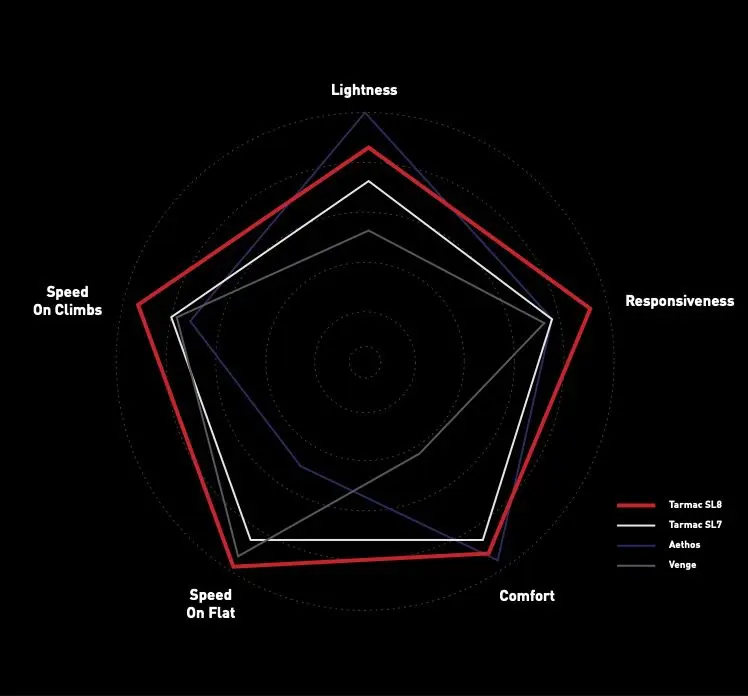
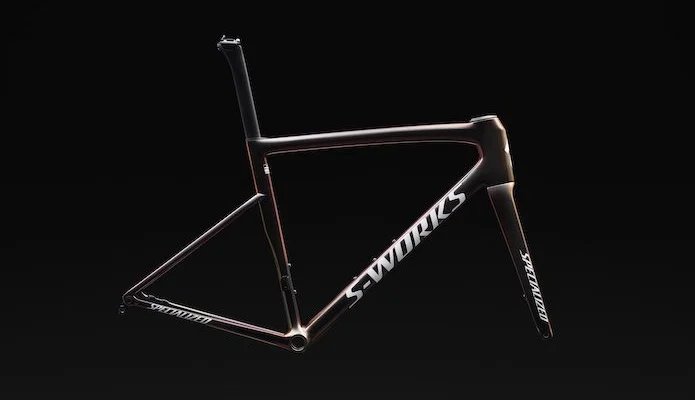
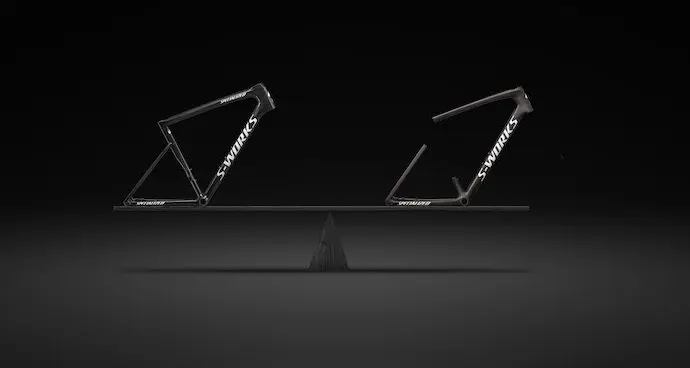
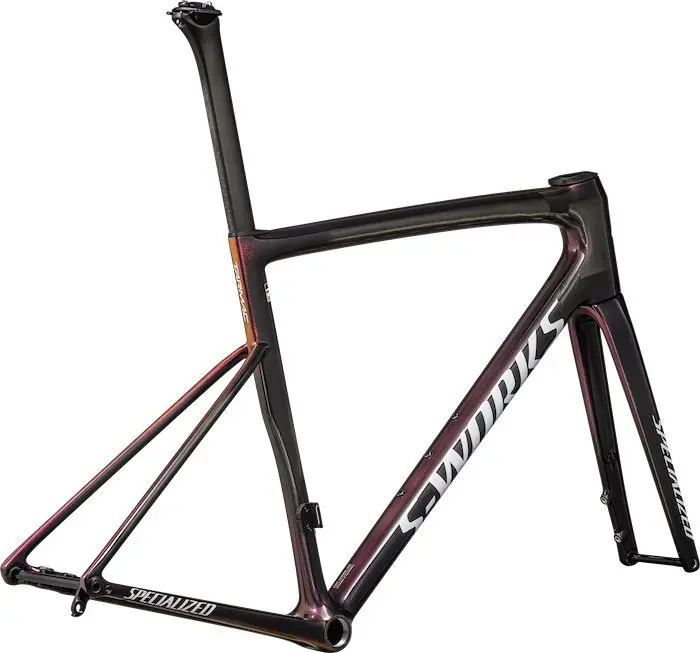
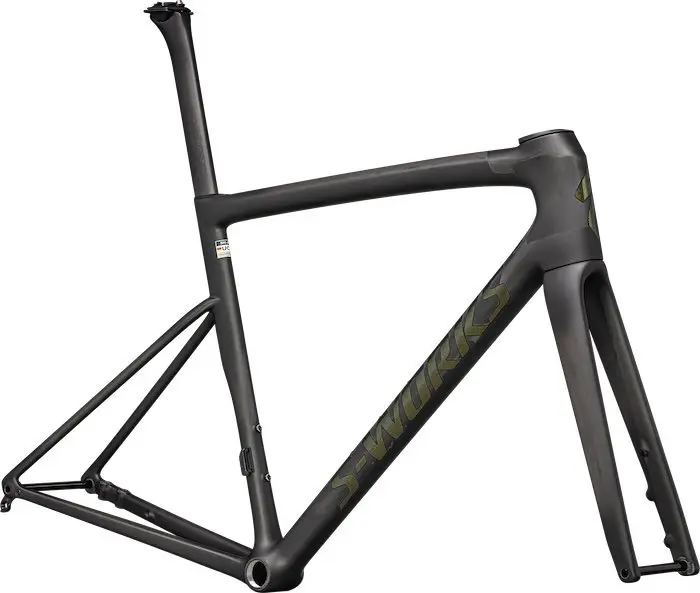
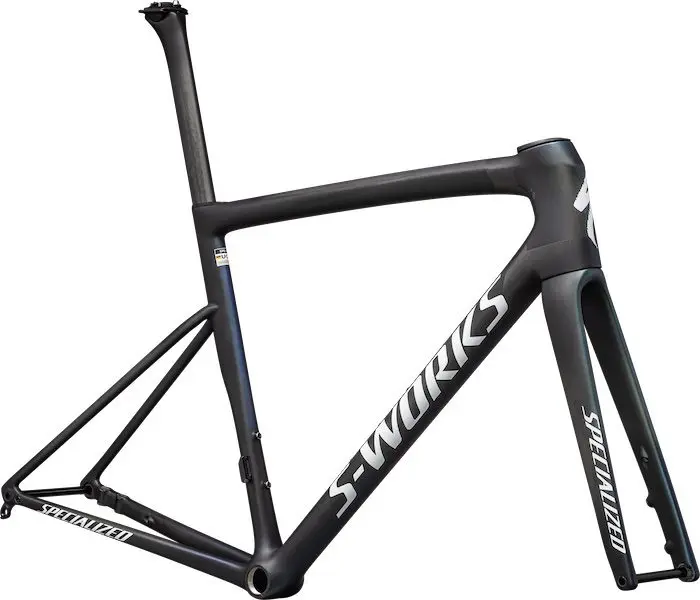
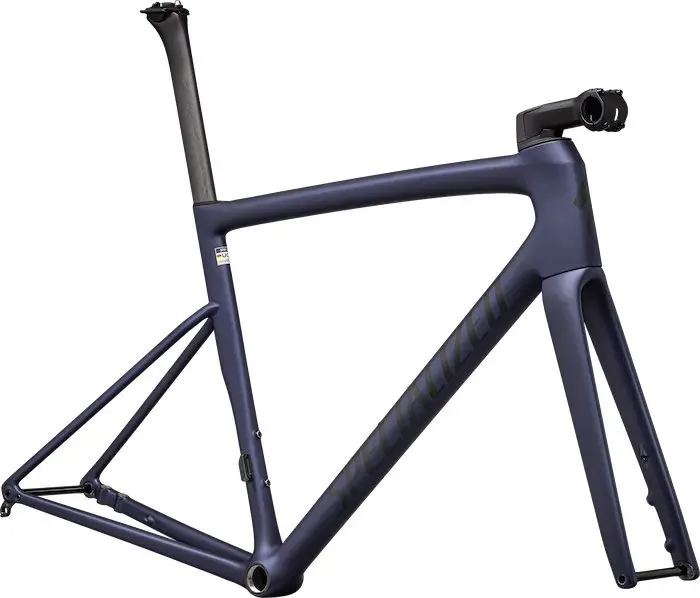
With the ability to make lightness an absolute priority in the down tube, seat tube, and rear of the bike, the lessons from the Aethos have been applied. The frame shape transmits stresses in such a way that certain additional carbon layers have become superfluous. The total frame surface can also be reduced to decrease weight when the frame only benefits from aerodynamics where necessary. The new Tarmac S-Works SL8 thus weighs 685g in the lightest Satin Carbon/Chameleon Snake Eye version (56cm), which is 15% lighter than the SL7. The seatpost (available with 15mm setback or no setback) weighs 165g. The complete chassis (frame, fork, seatpost, and cockpit) saves 250g compared to the SL7.
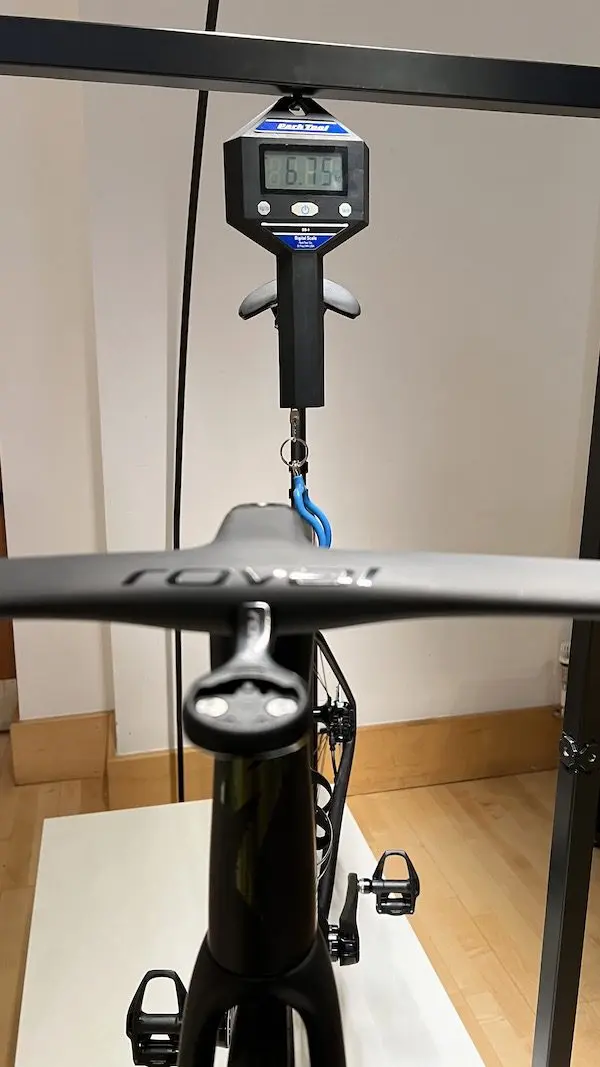
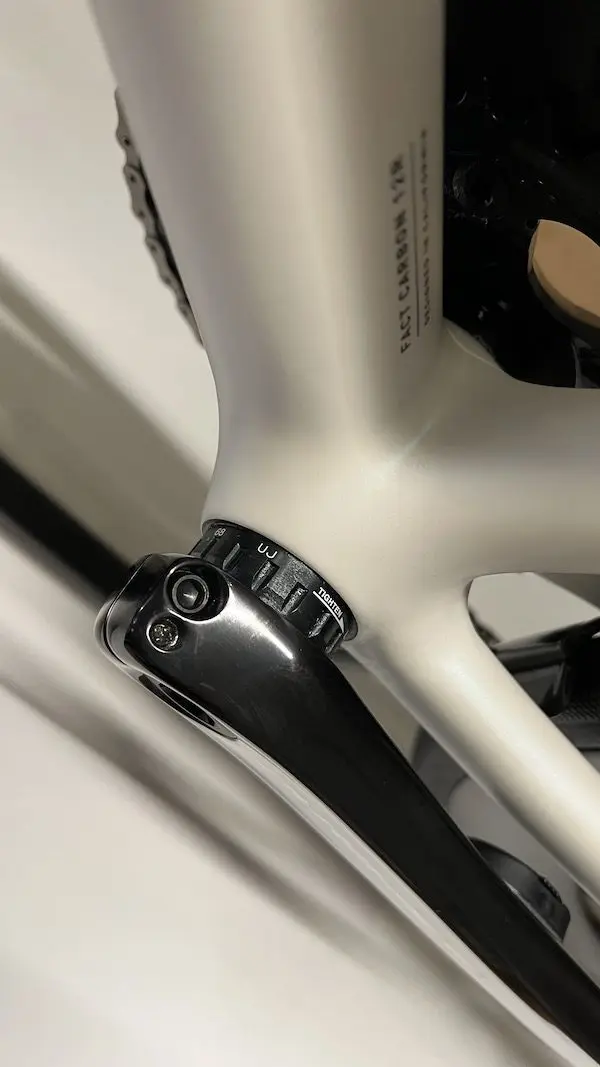
The Pro version in Fact 10r carbon instead of the S-Works’ Fact 12r weighs 780g. Both levels share the same design, geometry, and handling characteristics. The S-Works version uses the finest materials and most sophisticated construction techniques. Consequently, the S-Works 12r frame is approximately 100g lighter than the 10r frame. Note that in both cases, the Tarmac retains a BSA bottom bracket shell, a system that is not the lightest, but has proven its reliability.
Specifications, prices and weights of complete bikes
Good news: the prices of complete Tarmac SL8 bikes are slightly lower than those of the Tarmac SL7.
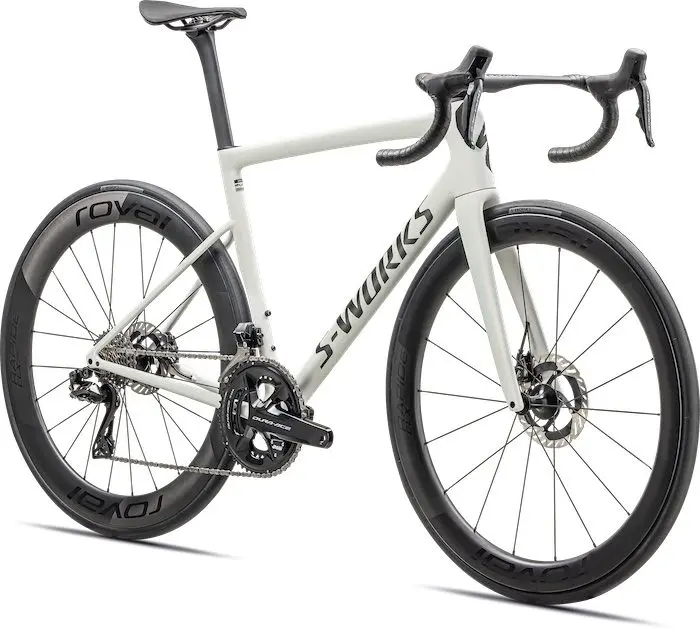
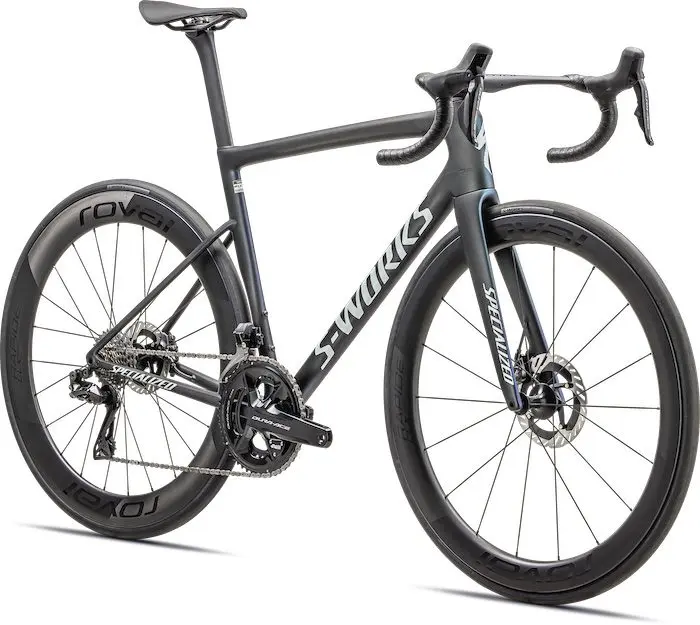
S-Works Di2
S-Works Tarmac SL8 FACT 12r Carbon frame
Shimano Dura-Ace 12-speed groupset
Roval Rapide CLX II wheels
Roval Rapide cockpit
Weight: 6.6 kg
Price: €14,000
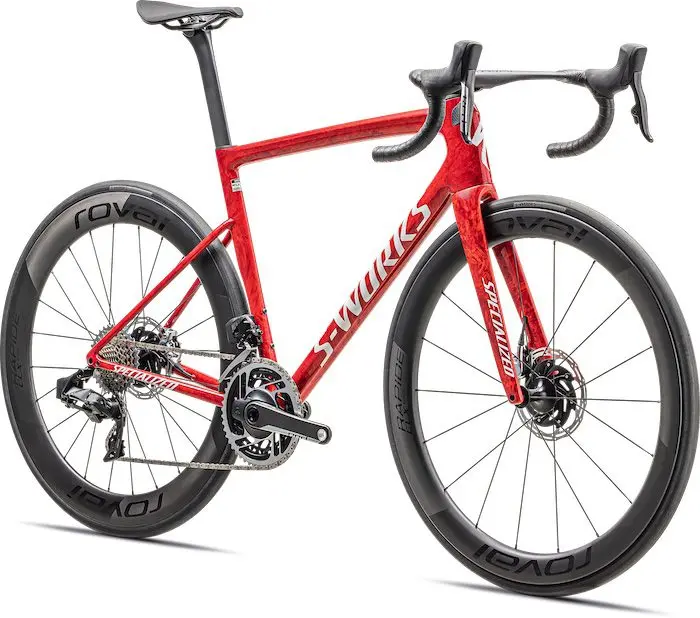
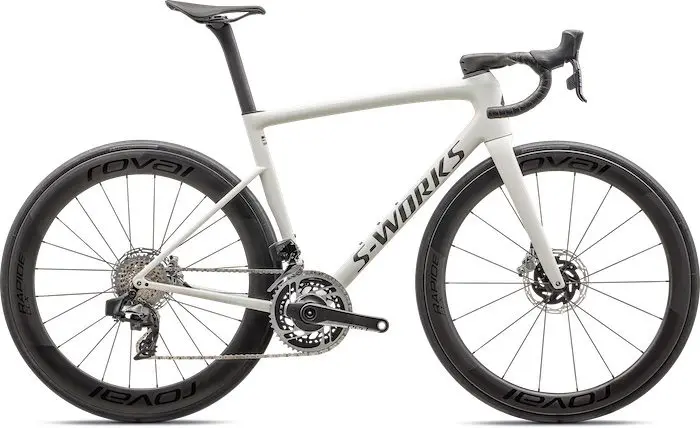
S-Works eTap
S-Works Tarmac SL8 FACT 12r Carbon frame
Sram Red eTap AXS 12-speed groupset
Roval Rapide CLX II wheels
Roval Rapide cockpit
Weight: 6.8 kg
Price: €14,000
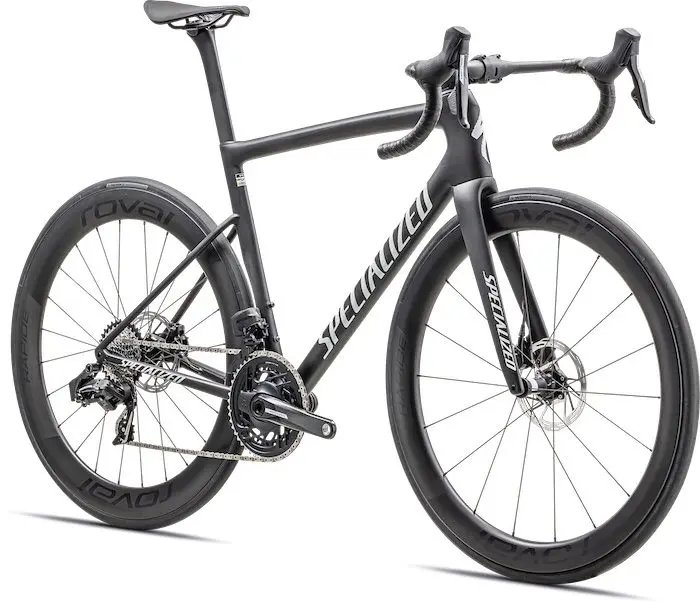
Pro eTap
Tarmac SL8 FACT 10r Carbon frame
Sram Force eTap AXS 12-speed groupset
Roval Rapide CL wheels
Roval Rapide handlebar
Weight: 7.4 kg
Price: €9,000
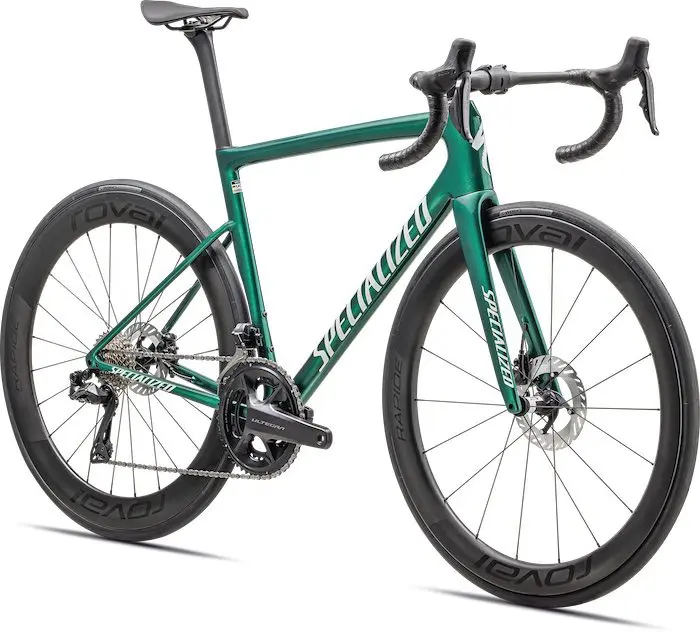
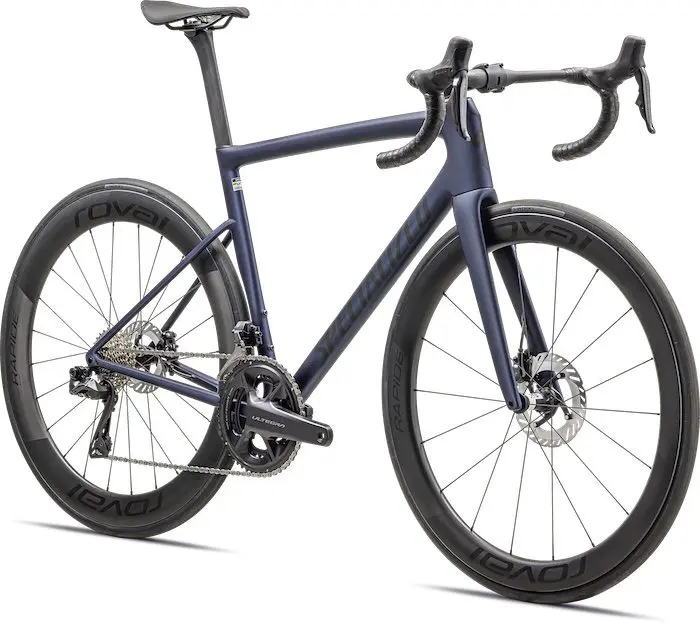
Pro Di2
Tarmac SL8 FACT 10r Carbon frame
Shimano Ultegra Di2 12-speed groupset
Roval Rapide CL wheels
Roval Rapide handlebar
Weight: 7.2 kg
Price: €9,000
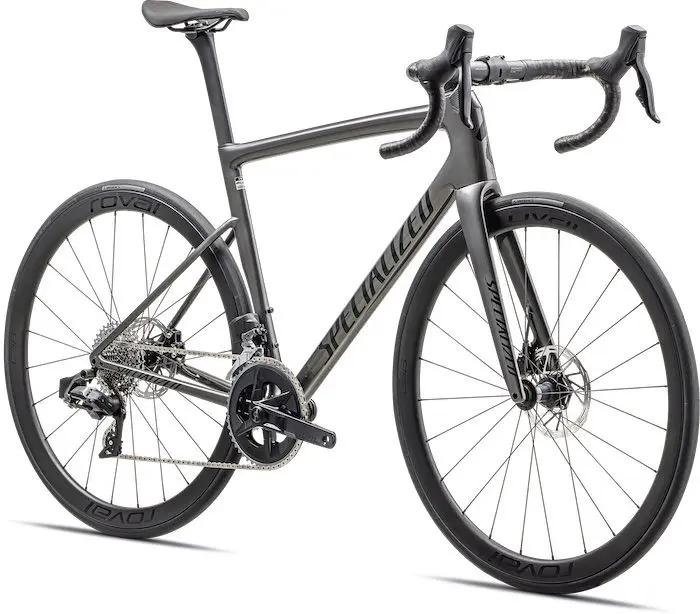
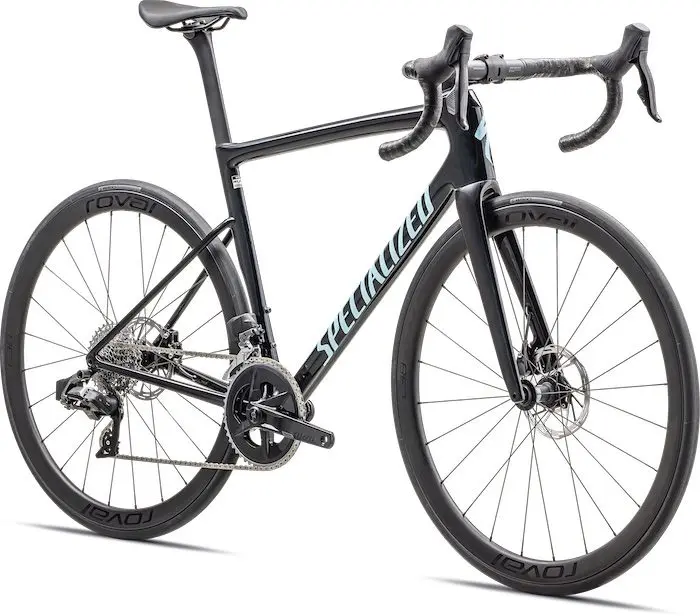
Expert eTap
Tarmac SL8 FACT 10r Carbon frame
Sram Rival eTap AXS 12-speed groupset
Roval C38 wheels
Specialized Expert Shallow handlebar
Weight: 7.7 kg
Price: €6,500
Ride quality and handling on the menu
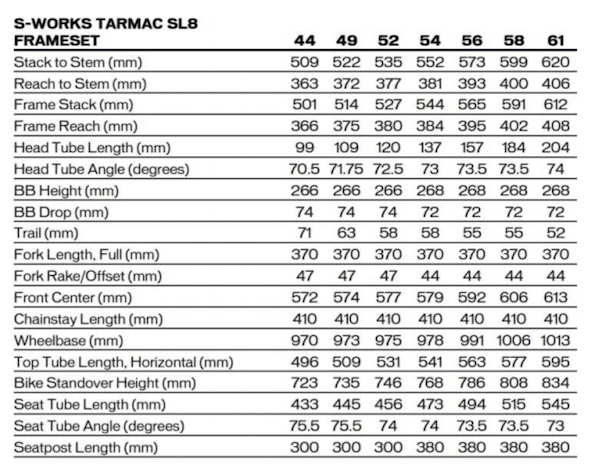
The Tarmac SL8 retains the same geometry as the Tarmac SL7, whether for the S-Works, Pro, or Expert versions, meaning it maintains the same handling and precision. It is also still compatible with 32mm tires. However, by improving the stiffness-to-weight ratio by 33%, the brand claims to have further optimized the bike’s ride qualities. While the power transfer and precision zones are stiffer in the saddle than on the SL7, Specialized claims the Tarmac SL8 is 6% more compliant, thanks to what was learned from the Aethos.
Thanks to the comprehensive data acquisition on the forces exerted on each part of the frame during real-world testing, the Tarmac SL8 has been designed to offer the same behavior, regardless of the chosen size among the seven available, for an optimal balance of stiffness, weight, and dynamic quality for all sizes.
Ever more exciting colors
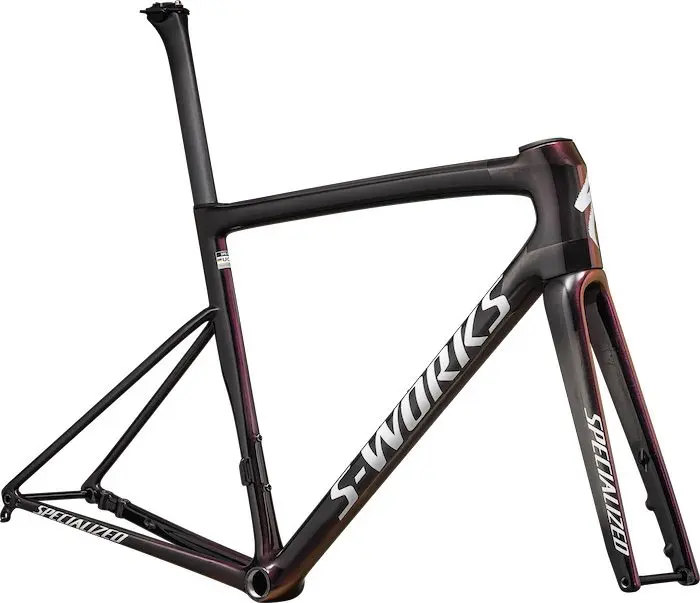
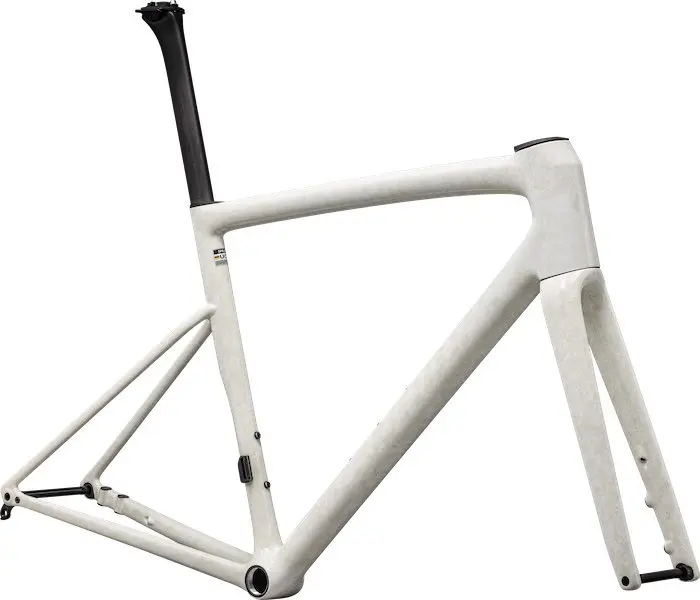
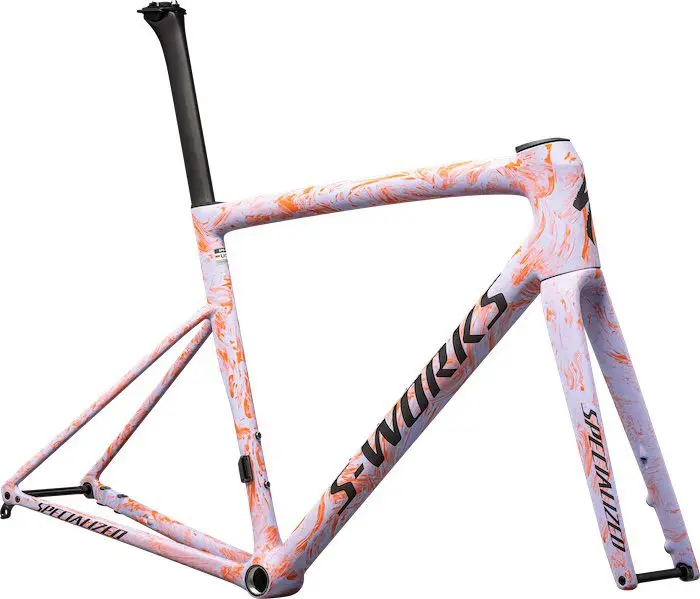
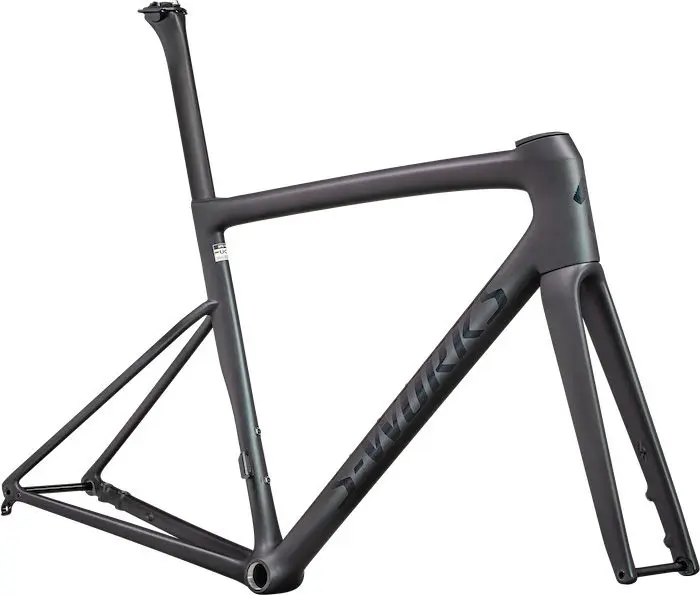
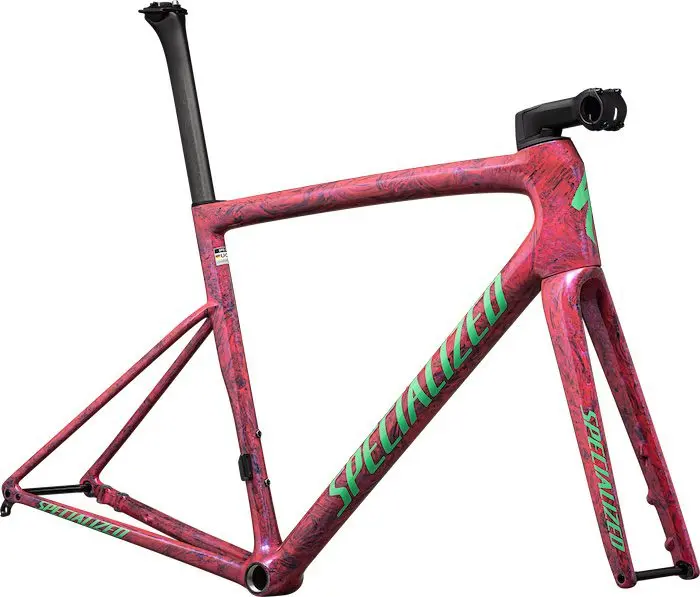
Specialized has developed new techniques and pigments to create these effects with as little paint – or added weight – as possible. The Strata Red finish, for example, uses very little paint to create a sense of movement with a beautiful texture. Premium pigments are used to achieve as much color as possible, while remaining very light thanks to the quality of the material, the placement of the pigment, and the raw carbon base.
In addition to the colors offered on complete bikes, Specialized is launching S-Works and Pro framesets, priced at €5500 and €4000. Please note that not all colors offered on complete bikes are available in France as framesets.
In a few days, you will find the rest of this article with the first exclusive test of this machine already used by Remco Evenepoel, Kasper Asgreen, Julian Alaphilippe, Peter Sagan and Sam Bennett at the World Championships. Stay tuned!
(With CP)
=> SEE ALSO: All our New Products articles
Share the post "Specialized launches the new Tarmac SL8"