Share the post "NLP in Cycling"
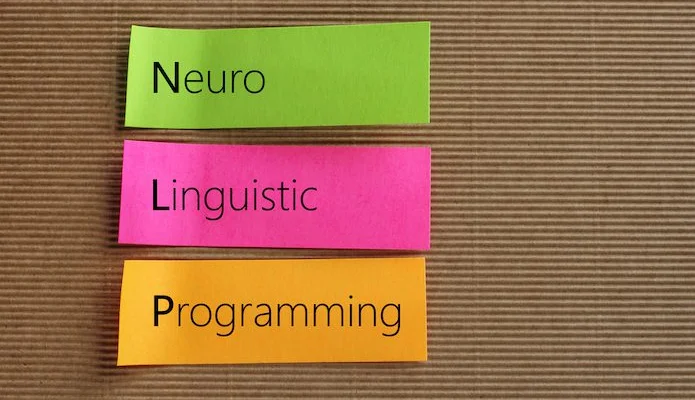
Are you a cyclist? Do you practice or have you practiced this sport in competition? Have you always dreamed of being able to read your competitors’ minds? To know their true physical state? What’s going on in their legs? When to attack them? Let’s discover together the user manual of our brain and focus for a few minutes on NLP, or Neuro-Linguistic Programming, to better take advantage of all situations where the human factor plays an important role.
By Jeff Tatard – Photos: Depositphotos.com / DR

We know that having a steel mind is essential for high-level athletes. And to be at the top of their game during competitions, some champions use NLP. But what does NLP have to do with sports, you might ask? In fact, NLP can be used to find that extra millimeter to perform. For this, different techniques exist, such as visualization, anchoring, or switching. Indeed, in sports, difficulty is part of daily life, and thanks to NLP, such as anchoring for example, the athlete will be able to recall a positive emotion or a constructive perception that will help them project themselves with powerful energy.
Some even have mental preparation coaches who give them these mental training techniques that help and refer to an emotion, which in turn refers to a physical state that allows them to surpass themselves and achieve beyond 100% of what seemed physiologically possible.
But NLP is not just for that… You can also learn to read the minds of your riding companions. To read their bodies and their legs. To know what’s going on and to decipher their state, or even to influence it without resorting to witchcraft. In short, NLP in sports also allows for a better understanding of human behavior.
7 questions to decipher your opponents
To quickly and easily determine what others are thinking and feeling in a given situation, we have identified seven questions to ask ourselves to break down the other person’s thoughts. This method will also help develop our emotional empathy, to better understand others.
1. Is your opponent hiding something from you?
The first and not least question to ask yourself to understand your opponent’s thoughts is whether they are hiding something from you. For this, there are different techniques ranging from a simple test attack to setting up an imaginary element, as well as other manipulation methods to get the truth.
2. Does your opponent like or dislike something?
Depending on certain race situations, it can be difficult to know what your opponent is really thinking (whether they like the terrain or if, on the contrary, it is completely unfavorable to them). To do this, there are analysis techniques (which sometimes require some training) to detect the feelings of others with micro-expressions to decipher.
3. Does your opponent really have confidence in themselves?
In a race, it’s sometimes a poker game. And you’d like to know what your opponents have in their heads (or in their legs)? Use their self-confidence gauge. Be able to analyze if your opponent believes in their chances of success or if their meta-message just wants to put on a show.
4. Behind appearances, what is really going on?
One of the possibilities when learning to read minds is to be able to know the truth behind appearances. How did your opponent’s preparation (really) go? Is your teammate (really) happy in your team? Here again, it’s about distilling methods to identify consistencies and contradictions within the same attitude.

5. Is your opponent interested in the same thing as you, or are you wasting your time?
There is nothing more unpleasant than realizing (too late) that you have wasted your time trying to convince or seduce someone who was completely unreceptive from the start. Whether in sports, love, or even at work, everything is in the eyes… especially the truth. And you can learn to decipher what’s going on in a person’s gaze.
6. Ally or saboteur? Which side is your opponent really on?
Is this person with you when you go on a breakaway, or are they taking advantage of your naivety to finish you off in the sprint? Once again, we offer you here to distill certain techniques to trap your opponents by judging their degree of involvement, but also their loyalty in collaboration.
7. Stable or violent? What is your opponent’s emotional profile?
The last question to ask yourself to learn to read your opponents’ minds: how to determine their emotional profiles. Stable or violent? Irritable or empathetic? In just two minutes, you can learn to detect emotional instability in others. There are undeniable signs.
Obviously, these seven questions are not the only ones in the process of learning to read your opponents’ minds. You also need to know the different decision-making processes by going beyond personality types and being able to determine people’s psychological profiles as quickly as possible.
Similarly, it seems just as important to understand the impact of self-confidence in this process and the pitfalls to avoid. Because your opponent might be so skilled in NLP that they give you misleading information to deceive you. But the good news is that if it’s possible in one direction, it’s also possible in the other. And so, thanks to all these elements and with a lot of practice, it is possible that you become the main player in the game. And that, like a mentalist, you manage to guide and influence the behavior of others so that the outcome is most systematically favorable to you. That’s what NLP brings to our sport…
=> SEE ALSO : All our Coaching articles
Share the post "NLP in Cycling"