Share the post "Review of the fi’zi:k Transiro Hydra Aeroweave"
Designed specifically for triathlon, the fi’zi:k Transiro Hydra Aeroweave shoes combine an ultra-breathable upper, the Italian brand’s stiffest carbon sole for efficient pedaling, and a unique Velcro strap closure. The goal: to help triathletes optimize their performance, particularly during the crucial transition phases, to lose as little time as possible. Is this the ideal shoe for the triathlon? We put it to the test on the road.
By Pierre-Maxime BRANCHE – Photos: ©3bikes.fr
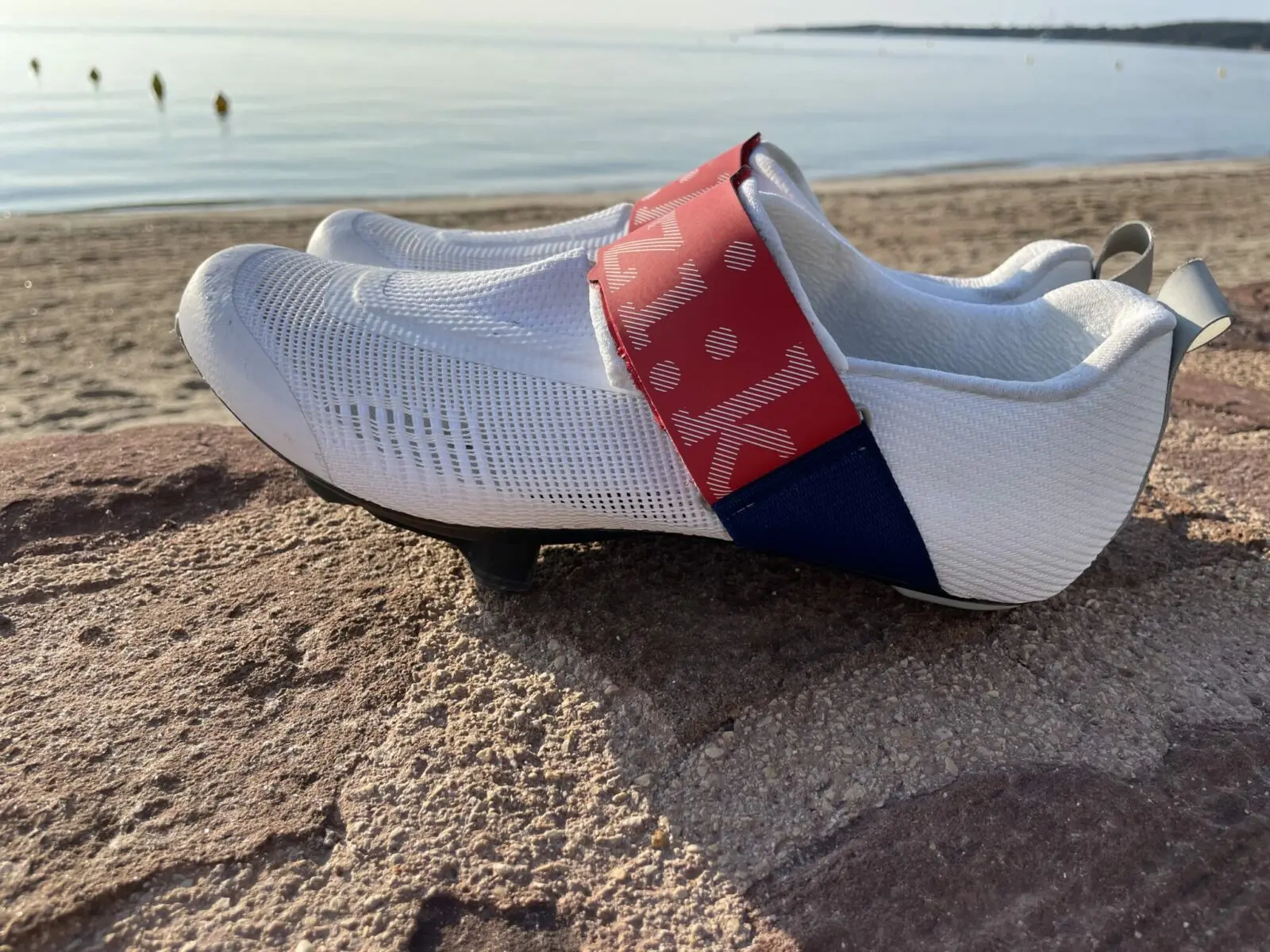
You may have already spotted them on the feet of British triathletes such as Georgia Taylor-Brown, Alex Yee, Jonathan Brownlee, Sophie Coldwell during rounds of the World Triathlon Championship Series, or even on the feet of Alistair Brownlee, the two-time Olympic champion (2012, 2016), in the Long Distance event. The fi’zi:k Transiro Hydra Aeroweave is designed to enhance high performance and has already claimed numerous podium finishes in triathlon.
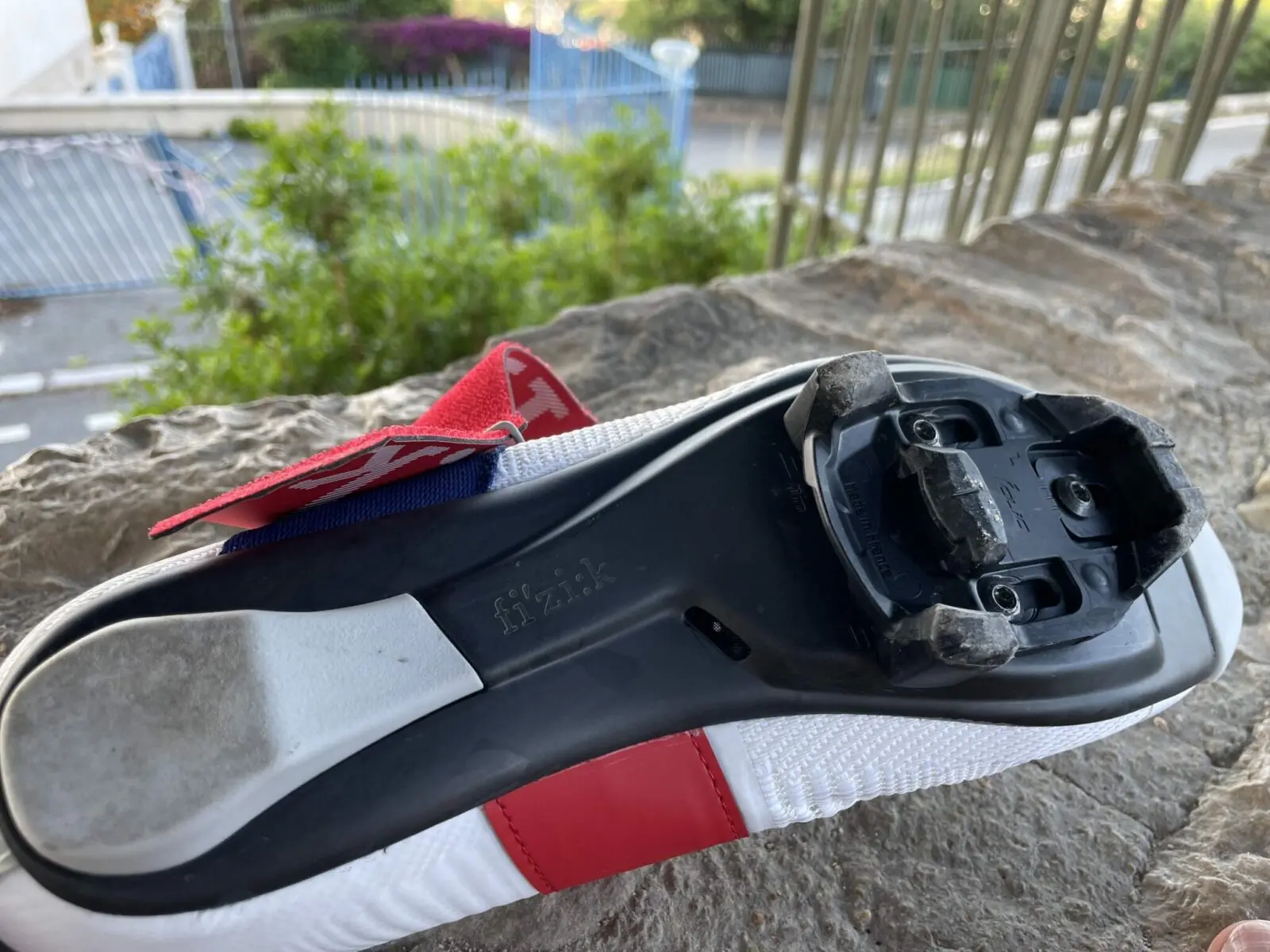
With this high-end model, the Italian brand offers a true triathlon shoe. It features the highly durable Aeroweave upper, made of nylon fibers and thermoplastic polymer filaments, which is both snug and cushioned, yet breathable and lightweight. Beneath the upper, fi’zi:k has incorporated its R2 sole made of unidirectional carbon fiber. It boasts a stiffness rating of 10/10 (according to the brand’s own standards) and remains very lightweight. It features a wide ventilation slit and deep internal channels to ensure airflow. Also practical is the classic marking system for precisely positioning your cleats. This is the most performance-oriented sole in the lineup.
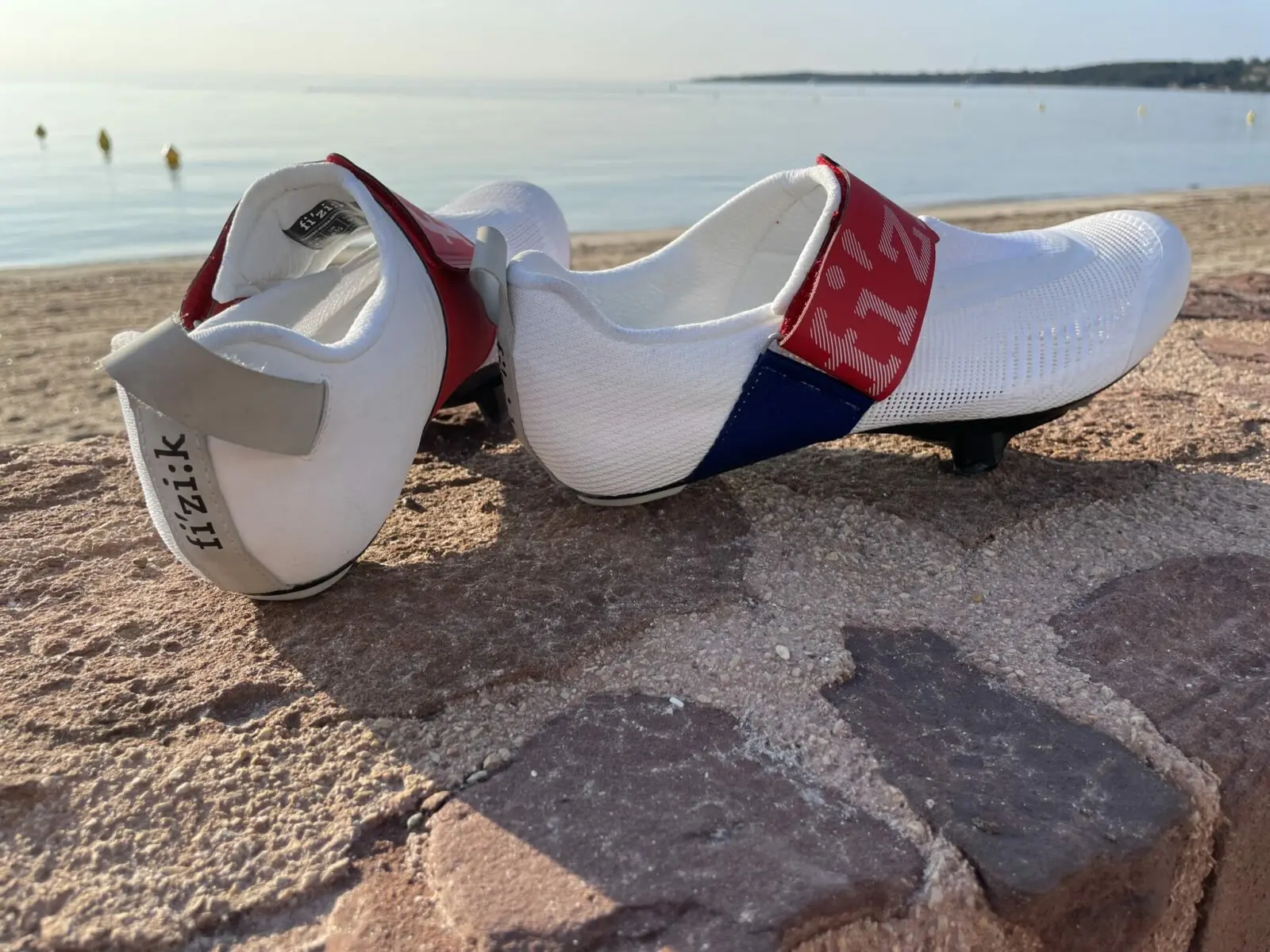
For triathlon and to enable quick transitions, fi’zi:k has opted for a closure system featuring a single wide Velcro strap. This strap is positioned fairly high on the instep and allows for a tight fit along the inner side of the foot. The metatarsals are left free—there’s no tightening there. Also worth noting is a large tab on the heel that makes it easy to grab with a finger, hold the shoe in place, and slide your foot in or out as needed during T1 and T2.
So how does this model—designed for triathlons, priced at €290, and weighing 225 g in size 42—perform in terms of comfort, stiffness, fit, and, of course, optimized transitions?
Put to the Test on the Road
What do we expect from triathlon shoes compared to standard road running shoes? First and foremost, they need to be easy to slip on; second, they need to be breathable so they dry quickly after the swim—due to wet feet—but also during the race; they need to be comfortable inside in case you’re riding without socks; and finally, they need to be efficient in terms of power transfer. Ultimately, there aren’t that many differences, since efficiency, comfort, and ventilation are qualities already sought after by road cyclists.
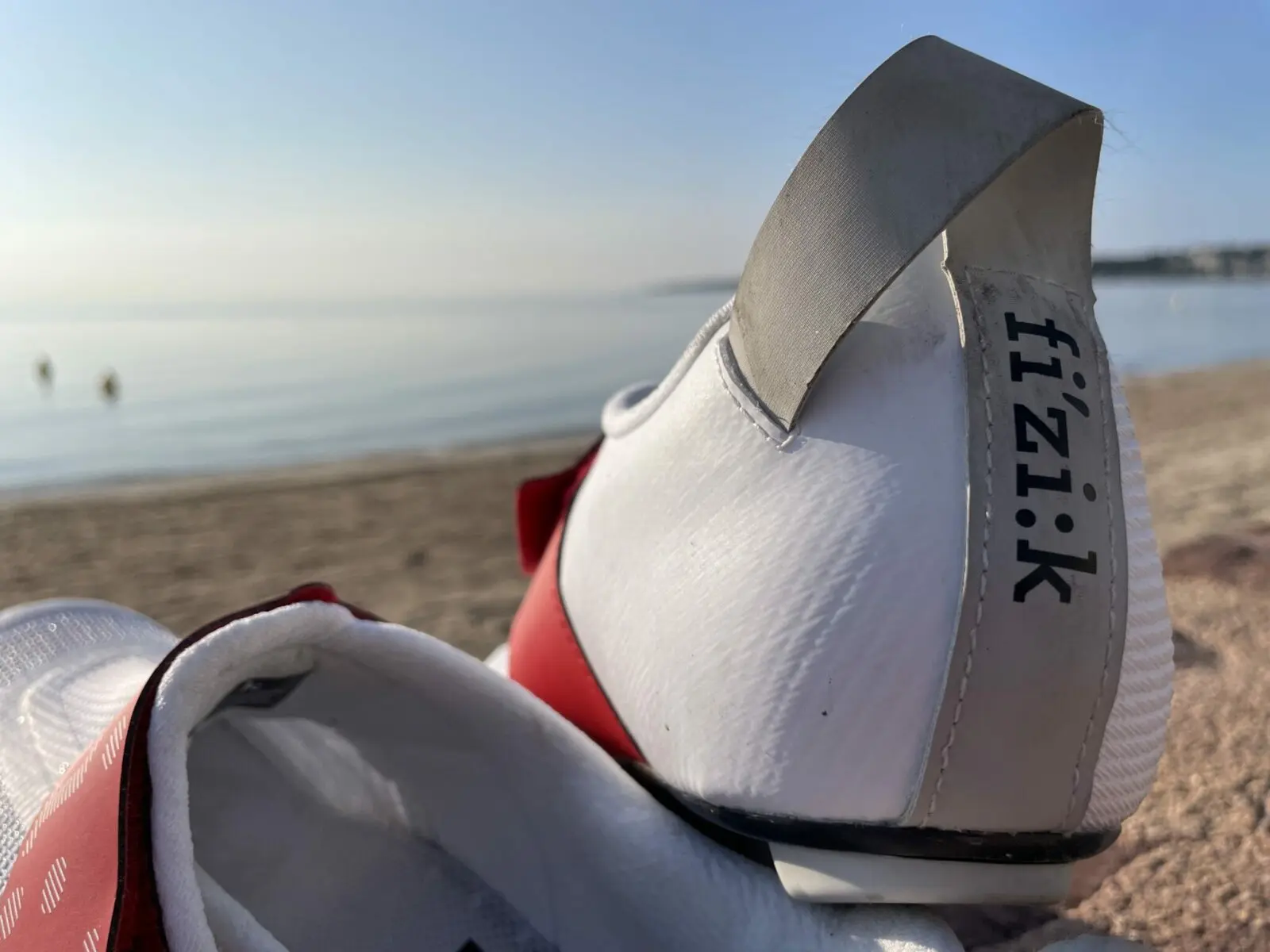
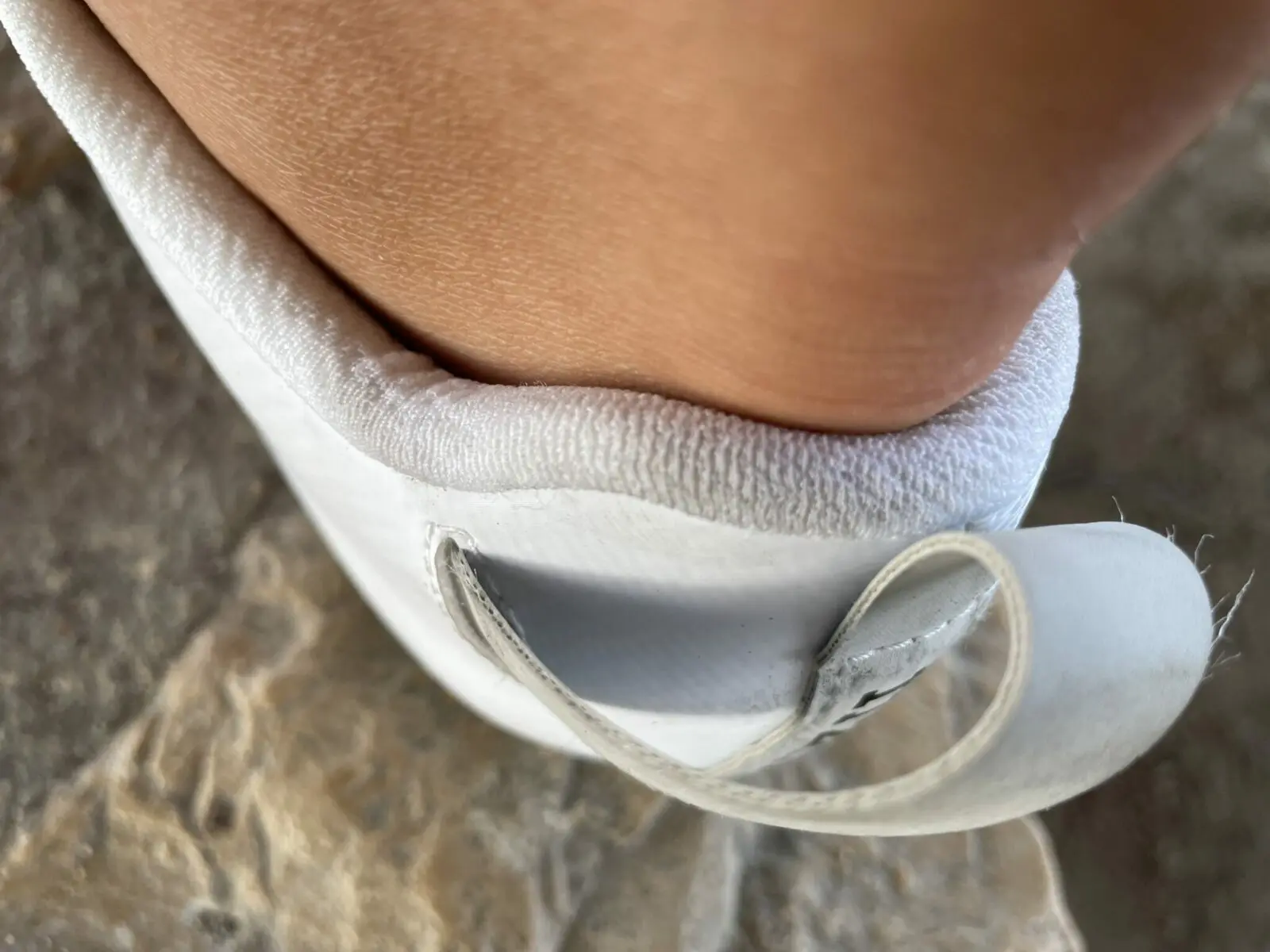
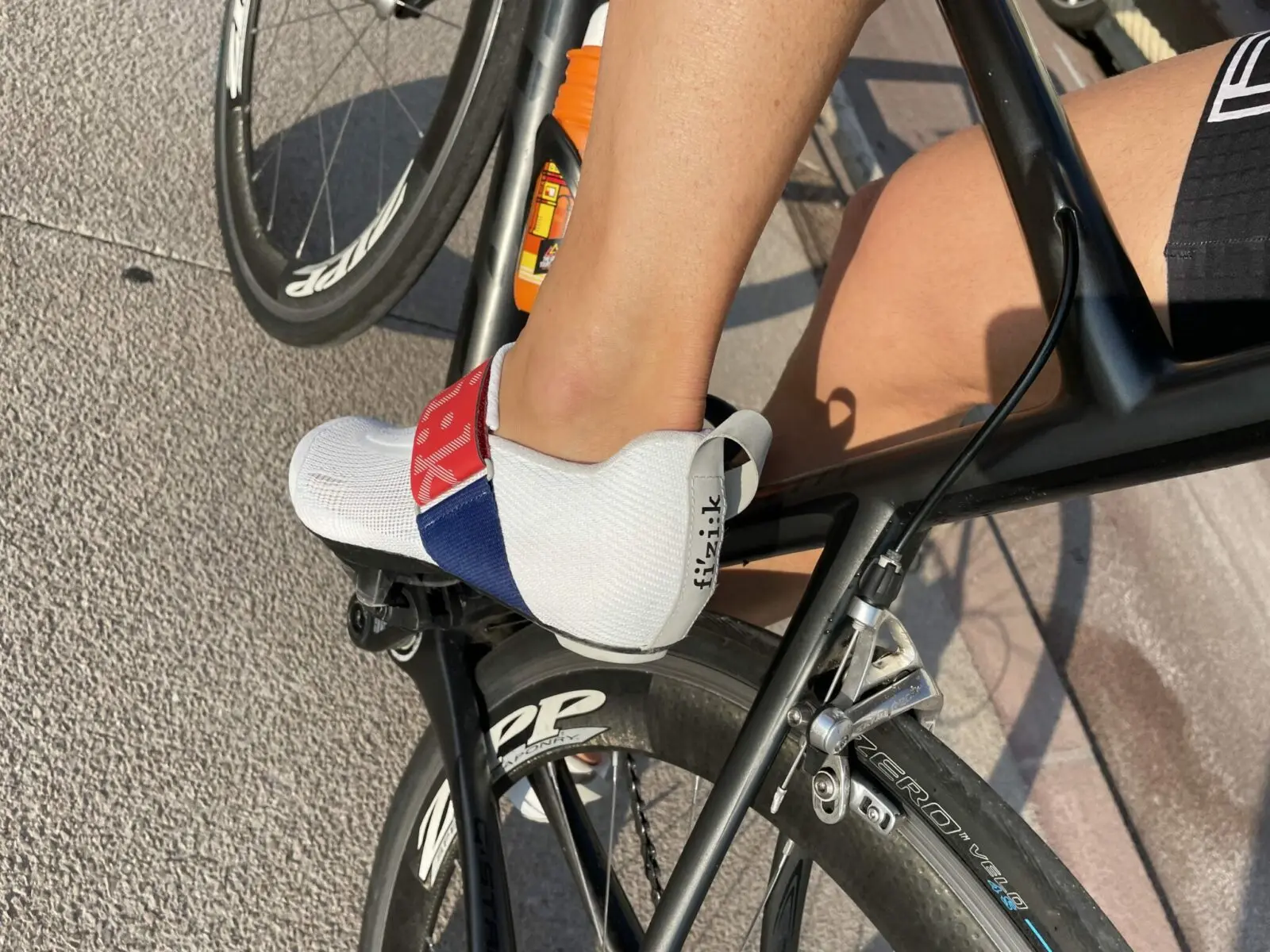
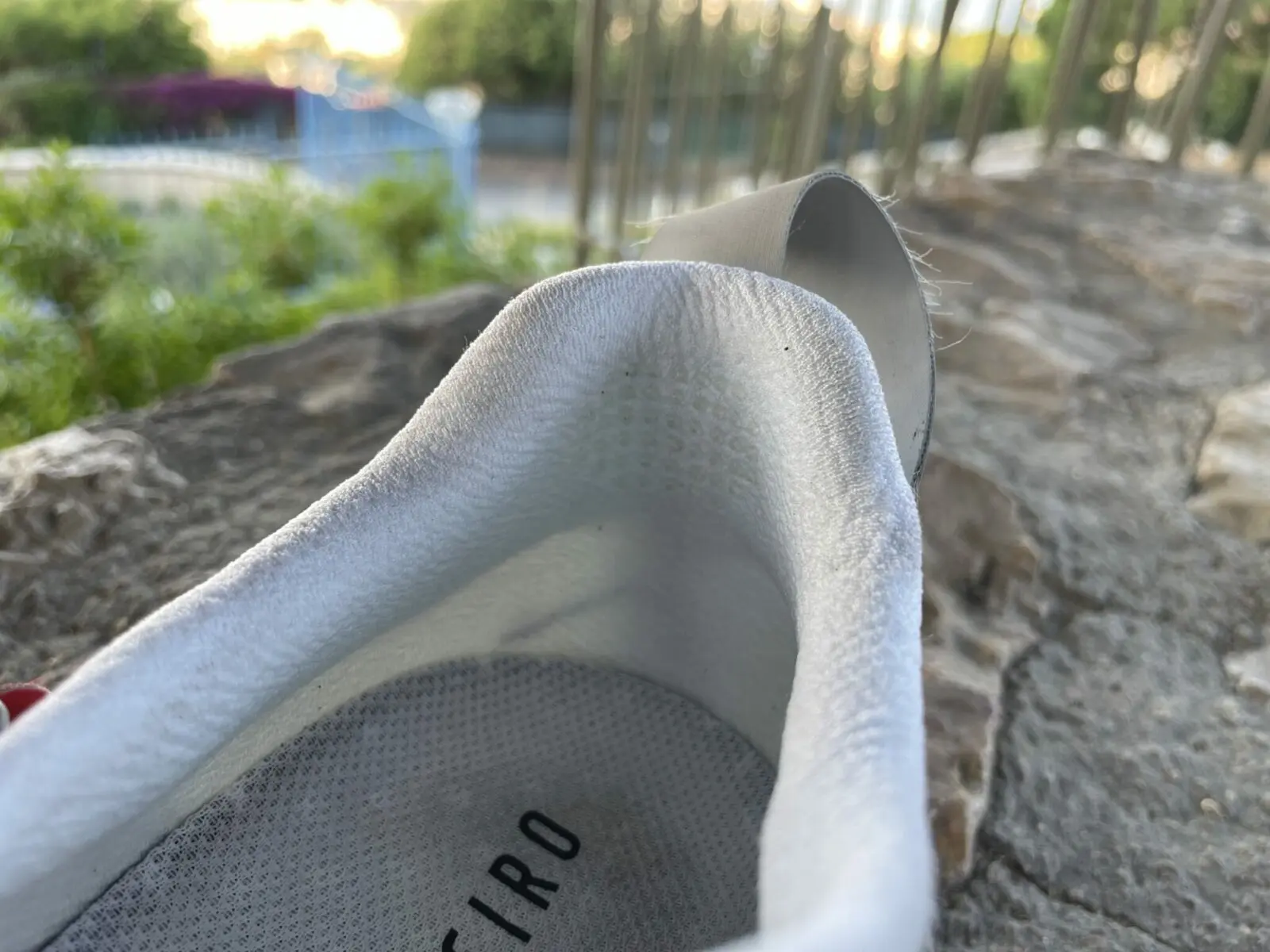
What we want most of all is convenience and speed when putting on the shoe to manage transitions as efficiently as possible—on long-distance runs and especially on short-distance runs, where every second counts. Here, our Transiro Hydra Aeroweave features the “essential” rear buckle. This is far from a minor detail, as it serves a dual purpose: first, it keeps your shoes upright when they’re clipped in so you can run alongside your bike in the transition zone (thus preventing you from either running with your cleats still in or watching your nice shoes scrape the pavement and spin around in all directions); second, it lets you easily grip your shoe with one finger to slide your foot in with a single motion. Thanks to its high position on the heel, its design to accommodate your finger, and its size and width, this tab fulfills its purpose perfectly. It’s very easy to grip and proves to be very sturdy when you pull hard on it if your foot gets a little stuck.
Maximized Opening
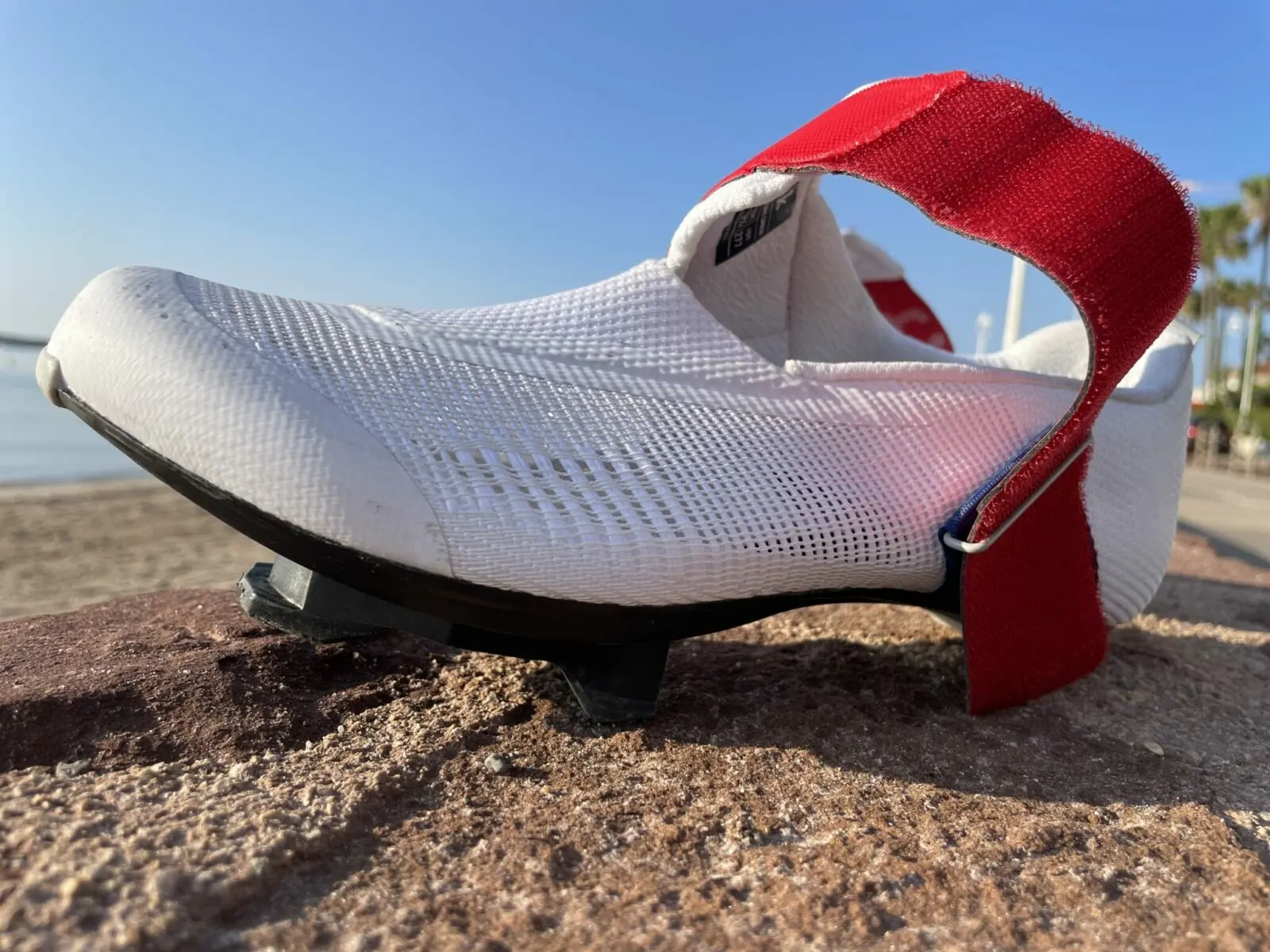
It seems almost unbelievable just how much room there is for your foot when the Velcro is fully opened. For starters, the upper’s design features a shortened structure that sits fairly low on the instep and is made of stretchy fabric that bridges the gap between the two sides of the foot. Then, when you fully open the Velcro, the opening is huge! Once you’ve grabbed the tab to stabilize the shoe, slipping your foot inside is a breeze. There’s plenty of room, and there are no obstructions (such as a Boa cable). Taking your foot out is just as simple. Once you grab the tongue and open the Velcro strap in a flash, your foot slips right out. Finally, the width of the upper and the absence of a Boa closure make it easy to place your foot flat on the shoe and pedal while waiting for T2.
Customizable Tightening and Loosening
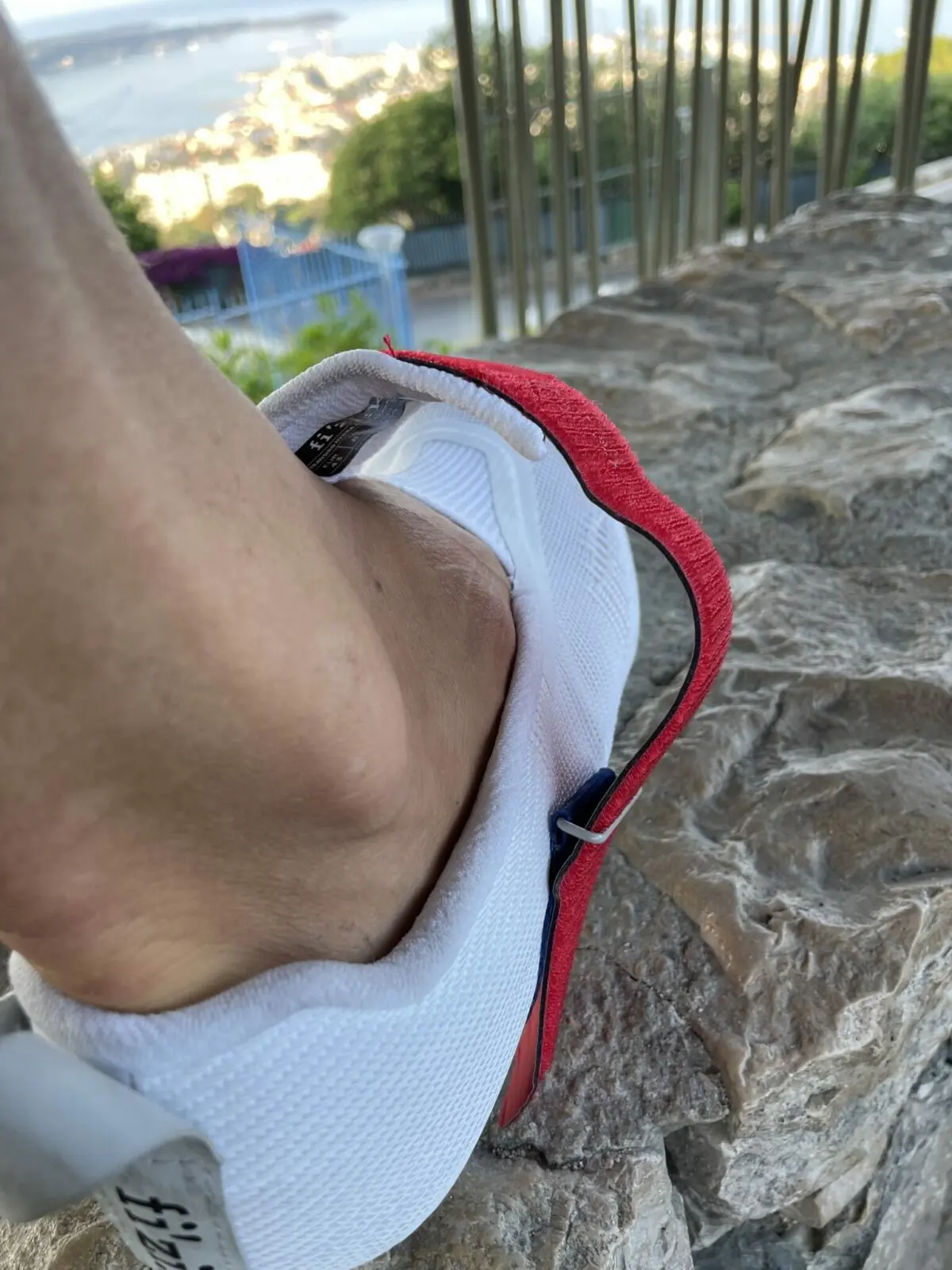
Once your foot is in, tightening—which consists of a single, wide Velcro strap—is ultra-fast. Best of all, it can be readjusted as needed in a second, depending on the terrain and race intensity. With this Velcro positioned very high up, your foot stays secure when you’re pushing hard on the flats and over hills. The same goes for accelerations. Your toes, meanwhile, have more freedom. It takes a little time to get used to compared to road shoes with double or even triple fastenings, but the feel is good and the loss of power transfer is—based on how it feels—minimal. The Velcro strap wraps around the foot snugly, extending quite far along the inside of the foot, which provides strong support.
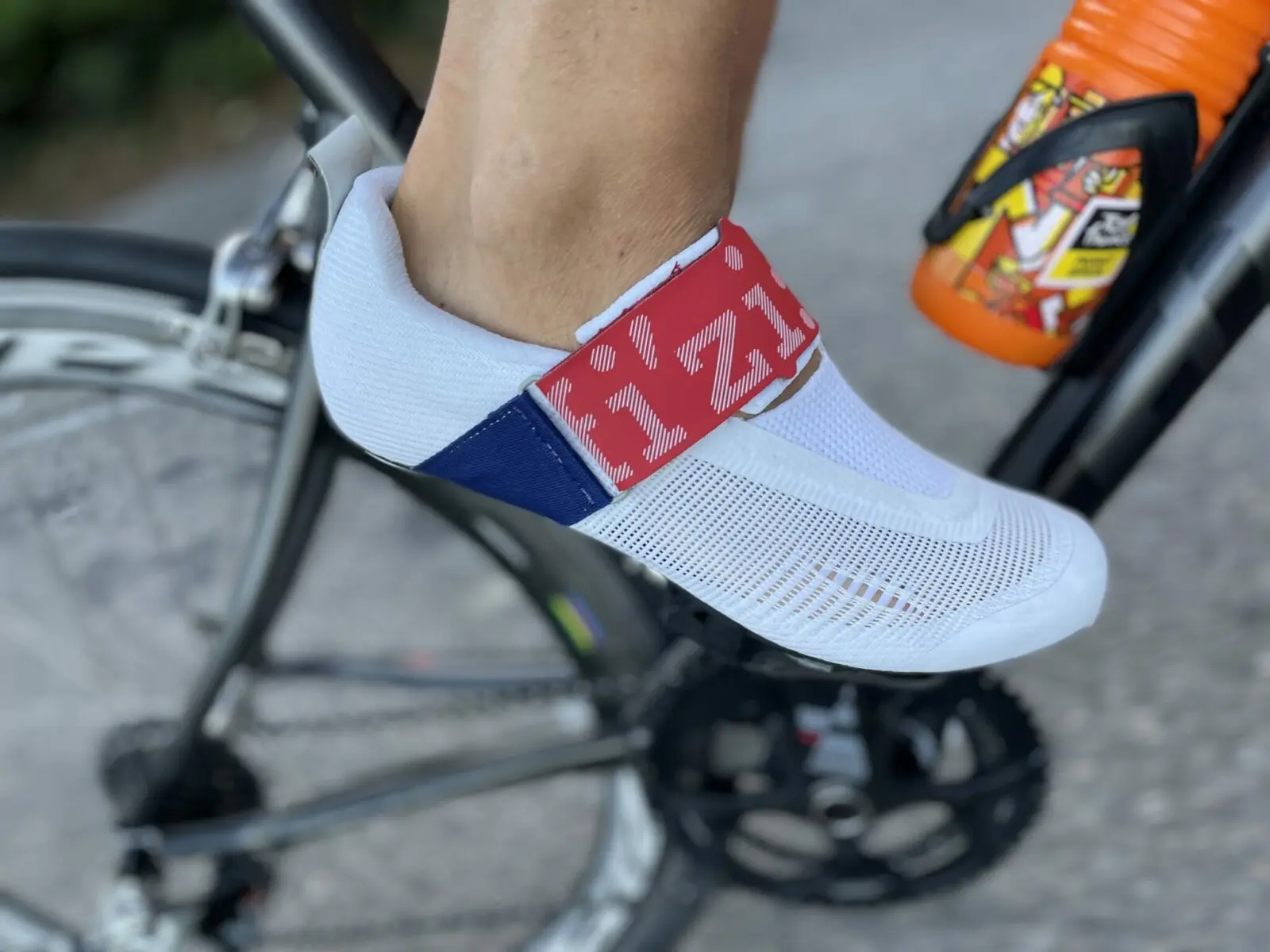
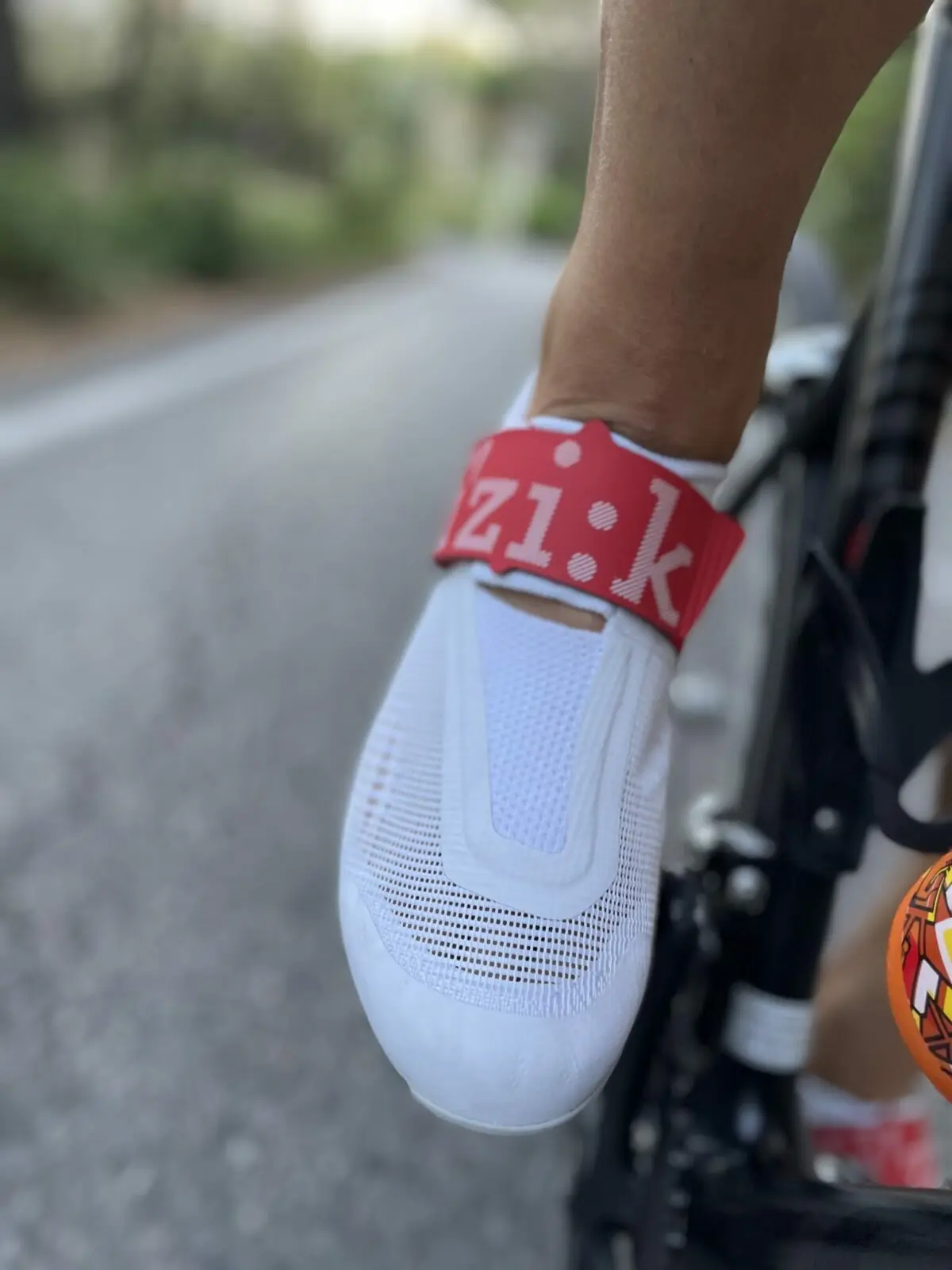
For steady, long-distance efforts, this deliberate design choice by fi’zi:k is perfect. Over shorter distances, however, it might be an issue in races involving drafting and on circuits. With frequent surges and accelerations, this fastening method may require a slight extra expenditure of energy. But it’s important to immediately counterbalance this: the ease and speed of fastening can, above all, save you precious seconds and allow you to find yourself at the front—in a breakaway, and thus in a steady-paced effort—rather than in the peloton. It’s also important to note that this single Velcro strap was requested by athletes (British, ed.), who are well aware that even the tiniest mistake—and thus a loss of time during the transition—can cost them dearly later in the race. That said, this strap system is comfortable and effective. Furthermore, it causes no pressure points or tension, which is yet another major plus.
A snug and comfortable fit
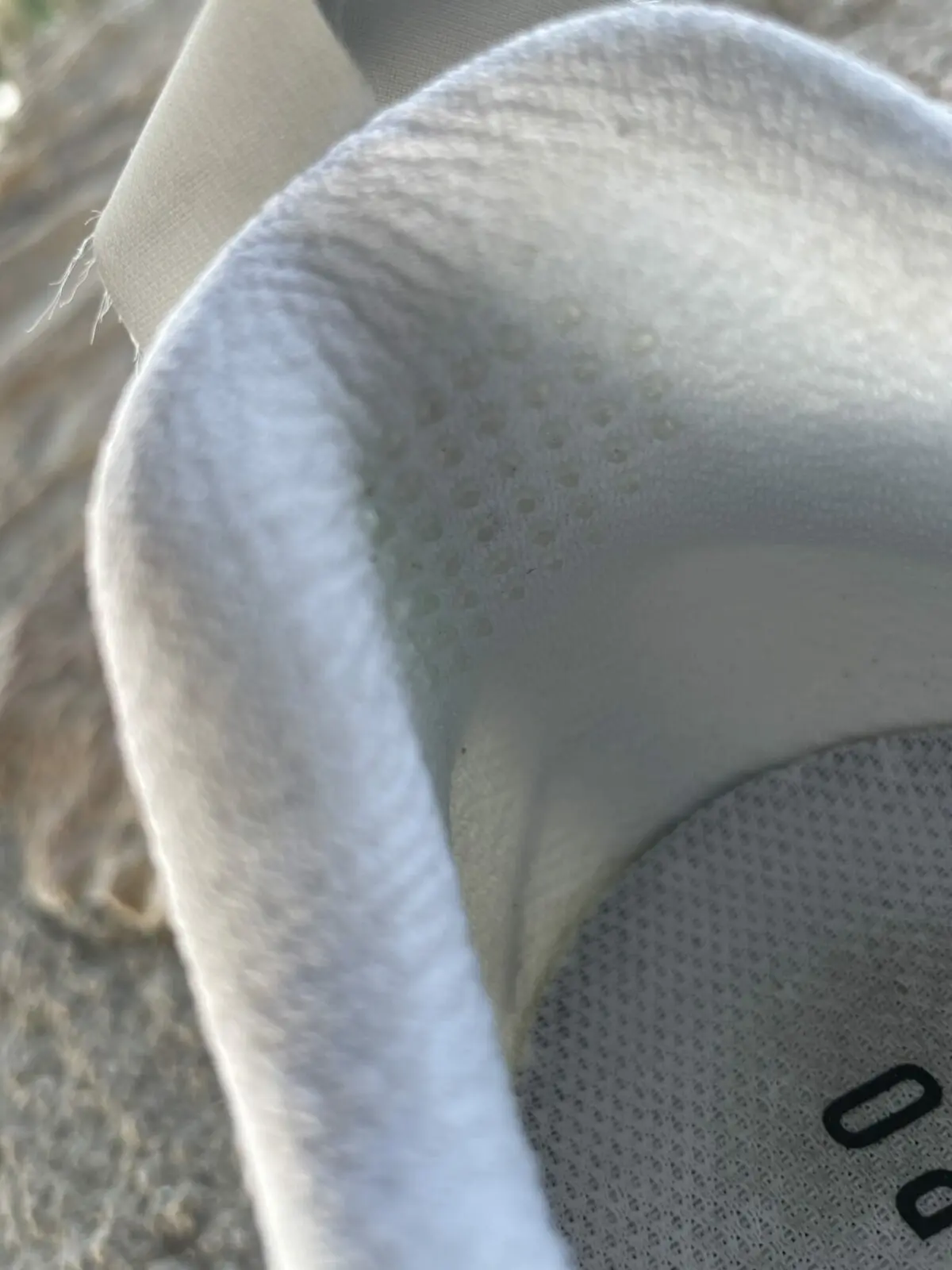
Inside the Transiro Hydra Aeroweave, the foot fits snugly, and once laced up, the fit provides firm support. At the back, the heel is snugly cradled and supported without being overly stiff, aided by a nice layer of padded fabric and an area featuring small silicone dots. The ankle is free and well-supported. The toes have plenty of room to move at the front of the shoe; the lacing makes the back of the shoe very ergonomic and gives the front a little more freedom—all without any pressure points and therefore no irritation. When you’re cycling without socks, over long distances, and in the heat, this is definitely a big plus.
Excellent power transfer thanks to the R2 carbon sole
At the intensities tested, the R2 carbon sole showed no flex. Even during multiple hill sprints from a standing start, it never faltered. We inevitably lack power compared to the best triathletes and road cyclists, but for the average rider, this sole clearly does the job in terms of energy return. With the excellent single-strap Velcro closure, the sole and upper form a single unit—whether you’re pushing or pulling while pedaling—without any loss of power in the transmission of force.
Multiple Ventilation Openings
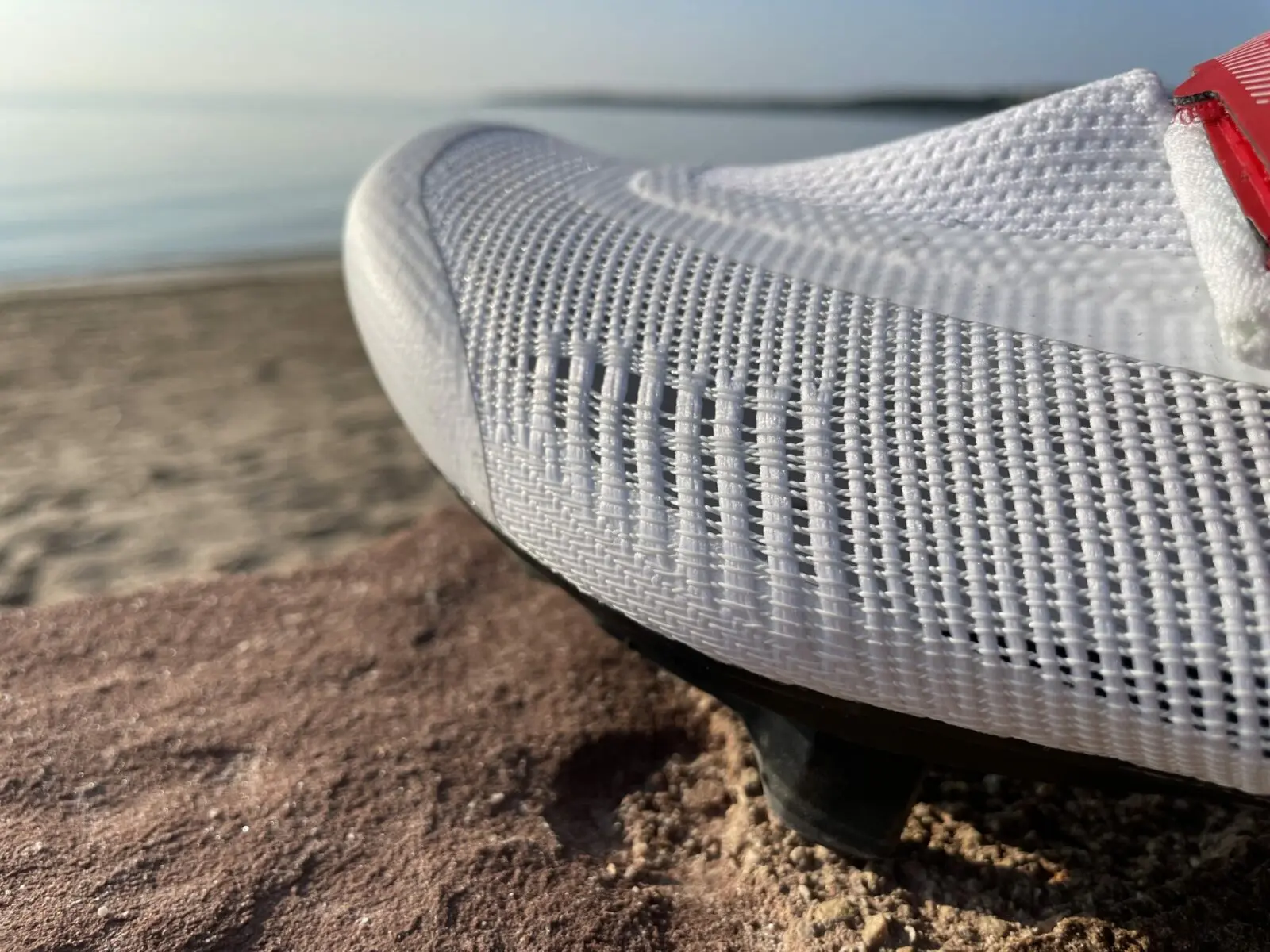
This is another major strength of the Transiro Hydra Aeroweave: foot ventilation, which ensures ultra-fast drying after T1 or when you splash water on yourself to cool down. fi’zi:k offers an ultra-breathable model here, with ventilation throughout the upper. The upper is meticulously designed. This is particularly true across the entire front of the upper, where you can see your socks and toes depending on whether you’re riding barefoot or not.
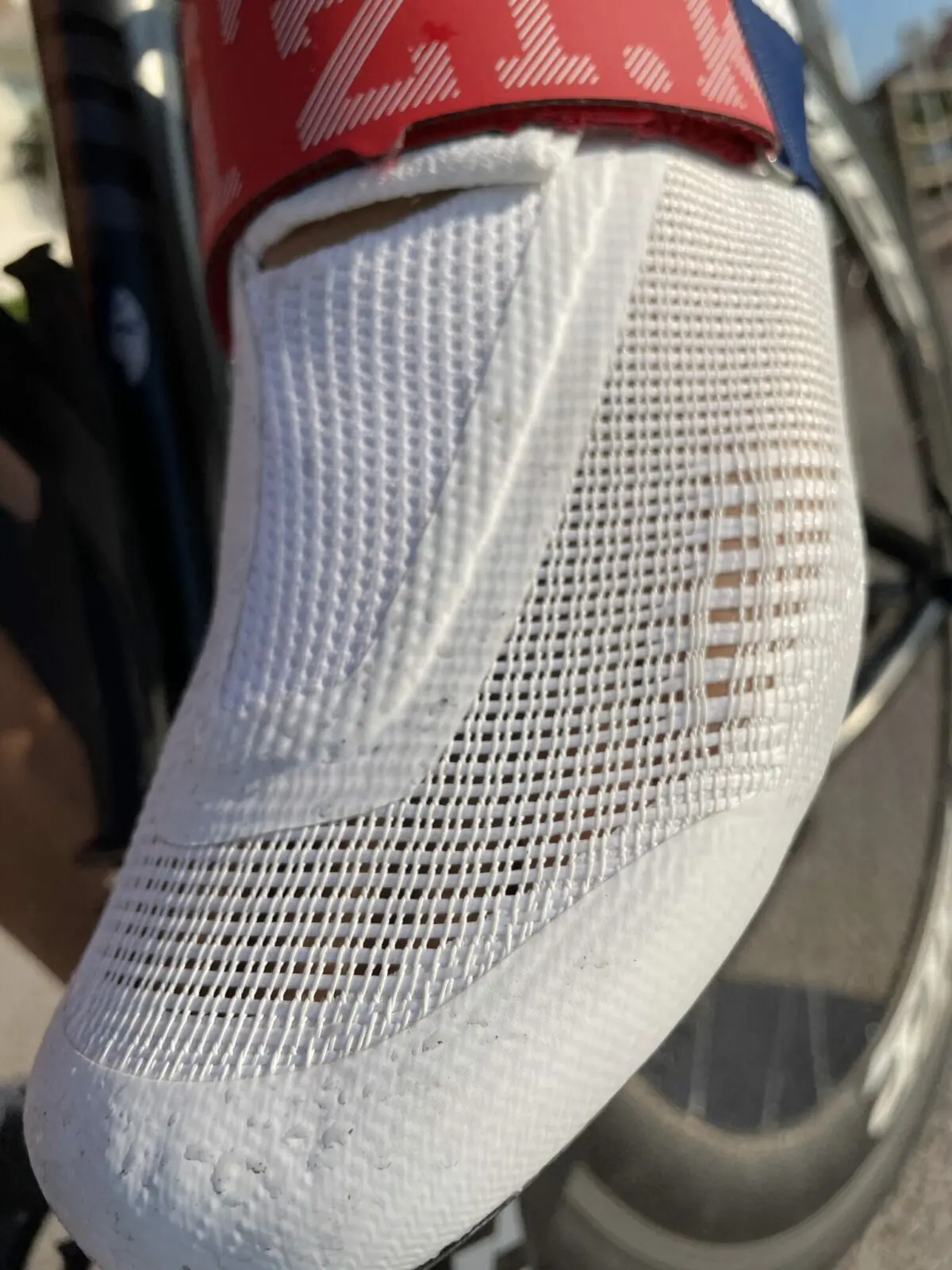
This is where the Aeroweave technology really shines, featuring high-strength yet highly breathable, comfortable, and durable mesh. It’s also visible on the side, on the outside of the fifth metatarsal, and on the inside under the big toe, above the arch of the foot. Only the heel area retains a more traditional mesh design. Similarly, several ventilation channels positioned on the R2 sole help ventilate the arch of the foot and regulate temperature. We deliberately poured half a water bottle onto each foot one morning before the sun had started to heat up: they dried very quickly.
The ideal shoes?
Ergonomic, highly breathable, easy to put on and take off, and with excellent energy return, we were won over by the feel of these Transiro Hydra Aeroweave shoes, not to mention the effective (more so than you might think), consistent, and (naturally very) snug fit. This model is perfectly suited for triathlon thanks to its many features designed to make transitions easier, and it’s ideal for all distances of the triathlon. Once on, these shoes are very comfortable and provide good support. Their weight of 225 grams in size 42 (a snug fit with room in the forefoot for the toes) is a definite plus, and the colorway we tested—with its pristine white, flamboyant red Velcro, and royal blue accent strip—won us over. The price—€290—is starting to add up, but fi’zi:k has delivered a very good product here that will provide the necessary performance for all triathletes, regardless of their skill level, discipline, or distance.
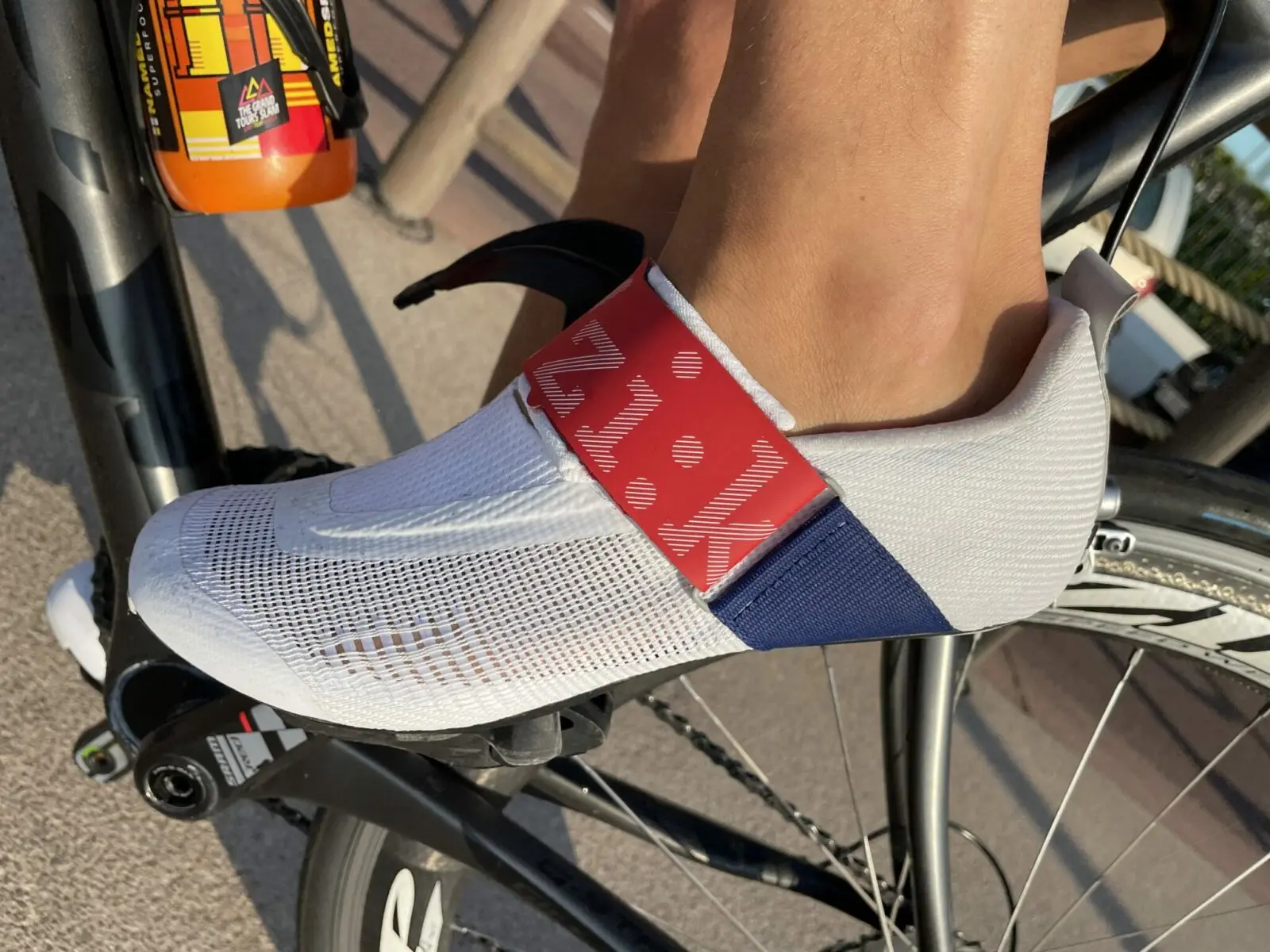
The fi’zi:k Transiro Hydra Aeroweave at a Glance Rating: ***** Pros: ventilation, easy entry, fit, R2 carbon sole, and weight Triathlon shoes. Aerowaeve 3D air mesh upper with highly breathable mesh construction. Unidirectional carbon R2 sole with a stiffness rating of 10/10. Single-strap Velcro closure. Colors: white/black or white/blue/red. Weight: 225 g (size 42). Sizes: 36 to 48 (with half sizes from 37 to 47). Price: €290 Contact: fi'zi:k |
=> SEE ALSO: All our Equipment articles
Share the post "Review of the fi’zi:k Transiro Hydra Aeroweave"