Share the post "Review of the fi’zi:k Vento Argo 00 Adaptive Saddle"
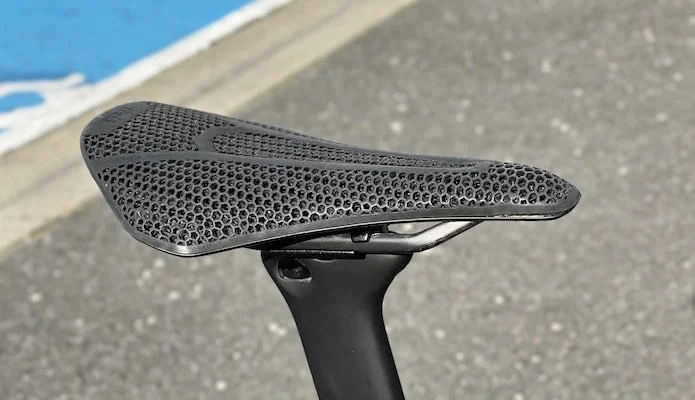
A few months after testing the fi’zi:k Vento Argo R3 Adaptive saddle, here’s our review of the new top-of-the-line version of this model, which had thoroughly won us over with its comfort, shape, and 3D-printed Adaptive technology. The Vento Argo 00 Adaptive follows the same formula, but with a carbon shell and frame to reduce weight. Comfort remains excellent—at least for athletic use. By Guillaume Judas – Photos: ©3bikes.fr
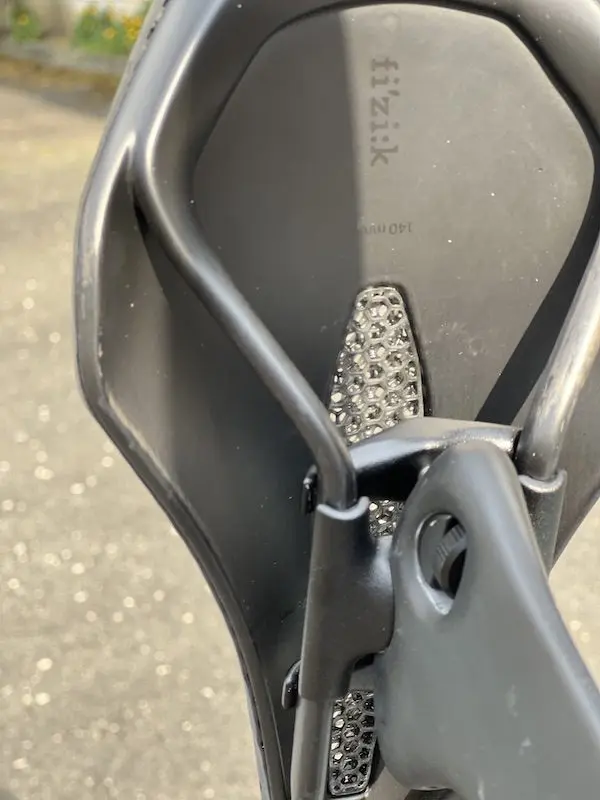
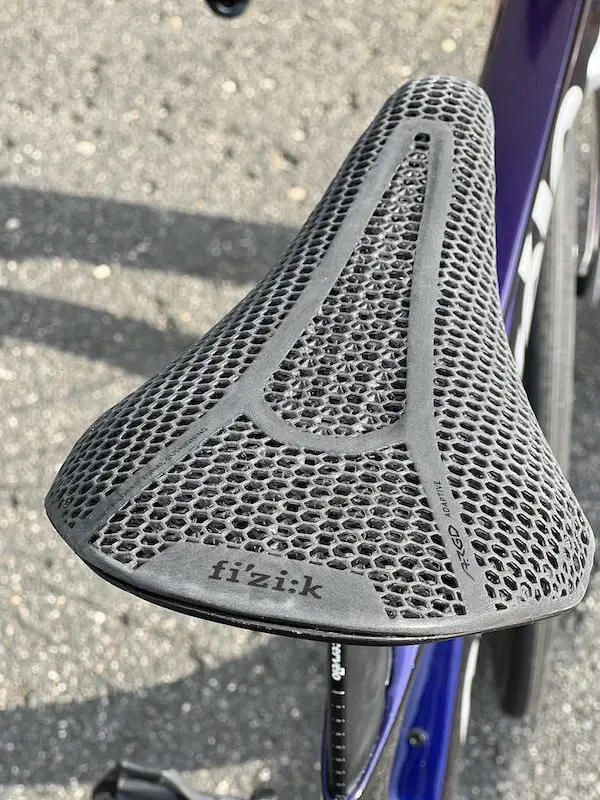 At €399, the fi’zi:k Vento Argo 00 Adaptive is very expensive. It sits at the top of the Vento Argo range, featuring 3D-printed padding similar to the R3 model we tested in July 2022 (€259), but this time with a high-modulus carbon shell and a Moebius monocoque carbon rail. This trimming saves about 50 grams, as our test sample tips the scales at 182 g versus 233 g for the previously tested R3 model, This is with the same width of 140 mm, although the saddle is also available with a 150 mm width. The Vento Argo Adaptive is also available in an R1 version (€299), with the same shell as the R3 and carbon rails like the 00.
 Otherwise, the fi'zi:k Vento Argo Adaptive is a short (but not too short) saddle, designed to promote comfort in an aggressive riding position by relieving pressure on the soft tissues of the crotch. It measures 265 mm in length, whereas a Specialized Power, for example, measures 240 mm. It differs from the more classic Vento Argo with a 3D-printed honeycomb cover featuring variable density, offering firmer support where it’s needed most and greater flexibility in sensitive areas. The central area, which replaces the full cutout found on the Vento Argo, is, for example, completely flexible and serves only to ensure stability while pedaling.
The carbon rails on the Vento Argo 00 Adaptive help reduce weight, but they are oval-shaped with dimensions of 7×10 mm, which can pose compatibility issues depending on the bike and seatpost used. In fact, most other high-end saddles on the market use 7×9 mm carbon rails. 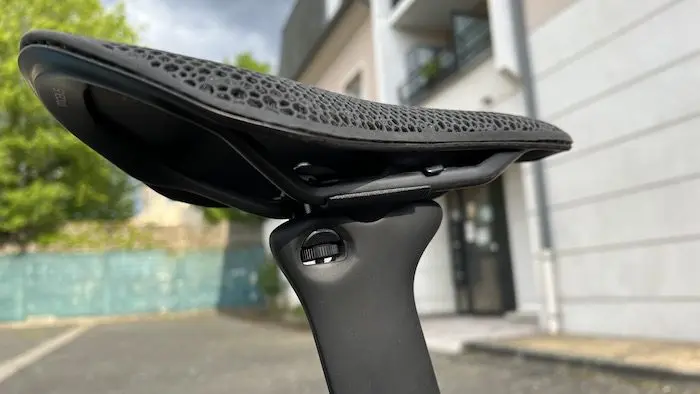 The Vento is a saddle with a barely noticeable dip—it’s almost flat—and thus offers plenty of freedom to shift your position along its entire length, depending on the type of effort. When dialling in saddle setback, fi’zi:k suggests using the 75 mm width point—what the brand calls the “centre” of the saddle—which sits 114 mm from the nose. It’s also worth noting that at this reference width specified by the Italian brand, the distance between the rail and the top of the padding is only 43 mm—2.5 mm more than on the R3 Adaptive. It is therefore important to take this into account when adjusting the saddle height on the bike.
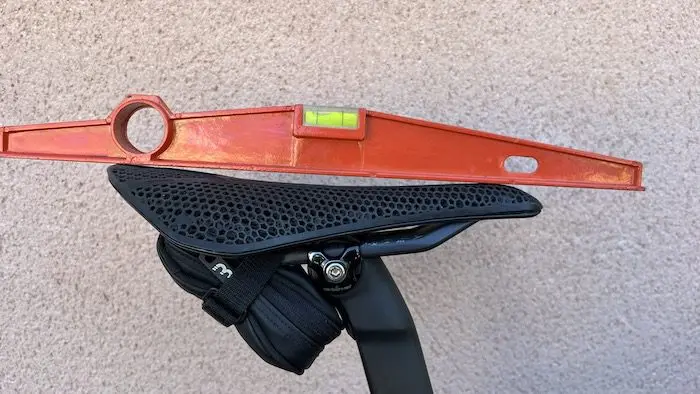
A Stiffer Shell but Comfort Remains a Priority Compared to the Vento R3, the 00’s carbon shell is lighter but also stiffer. In practical terms, the shell deforms less under the rider’s weight and in response to road bumps. In the middle of the saddle, at the central opening in the shell, you can see a slight flex under pressure, but the rear section, on the other hand, is very stiff. In the past, we’ve used fi’zi:k 00-series saddles, which sometimes caused discomfort due to the very minimalist padding over the carbon shell. But here, the 3D-printed cover offers a completely different feel, though it doesn’t quite match the level of cushioning found in Specialized Mirror saddles, for example. => SEE ALSO: Review of the Specialized S-Works Romin Evo saddle with Mirror
When you’re seated on the saddle, you really feel supported—much more so than with a “smooth” saddle—but without feeling any hard spots. The Adaptive concept—relatively thin but offering variable support depending on the zone, and above all perfectly customised by deforming exactly where needed (and not elsewhere)—also seems to eliminate the small differences in pressure between the right and left sides that you can sometimes feel in the saddle area. You feel better aligned on the saddle. You also don’t slide around on the saddle, which can sometimes be disorienting if you’re used to the opposite—for example, when shifting your weight slightly depending on your pace and the road’s profile. While riding, you don’t feel the rough, honeycomb texture of the surface at all, unless you’re used to sliding forward while pedaling or adopting an aggressive position with your torso very low. In use, you don’t notice any premature wear on your cycling shorts.
The saddle stays firm, and you don’t feel disconnected from the road’s imperfections. That firmness doesn’t create the “air cushion” effect you get with Specialized saddles that have the Mirror coating. The advantage here is that pedalling remains truly stable regardless of your pace or the gear ratio used. Comfort is still present, however, as all the micro-vibrations from the road are effectively absorbed, and the very design of the cover allows pressure to be ideally adapted to the contact zones.
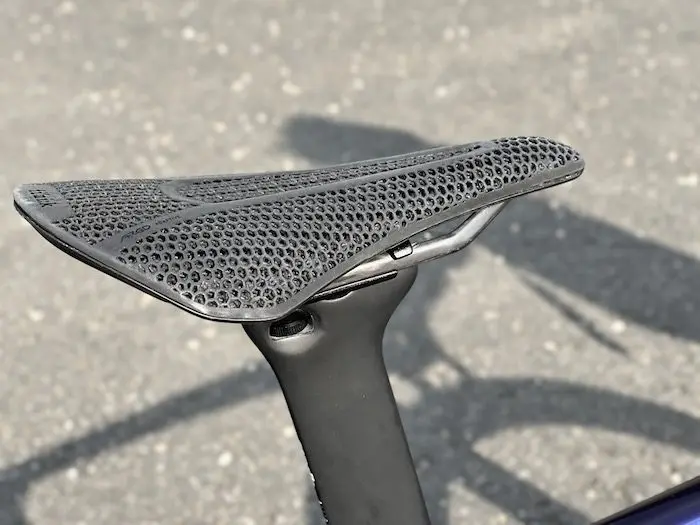
I wasn’t able to test the Vento Argo 00 on a gravel bike, and I’m not sure if this lightweight model with a stiff shell is the best choice for handling the repeated vibrations from an uneven and rough surface. Perhaps in this specific case, the Vento Argo R3 or R1, with a slightly more flexible shell, would be a better choice.
As for durability—since this is a frequently asked question—we haven’t encountered any issues with the Vento Argo R3 Adaptive over 11 months of use. There’s therefore no reason why the same wouldn’t hold true for the Vento Argo 00. Our Take on the fi’zi:k Vento Argo 00 Adaptive
It bears repeating: comfort on a saddle depends on many factors, starting with shape and dimensions. It just so happens that the Vento Argo fits my body perfectly, and I was able to set out on a 100 km ride the very first time I used it. Our love affair has continued ever since, whether on intense rides with sustained pedalling in higher gears or on more relaxed spins using the small chainring. That said, for a more contemplative ride—meaning with plenty of coasting and leaning heavily into the saddle—I don’t think this is the best model.
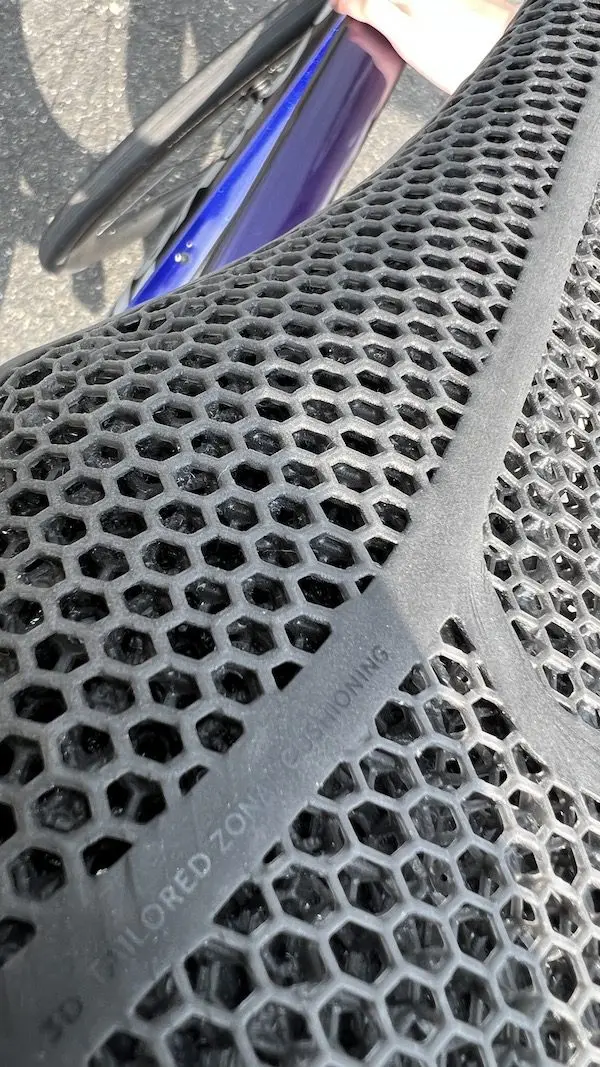
The firm shell is offset by a cover that promotes proper positioning and pelvic support, even giving the sensation that it compensates for slight differences in pressure points or positional asymmetries.
In short, I love this saddle, but in my opinion, it has one major drawback: the dimensions of the carbon rails fall outside industry standards. This can make it difficult to install on certain bikes.
The fi'zi:k Vento Argo 00 Adaptive at a glance… Rating: ***** Pros: comfort during athletic use, dimensions, finish, weight Cons: 7×10 carbon rails not compatible with all seatpost clamps, price Cover and padding: Carbon Digital Light Synthesis 3D-printing technology – Shell: Carbon – Rails: Carbon 7×10 mm – Length: 265 mm – Widths: 140 or 150 mm – Height at 75 mm width (seat depth): 43 mm – Weight: 182 g – Price: €399 Contact: fizik.com |
=> SEE ALSO: All our Equipment articles
Share the post "Review of the fi’zi:k Vento Argo 00 Adaptive Saddle"