Share the post "The all-new Scott Plasma RC"
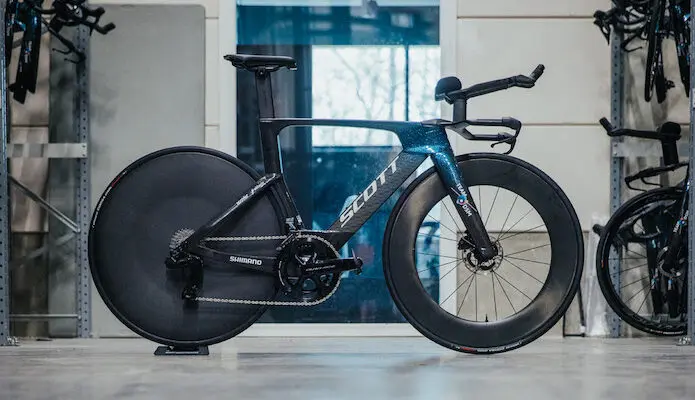
When it comes to designing a bike for pure speed, there’s no better exercise than a time trial bike. With the new Plasma RC TT, Scott had a simple goal: to offer the fastest bike the brand has ever made.
With minimal differences between competitors, time trialing requires every aspect of a bike dedicated to this discipline to be taken into account. Scott had a solid bike, but with advances in carbon design, technology, and modeling, the brand went back to the drawing board with a simple goal: to offer the fastest bike the brand has ever made. Scott wanted the Plasma RC TT to be the fastest disc-brake TT bike on the market.
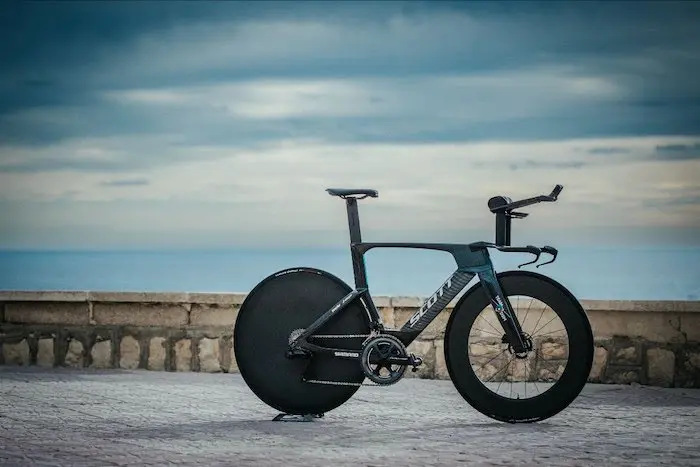
Before starting the project, Scott had open discussions with its WorldTour partners, Team DSM, and some athletes, to understand what is needed in a new time trial bike. The requirements were quite clear and set a framework from which the engineers and designers could begin to work. These requirements were:
- Lowest possible drag at 55 km/h
- More stability at high speed
- Maximum adjustability to fit all riders
- Ultimate integration
- Disc brakes
Lowest drag at 55 km/h
To achieve the most aerodynamic bike possible, Scott used computer modeling with Computational Fluid Dynamics to identify new designs. By iterating on each tube and each junction of the frame, the team identified several options to pursue. By entering the wind tunnel, the team was able to measure the real impact of the options.
Using a modular bike, the team, alongside aerodynamics experts Drag2Zero, was able to test different designs for each tube. This iterative process, although time-consuming, also allowed each design to be compared not only to the previous Plasma, but also to its competitors.
Improved riding stability
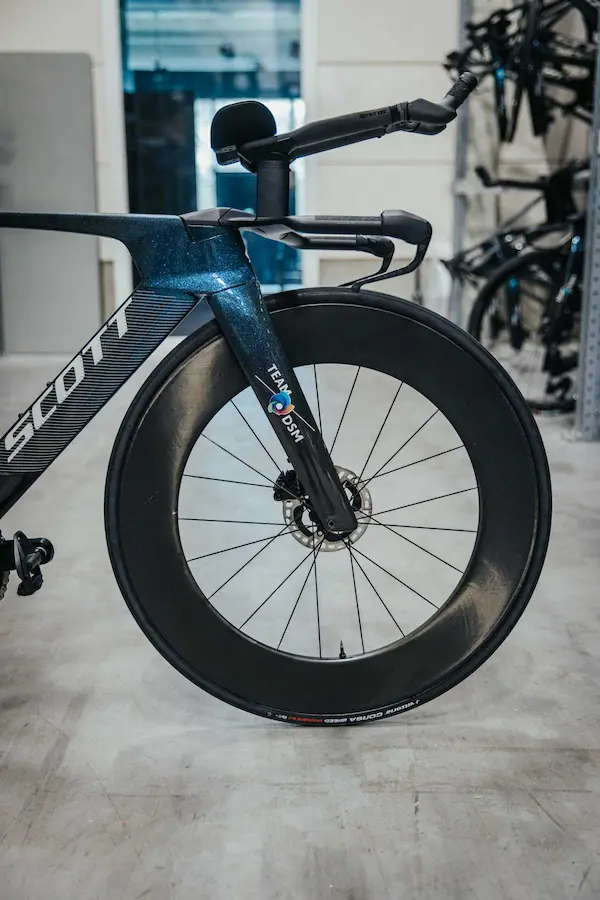
The team shortened the fork offset for a more stable ride. Stability allows the rider to maintain their aerodynamic position and thus offer less drag. While building a fast bike can start in the wind tunnel, it is equally important to consider the real-world effects of these decisions.
Integration
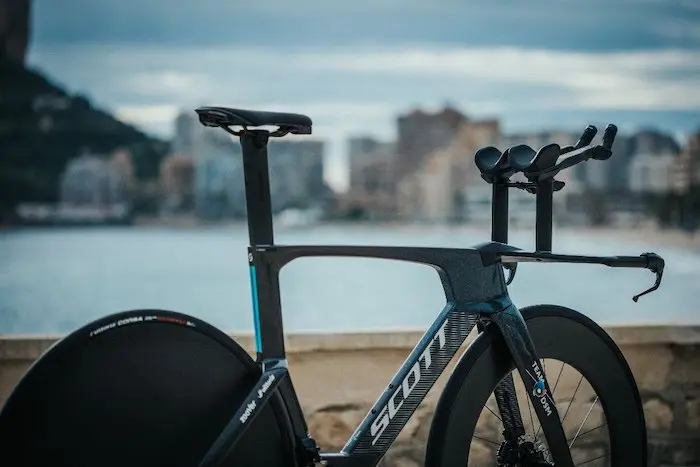
To minimize drag, Scott engineers created a patented design allowing cables to pass directly through the cockpit for a narrower head tube than before. This eliminates the need for cable clearance around the steerer tube but also allows for a smaller upper bearing. In addition, it allows for easy disassembly of the fork and cockpit, for travel for example, without having to disconnect the cables.
An innovative cockpit
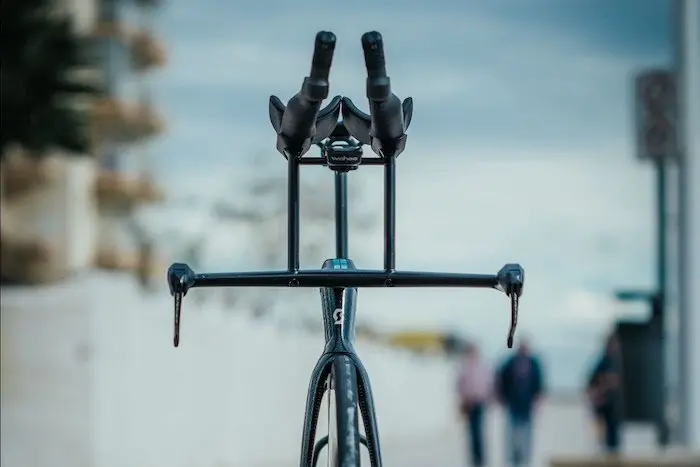
The design and engineering team paid particular attention to creating a system that will allow all types of cyclists to achieve an optimal position to offer low drag for the complete system: the rider and the bike. The adjustability integrated into the Plasma RC TT not only helps the cyclist find a perfect arm position to shield their body from the wind and be as aerodynamic as possible on the bike, but it is also crucial for placing the cyclist in a physiologically efficient position, to transmit maximum power while breathing well.
Ergonomics
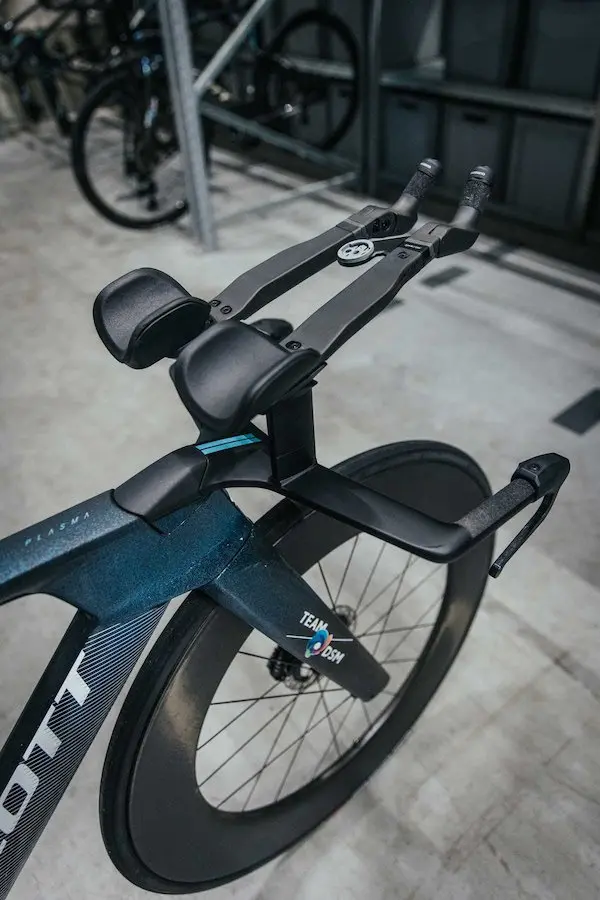
This was achieved when bike fit measurement points collected from the various DSM team programs (men, women, and U23) were incorporated into a 3D geometry file. Based on each rider’s data points, the optimal adjustment range was defined and the cockpit was designed accordingly. The new cockpit includes interchangeable and adjustable parts that offer a very high degree of adjustment across multiple axes, allowing riders to find the position on the bike that is not only the most aerodynamic but also the most ergonomic.
Syncros Creston iC TT
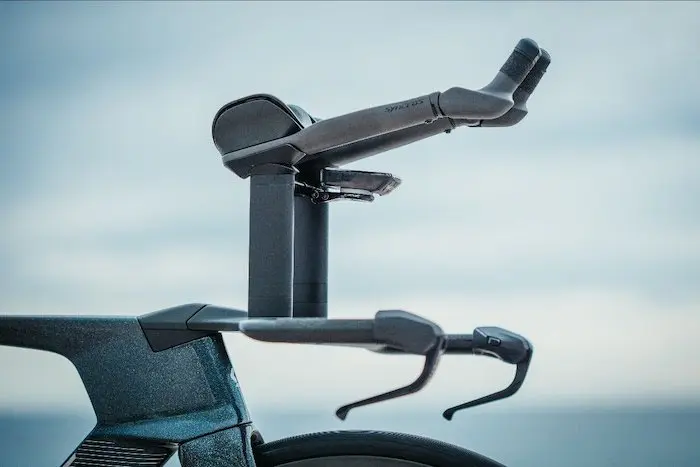
With maximum adaptability in mind, the brand created the Syncros Creston iC TT cockpit – the most adjustable integrated TT cockpit on the market. It features:
- Base bar available in three different sizes: 85, 105, and 125 mm for a perfect fit
- Adjustable mast height from 0 to 145 mm to accommodate pelvic and hip flexibility
- Vertical angle adjustment of the extensions from horizontal (0°) up to 15°
- Grip angle adjustable between 13 and 53° for optimal hand position
- Adjustable arm pad positioning to support an ideal ergonomic posture
- Length adjustment from 0 to 30 mm for different arm lengths and postures
- Lateral adjustment up to 5° of the extensions to adapt to hand distance
Lighter and faster than ever
When measuring the final prototype, it became clear that the new Plasma RC TT not only meets ambitious performance targets but actually exceeds them:
- The Plasma TT features a 12% weight reduction without sacrificing stiffness or aerodynamics compared to its predecessor.
- On a typical 40 km time trial course, the new bike is able to ride 33 seconds faster with the same power, compared to its previous model and measured in real conditions with a cyclist.
- The focus on geometry and real-world use means Scott has succeeded in delivering a stable and responsive bike.
Plasma RC TT frameset
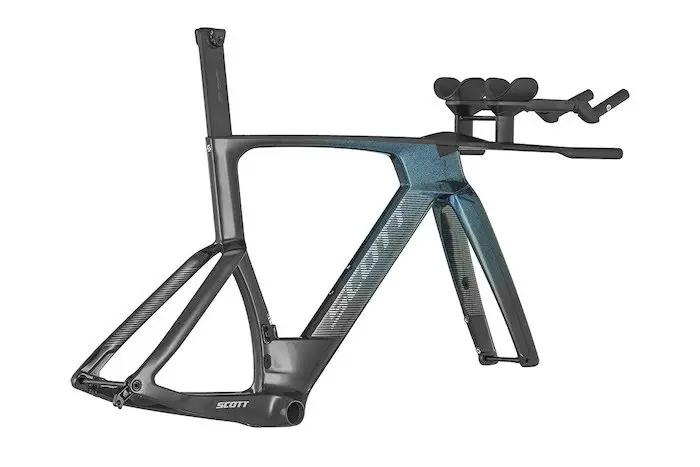
The Scott Plasma RC TT is available as a frameset in sizes S (49), M (54), and L (58), it is compatible with electronic shifting with a maximum tire clearance of 30 mm front and rear, and includes the Syncros Duncan SL Aero seatpost and the all-new Syncros Creston iC TT cockpit.
Recommended retail price: €7,999
More info: HERE
=> SEE ALSO: All our New Products articles
Share the post "The all-new Scott Plasma RC"