Share the post "Everything you need to know about blood tests for athletes"
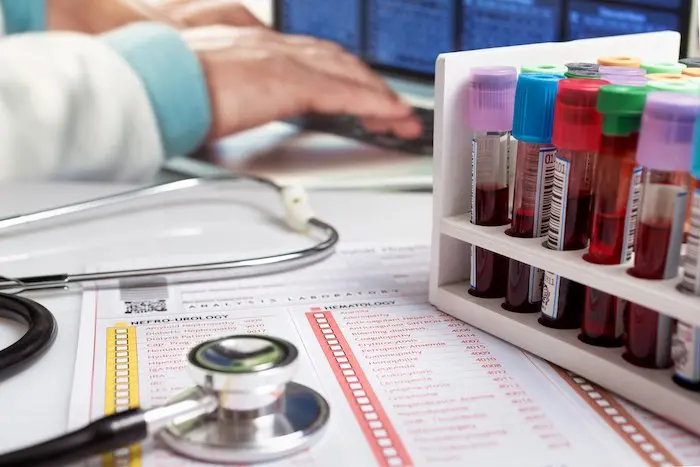
Sport, as most of us practice it, often deviates from health-focused sport. This is why it is also important to have medical follow-up. Not that you need to go to the doctor every week, but a complete blood test at least once a year can help us prevent many problems. Let’s see what the objectives of a blood test are and what parameters need to be checked.
By Jean-François Tatard – Photos: depositphotos.com
When you have a blood test, depending on the results, there are several avenues you can follow to improve your fitness and health. When I say “you”, I mean the doctor. Because indeed, the objective of this paper is not for you to turn into a biochemist or to take yourself for a doctor. But just for you to understand the importance of a blood test and its results. Thus, a blood test, through the doctor’s interpretation, will allow us to diagnose a possible pathology or to suspect nutritional deficiencies.
Which tests?
Among the different biological tests available, each will have a different function. Thus, we can find the following test possibilities:
• CBC
• Inflammatory markers
• Iron panel
• Lipid panel
• Glycemic panel
• Electrolyte panel
• Enzyme panel
• Kidney function panel
• Hormone panel
The CBC
The Complete Blood Count (CBC) helps diagnose hemolytic, inflammatory, infectious, and/or deficiency anomalies. Here’s what it includes:
• Red blood cells (RBCs): This is the number of red blood cells per mm3 of blood. Their role is to transport oxygen to the muscles. A low count reduces an athlete’s energy efficiency.
• Hemoglobin (Hb): This is the protein involved in oxygen transport. The higher the value, the better the transport. However, with fatigue, training, and competitions, this value decreases.
• Hematocrit: This is the percentage corresponding to the volume of red blood cells (RBCs) present in the blood. The higher this rate, the better the tissue oxygenation. With fatigue, training, and competitions, this rate also decreases.
• Mean Corpuscular Volume (MCV) : This is the average size of RBCs. A value that is too high indicates RBCs that are too large and therefore limited in their movement in the blood. Muscles will thus be less well supplied with oxygen.
• Platelets : or their number per mm3 of blood. They are involved in coagulation. A high value often reflects an infection and/or inflammation.
• Leukocytes: or the number of white blood cells per mm3 of blood. Leukocytosis is normal after intense and sustained effort, after significant stress. Pathologically speaking, it is associated with inflammatory and infectious phenomena.
Inflammation panel
Or the erythrocyte sedimentation rate (ESR) which corresponds to the time required for blood elements to sediment. ESR denotes a chronic but non-specific inflammatory state. There is also C-Reactive Protein (CRP). It is a protein that rises very quickly during inflammatory processes and reflects acute inflammation. This can be secondary to an infection, joint or muscle trauma, or an intolerance to training load.
Iron panel
Nothing magical, although… In the iron panel, two things interest us: serum iron and ferritin.
Serum iron corresponds to the iron contained in the serum. I remind you that iron participates in the formation of hemoglobin (located in red blood cells in the blood) and myoglobin (in muscle tissues). Its role is crucial. It is involved in oxygen transport in the body. And thus a deficiency very often causes a feeling of fatigue.
Ferritin, on the other hand, is an iron storage protein that regulates iron absorption according to the body’s needs. In cases of significant iron deficiency, hemorrhages, or a poorly balanced vegetarian diet, blood ferritin levels tend to be very low.
And there’s the opposite. In cases of iron overload in the blood, conversely, ferritin levels tend to be high and are seen in cases of inflammatory syndromes, infections, acute hepatitis, or hemochromatosis, for example.
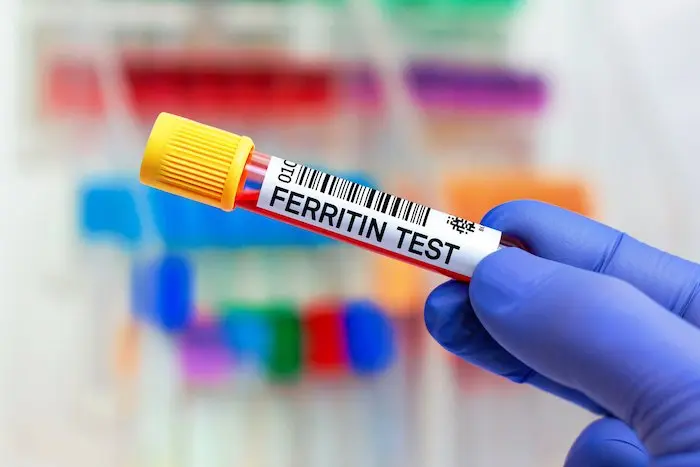
Serum iron and ferritin participate in the diagnosis of anemia in athletes (iron deficiency or hemolytic) and help identify the cause, often correlated with iron deficiency. Training and competition phases lead to a decrease in hematocrit and hemoglobin levels. Anemia can also correspond to excessive iron elimination through perspiration, increased elimination secondary to digestive disorders (diarrhea, malabsorption syndrome…), or a diet poor in iron.
Common symptoms of anemia include fatigue, less efficient muscle contraction, and decreased performance capacity. An adapted diet and eventual treatment can restore internal homeostasis.
Lipid panel
The lipid panel includes triglycerides (TG), cholesterol, and its LDL and HDL fractions. The question is often asked: “Is it good (HDL) or bad (LDL) cholesterol?“. Thus, measuring both is useful for detecting possible familial hyperlipidemias, with the subsequent objective of guiding towards a prophylactic diet aimed at minimizing their blood levels. But why is there a good and a bad one anyway?
« Good cholesterol » or HDL-cholesterol collects excess cholesterol from cells to bring it back to the liver and promote its elimination; it is the body’s “artery cleaner”. A low value is a cardiovascular risk factor.
« Bad » cholesterol or LDL-cholesterol delivers cholesterol to cells. Their oxidation leads to deposits on the arteries. A high value is a cardiovascular risk factor.
Glycemic panel
Blood glucose measurement allows for the detection of potential diabetes or the control of known diabetes. Blood glucose is fundamental for athletes. Its variation is variable throughout the day, depending on training, pre-, during-, and post-effort timing, and the nutrition implemented (concepts of food glycemic index, meal composition, etc.). The most significant risk for a diabetic athlete is hypoglycemia, often during or after exercise. A drop in blood glucose, or even hypoglycemia, is synonymous with underperformance, or even abandonment in extreme cases due to a decrease in the athlete’s capabilities.
Electrolyte panel
To put it simply, ions are: sodium, potassium, and chloride. Thus, sodium and potassium levels, called natremia and kalemia respectively, are interesting for athletes. Regarding potassium, it is an ion involved in cardiac contraction, the regulation of intracellular osmotic pressure and therefore in the control of cell water content, which plays a role in nerve impulse transmission, blood pressure, and glycogen anabolism. For athletes who also have eating disorders (anorexia, bulimia with induced vomiting, etc.) with a common goal of “losing weight”, the major risk is hypokalemia, which can lead to cardiac and muscular risks (and particularly facilitate the appearance of cramps).
As for sodium, it contributes to proper neuromuscular function and the maintenance of osmotic pressure; its measurement is relevant during training and/or competitions in hot climates, where the effect on natremia is an increase. Hyponatremia, less common, can be seen in cases of undernutrition and/or malnutrition relative to significant needs related to sports activity.
Finally, chloride participates in maintaining osmotic balance. A deficiency can promote the appearance of muscle cramps, and nervous and/or muscular fatigue.
THERE IS ALSO CALCIUM & PHOSPHORUS
Calcium acts in the constitution of bones and teeth, muscle contraction, heart rate regulation, and also in blood coagulation. A deficiency increases the risk of micro-fractures and stress fractures, and muscle weakness.
Phosphorus plays a role in the absorption and fixation of calcium on the bone matrix, in acid-base balance, and participates in energy metabolism (ATP, Creatine Phosphate).
MAGNESIUM
It is a central mineral element involved in over 300 metabolic reactions; it is a true enzymatic “activator” when not deficient. It promotes neuromuscular relaxation and thus recovery. Indeed, it participates in nerve impulse transmission, muscle contraction, and potentiates glycogen utilization at the cellular level.
A deficiency can have harmful side effects such as muscle irritability (tetany, spasmophilia), cramps, physical and nervous fatigue. Heart rhythm disorders, high blood pressure, digestive disorders, and psychological manifestations (hypersensitivity, anxiety), as well as sleep disorders, can also appear. It is the magnesium at the red blood cell level that is measured, called erythrocyte magnesium, which best reflects the state of our reserves (compared to plasma magnesium). Half of athletes are said to be deficient. Why? Sweat, of course! Indeed, losses through sweat must be taken into account in the decrease of magnesium levels, and moreover, note that supplementation is most often necessary during intense training phases.
Enzyme panel
SGOT, ASAT, SGPT, and ALAT: These will surely ring a bell, but what are they?
ALAT: Alanine Aminotransferase (SGPT, Serum Glutamic Pyruvic Transaminase),
ASAT: Aspartate Aminotransferase (SGOT, Serum Glutamic Oxaloacetic Transaminase)
Transaminases are enzymes with metabolic activity (between amino acid and α-keto acid) inside cells. These enzymes are present in several tissues (liver, heart, kidneys, muscles…) thus reflecting the activity of the liver and heart.
ALAT is found mainly in the liver, kidneys, and in small quantities in striated muscles and red blood cells. ASAT is found more in striated muscles, red blood cells, and the liver.
A decrease in transaminase values may suggest a vitamin B6 deficiency. Causes of an increase can be due to exertion and/or muscle trauma, a cardiovascular problem such as myocardial infarction, or pancreatitis. In women, oral contraceptives can alter blood test results.
ALKALINE PHOSPHATASE
Alkaline phosphatases are enzymes found in several types of cells: the intestinal mucosa, kidney, liver, bones, and brain. Alkaline phosphatases increase in two pathologies: liver diseases (hepatitis, liver infections, jaundice…) and bone diseases (fracture convalescence,…).
LDH
LDH is an important enzyme in carbohydrate metabolism, present in certain body tissues such as cardiac muscle or myocardium, red blood cells, kidneys, skeletal muscles, and the liver. An increase in its level can be seen during hemolysis, violent exertion leading to muscle “breakdown” (e.g., eccentric exercises).
CPK
CPK is an enzyme whose presence in the blood helps diagnose muscle, cardiac, or cerebral damage given its presence in these three tissues. An elevation can be due to muscle trauma such as shock, intense training, intramuscular injection…
ALAT, ASAT, CPK, and LDH enzymes are important markers of cardiac, muscular, or hepatic pathologies. In summary, the elevation of the first three points towards overtraining and the risk of serious injuries.
Kidney function panel
By kidney function panel, we mean: uric acid and urea. Uric acid is a molecule almost insoluble in water resulting from the degradation and excretion of purines (nitrogenous molecules composing DNA, ATP…), a true biological marker of training intolerance. A value that is too high reflects hyperuricemia, very common in athletes. This can promote the occurrence of muscular, tendinous, articular, or even renal pathologies (kidney stones). The athlete’s diet, often high-protein diets, combined with inadequate hydration increases the risk. Associated with this, hyperuremia (urea level, a product of protein catabolism formed in the liver from ammonia in the blood) is also frequent and correlated with low hydration, a protein-rich diet, increased protein catabolism of tissues…
AS FOR CREATININE…
Creatinine results from the breakdown of creatine during exercise in the muscle and is eliminated by the kidneys. Normally, creatinine is eliminated by the kidneys in the urine. As soon as its level abnormally increases in the blood, it indicates insufficient kidney function. Its concentration decreases, conversely, if muscle mass decreases because muscles produce creatinine.
Creatinine clearance is one of the best markers of kidney function. It is calculated from the results of creatinine measurements in blood and urine. It can also be estimated from blood creatinine measurement (plasma creatinine) and by knowing the patient’s age and weight. A decreased value reflects insufficient kidney function.
Hormone panel
Three axes interest us in the hormone panel. The corticotropic axis. The gonadotropic axis. And the somatotropic axis.
The corticotropic axis is cortisol. Thus, cortisol is a steroid hormone secreted by the adrenal cortex. It is a very interesting data point for evaluating training tolerance and imposed loads. Its activation is directly correlated with a physiological adaptation to exercise based on volume and intensity. Its increase is positively correlated with these two parameters. Nevertheless, a low level can signal corticosteroid intake, and hypercortisolemia can warn of significant stress (intense training phase,…).
The gonadotropic axis is testosterone. A steroid hormone, primarily secreted by the testicles in men but also by the adrenal glands (men and women). This parameter is often sought along with cortisol. Blood testosterone levels are positively correlated with intensive and high-volume training (in other words, resistance training). An endurance training protocol tends to have the opposite effect (decrease in testosteronemia).
The somatotropic axis is growth hormone (GH). Growth hormone, or somatotropin, is a hormone secreted by the somatotropic cells of the anterior pituitary gland. Exercise intensity increases growth hormone secretion. Nevertheless, age (decrease), body composition (the higher the body fat percentage, the lower the secretion), sex (lower levels in men), and training (increase) also affect this hormone.
To conclude
Your biological monitoring should be undertaken as part of a comprehensive approach. And if the results from a blood test obviously require analytical skills that you are not expected to have, you need to be accompanied. It is an expertise. Blood tests and their results aim both to optimize performance and to protect your health. And when we talk about health, it includes your physical, physiological, and psychological integrity. Thus, consider that a biological assessment is, in my opinion, essential for adjusting your training orientations and your race and competition programming. But it also allows you to adapt training loads and finally to supplement or modify certain dietary or other habits, good or bad…
=> SEE ALSO : All our Coaching articles
Share the post "Everything you need to know about blood tests for athletes"