Share the post "Review of the Specialized S-Works Evade 3 Aero Helmet"
The latest version of Specialized’s S-Works Evade 3 aerodynamic road helmet is one of the most efficient on the market, but also one of the most ventilated. This model offers a great balance of performance and comfort for competitive cyclists, even if it comes at a high price.
By Guillaume Judas – Photos: ©3bikes.fr / DR 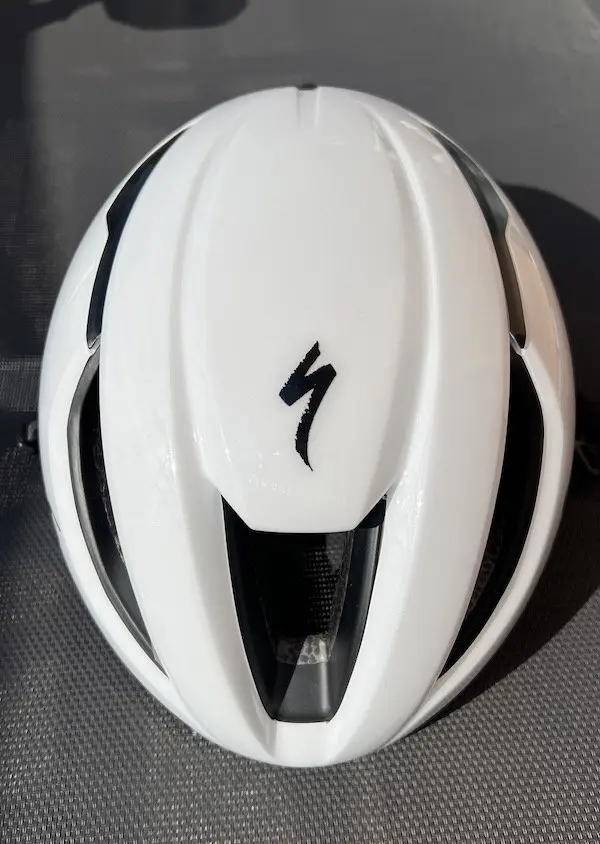
According to Specialized, the third generation of the Evade helmet doesn’t actually represent a significant improvement in aerodynamic efficiency compared to the previous version. But the Evade 2 was already recognized as one of the very best road helmets in this category. These results may come as a surprise, but they have been verified by some of our colleagues in the German press, such as Roadbike.de, through wind tunnel testing. At a reference speed of 45 km/h, there can be a power savings of up to 10 watts between a highly aerodynamic helmet and a more traditional helmet—particularly those designed to provide ample ventilation at low speeds. At 30 km/h the gain is smaller, but it’s still significant in terms of lap times. However, to go fast and/or conserve energy, you often have to compromise on ventilation, weight, and comfort. Specialized has therefore focused on these aspects for the Evade 3, making it one of the most versatile helmets available today.
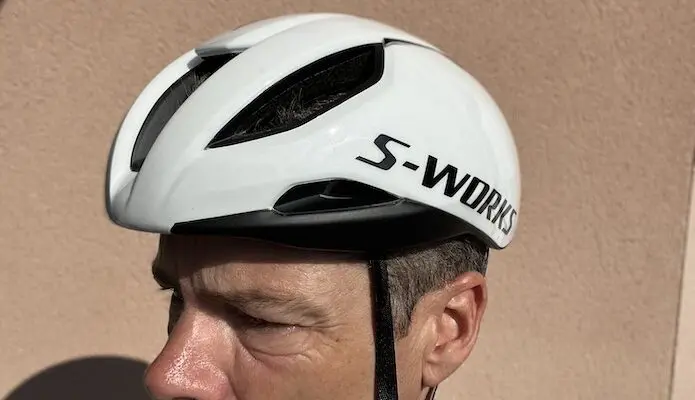
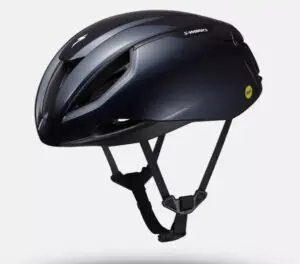
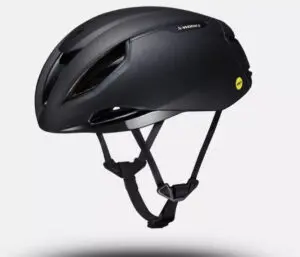
Aesthetically, the Evade 3 is slightly shorter than its predecessor, but it remains fairly narrow. It’s clear that this helmet is designed to slice through the air, as it has a distinctly tapered shape, but its proportions give it a slightly more mainstream look than the previous model. You’ll also notice that the straps are thinner (10 mm instead of 15) and that they attach slightly further back from the temples.
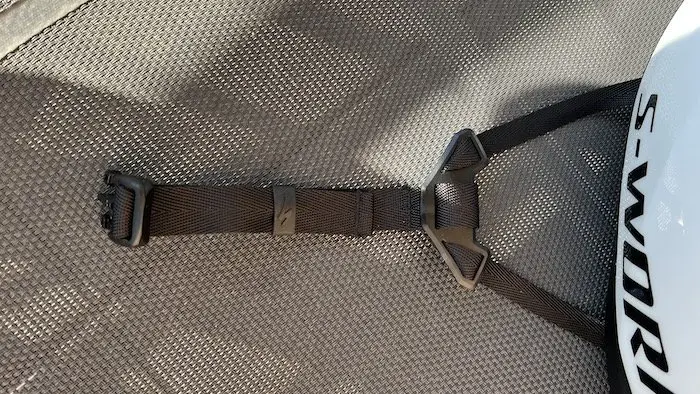
The straps are also adjustable, allowing you to position the helmet as needed. The Evade 2, for example, had a front tip that was a bit too prominent in the field of view, whereas it’s now possible to adjust the Evade 3 to sit slightly further back on the head. This new model does away with the magnetic buckle closure system and returns to a more traditional system, which is naturally a bit lighter. Comfort All Around
Let’s start with the weight. In size S, the Evade 3 weighs 255 g, compared to 236 g for the second generation. Is this a disappointment? Not really, because that 19 g difference is virtually imperceptible once the helmet is on your head. As a reminder, the Prevail 3 weighs 251 g. 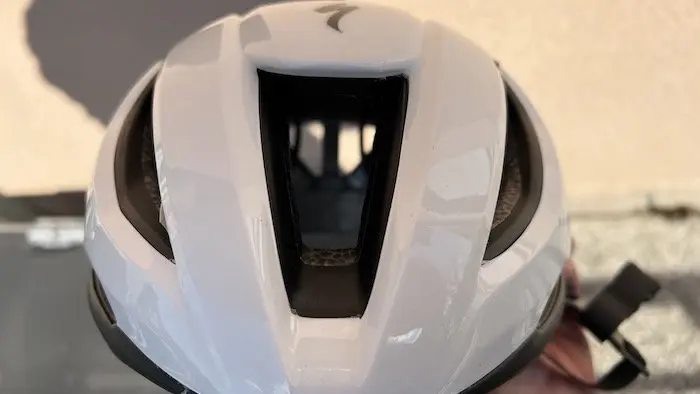
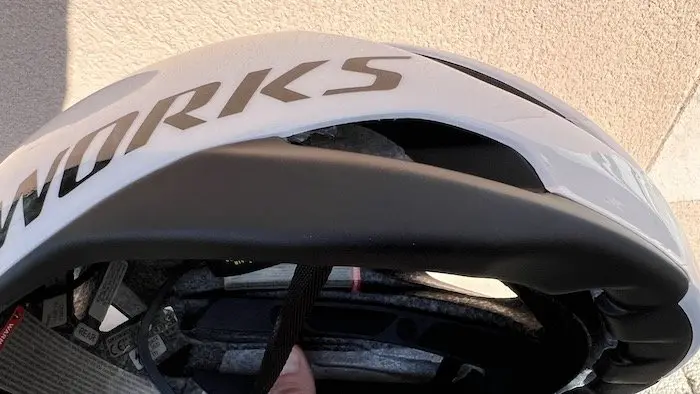
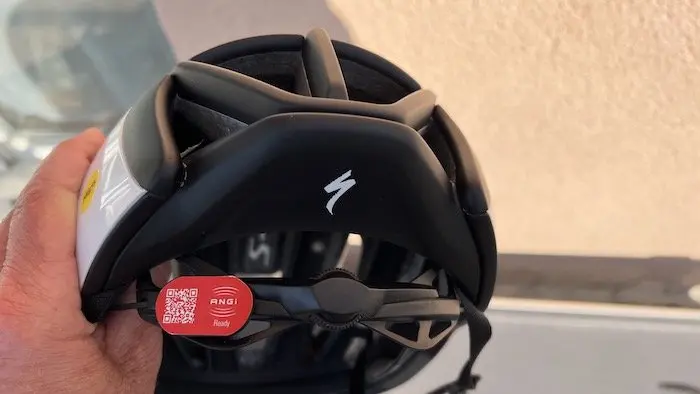
Helmet comfort hinges on shape, adjustability, the type of retention system and how air flows over your head. The new Evade does away with side vents, which have been replaced by two new front air intakes, in addition to the three larger ones that allow plenty of air to flow through. At the back, a wide diffuser lets air flow more freely over your head while improving aerodynamic drag. 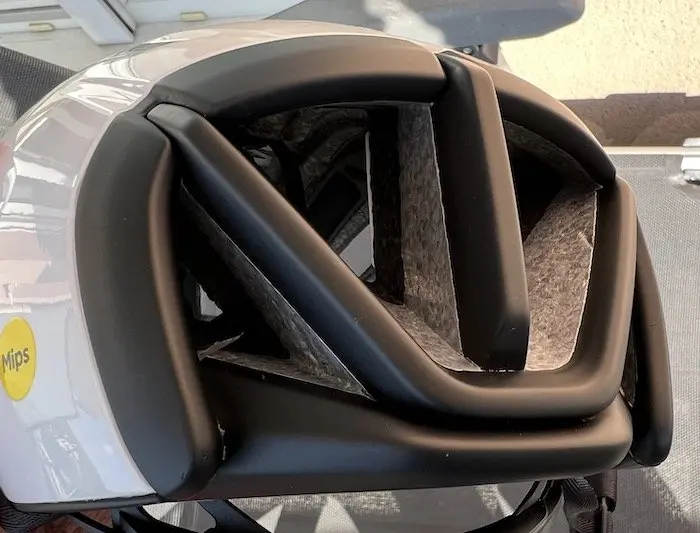 Inside the helmet, the retention system is very discreet and does not create any uncomfortable pressure points around the skull. The Evade 3 features MIPS Air Node technology, a system known for reducing rotational forces in the event of an impact. The Air Node system is much more discreet than the original MIPS and allows air to circulate freely inside the helmet. Fit is dialled in via a rear tension dial, and nearby there’s a mount for the optional Specialized ANGi alert system, a sensor that detects crashes and notifies a contact via a dedicated app.
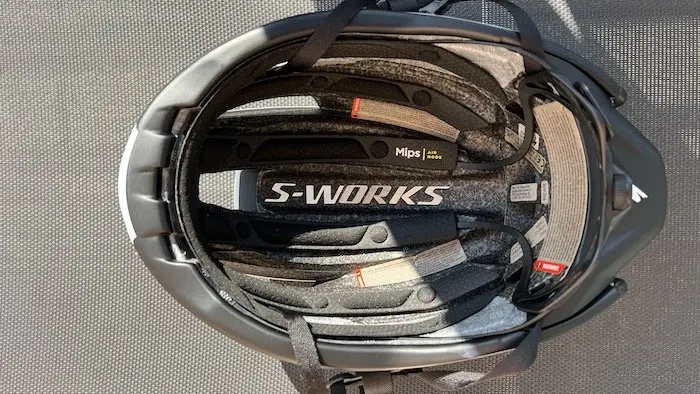
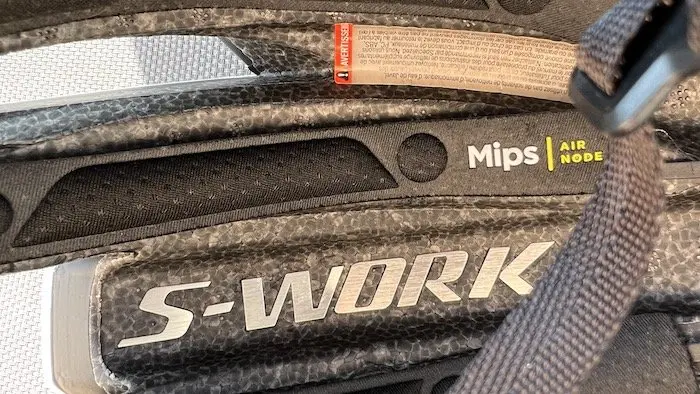
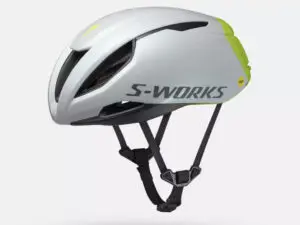
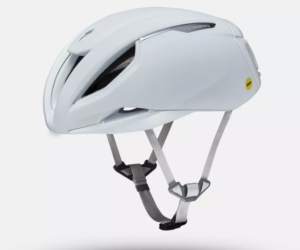
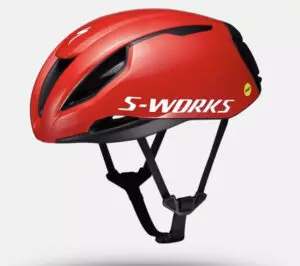
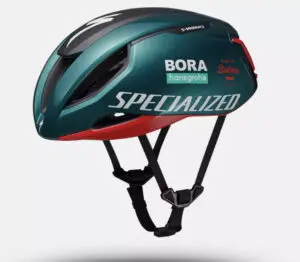
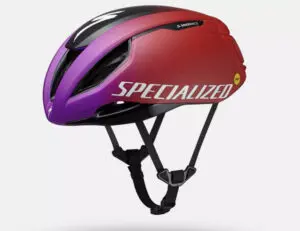
In terms of construction, the Evade 3 has a more traditional design than the Prevail 3, with an EPS foam core and a polycarbonate shell. This shell provides excellent coverage, enhancing the helmet’s finish while also protecting its edges during transport or rough handling. The Evade 3 has a very high-end look and is available in three sizes and 10 color options, including the colors of the four professional teams sponsored by Specialized (Bora-Hansgrohe, Soudal-Quick Step, TotalEnergies, and SD Worx).
 A helmet for almost every day
Since the release of the Evade 3, we’ve noticed that pros have been using it in almost all conditions—on flat stages, in classics, at cyclocross races, on gravel rides, and even on mountain stages, at least early in the season. While it is theoretically less ventilated than the Prevail 3, it is still significantly faster against the wind—even though we obviously can’t verify this with the resources at our disposal. And the difference in ventilation isn’t significant enough to make the Prevail the preferred choice except in high mountains on scorching days, when riding speed is very low, you feel a bit stuffy, and you need a large opening at the top of your head.
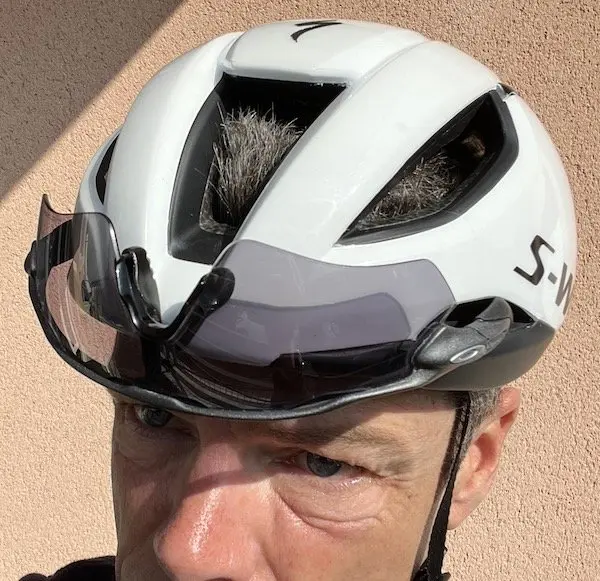
In practice, we were able to test the Evade 3 as soon as it was released in the summer of 2022 during a heatwave, going on rides lasting over four hours in 40°C heat. As long as your riding speed is “normal”—matching the typical pace of a training ride on hilly terrain—the Evade 3’s ventilation poses no problem whatsoever. And even in early spring, compared to a standard mid-range helmet, you can easily feel the cool breeze on your head—a sensation similar to going for a bike ride right after leaving the hair salon. So even in the middle of summer, the Evade 3 doesn’t cause overheating; you don’t notice excessive sweat running down the inside of your glasses, and the straps never feel constricting.
Our take on the Specialized S-Works Evade 3 helmet Except when you’re riding very slowly in extreme heat, the Evade 3 isn’t really any less ventilated than the Prevail 3. If you’re looking for an aerodynamic yet versatile helmet that you can wear on all your rides, the Evade 3 is one of the best models available right now. While not necessarily faster than its predecessor, it feels less noticeable on the head and is more comfortable thanks to a progressive and very well-designed fit. The high price tag remains a factor, but the build quality and color options may also tip the scales in its favor. 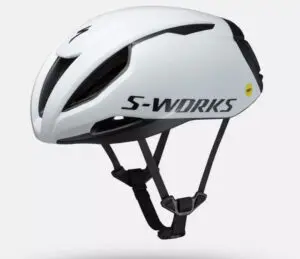
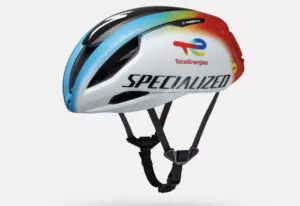
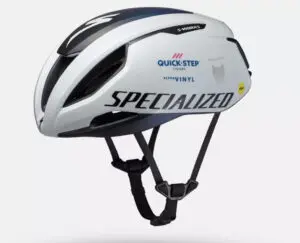
The SPECIALIZED S-WORKS EVADE 3 in brief… Rating: ***** Pros: build quality, comfort, ventilation, color options Cons: price Optimized dual-density EPS foam – Polycarbonate shell – MIPS AIR NODE system – Adjustable Tri-Fix strap separators – Occipital adjustment – ANGi-compatible Mindset system – Weight: 255 g in size S – Sizes: S, M, L – Price: €330 Contact: specialized.com |
=> SEE ALSO: All our Gear articles
Share the post "Review of the Specialized S-Works Evade 3 Aero Helmet"