Share the post "In the Wheel of… Michael Herter, French Paratriathlete"
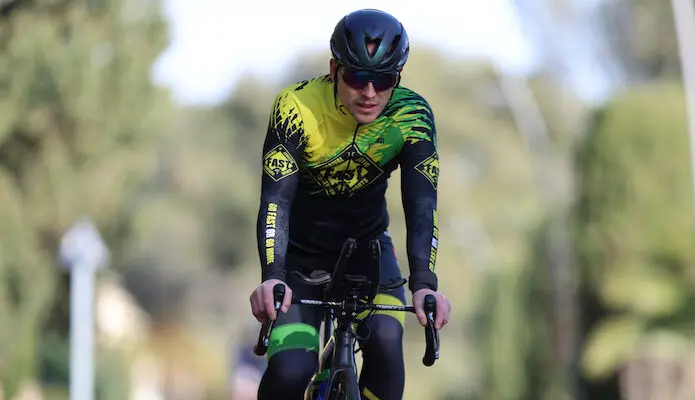
3bikes.fr went to Alsace to meet a paratriathlete with an extraordinary journey. Michael Herter will talk about his health problem, leading to this new life as a champion who now represents France in his discipline of para triathlon. He tells us about his new world and finally, he reveals his future projects.
By Jean-François Tatard – Photos: All rights reserved
From this story of a tumor located in the spinal cord that led to paralysis of the lower limbs, to the goal of participating in the 2024 Paralympic Games, passing through the Rehabilitation Center where he discovered an invaluable resource capable of overcoming the worst situations, Michael shares his philosophy here, which – we hope – will inspire all those in need who are looking to climb the steepest slope.
An invisible disability
When I meet Michael, nothing makes me think he suffers from a disability. His contagious enthusiasm and reassuring optimism hide his physical problem. This endearing young man, who lives in Wattwiller in Alsace and has already stood on the podium twice in Paratriathlon World Cup events, shows nothing. But from the beginning of the interview, he answers the question everyone is asking: what allows Michael to compete with disabled athletes? In 2015, he was diagnosed with a tumor in his spinal cord. Following the operation, he lost the use of his legs and ended up in a wheelchair…
“I love life and I’ve never been so alive”
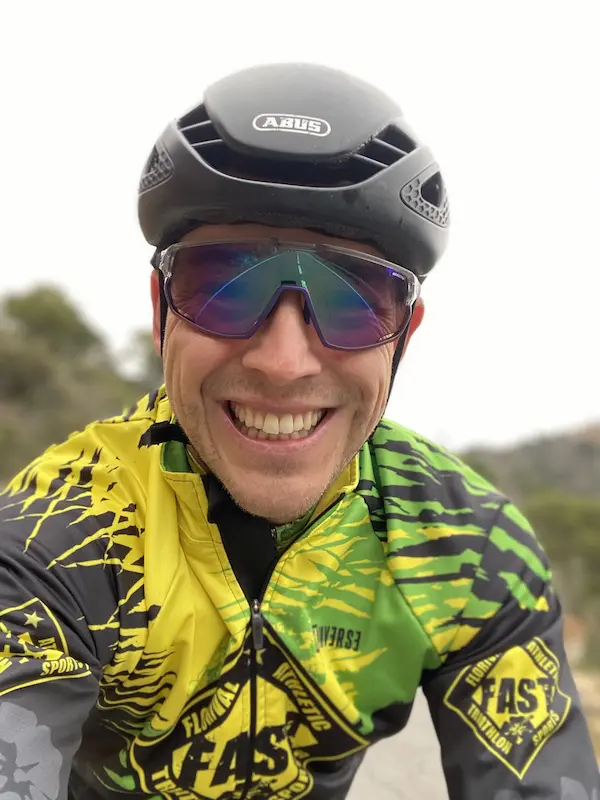
“My life today has never been better“: that’s what Michael tells me. But if he loves this life so much, it’s also because he has made something of it. After this illness, he bounced back and got involved in sport… up to the highest level one can reach in this category. He is fulfilling his dreams, without nostalgia. What I decipher from the beginning of our exchanges is that there was no denial, no anger. This talented thirty-something (he is now approaching forty) quickly understood the positive meaning of this situation which would have seemed tragic for 99% of us. Indeed, most of the time, we see a difficulty in every change. In every transformation. In every modification. In most new things. This is where the difference with great champions lies: they very quickly manage to identify a new opportunity in every difficulty. And it is precisely in the midst of this difficulty, however terrible it may be, that the opportunity to realize our full potential lies. This is what I learned from this discussion with this somewhat philosophical champion…
An example of resilience
During this interview, I couldn’t help but think of our meeting in September 2021 with Kevin Le Cunff. You know, that kind of encounter that awakens you to the beauty of the world around us. A prime example of resilience. The kind of guy who proves to you that anything is possible and that despite adversity, whatever it may be, each of us can draw this strength from within and achieve self-fulfillment. Michael Herter is one of those who demonstrate, like an astonishing adventure, that we are totally subjected. I think that somewhere, this taste for surpassing oneself is not unrelated to what many of us would have considered a victory against a small death won by Michael. He almost brushed with it. He saw it. And it did not take him. He was the strongest…
3bikes.fr: So explain to us, Michael… How did the opportunity for para triathlon come about for you?
MH: After my operation for a tumor in 2015 located in my spinal cord, which caused me to lose the use of my legs, I went to the Mulhouse rehabilitation center and the sports educator in charge of my rehabilitation, Frédéric Schaffner, tried to transmit his passion for this wonderful sport to me. Very quickly I let myself be charmed by the siren song.
3bikes.fr: And before that? What were you doing?
MH: Before that, I was a tiler and my sport was football. But this sport was mainly an excuse to meet up with friends and celebrate the third half.
3bikes.fr: How can one pedal or run when one’s lower limbs are paralyzed?
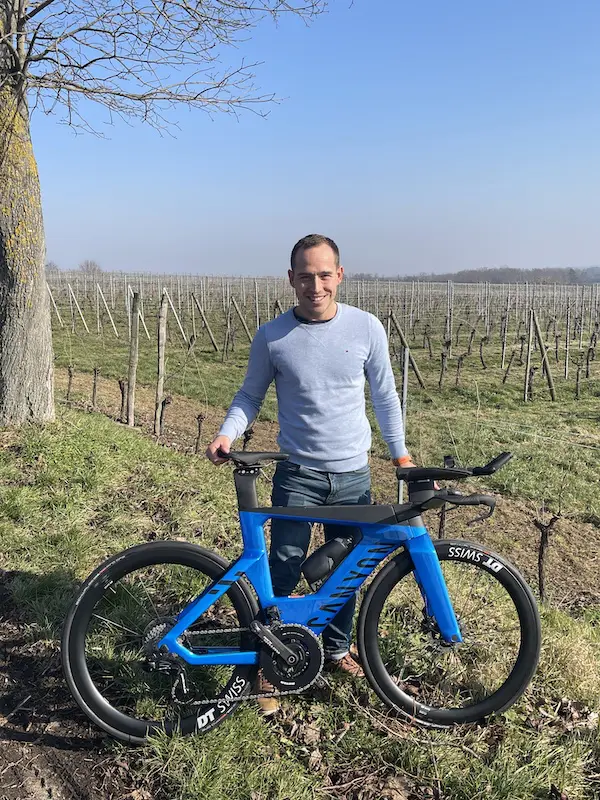
MH: I first spent many months in a wheelchair and it was only after a long rehabilitation that I started to regain mobility in my legs. Nevertheless, I still suffer from paresthesia.
3bikes.fr: Can you explain the difference between paralysis and paresthesia?
MH: In both cases, the problem is neurological. But in the first case: paralysis is the inability to act or react. There is a total abolition of the muscles of the lower limbs. Whereas paresthesia is a kind of desensitization. I feel little or no sensation in my leg muscles. I don’t feel the surface of my skin even though something is in contact. It’s not painful but it’s unpleasant.
3bikes.fr: Is it still a good development? How do you explain it? What do you attribute it to?
MH: Many people underestimate the role of the brain and nervous system in movement, but also in overall performance and chronic pain. My initial rehabilitation was mainly designed to stimulate the postural functions of the nervous system. And eventually, quite quickly, while having fun and being enthusiastic about my progress, I was able to achieve practical results. Thanks to sport and therefore triathlon.
3bikes.fr: So that was in 2015… And today, do you continue to observe neurological improvement?
MH: Of course! Daily movement (sometimes pushed to its paroxysm) influences the development of my brain and my posture a little more each day. And so even at 37, I continue to progress at that level.
3bikes.fr: I imagine that, like any high-level triathlete, you swim, ride, or run every day, but is there still room for this type of training? Do you do specific strengthening?
MH: Yes, once a week at the rehabilitation center where I have my bearings, I work on my proprioception. Every day I improve the perception, balance, and reactivity of my legs and also all the other muscles in my body. Often, this is a method used to prevent injuries. But in my case, it’s to improve my performance and regain a functioning proprioceptive system.
3bikes.fr: And how does that work?
MH: As soon as the body moves in space, it continuously perceives external stimuli through the sensory organs and fine bodily receptors called proprioceptors. This information and our motor behavior are directly linked. This is exactly where proprioception comes in. In my case, it is a method aimed at training my deep perception using balance and concentration exercises. And in addition to this weekly session in the gym, I add two complementary ones at home.
3bikes.fr: And how do you organize the rest of your activities?
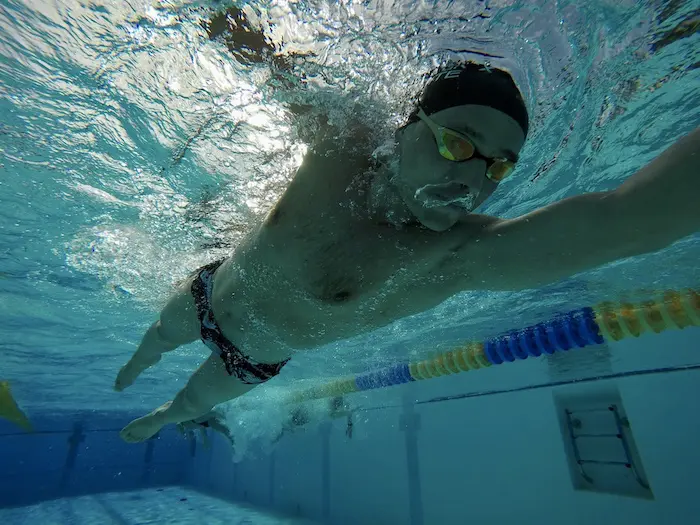
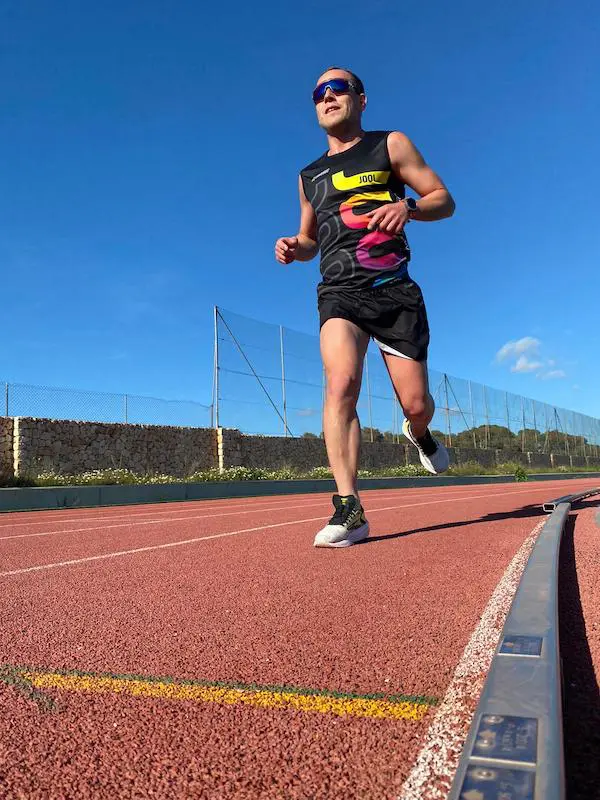
MH: Guillaume Jeanin, my coach, prepares a schedule for me based on my goals and the times when I want to be in the best shape. But as a general rule, it’s twice a day. Every week: I swim 5 times, run 3-4 times, and ride 3-4 times.
3bikes.fr: Do you know your performance statistics?
MH: Yes, and everything is planned according to these indicators, which need to be put into perspective because my VMA, for example, is not used in the same way as an athlete who has full physical integrity. My nerve desensitization prevents me from being properly reactive at high cadence.
3bikes.fr: You seem to know your limits well… So, in your opinion: what are your strengths and weaknesses for your sport?
MH: Cycling is the easiest of the three disciplines for me to manage. In swimming and running, the fact that I don’t feel my legs penalizes me in terms of motor skills. That’s also what my proprioception work is for. To improve my concentration.
3bikes.fr: And from a professional point of view, how do you manage to reconcile everything?
MH: I am lucky to be a social worker and to make an obvious link between my job and the sport as I practice it to help people in need. I work 25 hours a week, including 2 long mornings and 2 long afternoons. This leaves me time to train properly.
3bikes.fr: I imagine Paris 2024 would be the pinnacle of your athletic life? How do you envision that?
MH: Before that, several objectives are looming for this season, which will start soon. First, a qualification for the European Championship, remaining the best Frenchman on the international circuit, and I want to regain my PTS3 French champion title. I will also continue to participate in races on the international circuit to continue my progression in the world rankings and hope to be selected for the World Championships and meet the selection criteria for the ultimate dream: the Paralympic Games in September 2024 in Paris.
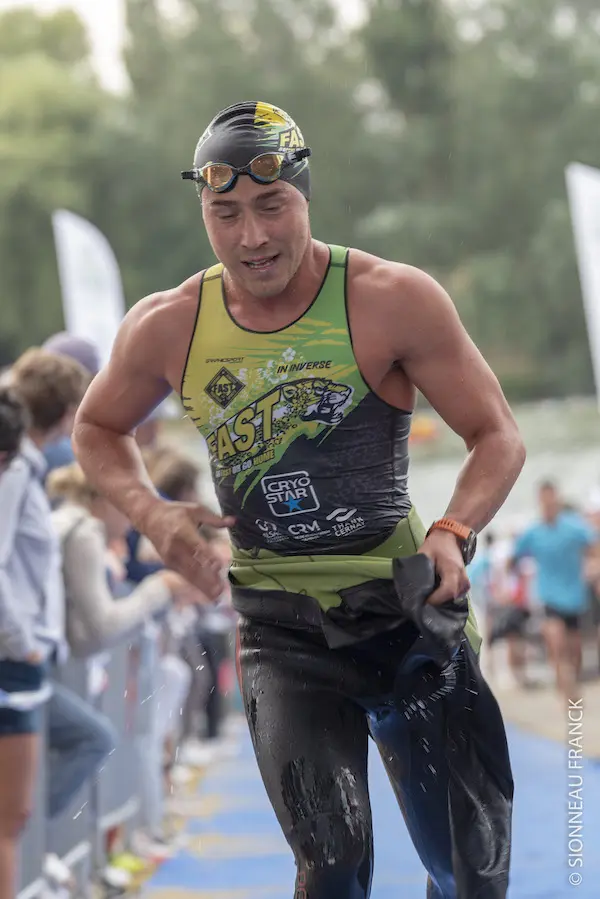
3bikes.fr: I know that the Canyon bike brand is one of your partners. But who else supports you in this project?
MH: Today, I have a few partners who help me. Cryostar, the Mulhouse Rehabilitation Center, and Tronox also trust me in this Paris 2024 project, but for the rest, I manage on my own.
3bikes.fr: I have a feeling you can go for a medal at the next Paralympic Games, but you’re going to need a little boost. How can we help you shine brighter?
MH: I’m not good at communicating on social media, and yet I know it’s an essential point for ensuring visibility for partners. Nevertheless, I try to play along, but I’m not sure I really like it because I find it doesn’t align with one of my values, which is humility. I do all my activities thoroughly, and I tell myself that the message can also get across very well.
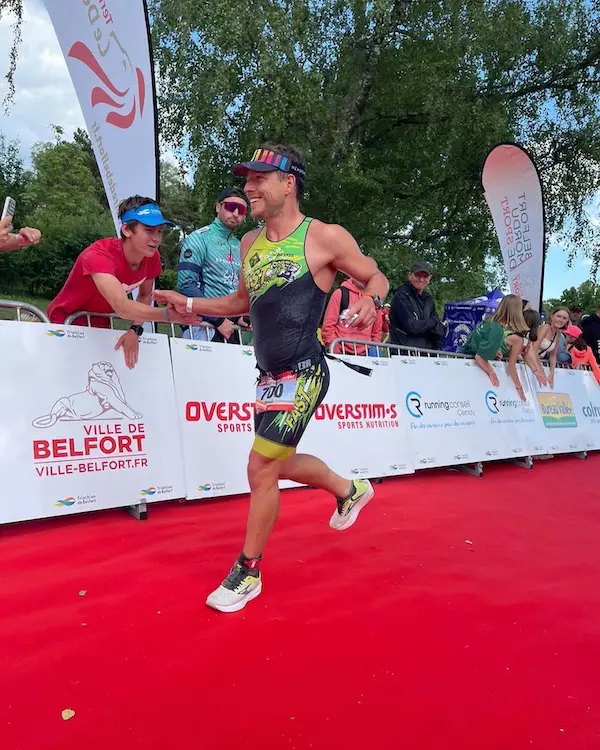
So, Michael chose triathlon and the dream of the Paralympic Games to continue living. And when asked if he regrets his old life and if he had dreams before this tumor story, he replies “not really, in truth“. Michael asks for nothing. He feels lucky. It’s in his nature.
What I take away from this unforgettable exchange is to stop saying to yourself: “If only I had known“. That’s the most terrible phrase you can hear. If you had known, you would have dared, so dare. All those who have achieved their dreams did so because they dared.
What a wonderful encounter… This talented young man still has many good years ahead of him. Triathlon and sport in general can be inspired by the philosophy of this great guy. And beyond his performance, his extraordinary resilience, his kindness and gratitude towards life, but also his perseverance and extraordinary will, what Michael taught me today by sharing these few words is that most of the time, and for most of us, we see a difficulty in every change where some identify a new opportunity in every difficulty.
To learn more about Michael Herter: https://www.instagram.com/michael.herter/
=> SEE ALSO : All our MAG articles
Share the post "In the Wheel of… Michael Herter, French Paratriathlete"