Share the post "Should you use special insoles inside your cycling shoes?"
Before discussing the importance of insoles in your shoes, have you ever really considered the fundamental role of the foot when you run or ride? How important is the quality of foot placement for you, the cyclist or runner? Assuming that this type of support is particularly important for comfort and efficiency, how far should you go to customize it?
By Jean-François Tatard – Photos: All rights reserved
Due to its biomechanical constitution, the foot captures variations in the ground as well as its different positions. Are you familiar with the phenomenon of pronation and supination? Because the other role of the foot is to allow the control and maintenance of the entire body posture. The foot is both a sensor and an effector. For cycling, the foot is in contact with the shoe’s sole, which is itself attached to the pedal, and it performs a rotation to accompany the crank movement, alternating pushing phases with pulling phases. Foot comfort and support inside the shoe are therefore fundamental for pedaling efficiency and for being able to sustain effort over the long term without suffering from debilitating pain.
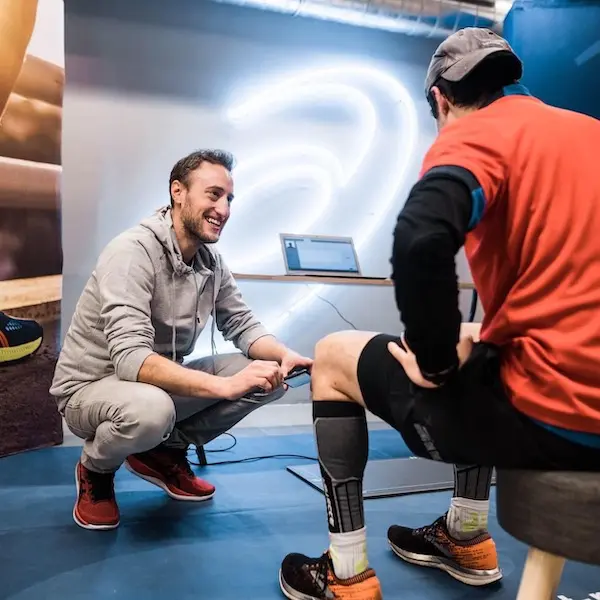
When should you consult a podiatrist?
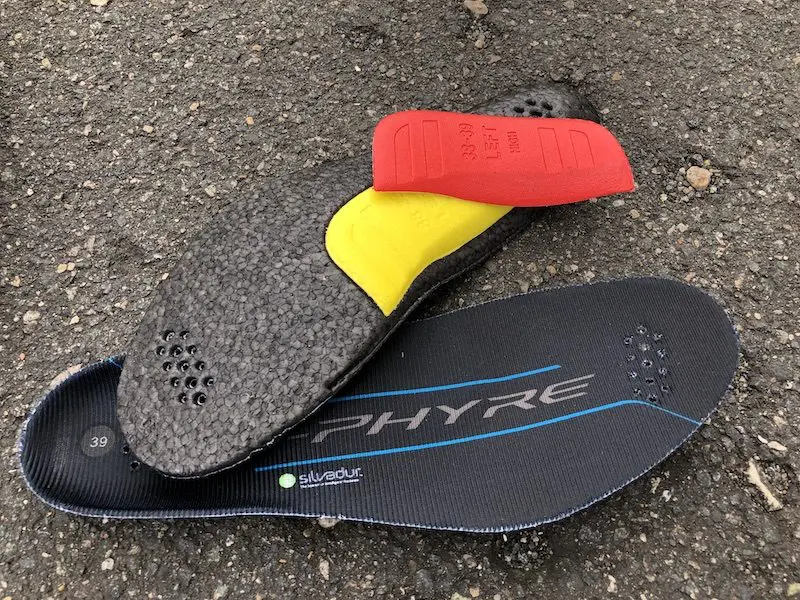
The first step to take when you suffer from foot pain while pedaling is to examine the shoe’s insole, which is most often basic and lacks arch support. It is also possible to opt for insoles with better support, either because this support is customizable with an adjustable support system (as with Shimano S-Phyre shoes), or by purchasing additional insoles, for example from Specialized. Thermoformable insoles (therefore not exactly with the same levels of correction as orthopedic insoles) are also available. To go further, it is also possible to consult a podiatrist.
One of the primary reasons that drives you to seek a podiatrist is persistent pain during cycling activity or when you run. In the knee, hip, or Achilles tendon, for example. Another reason may be premature wear of your running or walking shoes, or unbalanced wear from one foot to the other. But persistent foot pain while pedaling in extreme conditions (heat or cold) can also be a sign of unbalanced pressure points in the shoes, which tend to create venous stasis. Excessive and poorly distributed pressure points can create blood stagnation that cuts off circulation and regularly gives the sensation of “burning feet” or “frozen feet”. An orthopedic insole is in this case perfectly indicated to solve the problem.
The orthopedic insole
It’s not just a detail. Even if they come in different materials and all sorts of colors, the orthopedic insole is even less of a fashion phenomenon. It is indeed a medical act. After a personalized podiatric assessment, the podiatrist will decide whether insoles are necessary or not. It is the podiatrist himself who makes them. And they have absolutely nothing to do with those you will find in the accessories section of your sports store.
They can be prescribed preventively. The objective is to act on foot balance, to prevent potential static disorders. It’s a kind of insurance for the quality of foot support.
Curatively, the podiatrist treats a clearly identified pathology: tendinitis, periostitis, plantar fasciitis, patellofemoral pain syndrome, IT band syndrome (also called “runner’s knee”), and all other pains related to the sporting gesture.
The adaptation period varies depending on the individual and the quality of your insoles.
Wearing insoles leads to a modification of the running stride or cycling pedal stroke, but also of the pressure points and even the sensations of running or pulling and crushing the pedal. As the pressure points are modified, the posture adapts and corrects itself. Furthermore, the adaptation period varies depending on the individual and the quality of your insoles.
Before prescription
The simplest approach is to first go through your general practitioner, who will then refer you to a podiatrist. It’s tedious and adds a step. But it has at least two advantages. First, it offers you a first opinion, and then it allows you to get a prescription and thus be reimbursed by Social Security and supplemented by your mutual insurance.
When choosing your podiatrist, I recommend word of mouth. Good ones for running are rare. But for cycling, it’s even more complicated. And so the materials used for the design of the insole are different from those you might use in everyday life. Don’t weigh yourself down! Remember that in your passion, weight is a handicap. And anti-perspirant materials are allies.
What about “minimalist” shoes?
My opinion is not objective (at the same time, by definition, like all opinions). I’m not a pro, but for this particular case, even if we can also talk about drop for cycling shoes, if it’s about running, I think it’s a bit of a trend. Nevertheless, what’s positive is that the movement is a return to the sensation of foot contact. This is good for the evolution of our two sports. And if we have to go through minimalism to make people understand the importance of foot contact, I agree.
For cycling, a “minimalist” shoe is a shoe with a less rigid sole, little arch, and weak support. This is destabilizing for those who like firm support, but generally this type of shoe creates less pain because with each pedal stroke the foot is forced to perform a slight flexion and adapt inside the shoe.
Furthermore, I think that you shouldn’t only use this shoe or insole daily and that you should alternate. Perhaps we could imagine this format as a muscular and proprioceptive tool. Foot work is essential; plyometric exercises with posture reinforcement are necessary to progress and avoid injuries. This type of insole and shoe can thus help us work on our proprioception.
In summary
Once again, everything is a question of balance. For runners as well as for cyclists, it is important to have balanced foot support in terms of performance, whether it’s for performing a precise movement or for performing a repetitive movement. What is the benefit of the insole? What is the interest of the insole? In our case, foot support is very, very important. The repetitive nature of the stride or pedaling leads to a degradation of the quality of foot support. And thus, the more balanced the foot, the better our stride or our pedal stroke will be. But pedaling more freely inside the shoe or on the pedal is not entirely to be excluded in terms of training, at least from time to time to work on proprioception, even if in this case we will no longer be talking about performance improvement.
=> SEE ALSO: All our Coaching articles
Share the post "Should you use special insoles inside your cycling shoes?"