Share the post "Coaching: How to make your own luck?"
When you’re an athlete aspiring to competitive results, you often need to master every detail that can lead to performance. But even when everything is in place for success, a grey area still persists. A notion close to chance in many people’s minds. So, does luck exist? Can we be lucky or unlucky? That’s what we’ll try to clarify in this article…
By Jean-François Tatard – Photos: depositphotos.com
But before we begin, a quick look at the dictionary. What is the definition of luck? Luck is a concept that expresses the realization of a positive event, improving a human situation, or by extension any living entity, without necessarily a cause-and-effect link between desire and its positive realization.
Luck would then be the improvement of a situation without a causal link to the individual’s actions, without controlled action on the positive result achieved. The Latin etymology of the word and its usage can only apply if the event and the result “fell” on an individual, significantly improving their situation. Any other semantic explanation falls more under intellectual, managerial, trend-driven interpretation, or the words of a fashionable guru. And so, viewed from this angle, it is a superstition if the person believes they are targeted by positive events.
If luck exists, can we attract it?
What Philippe Gabillet – Professor of Psychology and Management at ESCP Europe (Paris) – says in his book Éloge de la chance (In Praise of Luck) is that to trigger opportunities, you have to be an opportunity yourself for others, so constantly seek to create value for others and for the environment. The implication is that opportunities mean being in the right place at the right time with the right person, responding to the right demands, and in the right areas. He thus suggests four postures that open up opportunities…
- Vigilance and curiosity: breaking out of routine, allowing yourself to be surprised, and accepting to step off the pre-traced path
- The magic of networking: becoming the one who creates connections, who helps others achieve their own goals
- Using failures and turning them into projects (luck is not what happens to us, but rather what we do with what happens)
- Anticipation, being one project ahead… and thus going further on being lucky
We have a proposal for you
This proposal is to help you coach luck. It’s valid in sports, of course. But ultimately, it’s applicable to all areas of life. Indeed, an attitude of openness to opportunity can be cultivated. Better yet, creating opportunities for others can also be cultivated. And finally, using difficulties and failures is ultimately essential if you want to die saying: “I had a great life.”
It was after a conference I led on the Winning Mindset for young aspiring champions in Isle Adam that I remembered how bad a reputation luck has. It is very (too) often considered uncontrollable. Uninfluenceable. But also almost dangerous in the sense that having it could turn against us. And finally, when I question these teenagers who aspire to great performances, some find it unfair.
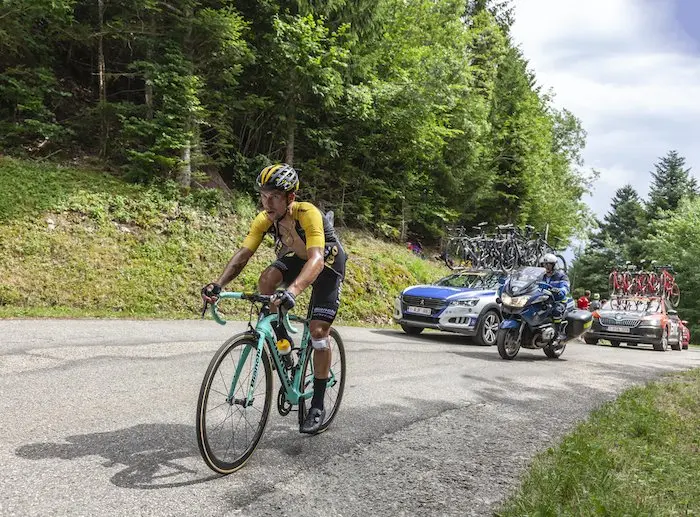
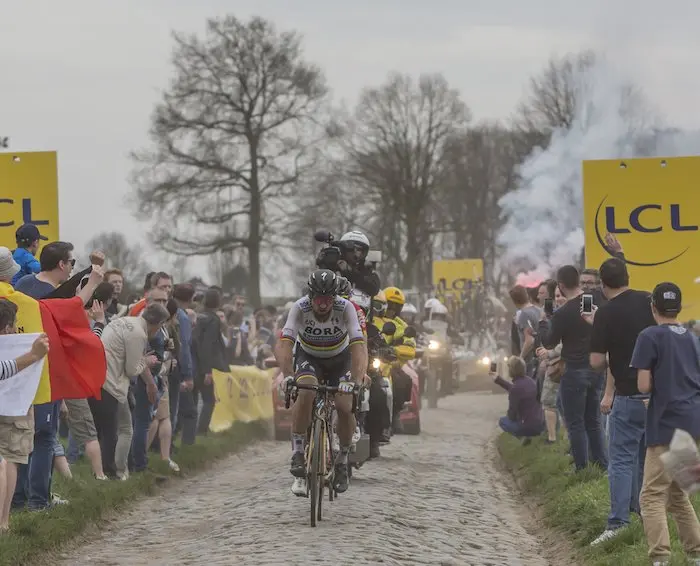
As for me, I prefer to think that luck is a skill. But you still need to understand how to attract it and what the limits of this power of attraction are. When we observe the different winners of the Tour de France, were they lucky? Why are they among the rare ones on the list who never crashed during the three weeks of the event? When American Lance Armstrong crosses the field in the middle of a descent during the 2003 Tour while Joseba Beloki breaks his femur: reflex or luck? When the winner of Paris-Roubaix is the only one in the breakaway who didn’t suffer punctures, was he lucky too? And when the Slovenian champion, Primož Roglič, loses his leader’s jersey on the penultimate day of the 2020 Tour when everything seemed won, did he, conversely, suffer from bad luck? And when this happens to him several times: is he a victim of a run of bad luck?
Let’s reconcile with luck. Let’s try to consider it as an ability to make the most of circumstances, as a form of intelligence in every situation, of the fortuitous, of the unpredictable. As a discipline of life to have and to consider it as if it were everywhere…
Triggering factors
There are triggering factors for what we can call luck, which we can try to make conscious. Our encounters, for starters. Indeed, we must keep in mind that each of our encounters can be the luck of our life. We can also bet that at every moment, information around us can constitute opportunities. Opportunities that we will create during our new experiences, as bad as they may seem good at first. But also unexpected requests to which we are not always attentive and from which we sometimes (often) tend to flee. But when you are asked for help or contribution, there is almost systematically a hidden gift. Do you know about providential incidents? Many strokes of luck indeed seem to come straight out of incidents, from the most mundane to the most improbable, like an alarm clock failure that makes you miss the plane that will crash in the middle of the Atlantic.
The secret is probably in the intention. Neurosciences agree that a prior intention is at the heart of any psychological mechanism. For us, it would be a kind of mental preparation to see luck in what surrounds us. The magic of positive self-suggestion. And in reality, if we work to positively orient our intentions outwards, then our perceptions and behaviors will also be oriented and will favor the realization of what we are positively seeking. And in truth, the more strongly we anticipate an event, the more we positively orient our thoughts towards its realization, the more our behavior will align with the initial prediction, and the more all of this will favor the realization of that event.
In practice, you have to get into luck mode; that’s the skill I was talking about. What is your ultimate goal? What is your dearest dream of accomplishment? What do you truly love? What are you good at? What achievement would you be likely to build that would leave a definitively indelible mark? Develop a precise thought about this deep desire. And nurture the intention to strengthen it. Visualize it!
And yes, luck is also a matter of perspective at all levels. Without vigilant attention to your environment, things can only be accidents. Your eyes have the power to transform them into moments of luck. Maintain your inner availability through conscious openness. Be curious. Accept to open yourself to what you don’t yet know, give yourself the right to explore new territories or create relationships with people very different from those you usually frequent. Ultimately, I realize that one must be wary of pre-established plans. I’m not saying you shouldn’t be structured or stray from the focal point, but prepare the ground for intuition. For the most rational among us, don’t be afraid of intuition; it’s just a shortcut between our actions and our experiences, themselves archived in a huge library of the unconscious.
When we look at champions, great champions, we realize that they have this ability to bounce back positively from what most would consider bad luck. They systematically look for the good sides of the situation. They maintain the conviction that a stroke of bad luck can lead to something else positive. It’s a character trait. But a character trait that can be worked on and maintained. Like striving to ruminate as little as possible after a misfortune. And quickly taking corrective measures to move forward. Another common characteristic of lucky champions is that bad luck gives them new opportunities. They are over-trained in relativizing. They digest the situation more quickly and move on to the positive faster than others. They restart the machine almost immediately.

Also, what I’ve noticed – and Philippe Gabillet talks about it in a video on YouTube – is that one of the best ways to achieve your own goals is to help those who need it to achieve theirs. In fact, it’s simple: it’s impossible to encounter opportunities by staying alone in your corner. Luck is also, and above all, about others, ultimately. Attracting luck is not that complex. Around us, there are people who are likely to connect us to others who will, in turn, bring us closer to that famous intention I mentioned earlier. If we want luck to smile on us, we must have an altruistic and generous approach, and not necessarily expect things in return. What we sow will germinate one day or another. That’s also what luck is. Seeds of luck to sow. We must smile at life. Good humor is contagious, and we must strive to bring luck to others. Let’s practice optimism, attention to others, open-mindedness, tolerance, and benevolence.
In conclusion…
Luck, ultimately, is something we dare to pursue. So, let’s assert ourselves with ambitious goals. Let’s be creative to innovate and invent solutions. Because, every time we venture down a path of a new experience, we improve our own self-knowledge a little more. We thus open ourselves to others and to new perspectives. And for my part, I am convinced that we all have the capacity to be luckier if we focus on the positive aspects of our lives and the small daily gifts. By changing our perception of events and stopping focusing on the dark things. Like a snowball effect, the optimistic energy we emit brings about positivity and contaminates our surroundings; that’s the magic. We can all learn to be lucky. We just need to modify our perception of reality. Is the glass half empty? Or is the glass half full? Let’s stay positive. And let’s stay curious. Luck only favors prepared minds. Let’s also prepare to be a source of luck for others. And if luck doesn’t always work, let’s turn our bad luck into an opportunity to (better) start over. Let’s always have a project ahead. And let’s talk about it to the people most likely to help us. Luck is a vision of the world that is maintained daily. Luck attracts luck. Just as appetite comes with eating, let’s simulate and stimulate luck. In short, let’s be inspired by those who are lucky because, the truth is, to be among the chosen few, it’s not by chance. They are solely responsible for it.
=> SEE ALSO: All our Coaching articles

Share the post "Coaching: How to make your own luck?"