Share the post "Sleep Problems: Causes, Consequences, and Solutions for Insomnia"
One in four French people don’t sleep well at night. And clearly, being an athlete doesn’t improve that statistic. But what are the repercussions? What are the causes? And how can we improve this important factor in the equation for success?
By Jean-François Tatard – Photos: depositphotos.com
Without a doubt, sport and sleep are inseparable. The two go hand in hand. And so, for training to be beneficial, we must recover afterwards. And how do we recover? Through sleep, of course. It is the most miraculous of assimilation remedies. And what’s more, it strengthens the immune system, releases hormones, and shapes our memory. And conversely, you also need to have slept enough to have the necessary energy for your next training session. Yet it seems that we are not all equal in this respect…
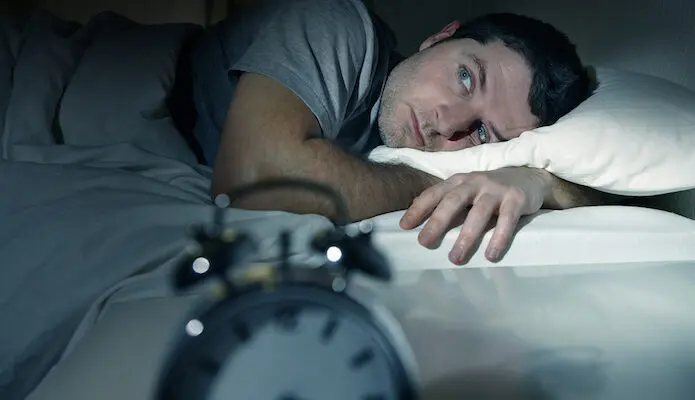
Not everyone feels fit and rested after a visit to the arms of Morpheus. Approximately 25% of the population suffers from sleep disorders. And athletes are not spared. When we ask Xavier, who is preparing for the next Paris Marathon, he tells us that Sunday night is almost systematically an insomnia night for him. But is it a problem falling asleep? Is it a problem of nocturnal awakenings? Is it a problem of early waking? The disorders can be multiple. And looking at the functions attributed to sleep, it seems obvious to me that the disorders that affect it have a major impact on our physical and mental health.
At first glance, one might tend to think that people who don’t exercise generally suffer more often from sleep disorders than athletes. And yet, the answer is not so obvious. Even if it is recommended to exercise regularly to overcome potential sleep disorders, it is better not to exercise just before going to bed. Exercising in the evening is sometimes the only possible slot in a busy schedule, but the problem is that after intense effort, the body needs a few hours for its temperature to drop.
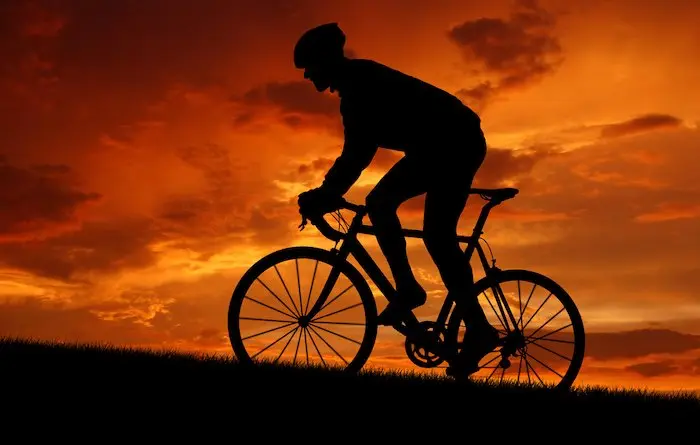
Moreover, after 7 p.m., the body’s temperature drops and alertness decreases. The body slowly prepares for bedtime. In this sense, exercising during this time slot can disrupt your biological rhythms. Sport is a real stimulant. Adrenaline and other stimulating hormones secreted during exercise disturb sleep. This is why, if you absolutely must schedule an evening session in your training plan, we recommend doing a relaxed endurance session, or an “active recovery” without raising your heart rate. Furthermore, it is in the morning that the body has the most testosterone and therefore the most energy for muscle development. So, whenever possible, train in the morning.
Another thing that can be associated with sleep disorders when exercising is overtraining and this state of deep fatigue. But so deep that it disrupts the biological system and therefore sleep and other associated behavioral changes (anxiety, stress, etc.).
The environment and lifestyle must also be taken into account. Simple things, but you need to get away from noise, heat, check the quality of your bedding, and be careful about probable excessive caffeine consumption. Or, time constraints and work overload (burnout) are also frequent causes.
What to do to fight insomnia?
First, rest assured that if an exceptional sleepless night disrupts your performance pattern, don’t stress, it ultimately has little effect on the next sporting result. Studies show that three out of four marathon runners have very disturbed sleep the night before their competition. But ultimately nothing serious, believe us, it’s not in the last night that it’s decided.
For the rest, there may be small corrections to make. Here is a list of behaviors to adopt to promote falling asleep:
- Establish a consistent and regular bedtime ritual
- Avoid heavy dinners, as well as caffeine and alcohol consumption
- Avoid the famous interval training session after 7 p.m.
- Take a cool shower to lower body temperature
- Naps are okay, but no more than 30 minutes
- Avoid evenings spent in front of a computer screen, or even just on an iPhone or tablet. Indeed, beware of this blue light which disrupts the normal secretion of melatonin and disrupts the biological clock.
- Respect regular bedtimes and especially wake-up times
- Avoid staying in bed without sleeping or spending time there watching TV or even reading.
- Sleep in a quiet and dark room.
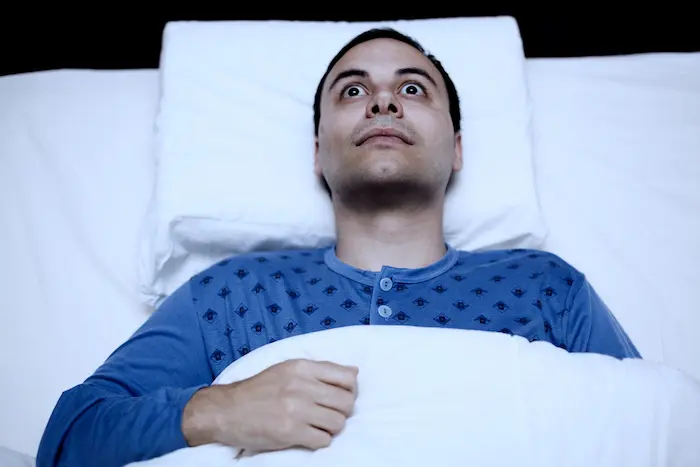
In short, sleeping enough is a major factor in being able to deliver high-level athletic performance, and conversely, chronic lack of sleep is detrimental to performance. Lack of sleep significantly increases the risk of injury. This is often the first consequence of prolonged fatigue. Also, it is rare for a person not to sleep at all. We often have the impression of not having closed our eyes all night, but most of the time, we are mistaken. Nevertheless, common sense must prevail. If you exercise a lot and at the same time suffer from sleep disorders, we suggest you implement the good practices we have listed, and if despite this, things do not improve after a few weeks, we suggest you consult a professional and find a solution for falling asleep first before considering more intensive training.
A legend says that we don’t sleep to sleep but to make our well-being and our results work…
=> SEE ALSO : All our Coaching articles
Share the post "Sleep Problems: Causes, Consequences, and Solutions for Insomnia"