Share the post "Fizik Artica Tempo Gore-Tex Shoes Review"
Continuing to ride in winter in less favorable regions requires carefully chosen equipment to combat the cold. The issue of foot protection through suitable shoes then becomes very important. While overshoes have made great progress, classic shoes are primarily designed for warmer seasons, and depending on one’s sensitivity to cold, the thickness of overshoes alone may not allow for comfortable riding when the thermometer approaches or drops below 0°C. For cyclists who ride in all weather conditions, Fizik Artica Tempo offers an appropriate solution.
Text: Olivier Dulaurent – Photos: 3bikes.fr, Fizik
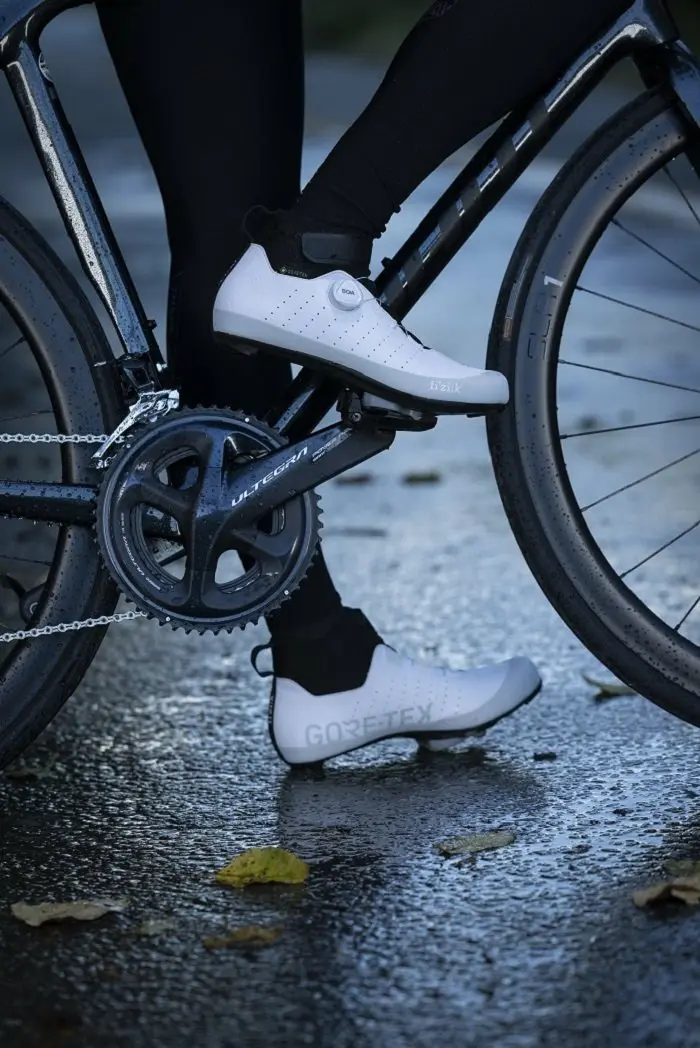
The Fizik Artica Tempo represents the road model and was launched last autumn alongside the Terra model for MTB/Gravel. 3bikes.fr had previously shown here its main features. To summarize the main points, let’s note some differences compared to the brand’s “summer” models of the same range:
- The upper is high-cut, with a Gore-Tex membrane added.
- A Velcro strap on top allows for personalized tightening at the ankle.
- Only one Boa dial is present.
- The outsole is made of nylon instead of carbon to ensure greater comfort. This sole is undrilled to prevent any entry of air and water.
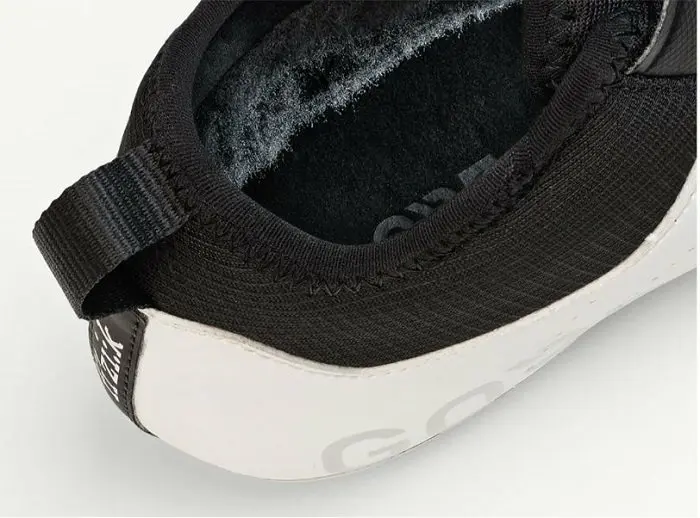
- A fleece-type lining is placed inside to ensure warmth retention.
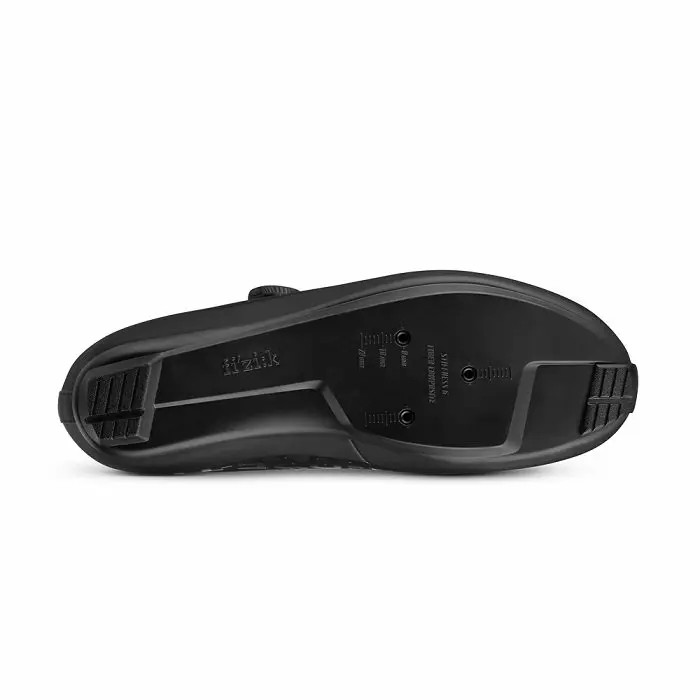
On the road
The first contact with the Fizik shoes leaves a pleasant sensation of warmth thanks to the lined interior. The last shape is rather wide, in line with the brand’s other models, but above all, it is quite voluminous. This point is important and also suggests additional protection against the cold, as we know that the foot should not be constricted so that blood circulation – and thus the fight against cold – can occur under good conditions.
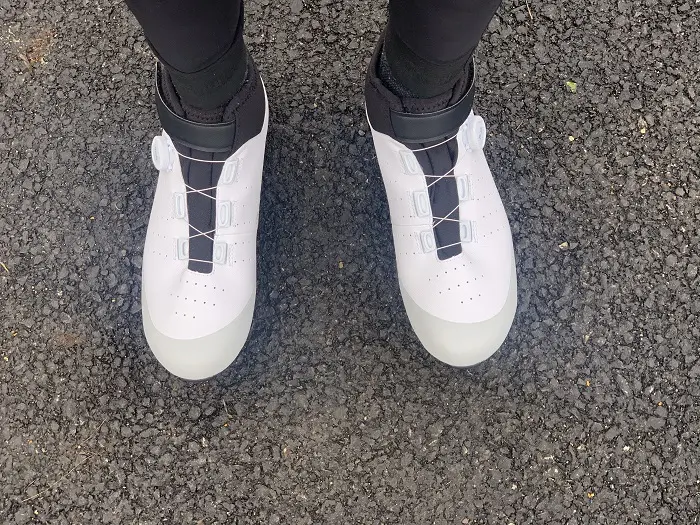
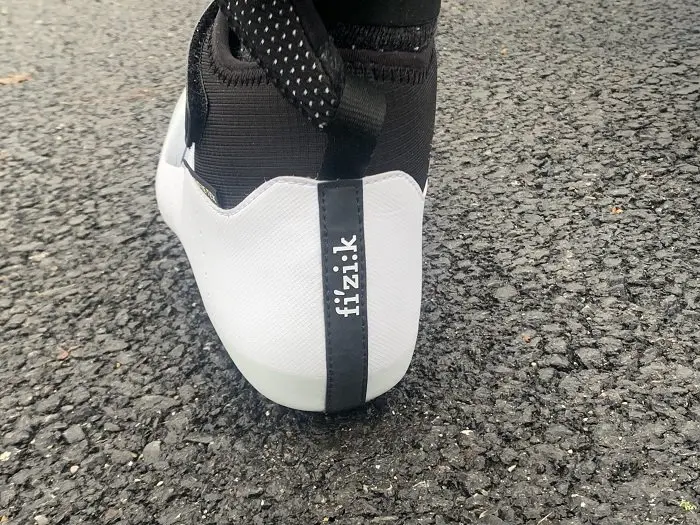
Regarding choosing the right size, it’s normally easy since for the test, a size 45.5 was used, for the same caliper measurement in a store for “city” shoes. Those who would only use Fizik for polar temperatures could, however, take half a size larger to allow for wearing very thick socks.
For tightening, a single Boa dial is present. Indeed, and always with the aim of offering the best possible blood circulation rather than performance at all costs, it was probably not necessary to increase the tightening.
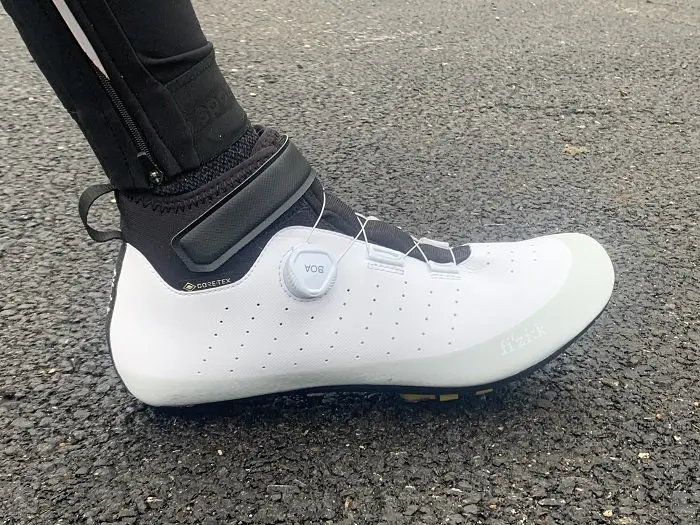
At the top of the shoe, the Velcro strap also allows for “customizing” both comfort and maximizing the prevention of water entry during rain showers.
In this regard, and to ensure the best longevity of the shoe, especially with the white color of the test model, the shoes were systematically used with overshoes, whether “sock-like” material in dry weather or with thin rain overshoes (rather than a thick Neoprene model) when showers occurred during the ride. But it should be noted that this model also exists in black.
In use, and not surprisingly, the Fizik shoes prove to be the perfect companion for rides regularly undertaken in cold and/or rain. Cyclists sensitive to their feet will find an indispensable asset here to continue training when temperatures are negative, as has often been the case in many French regions this winter. As mentioned above, with simple “sock” overshoes or thin and light rain overshoes, which only slightly increase the total weight around the pedal axle, protection is total. Against cold, of course, and against rain, with the almost certain assurance of returning with dry feet. Only riding for long hours in very heavy rain could eventually cause water to enter by capillarity via the ankle. But during the test, this was not recorded despite sometimes heavy showers.
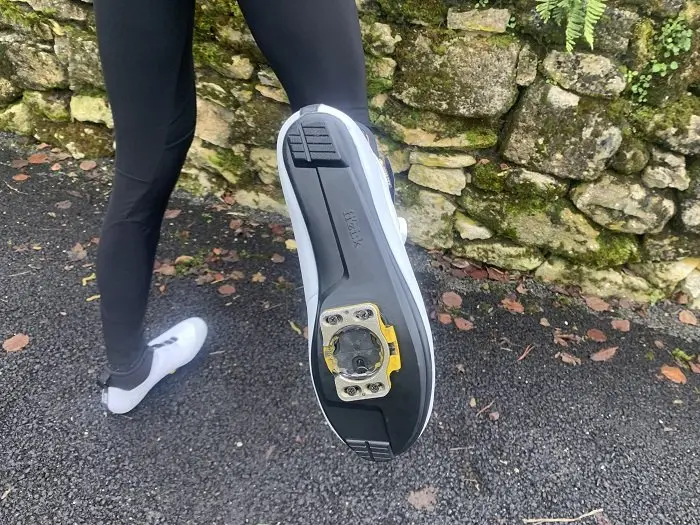
The careful cyclist can also see a definite advantage in using these shoes for winter, as regular rides in the rain lead to faster wear and tear on shoes, which eventually sag.
Over the course of the rides, only two aspects prevent a perfect score:
– Ankle rotation during the pedal stroke is not as fluid as with a summer model, which has a low-cut upper. But this is an inevitable consequence of choosing maximum protection.
– The outsole could have been stiffer, especially considering the size used (45.5). Performance is therefore not maximal. But here again, Fizik’s choice to prioritize comfort over efficiency at all costs is defensible. This is not a model designed to break personal records.
In conclusion, the Fizik Artica Tempo perfectly fulfills its specifications. They allow cyclists to continue riding in all weather conditions and in great comfort. Commuters will find an opportunity to arrive at work or return home with dry and warm feet. As for serious cyclists preparing for the warmer season, it’s also an opportunity to preserve their fine performance-oriented shoes.
The Fizik Artic Tempo shoes in brief… Rating: ***** Pros: maximum protection against cold and rain, overall comfort, outdoor training possible regardless of weather conditions Membrane: GORE-TEX Koala insulated – Lining: soft fleece – Upper: high-density PU + Ripstop fabric – Closure: L6 BOA® D Fit System – Outsole: R5, stiffness index 6 – Weight: 319 g +/- 3% – Sizes: 36-48 (37 to 47 in half sizes) – Price: 259 € – Contact: www.fizik.com/ |
=> SEE ALSO : All our Gear articles
Share the post "Fizik Artica Tempo Gore-Tex Shoes Review"