Share the post "Exclusive Test of the New Orbea Gain Electric-Assist Bike"
With the new Gain, Orbea refines the concept of the sporty electric-assist bike, offering a light, dynamic machine with discreet technological assistance and long range. The Orbea Gain is a bike designed to improve or maintain fitness without being stopped by the natural difficulties of the terrain. A kind of ultimate bike for anyone who above all wants the pleasure of pedaling.
By Guillaume Judas – Photos: Mario Cranks / Orbea
Pleasure as the driving force
Electric city bikes and e-MTBs have enjoyed great success for several years. The former encourage everyday commuting by bike by avoiding traffic jams and pollution, and they encourage sedentary people to take up physical activity. The latter allow riders to tackle very difficult terrain with muscle power alone. This last category has seen some manufacturers get caught up in a power race, which is not always appreciated by other users of wooded trails or mountain tracks, such as hikers or more traditional mountain bikers. Electric road and gravel bikes, meanwhile, struggle to find their audience, because many road riders are above all focused on performance or on maintaining their fitness, which can sometimes, wrongly, be seen as contradictory with using a form of technological “doping” like an e-bike.
On the road, manufacturers are first limited by regulation. In Europe, the electric assist must cut out above 25 km/h (32 km/h in North America). The motor’s help must be limited to making it easier to climb the gradients most often encountered on the road, or to accelerate repeatedly after slowdowns. Rather than engaging in a power race, manufacturers therefore aim to design bikes that are ever lighter, that handle as close as possible to a conventional bike, and that are increasingly well integrated. The idea behind this type of bike is not to break records, but to make certain routes accessible to all types of cyclists, whether young or old, beginners or experienced, healthy or sick, out of shape or overtrained. The goal is to find pleasure in pedaling and not to suffer excessively when fitness is lacking, which could ultimately be counterproductive when it comes to staying consistent enough to improve health and fitness.
Preserving the natural feel above all
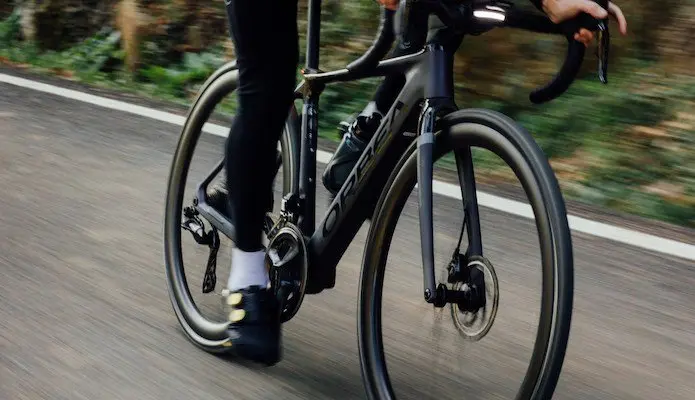
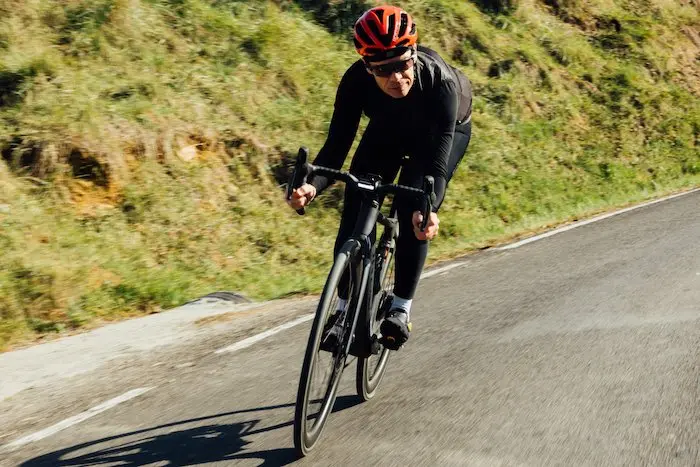
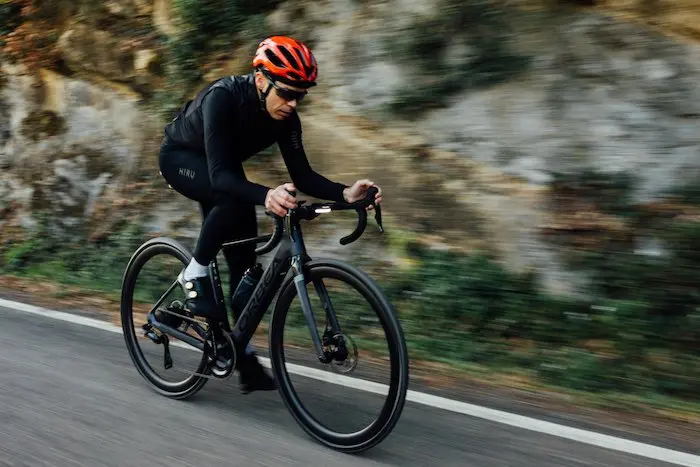
With the Gain, the Basque brand Orbea was one of the pioneers of light, dynamic, and discreet electric bikes, with an almost completely seamless transition between assistance modes and, above all, the moment when the assistance stops. The new version of the Gain (this is the third generation) naturally follows the same trend, but its resemblance to a conventional bike’s behavior has been greatly improved. The new Mahle motor in the rear hub, with settings customized by the brand, and a 350 Wh battery pursue two main goals: smooth, progressive assistance that preserves natural sensations while pedaling, and truly impressive range, so you can take on long distances without really fearing a lack of power on the way back. Beyond battery range, the new Gain stands out in that it behaves truly like a conventional bike. In other words, despite the slight extra weight inherent to the motor and battery, it is stiff and dynamic enough that you do not feel like you are dragging an anvil once the assistance is off.
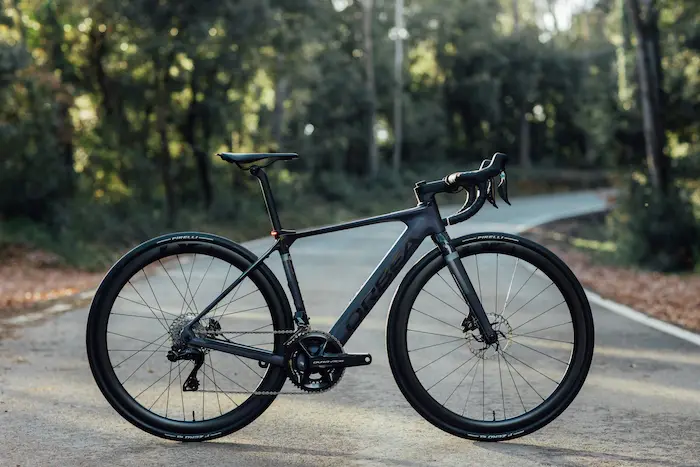
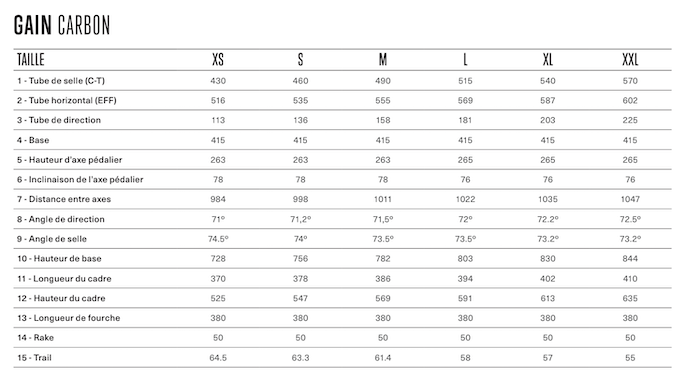
At the heart of the new Gain is first of all a monocoque OMR carbon frame, positioned in the middle of Orbea’s range, between the OME and OMX levels, and which we have already been able to test over a long period on the Orca OMR. It is a frame light, stiff, and strong enough to meet the needs of the new Gain and its new motor system supplied by Mahle, with the X20 drive unit and its large 350 Wh battery. The frame weighs barely over a kilo and has a geometry very close to that of a classic road bike.
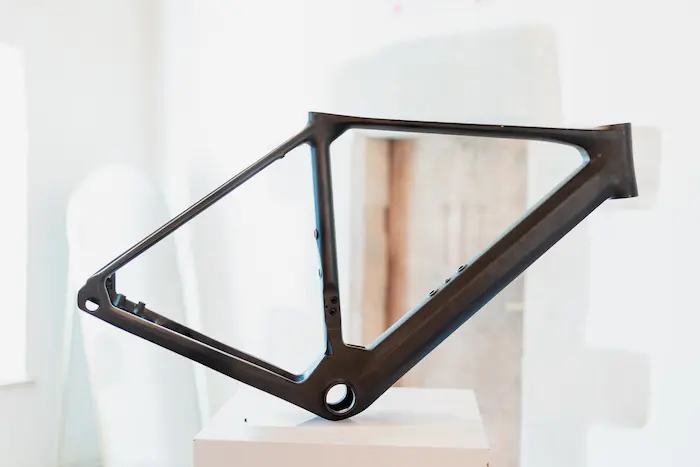
It is to get this type of frame that Orbea chose to keep a motor in the rear hub rather than opt for a mid-drive motor. This design first of all keeps a conventional two-chainring drivetrain, and then the maximum torque of 55 Nm delivered by the Mahle is more than enough to meet the philosophy behind the Gain’s design. For reference, some mid-drive motors used on mountain bikes offer up to 85 Nm of torque. Finally, the extra weight at the rear wheel is balanced by the large 350 Wh battery placed on the down tube. Orbea did not seek maximum weight savings by choosing a 250 Wh battery over a 350 Wh one (300 or 400 g lighter, but with less range, obviously). The overall setup does not excessively disturb the bike’s center of gravity.
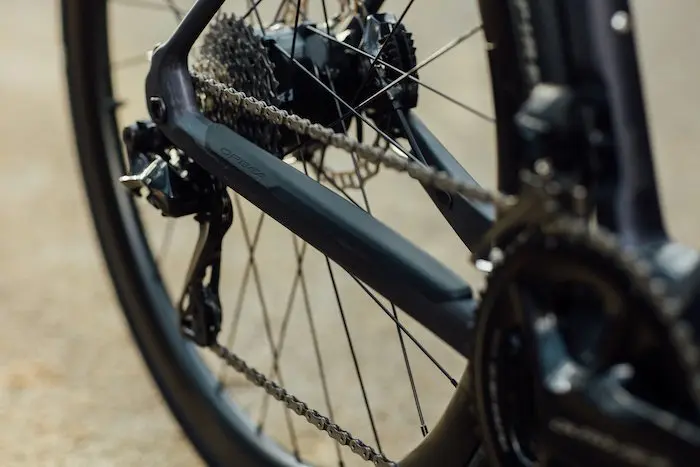
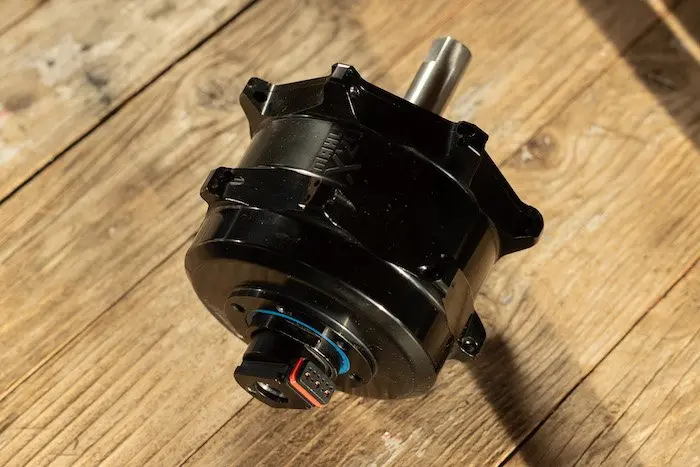
For the Gain, Orbea therefore worked with Mahle and developed its own firmware so that the assistance meets the expectations of the bike’s designers. The motor has been tuned to provide optimal assistance at a pedaling cadence between 75 and 95 rpm, which matches the habits of riders with some cycling experience. Other parameters were then adjusted so that the assistance is progressive and unobtrusive, and proportional to the power the rider naturally produces. Thanks to the new bottom bracket of Mahle’s X20 system, with a torque and cadence sensor, Orbea was able to tune the assistance to deliver that gentle feeling, comparable to a good tailwind, or that recalls the memory of being in great shape a decade or two earlier.
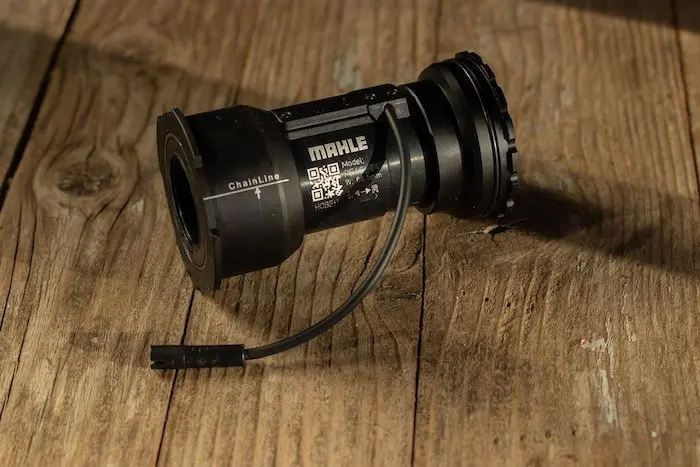
The chosen settings also include a progressive power cutoff as you approach the legal limit, so the transition is almost seamless. In practice, the motor is still working up to 26.5 or 27 km/h, as the faint whine from the system reveals, but it then provides only a few watts of assistance before leaving the rider alone with their effort, as with a normal bike that weighs around 11.5 kg, whose stiffness and component quality give striking feelings of efficiency once the machine is rolling.
Long range
With a reasonable weight for an e-bike, settings that favor gentle boosts without overly taxing the motor, a 350 Wh battery, and excellent efficiency, the new Gain performs very well when it comes to system range. With assistance engaged, Orbea claims up to 4,000 m of elevation gain for a 70 kg rider on the first assistance level, up to 2,300 m on the second level, and up to 1,500 m on the highest level. In the field, we completed a 100 km ride with 1,200 m of elevation gain using only 19% of the battery’s capacity (for a rider weighing 58 kg), whereas on the same ride, a colleague who weighs almost 30 kg more and is less fit finished after using 70% of the capacity.
With our less-fit colleague, we were able to finish the ride together, although sharing that moment would have been very difficult without assistance.
However, note that we were able to finish the ride together, although that would have been very difficult without assistance. The brand offers an optional additional 177 Wh battery that fits in the second bottle cage and adds another 1,500 m of elevation gain. This means that riding a Marmotte or an Étape du Tour with electric assistance engaged on every climb is entirely feasible.
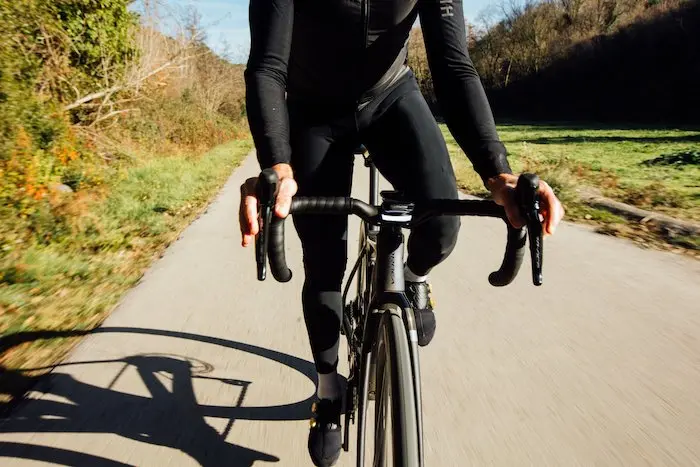
Battery use obviously depends on the type of route and how you ride. Overall, the gentle, progressive, and transparent assistance adds 1 watt per kg over an entire demanding section, which changes everything in terms of feel, as those who specialize in training or riding on Zwift will appreciate. The Orbea Gain boosts performance and sensations, but it does not turn the bike into a moped. With the maximum assistance level engaged, you can get up to about 240 watts of boost, which makes it easy to get over a steep section by simply supporting each pedal stroke, without being completely disconnected from the sense of effort. If you decide instead to go all out, the 240 watts add to what you produce, which can come to something like 600 or 650 watts for a few minutes. That is huge, but the cardiovascular strain in that case is severe and very real.
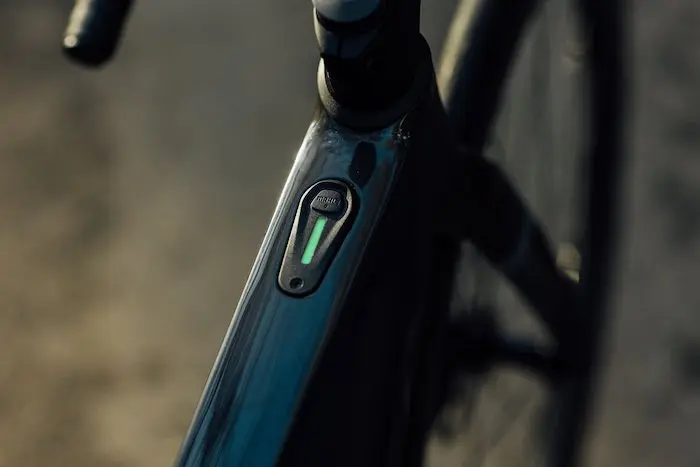
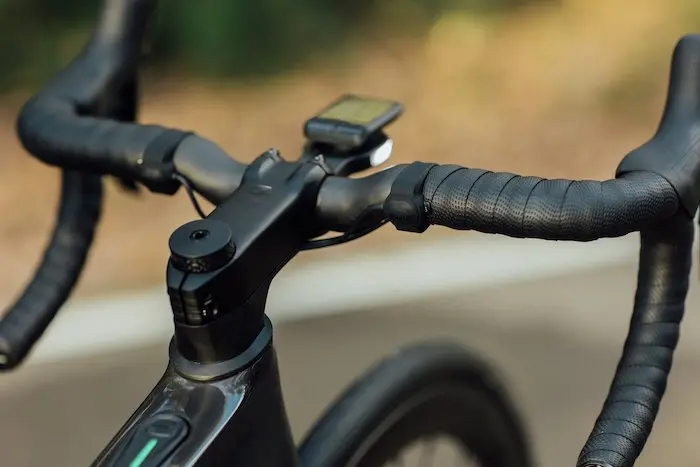
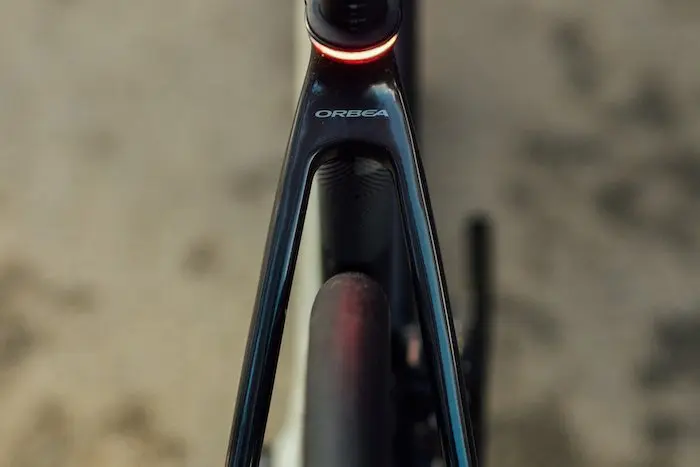
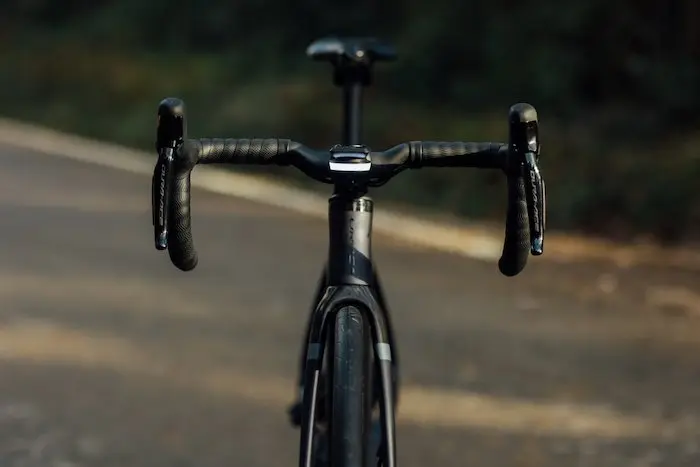
The three assistance modes can be changed with an easy-to-reach button on the top tube, which shows four color codes depending on the mode engaged: white (system on but not active), green (first assistance level), orange (second level), and purple (third level). Modes can also be changed with small optional buttons on the cockpit, which work almost like gear shifts (for example, changing the assistance mode for a few hundred meters when the gradient changes midway up a climb). The system also includes a dedicated computer, which shows speed, distance, battery level, and remaining range, both as a percentage and in kilometers. This computer mounts on a Garmin- or Wahoo-type bracket, and it can be replaced by connecting the bike to a compatible GPS computer. As with the previous-generation Gain, the bike is equipped with two integrated lights, front and rear, a plus for visibility.
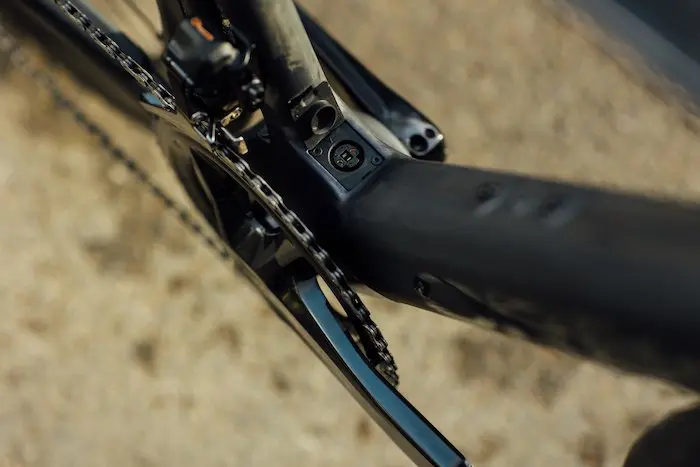
Finally, the battery charging port is located on the bottom bracket, which is fairly conventional in this case.
A range of six bikes
The new Orbea Gain with a carbon frame and Mahle X20 motor comes in six versions, priced from €5,499 to €9,999. This range joins the Gain Hydro, with an aluminum frame and Mahle X35 motor, which does not have the same settings and is priced from €2,999. For the model we are looking at here, the following road versions are available:
- Gain M30 at €5,499, with Shimano 105 11-speed groupset and aluminum wheels.
- Gain M30i at €6,299, with Shimano 105 Di2 12-speed groupset and aluminum wheels.
- Gain M20i at €7,499, with Shimano Ultegra Di2 12-speed groupset and Orbea 42 carbon wheels
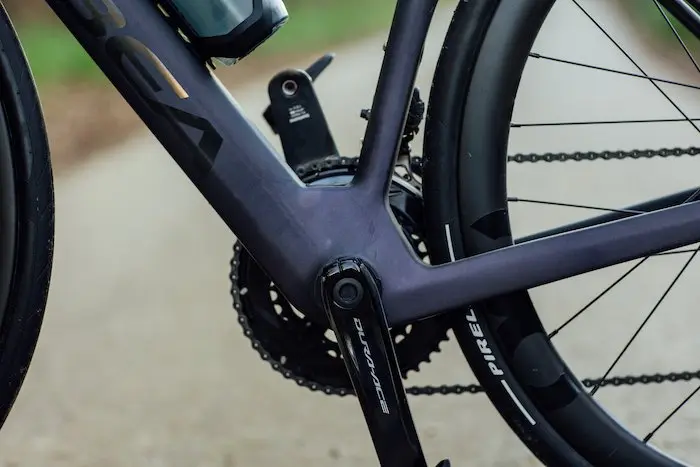
- Gain M10i at €9,999, with Shimano Dura-Ace 12-speed groupset and Orbea 42 carbon wheels (our test model).
In addition to these four models, Orbea adds two Gains set up for gravel, since the frame accepts tires up to 35 mm wide:
- Gain M31e 1X at €6,599, with SRAM Rival AXS 12-speed groupset in a single-chainring setup, with aluminum wheels.
- Gain M21e 1X at €7,599, with SRAM Force AXS 12-speed groupset in a single-chainring setup, with aluminum wheels.
We tested a SRAM Force version over about thirty kilometers of trails, and it proved very good fun, because off-road you are less limited by the regulated speed an e-bike is subject to. In our view, it has very strong potential given the versatility of a gravel bike in general, although the 35 mm maximum width means avoiding very wet or muddy conditions.
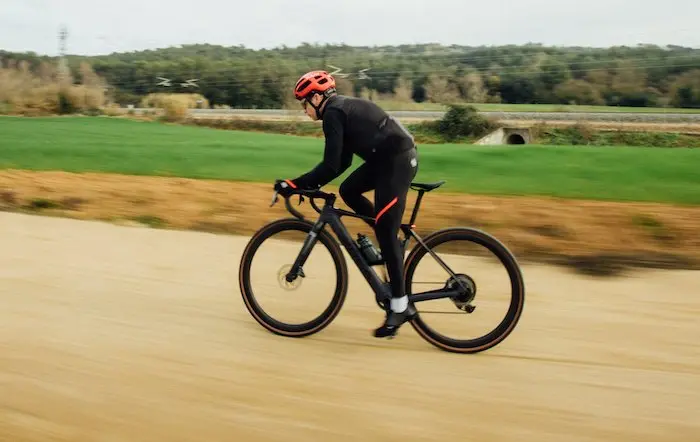
Note that, like most Orbea bikes, the Gain comes in three standard colors, but it is eligible for the MyO program, which lets buyers customize the paint when ordering and change certain components, such as the handlebar, tires, or saddle.
Our verdict on the Orbea Gain
Like most electric-assist road bikes, the new Gain is aimed at riders who are out of shape, less trained, have health issues, or want to ride with a group of more experienced cyclists on difficult routes. But not only that. Thanks to its handling, which stays extremely close to a traditional road bike even through tight corner sequences or steep descents, and thanks also to its overall efficiency, it also stands out as a highly addictive machine for regular riders.
Indeed, the assistance settings offer a noticeable but unobtrusive boost that lets you tackle climbs while staying in the endurance zone. The power delivered is enough to reduce perceived intensity by 10 to 20 heartbeats per minute during hard efforts, which both avoids suffering and makes training more productive most of the time. We know that to maintain good health, endurance efforts should be prioritized, and that for those aiming at performance, a long period of low-intensity training comes first.
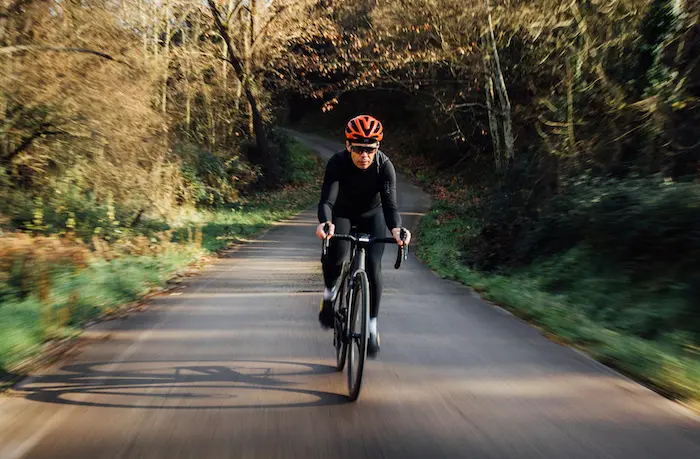
Of course, it is also possible to use the motor’s capabilities to add to those of the rider, in order to climb faster. Not as if you were on the handlebars of a scooter, but rather as if you had a good tailwind. It is exhilarating, and thanks to the battery’s range, it can last a long time. The commitment is very real in this case, and the cardiovascular and muscular work is genuinely effective. In any case, these features lead to more enjoyment, which was precisely Orbea’s aim when it created this bike.
The most surprising thing of all remains the very neutral behavior of the bike once the assistance is off, whether because you are exceeding the regulated speed, because you want to save battery, or simply because you want to test your natural abilities at that moment. The Gain is compact and stiff, and in this version with a Shimano Dura-Ace groupset it delivers genuinely high-end behavior. To conclude, we should note that the M20i with Ultegra Di2 at €7,499 nevertheless strikes us as better value for money, given the difference in price and weight (barely 250 g).
The ORBEA GAIN M10i in brief… Rating: ***** Pros: gentle, progressive, and non-intrusive assistance, range, complete bike weight, frame stiffness, handling (responsiveness and steering)
Frame: Orbea Gain Carbon OMR monocoque – Fork: Gain OMR Carbon – Motor: Mahle motor hub X20, ALC – Battery: Mahle iX350 36V 353Wh – Wheels: Carbon 42 – Tires: Pirelli P ZERO Race TLR 700x30c – Crankset: Shimano Dura-Ace R9200 50-34 12-speed – Derailleurs: Shimano Dura-Ace Di2 R9250 12-speed – Levers: Shimano Dura-Ace Di2 R9270 12-speed – Brakes: Shimano Dura-Ace R9270 Disc – Cassette: Shimano Dura-Ace 12-speed 11-30 – Handlebar: OC Road Performance RP10-R Carbon – Stem: OC Road Performance RP10 – Seatpost: OC Performance XP10-S Carbon – Saddle: Fizik Antares R5 Versus EVO Regular – Colors: 3 + MyO customization – Weight: about 11.5 kg in size XS without pedals – Price: €9,999 – Contact: orbea.com |
=> SEE ALSO: All our gear articles
Share the post "Exclusive Test of the New Orbea Gain Electric-Assist Bike"