Share the post "Review of the Cannondale SystemSix Hi-Mod Ultegra Di2"
Introduced more than four years ago, the Cannondale SystemSix Hi-Mod was designed at the time with the sole goal of making it the fastest road bike on the market. And while the competition has caught up since then, the SystemSix remains one of the most efficient models available today. Priced at €8,799 with a 12-speed Shimano Ultegra Di2 groupset, this top-of-the-line version offers excellent value for money.
By Guillaume Judas – Photos: ©3bikes.fr / Cannondale

Still very much in style even though it’s not this year’s newest model, the Cannondale SystemSix remains a bike in a class of its own—one of the first to combine the versatility of a peloton race bike with the efficiency of a time trial bike. Since its release in 2018, the SystemSix has been widely praised for its aerodynamic performance, first in independent wind tunnel tests and then on the road. Far from being a lightweight, the bike has repeatedly been the top choice among Cannondale-sponsored pro riders on hilly courses, even over the (theoretically) more versatile and lighter SuperSix from the American manufacturer’s lineup. Ultimately, only a new SuperSix that replicates the SystemSix’s aerodynamic qualities would be likely to dethrone this bike in the hearts of speed enthusiasts. But since all of this is still science fiction, let’s not deny ourselves the pleasure of putting this machine—designed to boost performance without being entirely out of reach for the average rider—to the test.

Six components designed to work in harmony
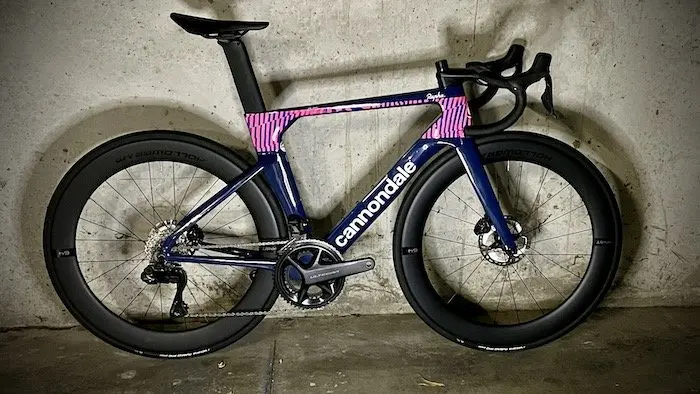
Behind the SystemSix concept lies a set of six components designed as a unified whole to optimize aerodynamic efficiency: the frame, fork, handlebars, stem, seatpost, and wheels. The frame and fork are designed with profiles intended to maintain continuous airflow, even at high yaw angles. To further optimize handling on the road, the entire chassis is asymmetrical, allowing it to respond instantly to pedaling and braking forces.
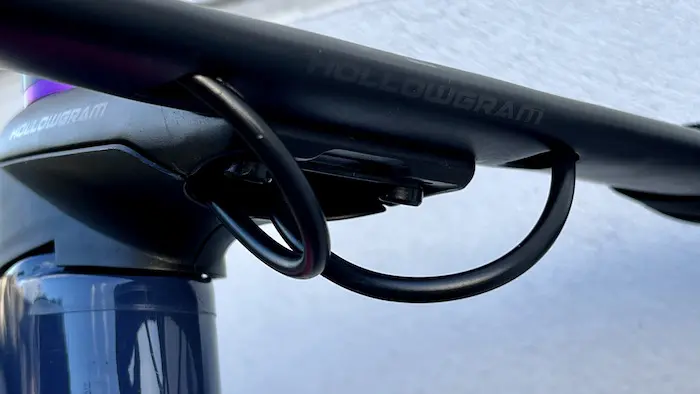
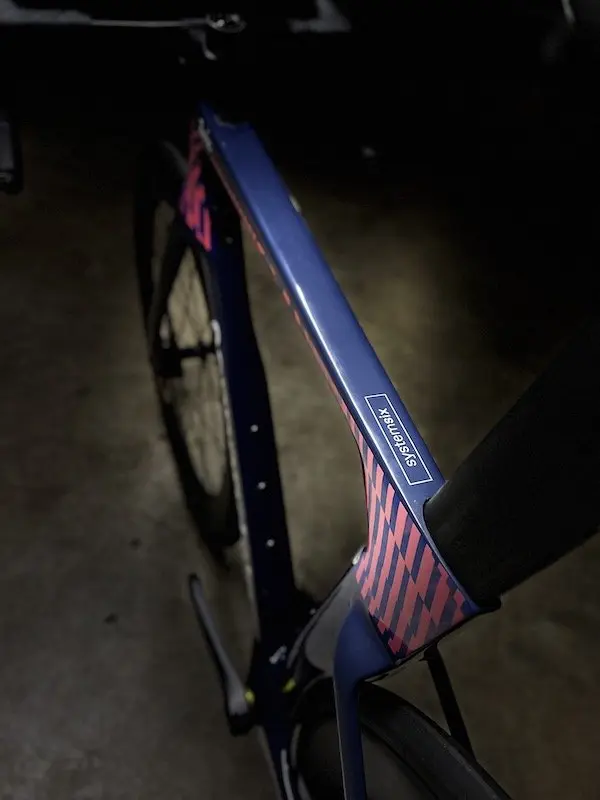
With massive, boldly shaped tubes and, above all, complete integration of the brake hoses inside the frame and fork—including, of course, the handlebar area —even though the hoses here are a bit long given the stem height we chose—the SystemSix is impressive. On the front of the head tube, you can see a protrusion, which actually allows the hoses to pass in front of the bearings. This system is simpler than most of those currently used by competitors inside the steerer tube. On the other hand, it significantly limits the handlebar’s turning radius. This is obviously never a problem while riding (except for those who want to balance in place at traffic lights), but it can be a bit of a hassle when stowing the bike in the trunk of a car, or worse yet, in a bike bag for taking the train or a plane.

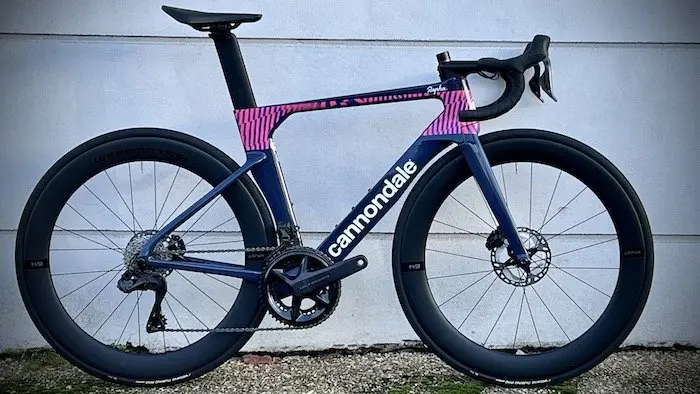
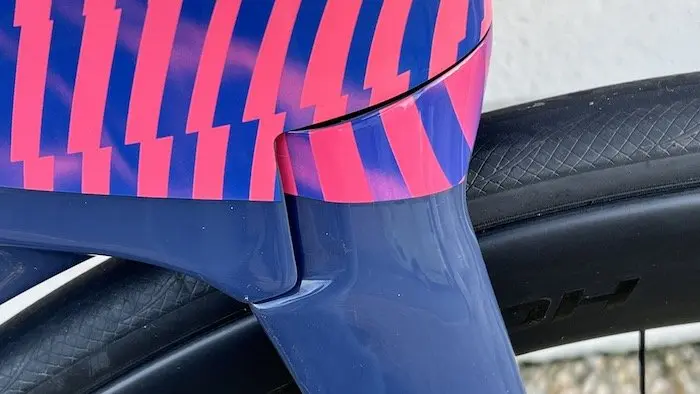
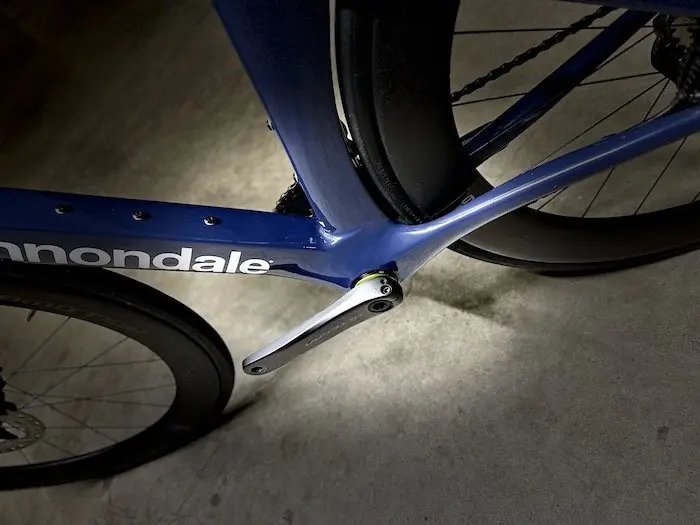
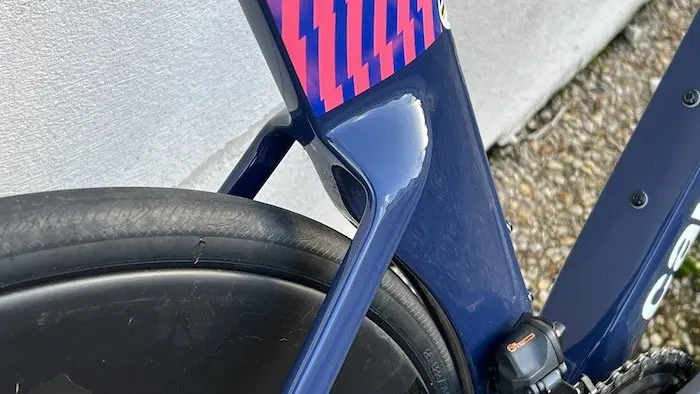
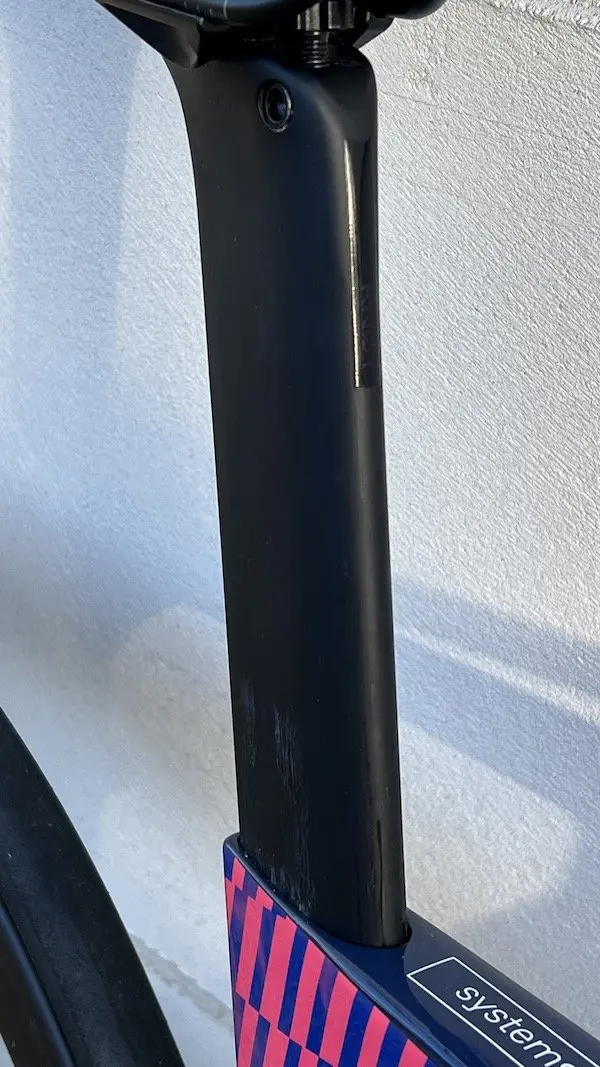
Beyond the imposing dimensions of all the tubes and the spectacularly aerodynamic shape of the seat tube and seatpost, the fork also catches our eye, with wide stanchions and, above all, superb aesthetic integration at the junction with the down tube. Further back, we notice an enormous bottom bracket shell that extends into wide chainstays, which are connected to thinner seat stays that attach fairly low on the seat tube. The down tube and top tube feature a design that has become classic on modern bikes, but they stand out once again due to their extraordinary dimensions.
Top-of-the-line equipment
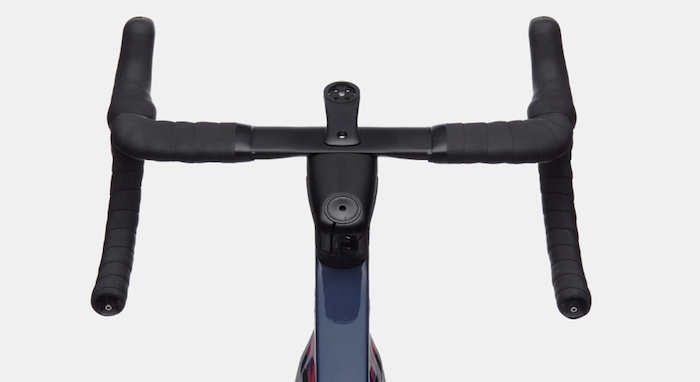
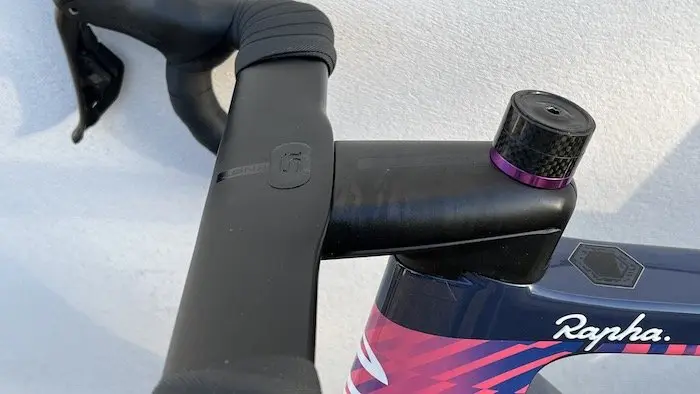
In addition to the wide, streamlined seatpost, the other standout feature is the handlebar setup, which is perfectly aerodynamic and resembles an integrated set in appearance. But here, the handlebars are adjustable and can be tilted up to 8 degrees, which is a clear advantage in terms of comfort. This same handlebar, with its compact dimensions and slightly flared lower section, offers superb grip—whether in an aero position on the drop bars with bent elbows, or during a sprint or acceleration with hands on the lower part of the bars. The upper section, shaped like an airplane wing, also remains comfortable, even though the SystemSix isn’t specifically designed to tackle long mountain passes.
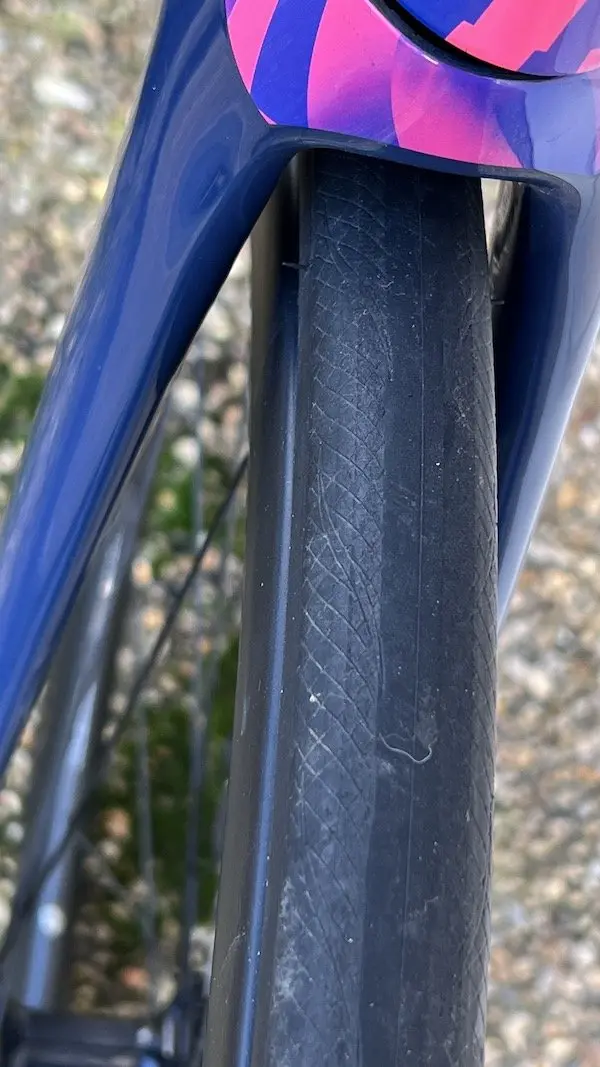
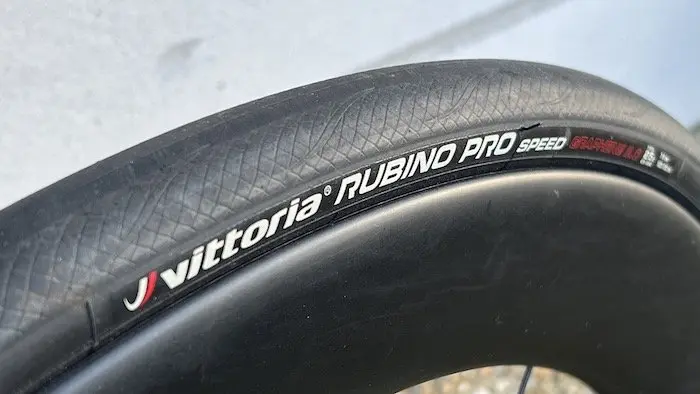
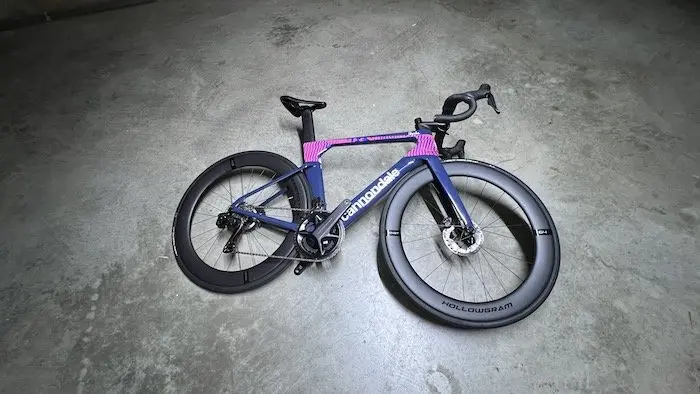
The HollowGram KN0T64 wheels, which are 64 mm tall and 32 mm wide, also contribute significantly to the bike’s overall handling. They are very stiff, and their width allows the 700×25 Vittoria Rubino Pro Speed tires to actually measure 28.5 mm. The very slightly arched shape of the rims prevents excessive instability in crosswinds and provides excellent overall balance at high speeds. They may feel a bit heavy when you first start pedaling, but once you reach cruising speed, they feel quite responsive. On the practical side, note the through-axles, which allow for quick wheel removal without having to unscrew them completely.
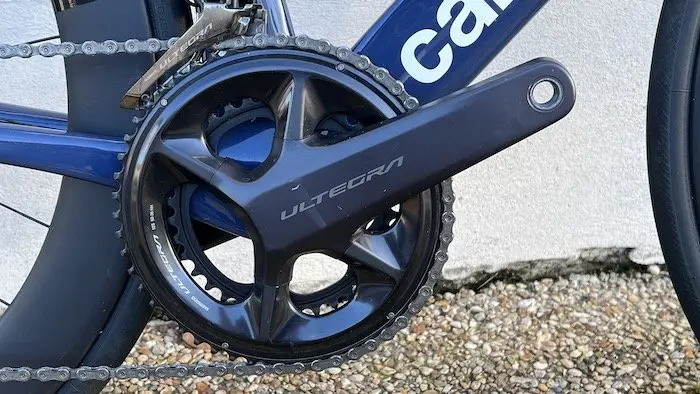
As for the rest of the components on this high-end version of the SystemSix, it features a complete Shimano Ultegra Di2 Disc 12-speed groupset that operates flawlessly, with an 11-30 cassette and 52-36 chainrings. In this stunning EF Education – Easy Post team colorway, the bike is rounded out by a Fizik Argo Vento R5 saddle, which we’ve already tested for comfort. Weighing in at 8.160 kg in size 54 (without pedals or bottle cages), the SystemSix isn’t exactly a featherweight, and it seems difficult to make it much lighter without compromising its robust character. Two other versions of the bike are available: one with a 12-speed Shimano Dura-Ace Di2 groupset (about 230 g lighter) for €11,999, and the other with a 11-speed mechanical Ultegra groupset and Vision SC 55 wheels for €5,699 (weighing about 250 g more).
A bike that really packs a punch
When adjusting the riding position, you’ll appreciate the relative simplicity of the system related to the handlebar setup. The fork steerer tube is standard, and despite the presence of special spacers under the stem when the bike is delivered, it’s still possible to position the stem as low as possible on the head tube. The components are substantial and appear compact at first glance, but in reality, the stem—which is perfectly parallel to the ground—is 120 mm long. However, the compact handlebars make it easy to find a sporty yet comfortable riding position.
The riding position is ideal right from the start for sporty riding. That’s a good thing, because that’s exactly what the SystemSix is designed for. You can feel the frame’s stiffness from the very first pedal strokes, and the bike’s slight excess weight requires a bit more effort than usual to reach cruising speed. Once it’s up to speed, the bike’s weight is nothing more than a distant memory. In terms of handling, the bike is both responsive and reassuring. Its stability inspires confidence, whether riding in crosswinds, on fast descents with shifting weight, or during emergency stops, thanks to the frame’s stiffness. Overall, as soon as you adopt a speed-oriented riding position—with your hands on the lower part of the handlebars or on the shifters with your elbows bent—its performance is impressive.
On climbs, the SystemSix remains effective as long as you maintain your cadence and effort. On short hills, it relies on its stiffness to power through. On longer climbs, it makes the most of its aerodynamics at speeds above 20 km/h, when weight is no longer really an issue. On the steepest slopes, it’s obviously less responsive than a true climbing bike, and it’s mainly the wheels that make you feel their inertia. Fortunately, the 12-speed Ultegra drivetrain with a wide range of gear ratios still makes it possible to get through, except, of course, for the least-trained cyclists.

While the SystemSix isn’t designed for leisurely rides, it isn’t entirely uncomfortable either—provided you maintain an active pedaling style and don’t let the bike’s stiffness get the better of you by overusing coasting with all your weight on the saddle and arms. The Cannondale is a bike that demands engagement, a steady pedaling rhythm, and frequent gear changes to avoid bumping over even the slightest unevenness in the terrain. While we appreciated the riding position (which is already a big plus in terms of comfort), the tire width—determined by the wheel size—also allowed us to ride with relatively low tire pressure, thereby significantly reducing vibrations. This was also beneficial in terms of traction on the slippery, wet roads of late December, without compromising the impressive performance of the Vittoria Rubino Pro Speed tires. In short, in many ways, the SystemSix confirms that it has been well-designed and meticulously engineered down to the smallest detail to conserve as much energy as possible when fighting rolling resistance or air resistance—or to ride faster than usual, depending on the situation.
Who is the Cannondale SystemSix designed for?
Does an aerodynamic and stiff bike like the SystemSix necessarily appeal only to advanced riders or top-level triathletes? No, far from it—even though the 64-mm-tall wheels further define its handling, making the bike a bit more demanding to get up to speed and control on windy days or on highly technical courses. The SystemSix impresses with its overall performance—which remains among the best despite fierce competition—and its general balance, which ultimately makes it very appealing. Those who enjoy riding fast for the fun of it and pushing their limits and average speed are also part of the target audience. In fact, all properly trained cyclists, except those who focus exclusively on climbing.
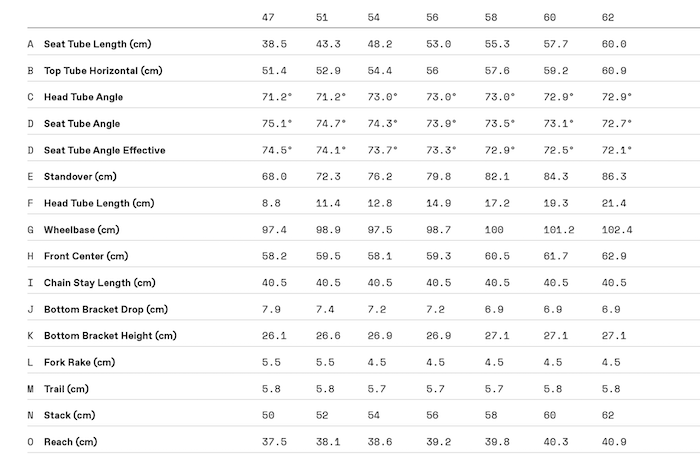
The CANNONDALE SYSTEMSIX Hi-MOD at a glance… Rating: ***** Pros: efficiency, stability, stiffness, handling, geometry
Frame: SystemSix Hi-MOD Carbon – Fork: Hi-MOD Carbon – Handlebar: HollowGram KNØT SystemBar – Seatpost: HollowGram 60 KNØT Carbon – Wheels: HollowGram 64 KNØT – Tires: Vittoria Rubino Pro Speed 700×25 – Crankset: Shimano Ultegra 12-speed – Derailleurs: Shimano Ultegra Di2 12-speed – Shifters: Shimano Ultegra Di2 12-speed – Brakes: Shimano Ultegra Disc – Cassette: Shimano Ultegra 12-speed 11-30 – Saddle: Fizik Vento Argo R5 – Weight: 8.160 kg in size 54 without pedals – Price: €8,799 – Contact: cannondale.com |
=> SEE ALSO: All our Equipment articles
Share the post "Review of the Cannondale SystemSix Hi-Mod Ultegra Di2"