Share the post "Shimano Dura-Ace Di2 12-Speed Groupset: 15,000 km Long-Term Test"
A year after its release, it is time to take a first look back at the Shimano Dura-Ace Di2 12-speed groupset, in terms of shifting precision and reliability. To do so, we put it through a long-term test of 15,000 km. The result: apart from minimal maintenance needs, Shimano’s flagship groupset lives up to what we expected of it.
By Guillaume Judas – Photos: ©3bikes.fr
=> SEE ALSO: Fitting and Adjusting the New Shimano Dura-Ace and Ultegra Di2 12-Speed Groupsets
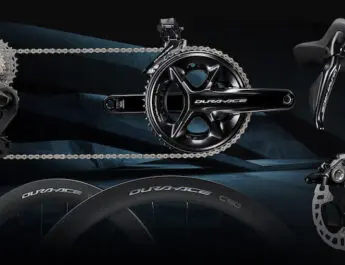
Shimano’s flagship groupset was highly anticipated when it launched a little over a year ago. As with each of its versions over the past thirty-plus years, the Dura-Ace is practically guaranteed to be a best-seller. Facing its rivals SRAM Red eTap and Campagnolo Super Record EPS, the Dura-Ace Di2 had to move to 12 speeds. But the world leader in drivetrains could not simply add a cog to the Dura-Ace cassette. The new high-end groupset also had to bring some new features over the previous version to justify its number-one position. With wireless communication between the shift levers and the derailleurs, a quiet, friction-free disc brake system, and an easy connection to a smartphone or PC app that makes many adjustments easier, the challenge has been met.
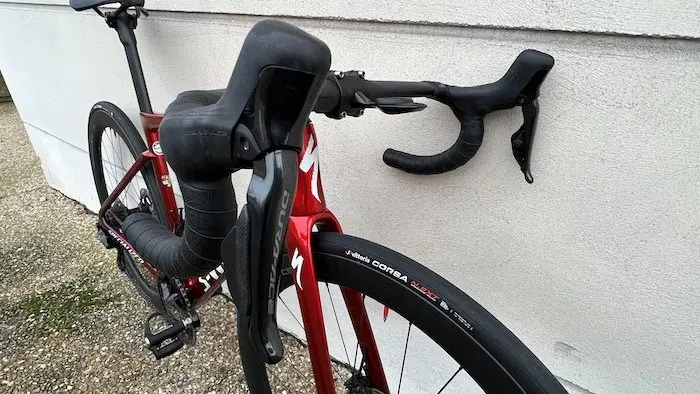
Nothing revolutionary, true, since competition is fierce in this area and SRAM or Campagnolo also regularly join the race for novelty. But with the Dura-Ace, Shimano mainly wants to offer a safe bet, a reference version in terms of finish as well as performance and reliability. That is what you expect above all from a very high-end groupset like the Dura-Ace, especially given its very high retail price, around €4,000.
On price alone, this new Dura-Ace groupset sits between the SRAM Red (around €3,500 retail) and the Campagnolo Super Record EPS (around €4,500). It now has the same number of speeds (12) as its two rivals, and in this disc-brake version it is even a little lighter (2442 g for the complete groupset, against 2516 g for the SRAM Red and 2634 g for the Campagnolo Super Record EPS).
Trouble-free operation and minimal maintenance
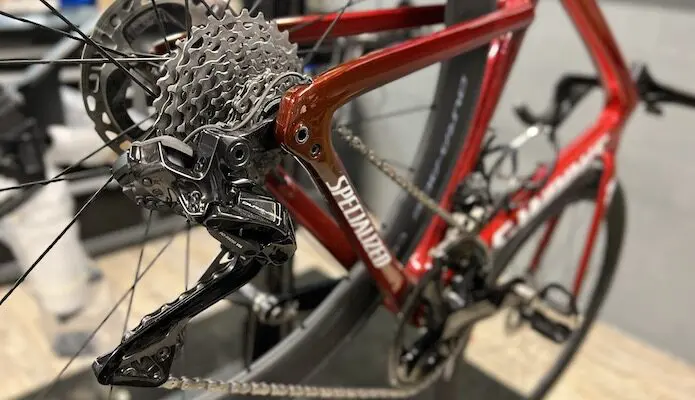
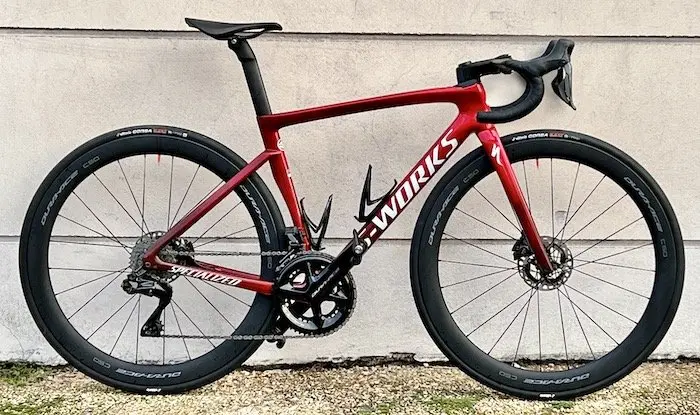
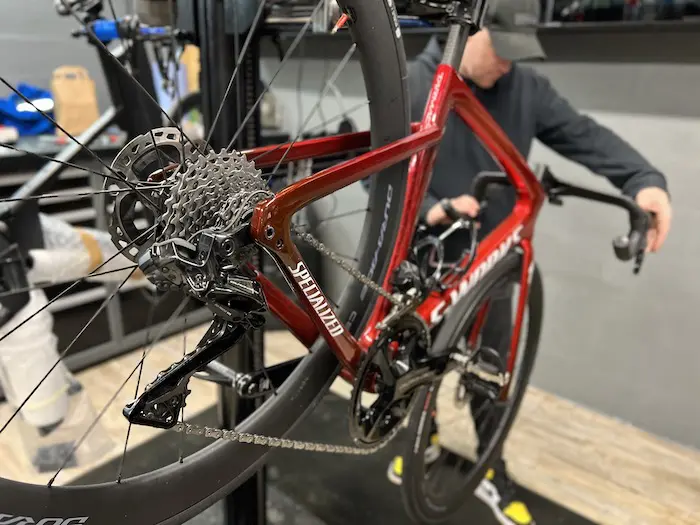
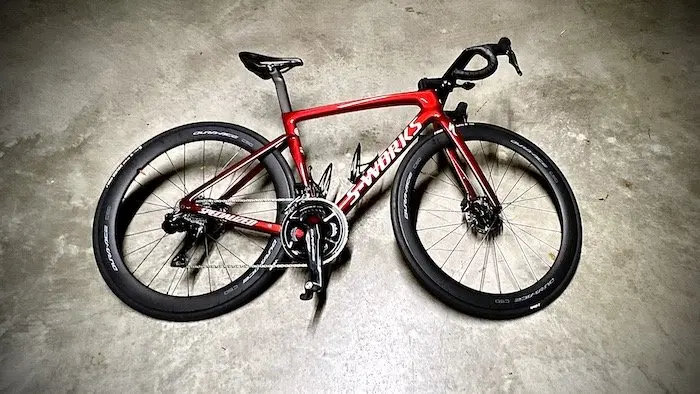
We put 15,000 km on the groupset between spring and autumn 2022, on a Specialized S-Works Tarmac SL7, successively fitted with Shimano Dura-Ace C50, Roval Rapide CLX and Fulcrum Racing Speed 40 wheels. The three different wheel sets slightly changed how the bike handled, but never the groupset’s behavior, obviously.
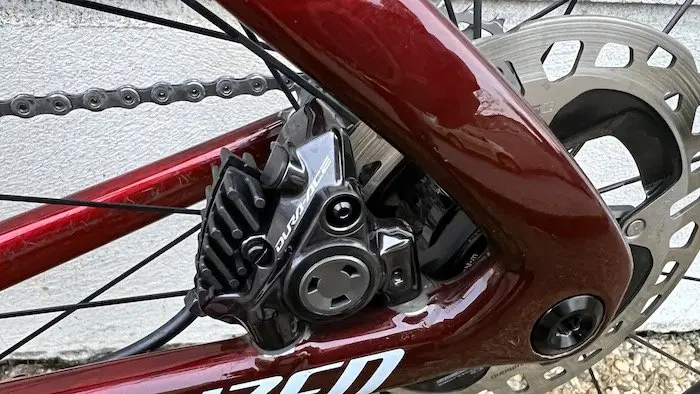
And even better: unlike the previous version of the Dura-Ace Di2 disc brake, it was never necessary here to readjust the brake calipers after each wheel change. The old system can still be a pain to adjust to avoid noise or rubbing at the brakes, given the very small gap between the pads and the disc. Any wheel change, even with the slightest difference in disc positioning, meant a tedious caliper adjustment. With the Dura-Ace R9270 version, the problem is almost solved, since Shimano managed to increase the gap between the pads and the disc without changing the brake lever stroke. That is a huge advantage over the old version.
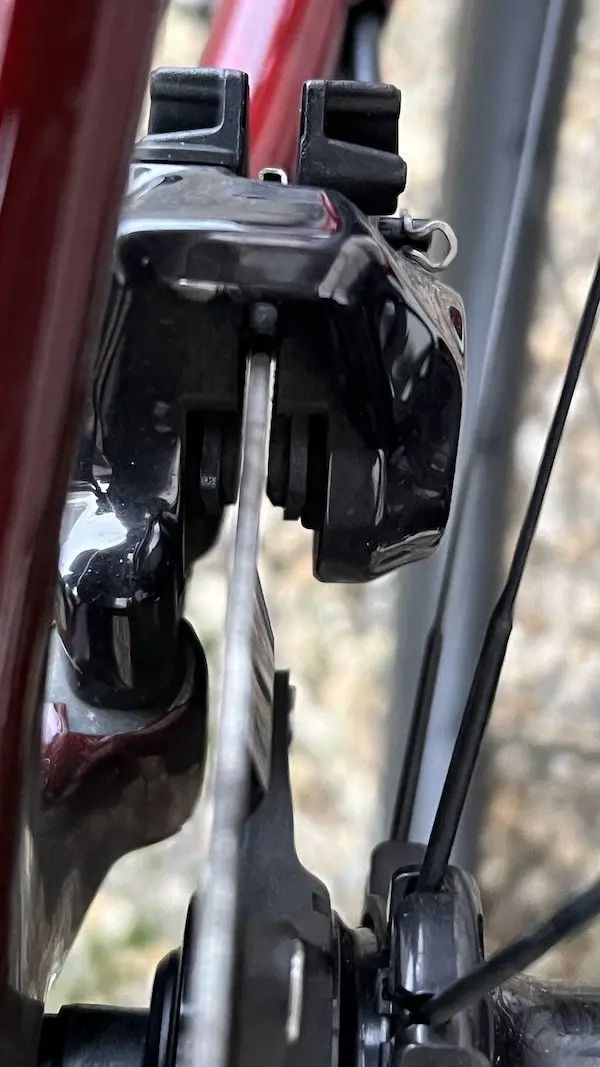
What’s more, braking performance in general is clearly better than in the previous version. Not so much in terms of power or stopping distance, but in terms of noise, which has almost disappeared except in wet conditions, and in how the pistons retract after hard braking, avoiding that stretch of a few seconds where the pads stay in contact with the disc even after the lever is released.
In terms of maintenance, we noticed that the brake lever stroke had increased over time. This was even more noticeable after switching to our winter bike. So we checked the brake circuit and bled a few air bubbles, which did not require a full bleed.
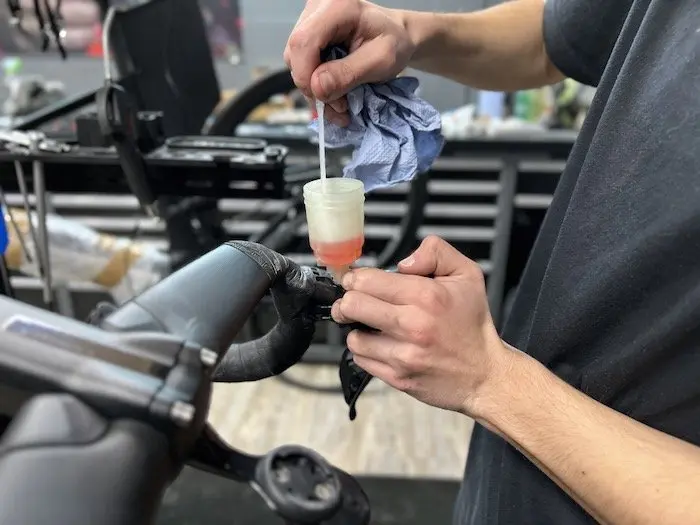
On the other hand, a thorough check of the brake pads shows they are at least half worn, and it may be time to change them. Nothing abnormal after 15,000 km, especially since some riders may need to change pads sooner, depending on their weight and the terrain they ride. The bike was mainly used in northern France on moderately hilly routes, by a rider under 60 kg, and the summer was particularly dry. Replacing the pads costs around €50 for both pairs (front and rear).
=> Buy Shimano L05A Resin Brake Pads for €24.99
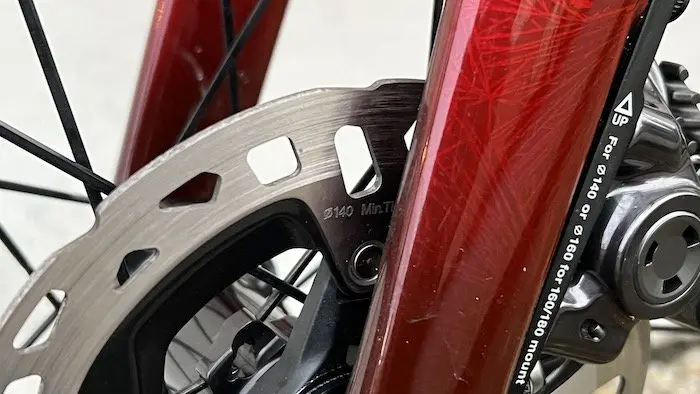
There are no issues with the discs (two 140 mm discs here). There is very little wear, and they look set to last at least 40,000 km. But always under the conditions of use described above. Note that with each wheel change, we took care to refit the same discs, which were therefore bedded in with the original pads. For reference, Dura-Ace/XTR discs retail for around €90 each, but you can always fit Ultegra/XT discs for around €60.
=> Buy Shimano XTR-RTM900 Brake Disc for €61.99
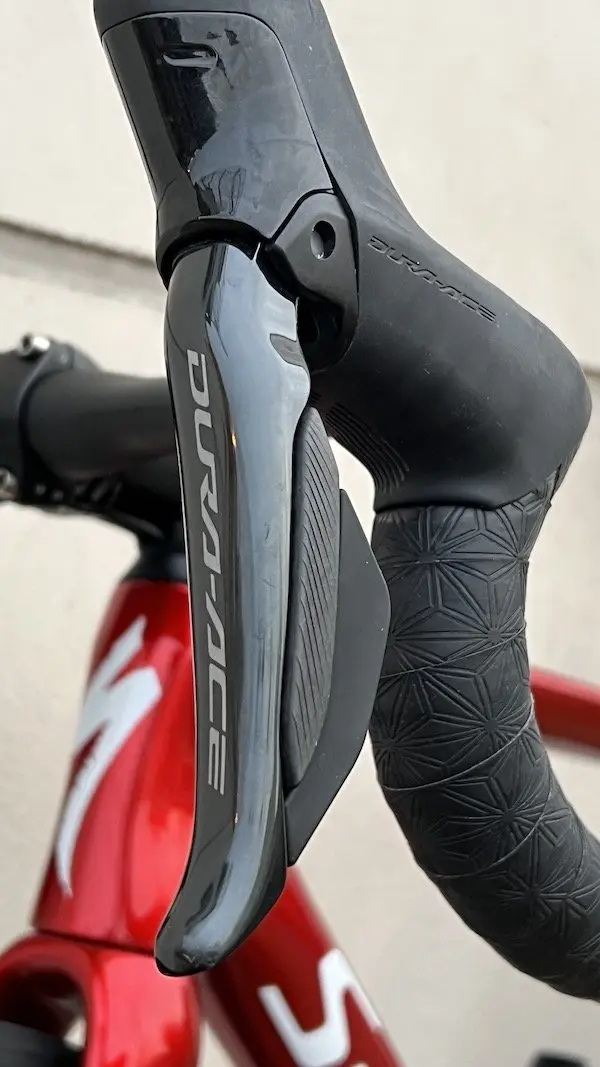
As for the brake hoods, the finish of the levers is still very good, and relatively resistant to scratches, except in the event of a serious crash. The rubber on the brake hoods seems a little firmer than on the previous version, and holds up better to the many repositionings needed to fine-tune the handlebar lever positions or change bar tape. The grip texture, however, seems to wear a little faster.
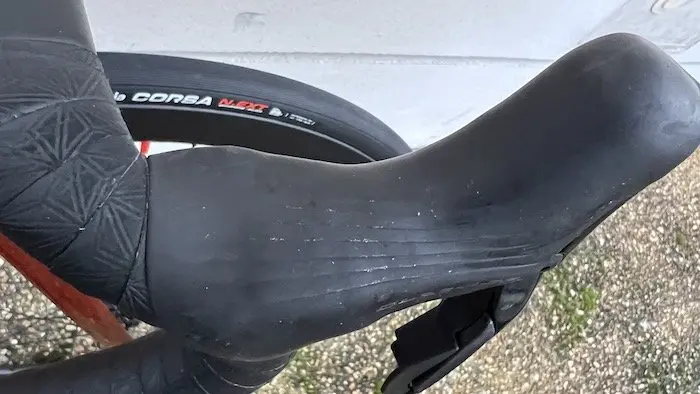
Compared with the old Dura-Ace, the 12-speed shift levers are more sensitive to vibration. Nothing really terrible, but there is still a small buzz that can be a bit annoying on roads with poor surfaces or when riding at high tire pressure.
Precision and durability
As for shifting, once again there were no (bad) surprises. Once properly adjusted, the derailleurs never moved and precision was always there. Compared with the Dura-Ace Di2 11, shifts are slightly faster. Nothing major, but you can notice it when switching from one bike to another.
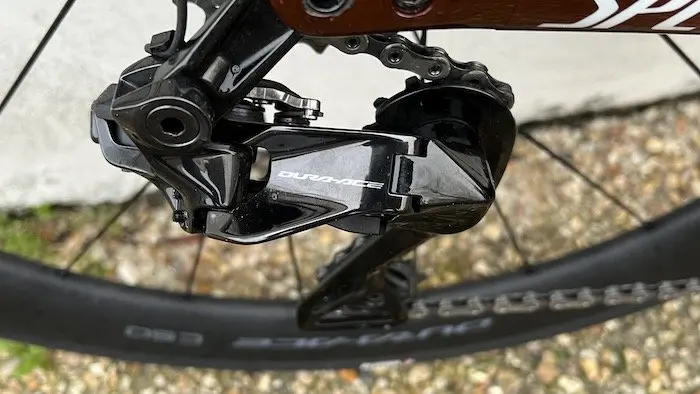
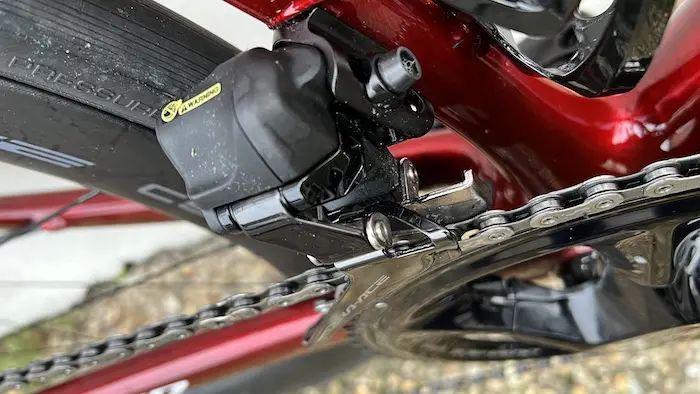
The derailleur batteries last slightly longer than Shimano’s stated figure, and it is possible to ride 1500 km without problems and without recharging. Note, however, that we use the small chainring quite rarely, so the front derailleur seldom comes into play, and it uses a little more power than the rear derailleur. Charging with the dedicated cable is very fast. It is just a shame that charging is done by plugging the cable into the rear derailleur, which means bringing the bike close to a power outlet. It is a detail, but depending on the lighting, reaching the charging port is not very convenient: you first have to lift the small protective cap on the derailleur, then find the magnetic connector. Sometimes you can search for a while in the dim light of a cellar. Nothing to report, however, on the coin cells in the shift levers, which have shown no sign of weakness so far.
The very easy Bluetooth connection between the system and the Shimano E-Tube Project app on a smartphone or the computer makes it possible in any case to check the battery status of the system and see when it’s time to recharge between rides.
=> SEE ALSO: Fitting and Adjusting the New Shimano Dura-Ace and Ultegra Di2 12-Speed Groupsets
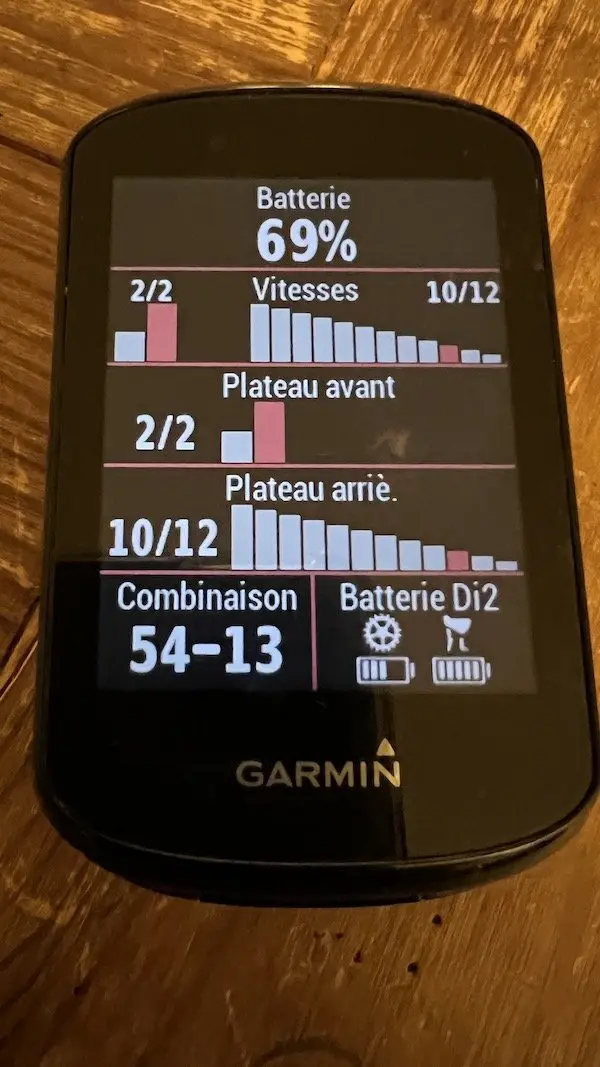
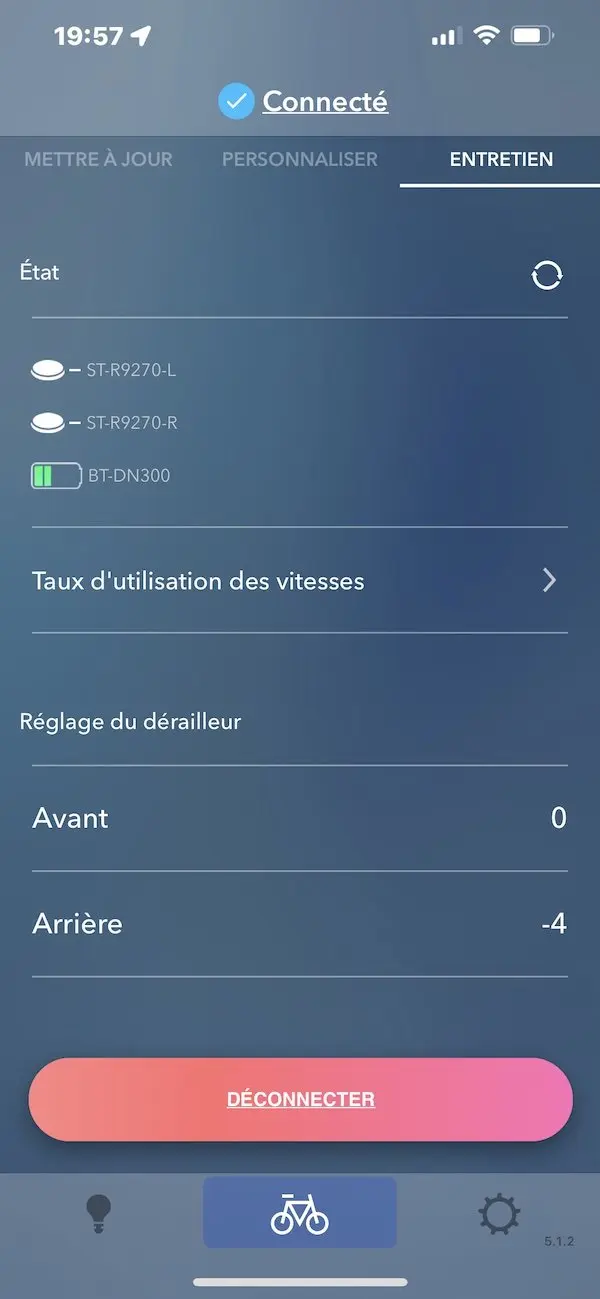
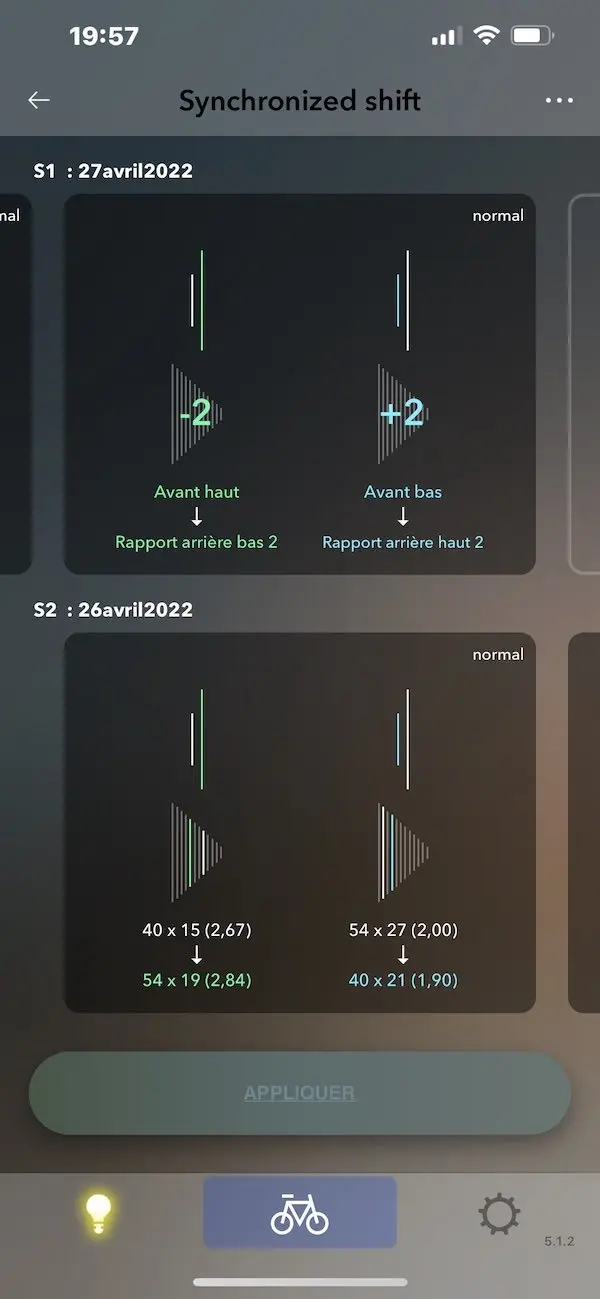
This same app also lets you adjust certain settings, such as the derailleur position if needed, or choose between “normal,” “semi-synchronized” or “synchronized” shifting modes.
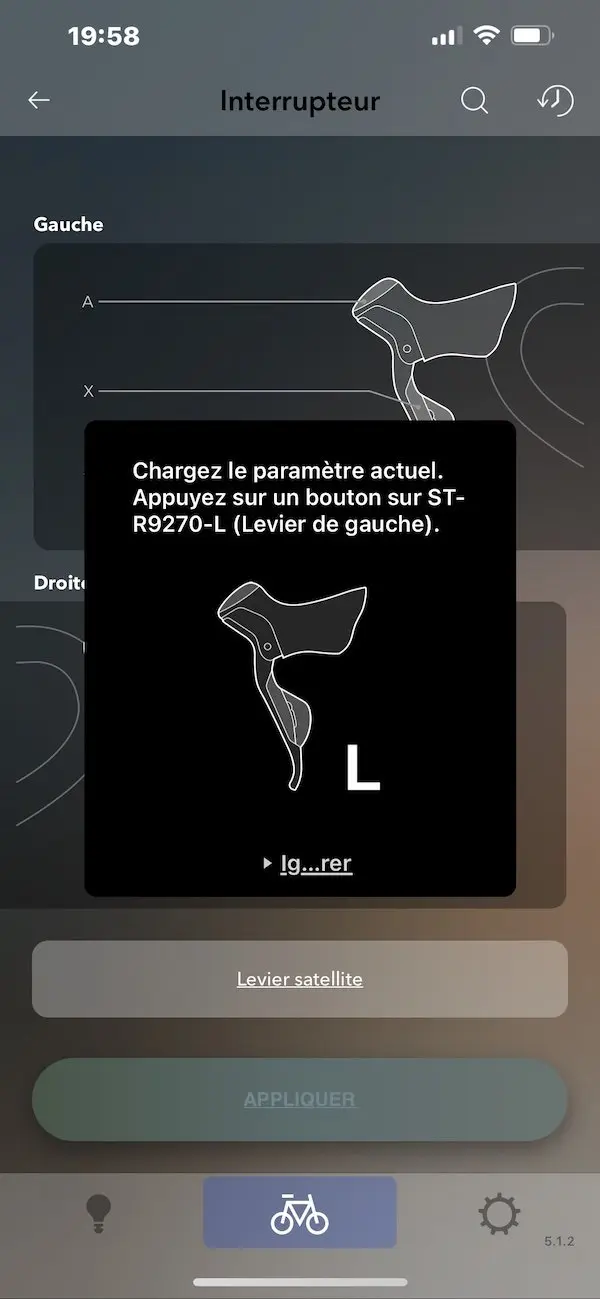
A marvel of electronic drivetrains, you can also change the function assigned to each lever button. We stuck with the classic setup: the large paddle to move up the cassette or shift to the big chainring, the small paddle to move down, and the buttons hidden under the hoods to change the pages on the connected GPS computer.
=> SEE ALSO: Everything You Need to Know About Shimano Di2
The app also offers some interesting information: usage statistics for each gear ratio since the groupset was set up, or for a particular ride.
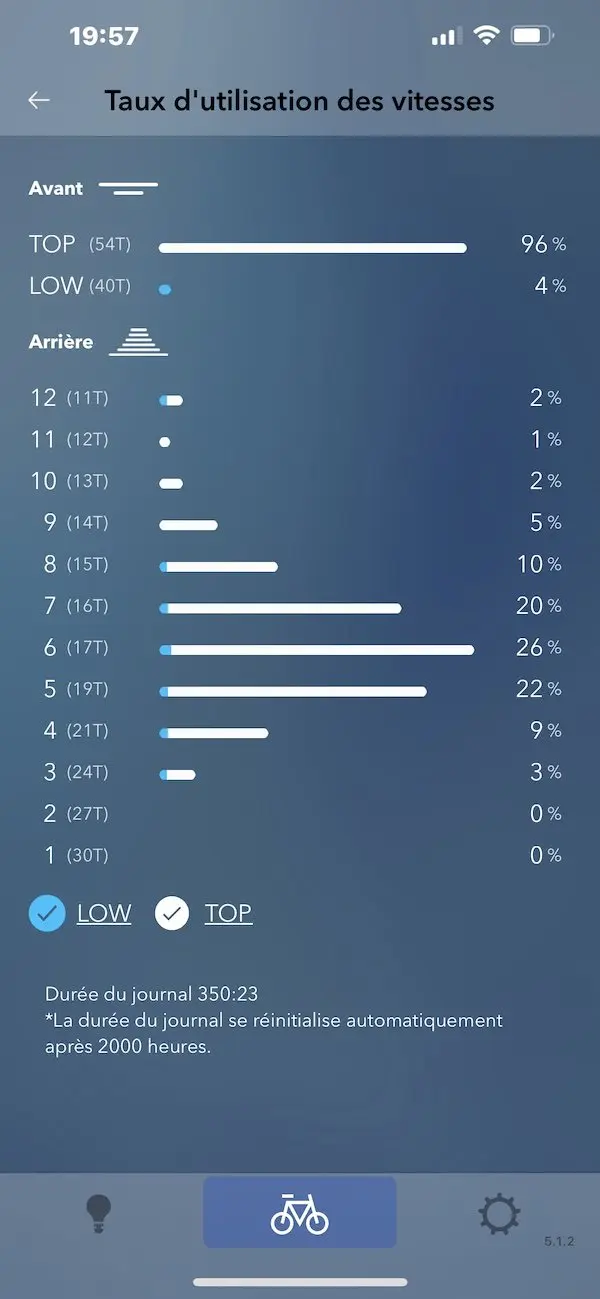
Beyond the curiosity factor, this feature can help you anticipate a chainring or cassette change if some sprockets are used much more than others, depending on conditions. That said, as far as we are concerned, the cassette is still in good working order after 15,000 km. Fortunately so, since even with three sets of wheels, we had to refit the same cassette each time. The first year of the groupset’s release was somewhat chaotic in terms of spare parts availability. For the price of a replacement cassette, it stings a little, since you should expect to pay around €350. Note that the Ultegra 12-speed cassette is of course compatible, and sells for around €120.
=> Buy Dura-Ace 12-Speed Cassette for €299
To preserve the cassette, it is necessary to change the chain regularly, to limit wear on the teeth caused by excessive chain stretch. We changed the first two chains after roughly 5,500 km each time, measuring stretch with a chain wear gauge. Contrary to some fears, there is no significant difference in wear between 12-speed and 11-speed chains. Note, however, that although we rode hard, we did not take part in races with frequent accelerations, chain cross-overs were very rare, and the groupset was mostly tested in mild weather. In more extreme conditions, the chain would probably need changing a bit more often, always with the aim of protecting the cassette and chainrings as much as possible. Replacing a Dura-Ace chain costs around €70. The Ultegra chain is also compatible, for around €60.
=> Buy Shimano XTR CN-M9100 12-Speed Chain for €59.99
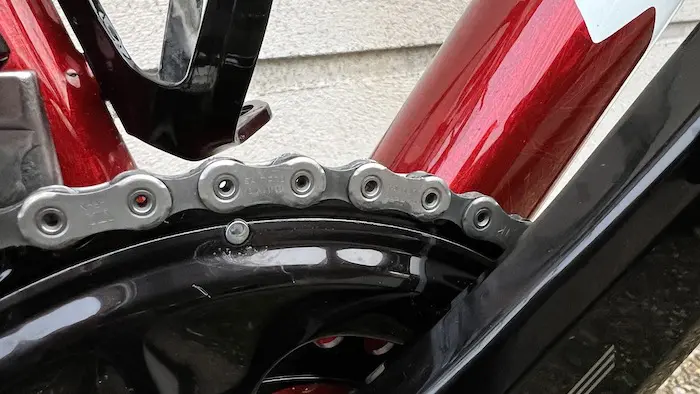
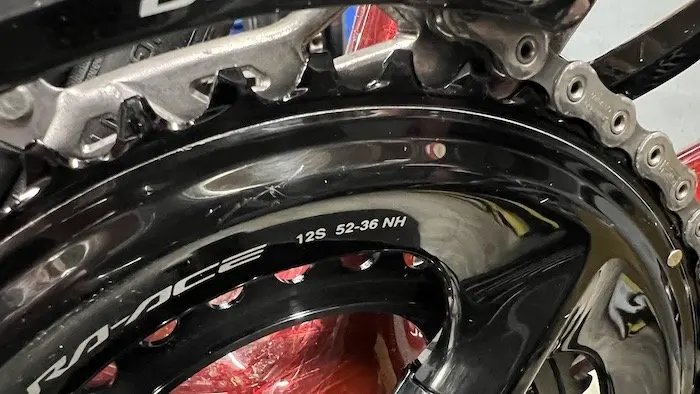
If the chainrings show no particular wear and seem able to keep going for a long time, their finish is very sensitive to scratches, whether during chain replacement, when transporting the bike, or when adjusting the derailleurs. And of course in the event of a chain drop, which thankfully almost never happens. The cranks have the same problem. Looking closely, the beautiful black anodizing is very fragile.
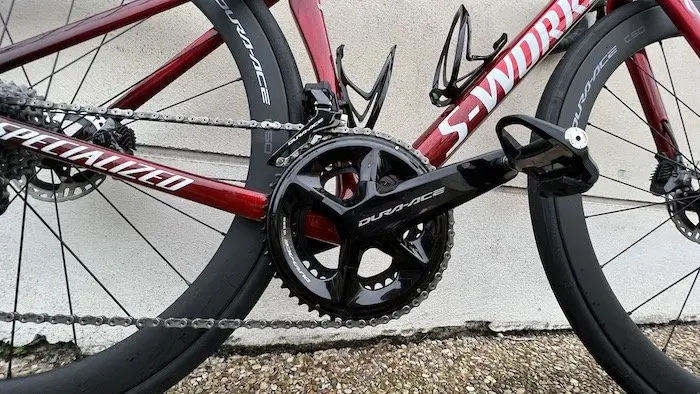
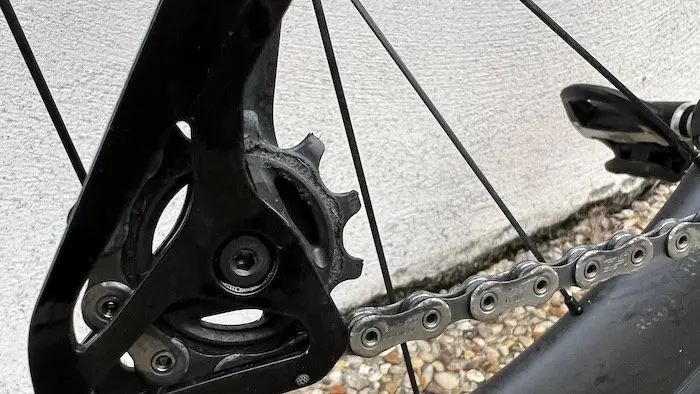
To finish with the wear parts, a word on the bearings. Although not exceptionally smooth from the start, the derailleur pulleys keep working well, without sticking or noise, even after 15,000 km. Nothing to complain about on that front; reliability is there.
As for the bottom bracket, note that Shimano did not produce a specific model for the 12-speed groupset. Given the number of formats on the market to suit different frames, the brand chose to keep offering (as an option) the bottom bracket from the previous groupset. Again, it is not super smooth, but in our experience it should last at least 45,000 km. Note, however, that for this specific setup with external BSA bearings, we opted for a Ceramic Speed bottom bracket, which is super smooth, did not move in 15,000 km, and required no maintenance whatsoever.
Verdict: a groupset that lives up to its reputation
Of course, the 12-speed Dura-Ace Di2 is particularly expensive, even when compared with its direct rivals, the SRAM Red eTap and Campagnolo Super Record EPS. And of course, the technologies used for shifting, braking and app connection are the same as on the 12-speed Shimano Ultegra Di2 groupset, which sells for about €1,500 less and weighs just over 230 g more.
But the materials used on the Dura-Ace, besides being lighter, also prove their durability, as was the case with previous versions. Indeed, such a groupset requires very little maintenance: just a chain change every 5,000 km or so, and perhaps brake pads every 10,000 km to be on the safe side. The cassette and chainring teeth are solid, and only the crankset’s anodizing is a bit disappointing. As for the rest, the groupset works as it did on day one, even after 15,000 km.
The Shimano Dura-Ace Di2 12-speed groupset in brief… Pros: trouble-free operation, long-lasting shifting precision, reliability, low maintenance, quiet braking, pad clearance Weights:
Contact: bike.shimano.com |
=> SEE ALSO : All Our Gear Articles
Share the post "Shimano Dura-Ace Di2 12-Speed Groupset: 15,000 km Long-Term Test"