
Share the post "Avoid the pitfalls of winter training"
Cycling training is based on a few major principles such as regularity, specificity, and progressivity. Yet it must also go beyond its own codes, its preconceived ideas.
Unfortunately, there are many such ideas concerning winter training, which leads to “classic” mistakes, some of which are perpetuated by popular belief. Let’s take a closer look at 10 classic winter preparation mistakes that you should not (anymore) fall into.
Text: Olivier Dulaurent – Photos: Castelli, Orbea, 3bikes.fr
1. Taking a complete and prolonged break
You train hard for months to reach an optimal level of fitness (a peak of form), for specific goals. However, a few weeks of rest are enough to jeopardize all these efforts.
More than two weeks of complete break (no endurance sports activity) lead to maladaptations, i.e., a degradation of the adaptations resulting from training. This will therefore result in undertraining and some markers of detraining.
While a relaxation is often necessary, both physically due to accumulated fatigue and psychologically since a certain form of saturation may have set in over the months, it is imperative to put an end to long weeks… or even several months… of complete break.
It is therefore preferable to think in terms of “transition phase” rather than “break phase”: it is imperative to continue maintenance, based or not on other sports activities (if you are saturated with cycling) so as not to destabilize the body. We also speak of “relative break” as opposed to “complete break”.
Prefer three to four micro-breaks of three to five days, spaced throughout the season, rather than one big break in the autumn or early winter. Indeed, it is not during the months of November and December that fatigue is at its peak, since the last races traditionally take place in October. Unless you are aiming for cyclocross, which is exactly “reversing” your planning.
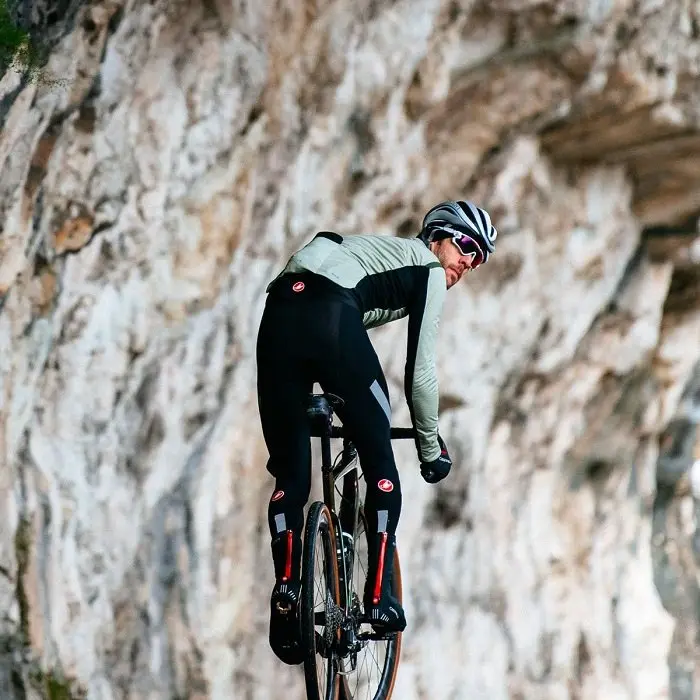
2. Maintaining the “diesel effect”
The “diesel effect” is one of the major pitfalls of winter training. According to the preconceived idea that has made its way over the years, winter should be spent:
– on the small chainring
– at low intensity
– on flat courses
However, by multiplying rides of this kind, not only do you have no chance of progressing, but, even worse, you risk regressing due to the degradation of other essential physical qualities.
It must be said that this “PPPP” mode (for “Plat, Petit Plateau, Pépère” – Flat, Small Chainring, Gentle) unfortunately still has too many followers. However, these famous “PPPP” rides in winter have their limits. If you don’t work on strength, this quality will degrade, resulting in a loss of power. If you don’t work on intensity, you will lose rhythm and the ability to change rhythm. If you don’t work on explosiveness, your fast-twitch fibers will be less effective. If you don’t work on elevation, your pedal stroke on climbs will degrade. In short, a rather bleak picture.
Moreover, a ride that would only develop endurance and only this quality would simply be unproductive since experience and the sequence of rides already give you a good basic foundation. So vary your content!
3. Going from one extreme to the other
These same cyclists who are fans of the “diesel” winter are often also fans of very intense springs. Explanations.
The “traditional” winter skips all forms of intensity and specific work to prioritize endurance and cadence. Everyone is well aware of the limitations of this method in the long term, which is why the other common mistake is to go from “all base” to “all intensity” in the spring.
Wanting to suddenly integrate strength, threshold, and PMA sessions without prior muscle preparation would go against the principle of progressivity and would quickly lead you into a state of fatigue.
The base phase gives way to intensity work, while the specific preparation phase gives way to low-intensity sessions. In terms of training, everything is a question of dosage. We speak of “dominants,” never “exclusivity.”
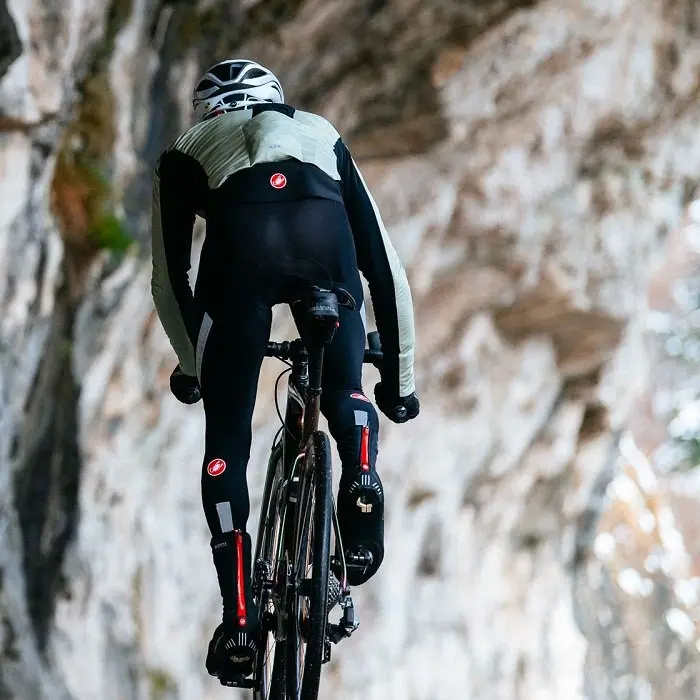
4. Integrating strength training to replace cycling
Practicing strength training in the winter phase (we will prefer the term muscle strengthening) is an interesting option, but muscle strengthening is not a substitute for cycling: it is a complement.
Completely cutting out cycling would lead to a degradation of basic qualities specific to cycling: coordination (pedal stroke), cadence, strength, and even the ability to ride for several hours are diminished: in short, the consequences are a loss of power and, more concretely, performance capacity.
Therefore, combine muscle strengthening and cycling. For those who dedicate time to actual weight training, it is also important to remember that the gains in strength must be transferred to the cycling motion by, for example, dedicating a few minutes at the end of each session to turning the legs on a bike, ideally your own.
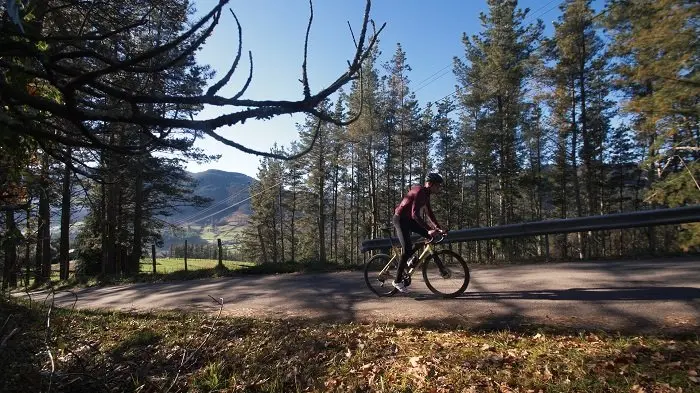
5. Skipping winter preparation
Summer is far behind and the goals are far ahead. From there, a phenomenon of discouragement is perfectly understandable. That said, all weeks are important and the winter foundation is a guarantee of form for the entire season. Thus, winter is by no means useless: it will allow you to work on qualities that you don’t have time to work on during the season.
Furthermore, skipping winter preparation (by dedicating yourself entirely to running or skiing, for example) will force you to resume specific training a few weeks before the first events, and at a time when intensity should theoretically increase. However, without a sufficient base (and without strength training in particular), this is doomed to failure.
6. Wanting to do too much and getting exhausted during winter preparation
The most motivated and willing will want to put all the odds on their side and will thus concoct a very tough winter, combining ancillary activities and intensity on the bike. Be careful, however, not to fall into extremes.
The risks of an overloaded winter are numerous:
– falling into a form of euphoria, forgetting to plan recovery periods and reaching spring in an advanced state of fatigue.
– taking the risk of being saturated at a time when you should, on the contrary, increase your volume for future objectives.
– putting too much pressure on yourself too early in your preparation.
Moreover, the diversification phase of training can also lead to false paths.
Between ancillary activities (running and swimming in particular), winter activities (cyclocross, mountain biking), muscle strengthening and cycling, the options are numerous during this period. If you want to do “everything” within the same week, you will multiply the sessions and ultimately fall into fatigue. Not to mention that “doing a little bit of everything” will maintain your physical condition but will not allow you to progress significantly. So make choices and stick to the framework you have set for yourself. Do not engage in multiple directions, you risk getting lost.
A good option could be to build microcycles of 10, 12 or 14 days if you want to focus your winter preparation on varied activities.
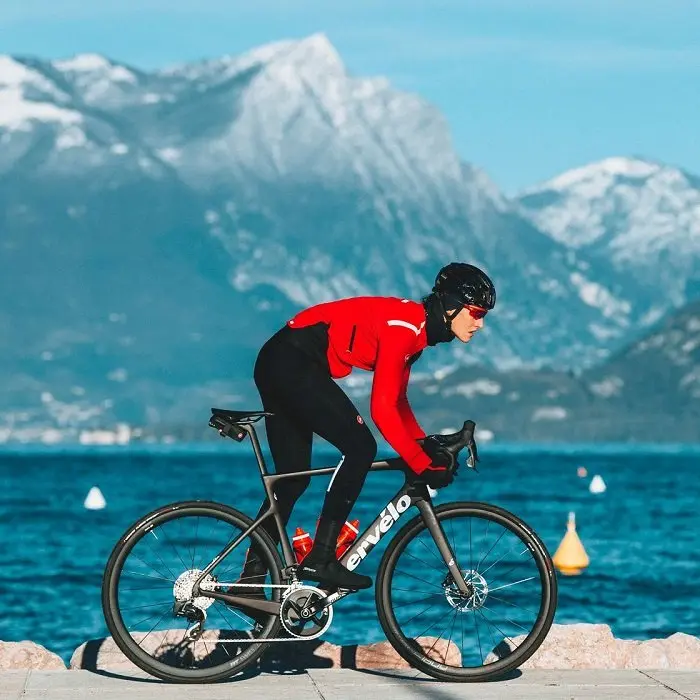
7. Waiting for a specific date to start your preparation
It is still often the famous role of January 1st that acts as a trigger. Let’s admit the fact of waiting until January 1st to start your preparation. What then to do with the three autumn months? Simple maintenance would not be enough and would go against possible progress during this period, for example, to work on your weaknesses and, systematically, on strength training.
Moreover, setting a specific date for the “serious” resumption can often lead to resuming at a time when weather conditions are no longer conducive to chaining rides, whereas beautiful rides of 3 hours or more could easily have been done in October and November.
What is done is done…
8. Considering winter as a simple regeneration phase
Every cyclist is well aware that regularity is necessary during the winter period. You must also convince yourself that this transition between two seasons should not be synonymous with simple maintenance but rather with progress.
Normally, the end-of-season recovery (from September-October) should have refilled your motivation, to be ready to face the necessary training in preparation for next year. So why wait until January, February, or even March to set up a coherent training program based on fundamentals, especially strength, explosiveness, and changes of pace? The notion of annual planning therefore takes on its full meaning, and the winter period is by no means a lull but indeed a source of progress.
9. Thinking that significant weight gain is normal
It is important to avoid letting yourself go because, mathematically, by gaining five kilos in the autumn but only losing two at the beginning of the year, you will have to redouble your efforts at the start of the season to regain your race weight.
However, winter is often characterized by excesses, “forbidden” evenings in the middle of the season, more substantial dishes, and a phenomenon of decompression.
The way forward would be to gradually reduce the training load – rather than cutting it abruptly – so that the metabolism adapts. Similarly, it is still possible to eliminate any winter dietary excesses as quickly as possible with a longer ride the next day or the day after.
10. Going out to ride in all weather conditions
The most motivated are capable of riding in all weather and don’t look at the color of the sky before hopping on their bike.
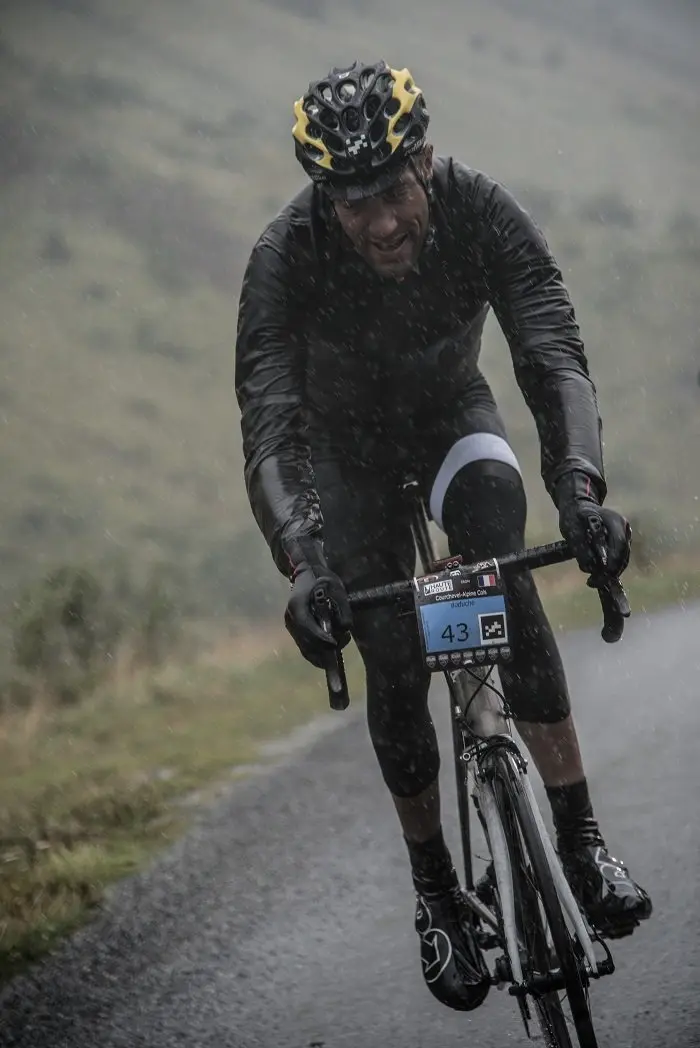
It’s good for the mental aspect because the weather can very well be unfavorable during an event (sportive or traditional race), but don’t fall into extremes and avoid riding when conditions are truly particular: extreme temperatures, snow, ice, hail showers are all contraindications. Indeed, by wanting to maintain a ride at all costs, you risk having to cross out several rides afterwards if you get sick, not to mention the risks of falling in certain circumstances. So consider a well-targeted session on the indoor trainer.
=> SEE ALSO : All our Coaching articles
Share the post "Avoid the pitfalls of winter training"