Share the post "The Pinarello Bolide F HR 3D for Filippo Ganna’s Hour Record attempt"
Filippo Ganna will attempt to break the Hour Record on Saturday, October 8, at the Grenchen velodrome in Switzerland. For this occasion, Pinarello has developed a new bike using 3D technology.
Source: Press Release
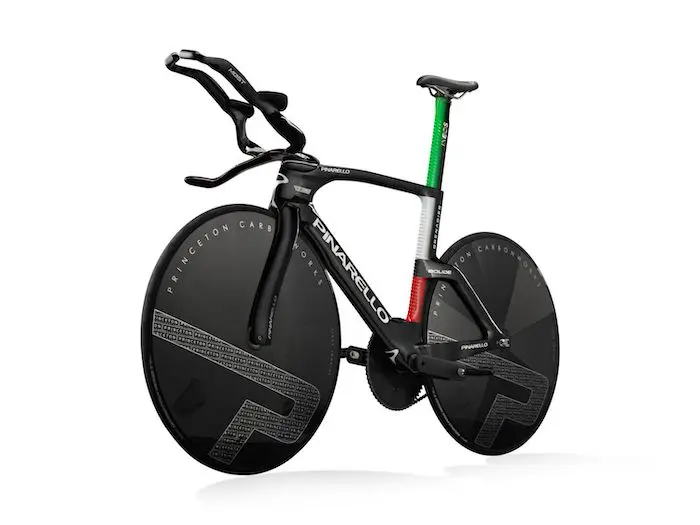
All cyclists always want to ride the best bike available, especially regarding aerodynamic performance and power transmission. But for this unique Hour Record project, the demands are even higher than usual. The Bolide F HR 3D needed a totally perfect fit, designed around the rider, conforming to Filippo Ganna’s unique anatomy to maximize both his comfort and overall aerodynamic performance. Comfort is often underestimated, but when it comes to an Hour Record attempt, it is absolutely crucial as it allows the athlete to go faster for longer. The importance of stiffness is also often underestimated for track bikes, but any flex under tension causes the wheels to rub, costing the athlete crucial centimeters every time they push the pedals.
With this in mind, this project had to combine strength and stiffness with aerodynamic gains, with a production method that allowed for millimeter-precise sizing and the full use of everything Pinarello engineers have learned from many months of intense research. This allows Pinarello to present a world first today: a 3D-printed frame, designed for a world champion and for his Hour Record attempt. It will be available for Filippo Ganna and for the global market (obviously, for a very select few).
3D Printing
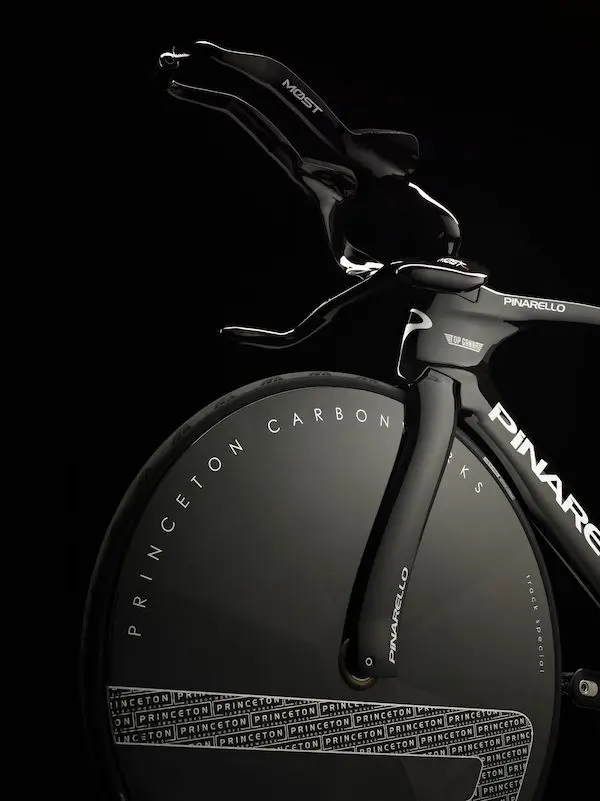
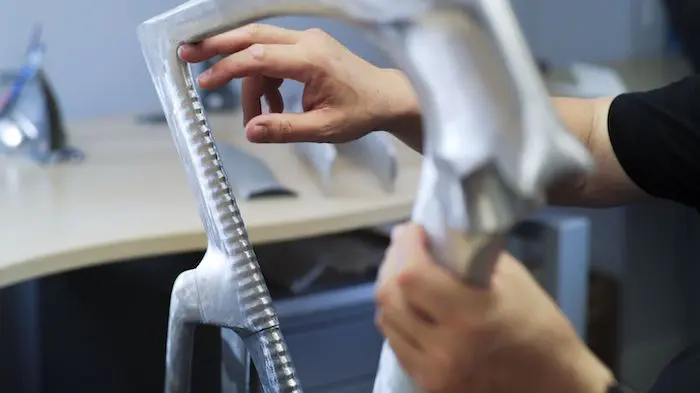
3D printing allowed Pinarello to introduce new shapes and features impossible to reproduce with existing carbon fiber techniques. With this new method, Pinarello created a unique aerodynamic shape and achieved a very high level of stiffness. Furthermore, it allowed for the addition of internal reinforcement, the creation of a totally new head tube shape, and above all, it also drastically reduced development time as engineers were no longer held back by the traditional time constraints of producing molds for a carbon fiber frame.
According to Federico Sbrissa, Pinarello Marketing Director, “this is such a unique project. We believe this is the beginning of a new era of manufacturing. The next step will be to make it more affordable by finding ways to scan riders with more affordable equipment and automatically design each unique bike. From a world champion to all World Tour riders, and eventually to all cyclists.”
Metal 3D printing was first launched in cycling by Pinarello in 2015, on Bradley Wiggins’ handlebars for the Hour Record. To find the expertise, knowledge, and appropriate equipment, Pinarello worked with Metron A.E. in the UK. The HR bike’s frame and fork were designed to take advantage of a new alloy called Scalmalloy, a high-strength Scandium-Aluminum-Magnesium alloy that is an aerospace material specifically designed for 3D printing. The choice of material and machine is crucial here.
Metron used a large-format EOS M400 machine to 3D print the Scalmalloy parts. Indeed, the frame was only five pieces, with the front triangle made in three pieces and the seat stays in two additional pieces. These parts were manufactured individually and after meticulous cleaning and support removal, the parts were bonded together using an aerospace-grade epoxy. Furthermore, titanium was used on the fork crown and on the handlebar extensions, which are the most stressed areas.
A Sum of Marginal Gains
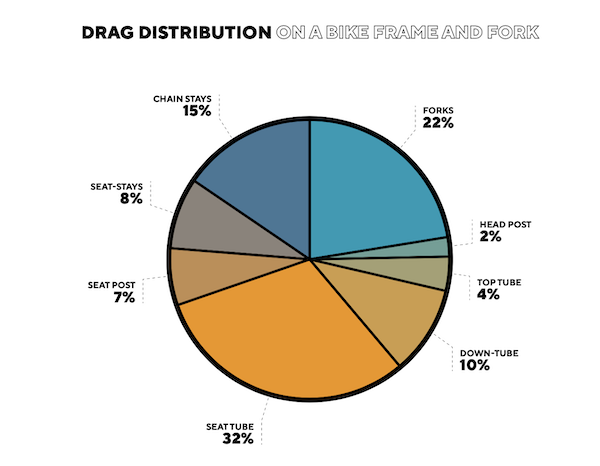
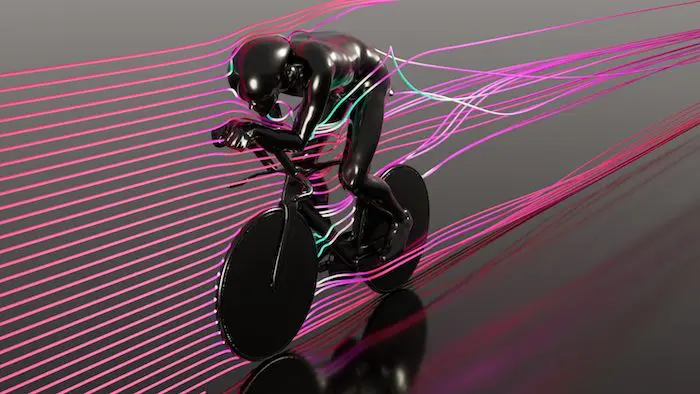
The rider’s legs move all the time in a complex but repeatable way. The air flowing around the seat tube and seatpost is never straight. This alternating airflow makes it very difficult for the air to attach to the seat tube. The consequence is that the airflow constantly separates from the seat tube, creating a large low-pressure area around it, which in turn creates large amounts of drag. This is partly why the combined drag of the seat tube and seatpost accounts for almost 40% of the total frame and fork drag.
Thanks to research conducted by the University of Adelaide, Pinarello and its aerodynamic R&D partner NablaFlow performed numerous simulations, finding effective designs, and others less so. After many CFD and wind tunnel tests with riders, the new AirStream technology was born to reduce drag.
The new frame was designed to reduce the frontal area as much as possible, also taking advantage of the removal of the UCI 3:1 rule. There were substantial gains by making the wheel hubs as well as the bottom bracket shell (BB) narrower than normal. The BB was reduced to 54 mm (instead of 70 mm), the wheel hubs from 120 mm to 89 mm at the rear and from 100 mm to 69 mm at the front.
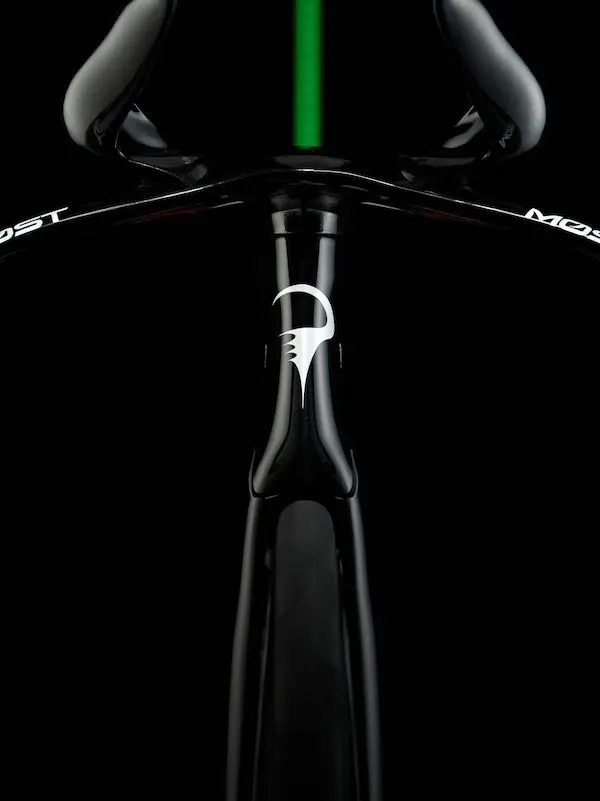
This new regulation also allows for the use of longer and thinner aerodynamic profile sections. It is well known that airfoil sections with a ratio of 6:1 or even 8:1 perform significantly better than the old 3:1 ratio.
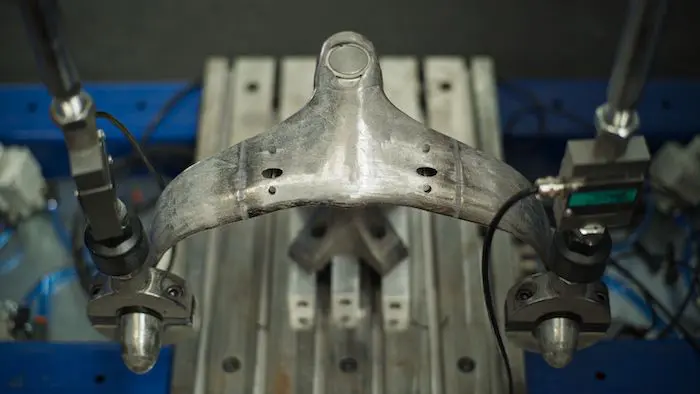
After several cycles of CFD optimization, a handlebar geometry was created that further reduced rider drag than the drag penalty imposed by its unconventional shape. Overall, drag is reduced. Again, 3D printing was necessary to manufacture this extraordinary shape. In the case of the handlebars, proven titanium (Ti6Al4V) was used on an ARCAM EBM machine. To ensure that the extraordinary shape of the extensions did not present a structural problem, Metron decided to test them under an enhanced testing regime to be safely mounted during an Hour Record attempt by an athlete as powerful as Filippo Ganna.
After simulations, only real-world tests can prove whether the design work has been successful. The Bolide F HR 3D was already proving to be the fastest bike by supporting Dan Bigham in his personal record of 55.548 km achieved on August 19, 2022. Bigham, who is INEOS Grenadiers’ performance engineer, was testing an unbranded prototype of the new Bolide F HR that he helped develop. He was also working on the development of other key components that will be used on the bike, such as the crankset.
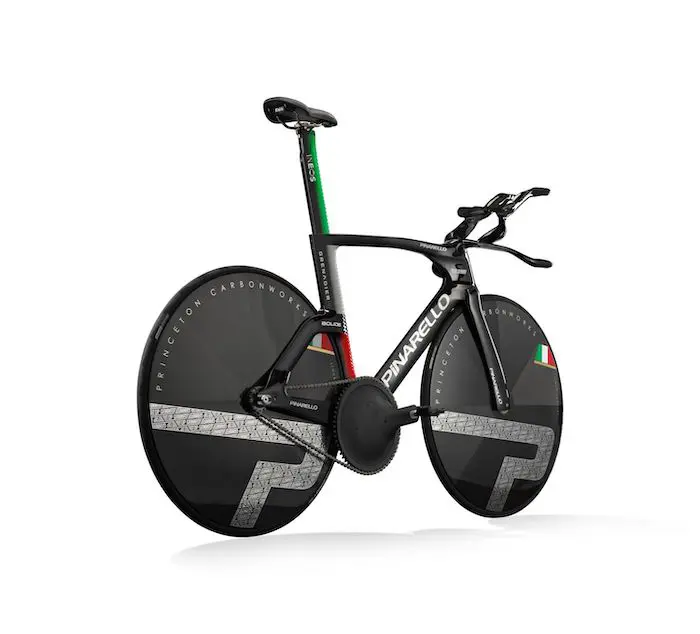
The new Bolide F HR 3D is available to order from an official Pinarello dealer starting this October 3, and due to the 3D printing production technique, it will be built only on demand.
And Fausto Pinarello concludes: “We are always pushing the level of product design to new extremes to enable our champions to achieve their goals. Constant innovation and research are the foundations of success if you want to build the fastest time trial bike for the track. From Miguel Indurain’s Hour Record to the recent gold medals in the team pursuit in Tokyo, Pinarello has always set the standard in this segment.”
=> SEE ALSO : All our MAG articles
Share the post "The Pinarello Bolide F HR 3D for Filippo Ganna’s Hour Record attempt"