Share the post "Mental: should you be instinctive or an advocate of hyper-rationalism?"
Today, cyclists are studied, measured, and analyzed in minute detail. With increasingly sophisticated sensors offering ever more reliable and precise data, we have, for several years now, entered the era of high-tech physical preparation. But what have we done with our instinct? Neurosciences confirm it: neither magic nor a gift, intuition is a form of intelligence present in each of us. It is cultivated, worked on, and sharpened daily. It is used as an inner compass that is worth knowing how to decipher. In this article, let’s try to re-listen to that little inner voice that advises us and gives us the best option. An ally not to be neglected, which, in the best cases, offers us a sudden certainty and will make our lives easier…
By Jean-François Tatard – Photos: Billy Ceusters
=> SEE ALSO: The limits of interpreting numbers for performance
The origin of instinct remains mysterious, but today’s neurosciences readily acknowledge that it is no longer a magical sixth sense, nor a gift reserved for a select few. The good news is that intuition is a faculty accessible to everyone. According to Einstein, it is the hallmark of all works of genius. For most of us, it would be more about having the ability to imagine answers and solutions outside of predictive logic. So let’s see how it works. This intuitive ability consists of perceiving contextual elements and arranging them adaptively to find a new solution within a pre-established program or in a repetitive situation. In reality, in our brain, we have a rational part that manages our learning and another, more emotional part that manages our relationships with things and people and allows us to adapt. In short, imagine your Garmin runs out of battery and you are lost with your mountain bike in the middle of the forest. You either ask a hiker for directions. Or you follow your feeling, that is, your sensations or impressions, which ultimately form a kind of floating certainty.
=> SEE ALSO: Mental projection
And yet, this intuitive conglomerate is not devoid of rationality. For a good part, it consists of sensory information that our brain captures but that does not reach our consciousness. This is why many neuroscientists call intuition: unconscious adaptation. And so our brain directly reaches conclusions and makes us make decisions without us being aware of the subliminal perceptions that led us there. In a way, our intuition is connected to our sensory database. This database is in constant motion, and yet it adapts in real time. Moreover, the most intuitive among us are therefore those who have best developed their sensory qualities.

Instinct as the best source of balance
As you may have noticed, some cyclists competing with others have their sense of intuition even more developed than others. But how does this work? How do they arrive at this affirmation that resonates with their actions? In reality, if we stop being focused on ourselves, if we truly empathize with others, then we can feel or sense things. We can thus capture events that are not the projection of our apprehensions and fears, or our desires and wishes.
=> SEE ALSO: A technique to improve mental strength
Everyone has the capacity to be intuitive. We can all access various data to evaluate a context or a person, be warned of danger, or find a new solution, but the real plus of intuitive intelligence is that it contributes to our own successes and therefore to our own happiness. This comes from an ability to integrate all the data from our environment and our present. And this will allow us to improve our future, and thus to discover, thanks to this open door to our brain, the personalized access codes to what will make us succeed in our actions.
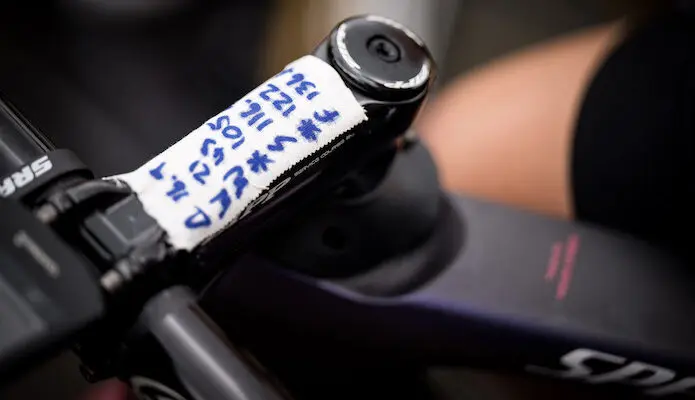
Too many numbers are counterproductive
The one who best manages to be connected to their senses, receptive to their emotions and their inner music, will be able to feel what is truly good or bad to do. When we know something with our intuition, we know it with our heart. It becomes a certainty that resonates throughout our body. And in our modern lives where options are increasingly numerous and where this creates more and more confusion in our choices, intuition can be a precious compass. Like an invitation to autonomy and thus the opportunity to shape one’s daily life as closely as possible to one’s needs, desires, and skills. And it is precisely a lack of self-confidence, hyper-rationalism, and negativity that put spokes in our wheels. Once you have identified them, you must break them. And not be afraid to welcome your intuitions.
=> SEE ALSO: A life as an athlete without Garmin
To conclude, instinct is a faculty that saves us time, brings us closer to our true aspirations and objectives, and connects us to our true inner resources. We must therefore learn to let go of the GPS and all these tools that offer us indicators. Let’s dare to trust ourselves. By nature, intuition is always right. And ultimately, when we make a mistake, it’s because we are not in the presence of an intuition, but rather the expression of a desire, imagination, will, or fear. We must keep an open space for our intuition to manifest because in all cases: thinking and reflecting are most often not the qualities that will allow us to make the best choices. This article thus aimed to remind you of all the benefit we have in connecting to our sensations, our impressions, and our emotions. Take the time… Your inner guide, more effective than a Garmin bike computer, will eventually make itself heard!
=> SEE ALSO: All our Coaching articles
Share the post "Mental: should you be instinctive or an advocate of hyper-rationalism?"