Share the post "Active recovery"
No cyclist who aspires to results is supposed to ignore it: recovery and rest allow the body to regenerate and thus progress. And more traditionally, the term “recovery” means “passive rest”… However, this type of rest, while sometimes – admittedly – indisputable, may not necessarily be the most appropriate for all situations. Let’s see why. And let’s explore the (complementary) path of active recovery…
By Jean-François Tatard – Photos: All rights reserved
Recovery is a crucial phase of any training plan for cyclists – whether beginners or experienced. Indeed, recovery is essential for all people who engage in sports activities. Intensive and repeated exertion of the body can lead to excessive fatigue when athletes do not take the time to rest. With risks of injuries or even illnesses, physical and sometimes even mental. So, in order to improve your athletic performance and protect yourself from certain health risks, it is essential to adopt habits that promote recovery. And not necessarily passive ones…
Active recovery
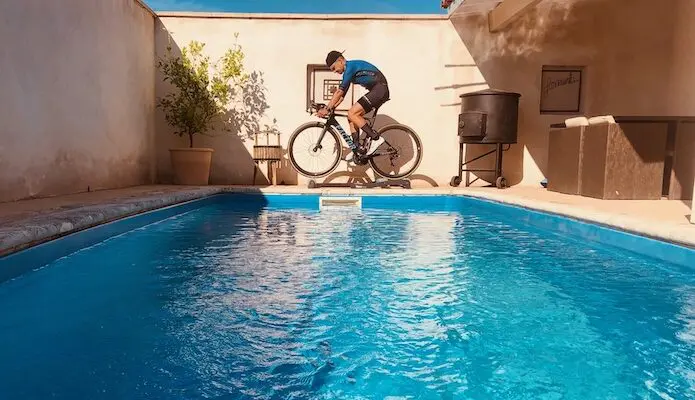
Contrary to what one might believe, during a rest period, it is not necessary to limit your efforts to the strict minimum for too long. This reconstruction phase is not necessarily passive and is not limited to simply remaining inactive. Active recovery, as its name suggests, plays an even more beneficial role. And this consists of performing physical activity. But of low intensity. And the goal is to further improve the recovery process.
Why and how to use active recovery?
Including activities that promote active recovery in your program offers many benefits. Indeed, active recovery at a very moderate intensity improves blood circulation for optimized oxygen supply. This also allows the body to deliver more nutrients to the muscles. On the other hand, it limits the accumulation of lactic acid and allows toxins to be eliminated more quickly. We realize that pain and muscle soreness also disappear more quickly than if we did nothing and stayed lying on the couch. And this gentle way of staying active maintains coordination, mobility, and flexibility. While improving sleep and maintaining good motivation and also protecting oneself from possible guilt.
When and how to use active recovery?
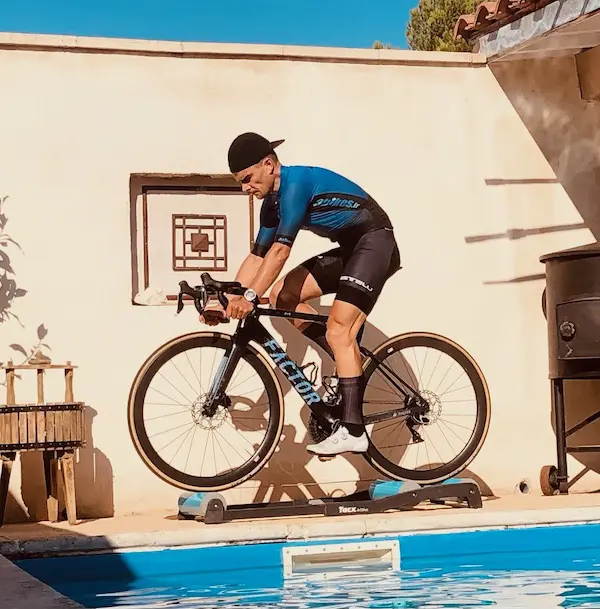
Active recovery can be performed immediately after an intensive training session or even immediately after a competition. We see it more and more on the Tour de France, just after the stage finish, the riders who still turn the legs a bit for about ten minutes at very low intensity and a slow cadence on the rollers… This is a practice commonly called cool down. Or otherwise translated as return to calm. But active recovery can also be practiced during rest days by performing a physical activity that gently engages the muscles and does not damage the joints and fibers. Moreover, for those who ride every day, the ideal might be to include one to two active recovery sessions of about 45 to 60 minutes per week.
Does passive recovery still have its place?
Yes, passive recovery still has its place. And this consists of introducing at least one full rest day into your weekly training schedule. This means that it is necessary to avoid stressing the muscles and joints to allow the body to rest fully and deeply. This is particularly important in cases of intense muscle pain or when the body expresses the need to rest via a feeling of excessive fatigue. It’s up to you to define the ideal day. Some will prefer the day after a race. Others the day after that. Probably in this case: after a day of active recovery. And passive recovery also brings many benefits. And there are also those who will prefer the day before or two days before a race. In truth, you have to test and see what suits you best. There is no rule…
To conclude…
Active recovery is very important whether between two bike rides, or after or before a competition. It allows for better recovery and thus, ultimately, increases the chances of performance, which are simply the result of what physical work should provoke. Of course, parallel lifestyle hygiene is essential, but don’t forget – unless you are injured or excessively fatigued and in that case, your body needs complete and therefore passive rest – that we are made to be in motion and that it is just as possible to regenerate our muscles by maintaining gentle activity.
=> SEE ALSO: All our Coaching articles
Share the post "Active recovery"