Share the post "First Ride Review: New Cervélo Soloist"
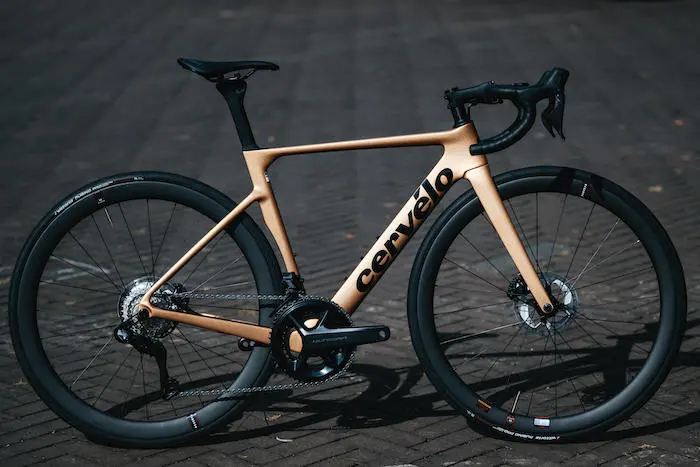
For an entire generation of riders, the name Soloist evokes the first road bike with aerodynamic aluminum tubes, highlighted in competition in the early 2000s by the riders of the famous CSC team led by Bjarne Riis. 20 years later, the Cervélo Soloist is reborn, this time with a carbon frame and still with the objective of prioritizing a certain balance, both in terms of handling, practicality, and retail price. We have already had the opportunity to test ride the new Soloist, to confirm that it meets the expectations of many competitors.
By Guillaume Judas – Photos: Gruber Images / Alex Lombardo / 3bikes.fr
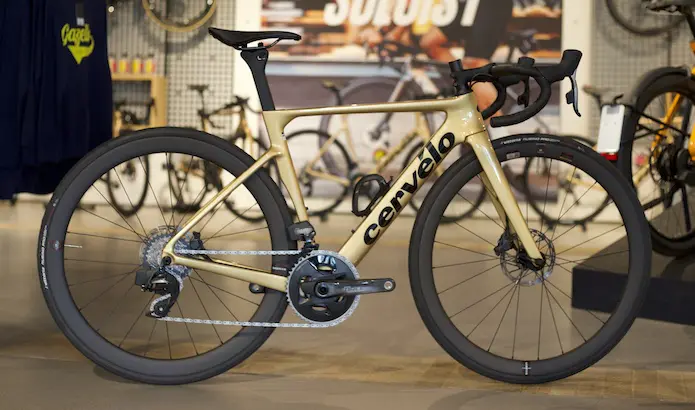
In the early 2000s, Cervélo was the first brand to offer a road bike with aerodynamic tube shapes, designed to be faster on most terrains, as long as the speed is high enough for air to be the primary resistance to overcome. A revolution at a time when most manufacturers remained focused on weight and stiffness gains. The aluminum Cervélo Soloist had its glory days with riders from Bjarne Riis’s CSC team like Carlos Sastre, Frank Schleck, Andrea Tafi, and Nicki Sorensen, culminating in Tyler Hamilton’s victory at Liège-Bastogne-Liège in 2003.
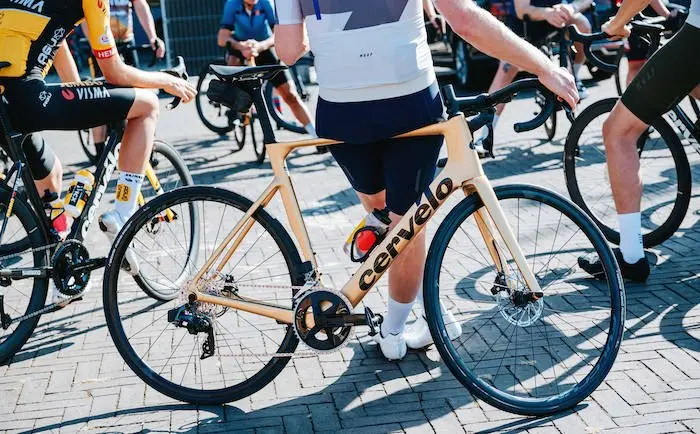
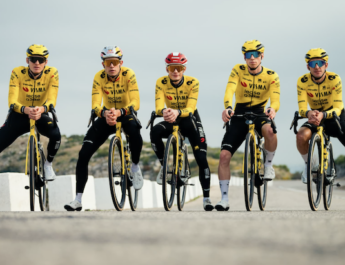
Nearly 20 years later, Cervélo has expanded its road range with models of bikes with strong personalities, which have also allowed the Jumbo-Visma team to shine in both the Classics and Grand Tours (with Jonas Vingegaard and Wout van Aert’s yellow, polka dot, and green jerseys in the last Tour de France). The iconic S5 is the brand’s aerodynamic road bike. The more discreet R5 is the lightweight (but stiff) model for climbing. The Caledonia-5 is the affordable and more comfortable bike for sport cyclists or for routes with poor road surfaces. Three specialized and high-end bikes, with premium finishes and very distinct performances in their respective fields, but is that enough to satisfy all riders? Cervélo answers in the negative, and by relaunching the Soloist name, intends with this new model to address amateur competitors, those who have only one bike and who accumulate kilometers on all terrains, all year round, with a machine that offers the best compromise between all the key characteristics of a bike.
=> SEE ALSO : Cervélo Caledonia-5 Review
The right balance at all levels
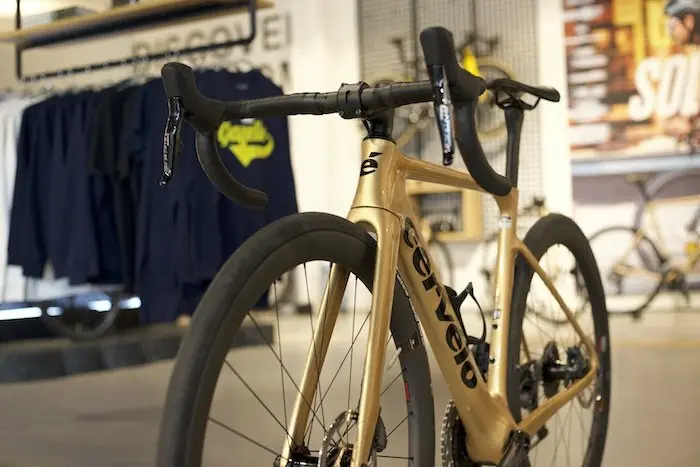
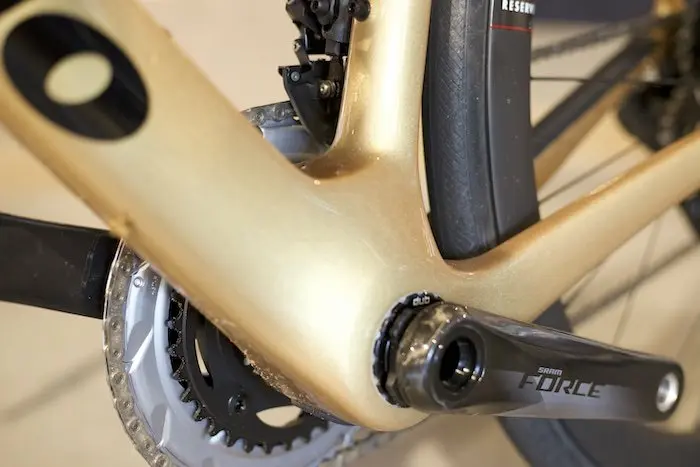
The Soloist is thus announced as more aerodynamic than the R5 (with equivalent stiffness and geometry, but with a frame weight of 261 g more), 154 g lighter than the S5 (but less aerodynamic), and with a more aggressive geometry than the Caledonia-5. A kind of just balance. For practicality, it adopts a semi-integrated cable and hose routing to facilitate assembly and maintenance, a more robust and easier-to-change BBRighT-47 (threaded) bottom bracket shell format, and compatibility with tires up to 34 mm in width to adapt more easily to modern wider wheels and incidentally gain a little comfort.
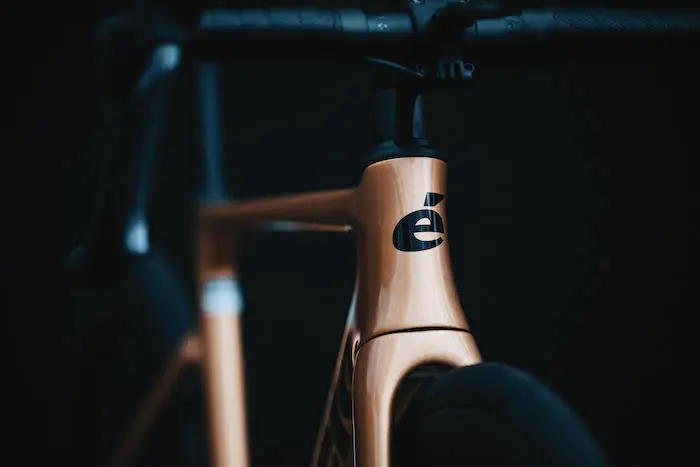
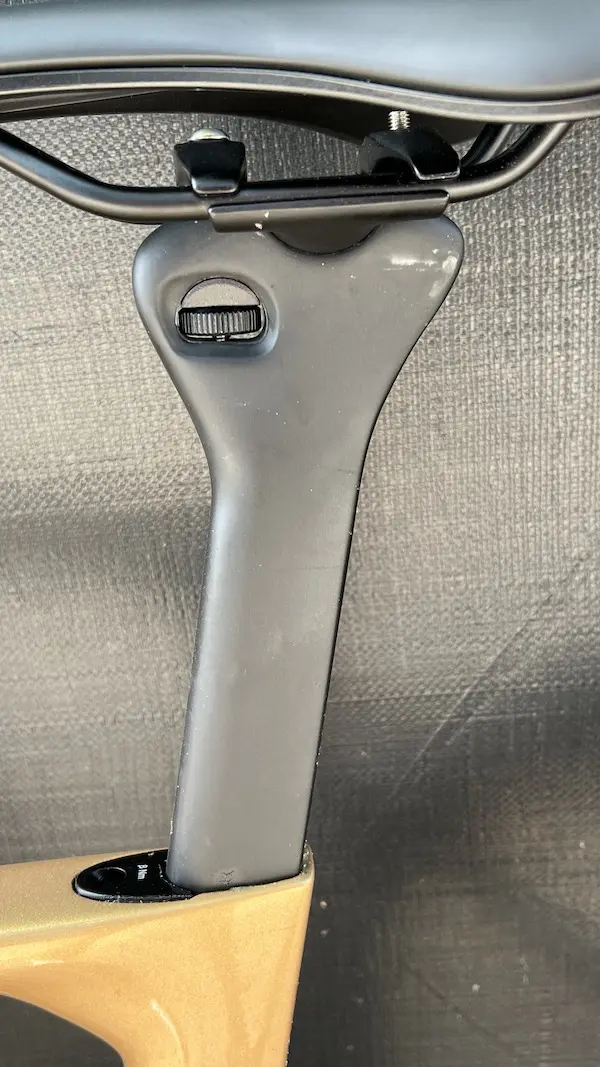
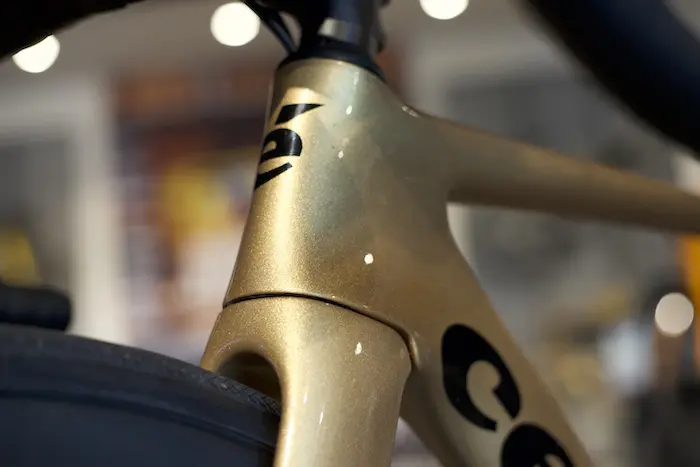
To design this brand new frame, Cervélo engineers started with… the seatpost, considering that all other tube characteristics stemmed from its shape and dimensions. The shape, flex capabilities, weight, and aerodynamics of the seatpost are thus positioned exactly in the middle between the characteristics of the S5 and R5 seatposts. For the rest of the frame, the profile and dimensions of the tubes were then studied in a wind tunnel to find the best compromise sought without reaching the extreme solutions applied to the S5, which is particularly complex to manufacture. Particular attention was paid, however, to the fork crown and its connection with the head tube, one of the key areas for air resistance.
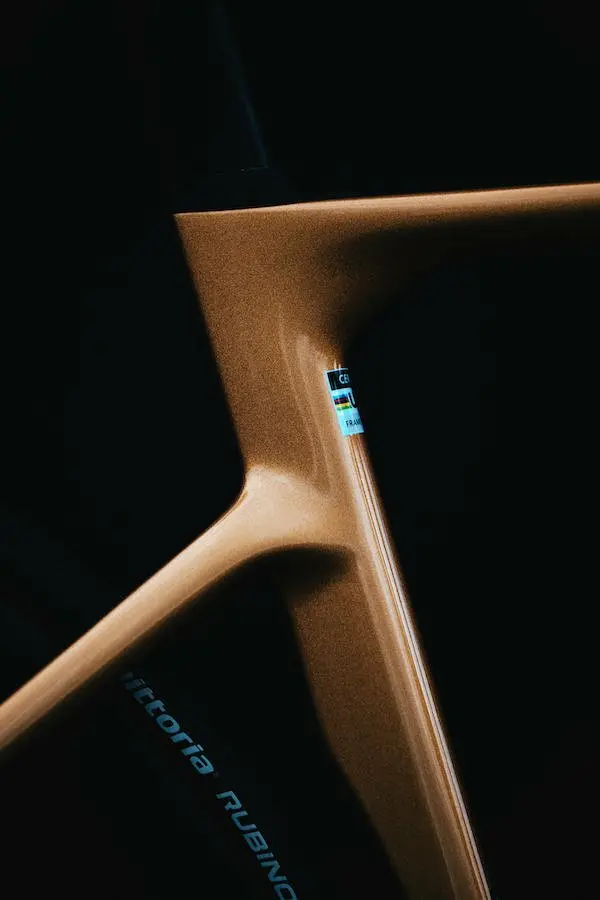
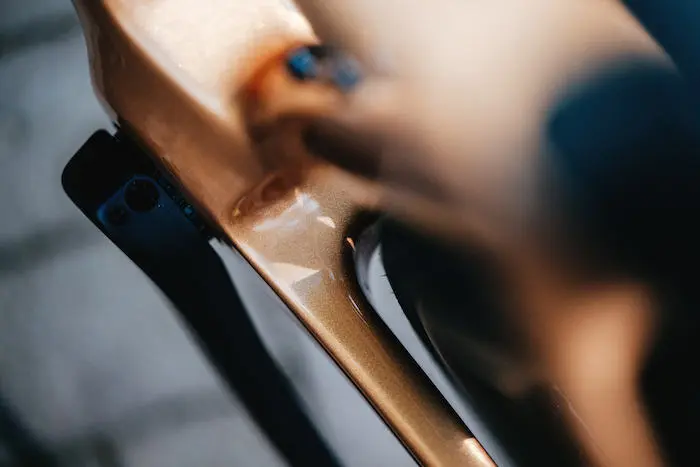
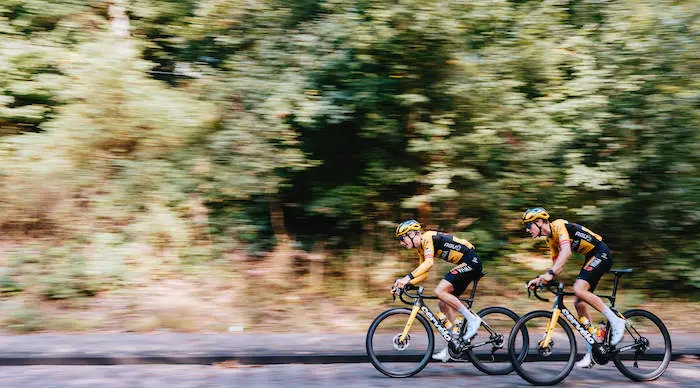
The less extreme design of the Soloist in terms of aerodynamics, lightness, or comfort compared to other bikes in the Cervélo range allows the brand to offer a slightly less expensive frame, even if it is designed from the same carbon fibers. Its construction is simplified from the moment a certain overall homogeneity is sought. The frame is thus announced at 919 g in size 56, with a fork at 374 g. A weight that remains performant nonetheless and does not prevent the Soloist from already being proven in high-level competition, as it is the bike discreetly used by the Jumbo-Visma Development team riders since the beginning of the 2022 season.
Note that the Soloist is compatible with mechanical and electronic drivetrains. This allows the brand to position this new Soloist in the mid-range, with equipment that follows the same trend. Six bikes are already available for sale, in addition to a frameset:
- Soloist Shimano 105 11-speed and Alex Boondocks aluminum wheels: €4299
- Soloist Shimano Ultegra 11-speed and Fulcrum Racing 600 wheels: €5399
- Soloist Sram Rival eTap AXS and Fulcrum Racing 600 wheels: €5999
- Soloist Shimano 105 Di2 and Fulcrum Racing 600 wheels: €6799
- Soloist Shimano Ultegra Di2 and Reserve 40/44 mm wheels: €7899
- Soloist Sram Force eTap AXS (with Quarq power meter) and Reserve 40/44 mm wheels: €8599
- Soloist Frameset: €3699
Reserve Wheels: performance and stability
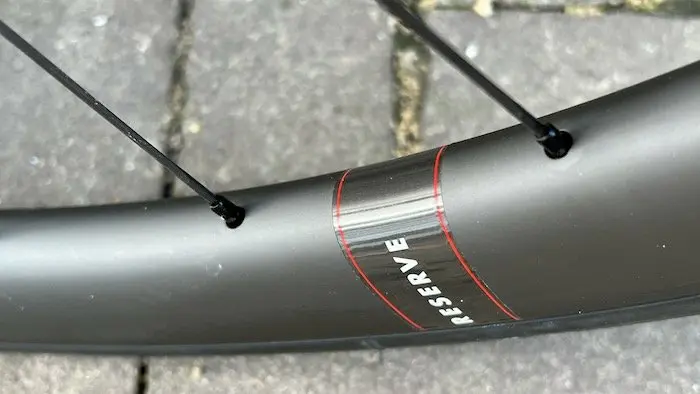
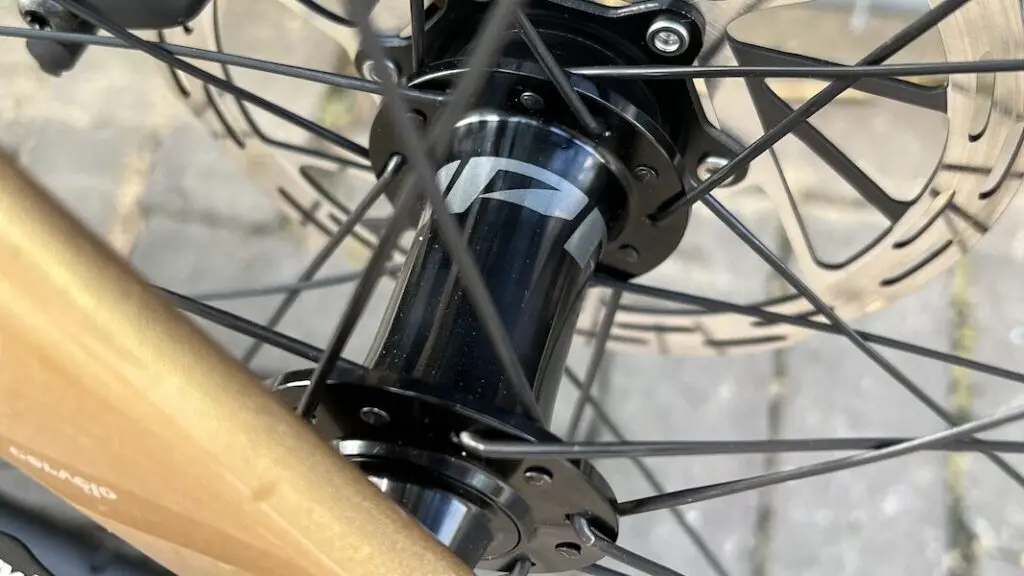
The two most high-end Soloist models are equipped with Reserve wheels, developed by Cervélo, featuring a 40 mm deep front rim with a 25.4 mm internal width, and a 44 mm deep rear rim with a 24.4 mm width. Again, this is an excellent compromise in terms of performance, weight, and stability in crosswinds, for wheels that can be used on all terrains, even gravel. Loe Van Belle, a Jumbo-Visma Development U23 rider (recently 9th in the Tour de l’Avenir), describes them as “Classics wheels,” and these are the ones he uses almost daily. These wheels are announced at around 1350 g with DT 180 hubs, and are shown here with about a hundred grams more with Zipp ZR1 ST hubs.
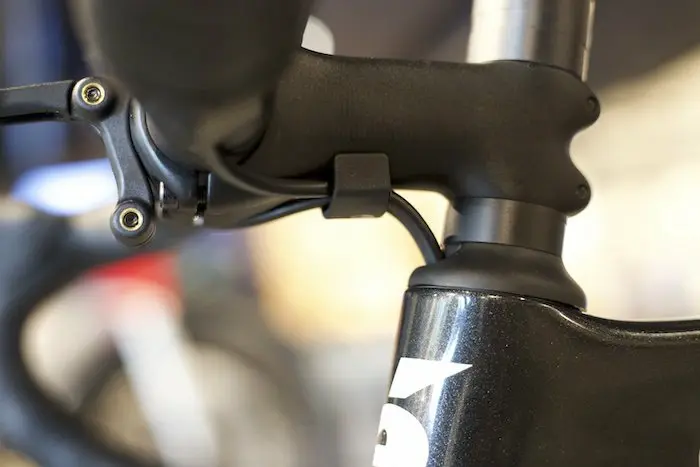
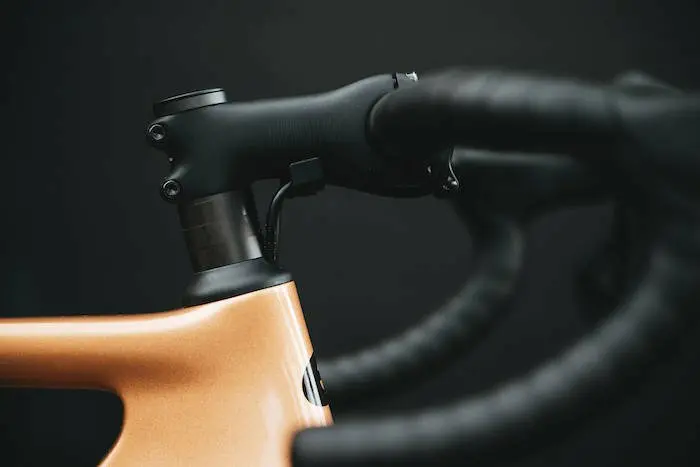
For the rest of the equipment, our test bike is equipped with a Sram Force eTap AXS groupset (with power meter), a Selle Italia Novus Boost Evo saddle, and Vittoria Rubino Pro 700×28 tires. The Cervélo aluminum cockpit is classic with an adjustable and interchangeable handlebar and stem combination, which is made possible by the integration system in the head tube developed for the Soloist. This system offers position adjustment possibilities without having to touch the hoses and the entire braking system. The cables pass under the stem and enter the head tube with a special ring, but it is always possible to mount an integrated cockpit so that nothing protrudes, as is the case on the Jumbo team bikes.
A bike with strong potential
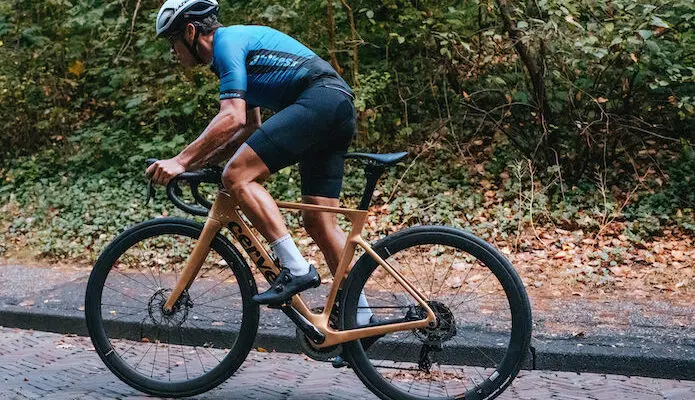
On the scale, the Soloist weighs 7.95 kg in size 51 without pedals, which is about 200 g more than the Ultegra Di2 model. This doesn’t make it an ethereal bike, but it has many other assets. Starting with its stiffness, never found wanting, whether in accelerations, during sprints, or riding hard at a steady pace on the flat with a big gear. The Soloist is firm under the pedal strokes, but without being excessively demanding either. It knows how to be dynamic, provided you have some watts in reserve. It’s a true racer’s bike! This stiffness is also very noticeable on the front part of the bike, which offers precision and stability in trajectory changes.
When the road goes up, it supports your effort whatever the pace, if you ride at a steady pace without seeking overly sharp accelerations. Because the very stiff front end, combined with an equally firm aluminum cockpit and a geometry that favors stability, does not offer the light handling expected from a climbing bike’s steering. Out of the saddle, you don’t hit the frame on steep gradients or in accelerations out of hairpins, but on condition that you opt for neat and well-coordinated movements. Here again, the Soloist confirms that it is a bike dedicated to performance and to riders in good physical condition.
A touch of responsiveness could, however, be gained by changing the tires, which here are not up to the level of a bike in this category in terms of efficiency. It’s a shame, as they partly mask the excellent impression left by the Reserve wheels. These are ultra-versatile wheels that do not penalize the bike with their weight on climbs, allow for maintaining a certain inertia on long rolling sections, and, above all, are super stable in gusts with side winds. It’s hard to say after this first test ride whether the wheels alone offer such a compromise between rolling qualities and stability, or if it’s because they are specially designed to suit the shapes and dimensions of the Soloist’s tubes.

As for comfort, it’s mainly the tire width on very wide rims that does the job of providing a cushioned contact with road surface irregularities. But the frame also doesn’t seem to transmit too many unpleasant vibrations, even on small cobblestones where the machine maintains good traction. Here again, the sensations would be even more positive with higher-end tires and a carbon cockpit, a little less stiff than the aluminum setup offered on the production bike.
Our opinion on the Cervélo Soloist
With its stiffness, aerodynamics, and consistent handling on many types of routes, the Cervélo Soloist is a bike designed for competitors or dynamic riders who enjoy testing themselves against their riding companions. Less specialized than other Cervélo bikes in their respective domains, it offers a good compromise in real life, meaning when you can’t always choose in advance the conditions in which you will ride or race.
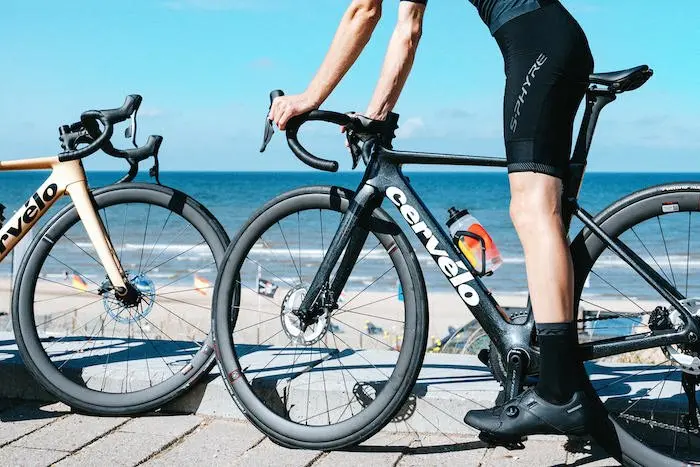
The Soloist frame, wheels, and groupset as supplied on this €8599 bike can easily compete in terms of pure performance and terrain versatility with bikes sold for much more. For the whole package to be perfect, however, the tires would need to be upgraded first, and possibly the cockpit, to save a little weight and make the machine even more responsive. But this model is a success.
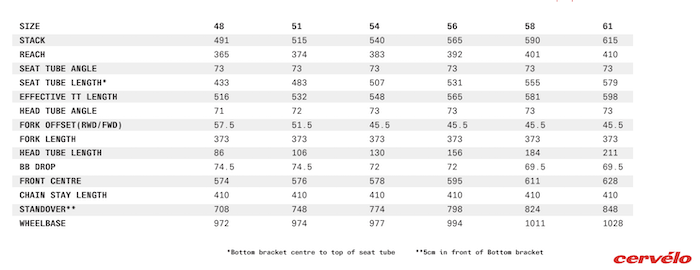
The CERVÉLO SOLOIST Sram Force AXS in brief… Rating: ***** Pros: stiff frame, reasonable aerodynamic shapes, simplified design, wheels, stability Frame: Cervélo Soloist Disc – Fork: Cervélo All-Carbon – Handlebar and Stem: Cervélo aluminum – Brakes: Sram Force 160/140 mm – Front Derailleur: SRAM Force AXS 12 sp. – Rear Derailleur: SRAM Force AXS 12 sp. – Levers: SRAM Force AXS hydraulic – Cassette: SRAM Force 10-33 – Chain: SRAM Force AXS 12 sp. – Crankset: SRAM Force AXS 48/35 (with Quarq power meter) – Wheels: Reserve 40/44 mm – Tires: Vittoria Rubino Pro TLR G 28c 700×28 – Saddle: Selle Italia NOVUS BOOST EVO SuperFlow Manganese – Seatpost: Cervélo SP27 Carbon – Weight: 7.95 kg in size 51 without pedals – Number of sizes: 6 – Price: €8599
Contact: www.cervelo.com |
=> SEE ALSO : All our Gear articles
Share the post "First Ride Review: New Cervélo Soloist"