Share the post "Review: The New Canyon Ultimate CF SLX"
Every update to one of Canyon’s flagship models is an event in itself, since the brand’s bikes are usually acclaimed for their performance and value for money. That is the case with the all-new Ultimate, tested here in its CF SLX 8 Di2 version, which offers dynamism and comfort while gaining aerodynamics, and is offered at a competitive price given its ability to shine on any terrain.
By Guillaume Judas – Photos: Vincent Lyky
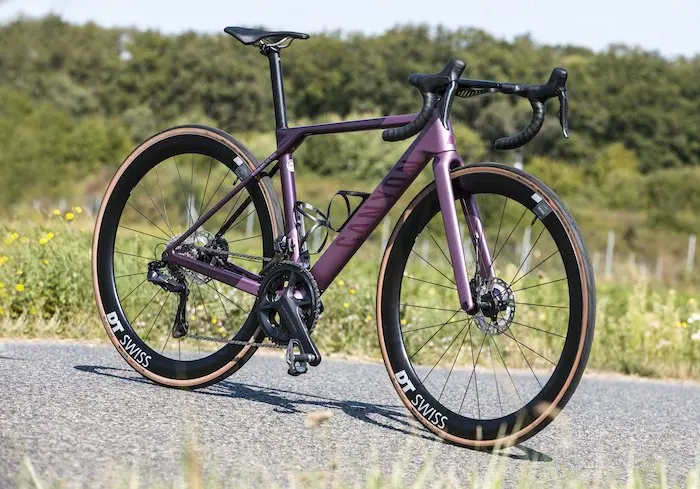
Since 2004, the Ultimate has embodied balance and versatility within the Canyon range. Alongside two more specialized models, the Aeroad, designed primarily to limit aerodynamic drag, and the Endurace, the brand’s truly comfort-oriented model, its success has never waned from one generation to the next, and not only because of a price-to-equipment ratio that remains very favorable compared with the rest of the competition. For this fifth generation of the Ultimate, Canyon stays true to the recipe that appeals to many riders, built on lightness, stiffness, and comfort, but improves its integration and aerodynamics by building on the work done on the latest Aeroad, released at the end of 2020.

The 2023 Ultimate comes in eleven models, all with disc brakes, across three different platforms. The range starts at 2699 € with Shimano 105 mechanical and goes up to 4999 € with Ultegra Di2 for the Ultimate CF SL. Next comes the Ultimate CF SLX, from 6299 € with SRAM Force eTap AXS up to 8699 € with Dura-Ace Di2, followed by the Ultimate CFR at 10499 € with Dura-Ace Di2, or 10999 € with SRAM Red eTap AXS. The main difference between the CF SL, CF SLX, and CFR frames is the type of carbon fiber used, which allows the two top-end CFR versions to weigh 6.2 and 6.6 kg. For our test bike, which sits roughly in the middle of the range, the CF SLX 8 Di2 with Shimano Ultegra, the weight is kept to 7.150 kg (verified, without pedals), for a price of 6499 €, which remains particularly reasonable, especially compared with competitors offering disc brakes, electronic shifting, and deep-rim wheels.
Subtle refinements in the search for the best balance
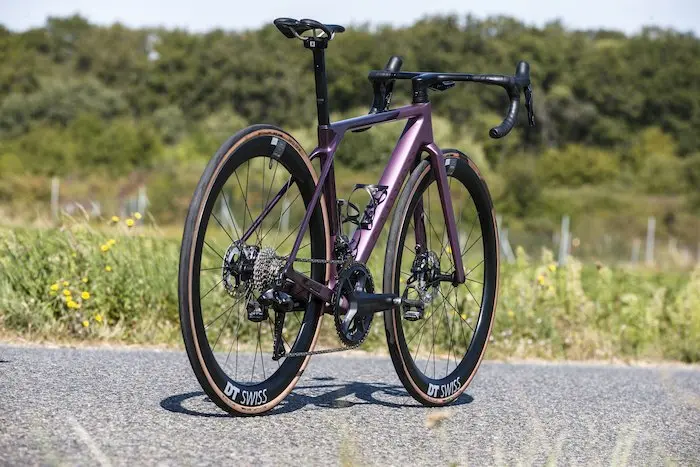
The new Ultimate keeps consensual lines (described as “pure” by Canyon), much like its handling, which is meant to suit many situations and types of rider. This is not a completely redesigned bike, but an evolution in continuity with the four previous generations of the model.
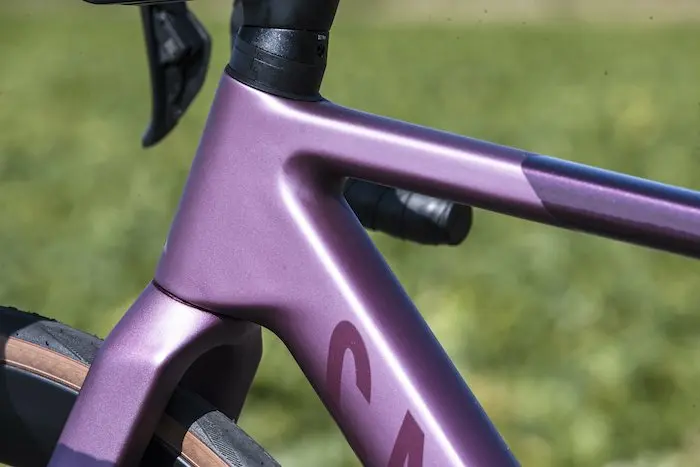
Just like the latest Aeroad, the new Ultimate now features fully integrated cables and hoses in the handlebar and headset, for a cleaner and, above all, more aerodynamic look. Even though its profile remains very close to the previous model, subtle improvements in tube shaping, for example at the fork crown or at the junction between the head tube and the down tube, save it a few watts in the wind. According to Canyon, 10 watts would be saved at 45 km/h on the frame compared with the previous Ultimate. That’s a huge gap.
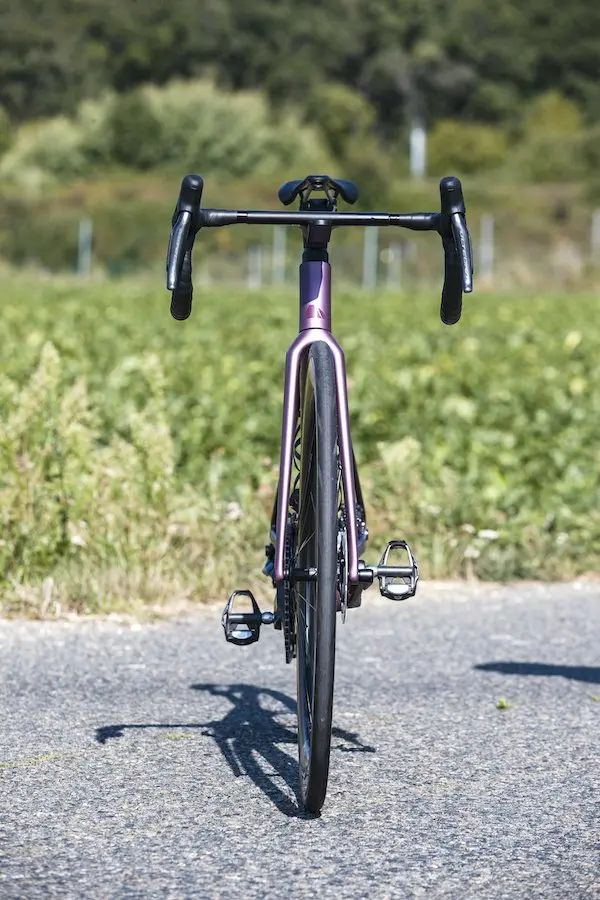
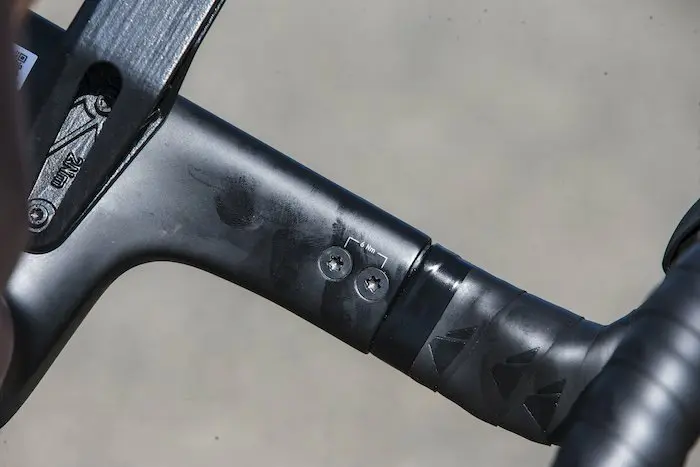
The Ultimate is also modernized by adopting the integrated handlebar seen on the Aeroad, with a streamlined upper section that has an adjustment system of 20 mm on each side, to change the handlebar width (to 390, 410, or 430 mm). These two sliding parts, which are fairly easy to adjust with two screws on each side, can also be detached from the central section and folded to the sides to make transport easier. Just like the Aeroad, the steerer tube dispenses with a traditional fork steerer pivot in favor of two parts that slide one inside the other, to make it easier to adjust the height of the cockpit. The 1-1/8″ fork steerer thus fits into a 1-1/4″ tube secured to the stem. Clamping is done with a preload ring placed just under the base of the stem, with a bolt and a sleeve that enter through a slot inside the system to lock it. This makes it possible to adjust the cockpit height (up or down) without cutting the fork steerer, and to go back if circumstances require it.
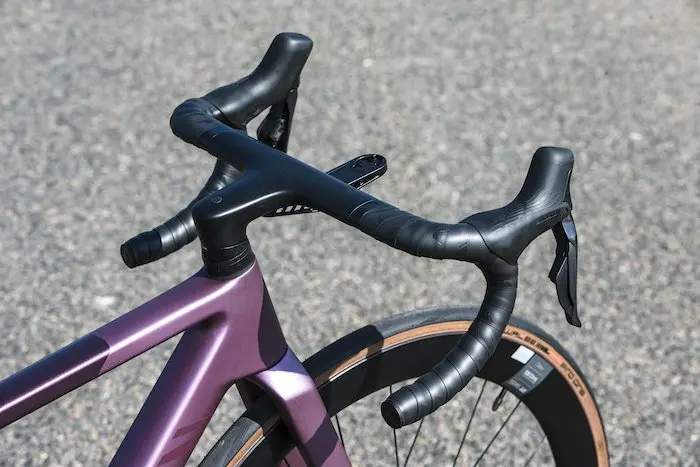
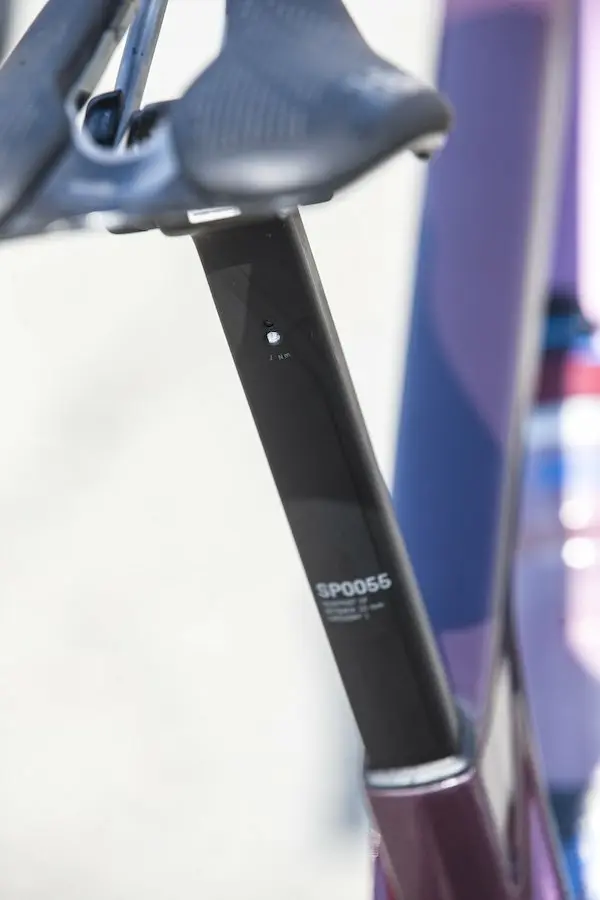
Apart from these most visible changes, Canyon has not radically changed the tube design on the new Ultimate, and has kept its three types of carbon fiber, with about 100 grams saved on the frame at each step up the range. To optimize weight, the brand did not want to take risks with frame reliability or with high-stress areas, and preferred to focus its efforts on parts such as the cockpit, seatpost, and seatpost clamp. With the clamp placed below the junction between the seat tube and the stays, this lightweight clamp is perfectly integrated, and above all its position, combined with the frame’s pronounced sloping, gives the seatpost a certain amount of flex, for added comfort.
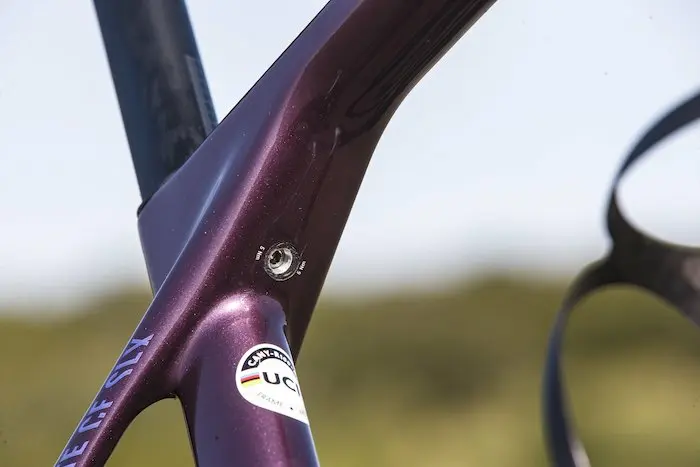
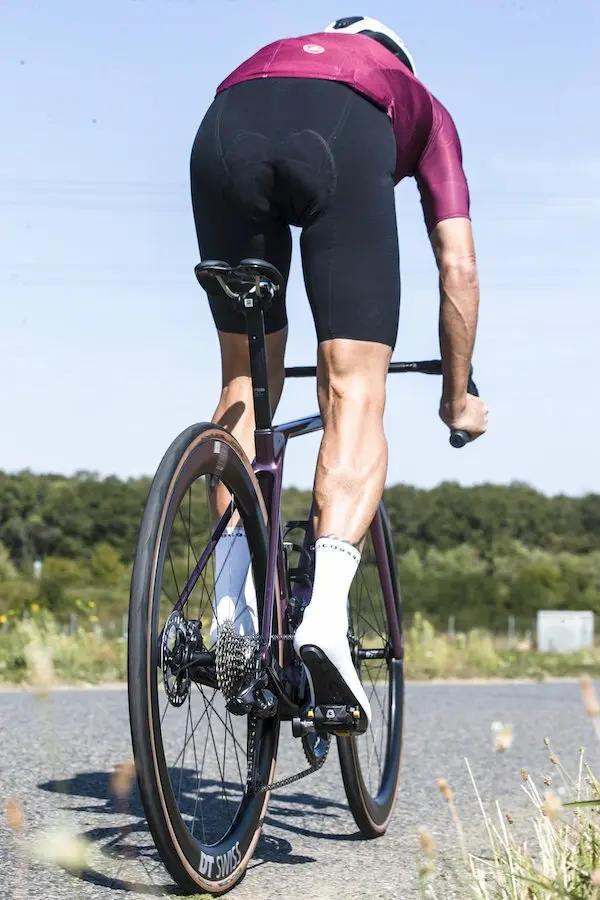
Beyond a thorough mastery of the carbon fiber layup, and of the tube shape and dimensions to strike a good balance between stiffness and comfort, the new Ultimate now has clearance for tires up to 32 mm wide. That gives it even more vibration absorption if needed, with wide tires at lower pressure, although our test bike doesn’t lack for it in sporty use, with stock tires of 25 mm at the front and 28 mm at the rear.
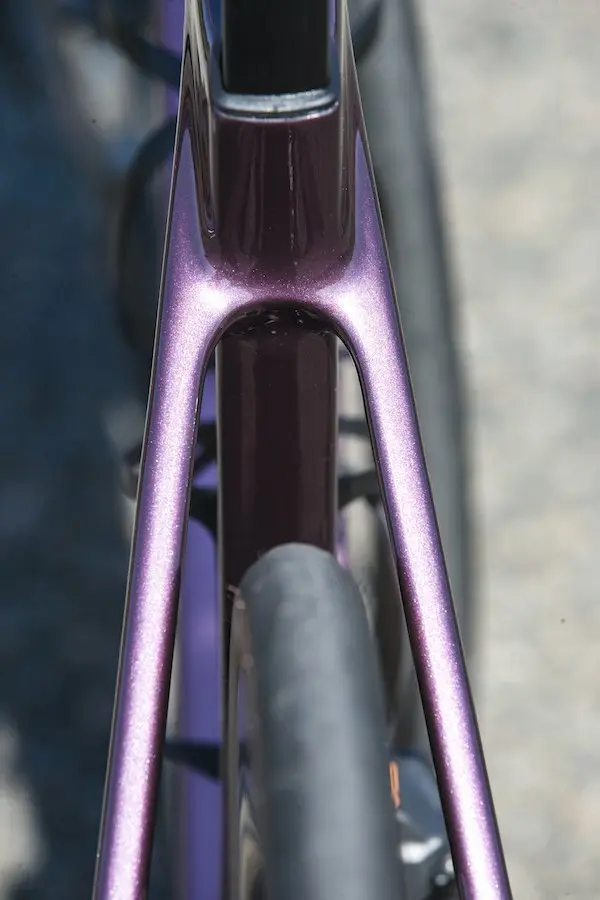
But a bike’s balance is also a matter of geometry. Offered in seven sizes (Ultimate CFR) and eight sizes (Ultimate CF SL and CF SLX), with a positioning now identical to that of the Aeroad, this bike is the very first Canyon with scalable wheelbase lengths. On sizes L, XL, and 2XL, they are proportionally longer than on smaller frames, to deliver the same balance between handling and stability across all frame sizes. The other notable change concerns sizes 3XS and 2XS on the Ultimate CF SL and 3XS on the Ultimate CF SLX, which come with 650b wheels, again to provide ideal road manners for the smallest riders.

Strong weight performance
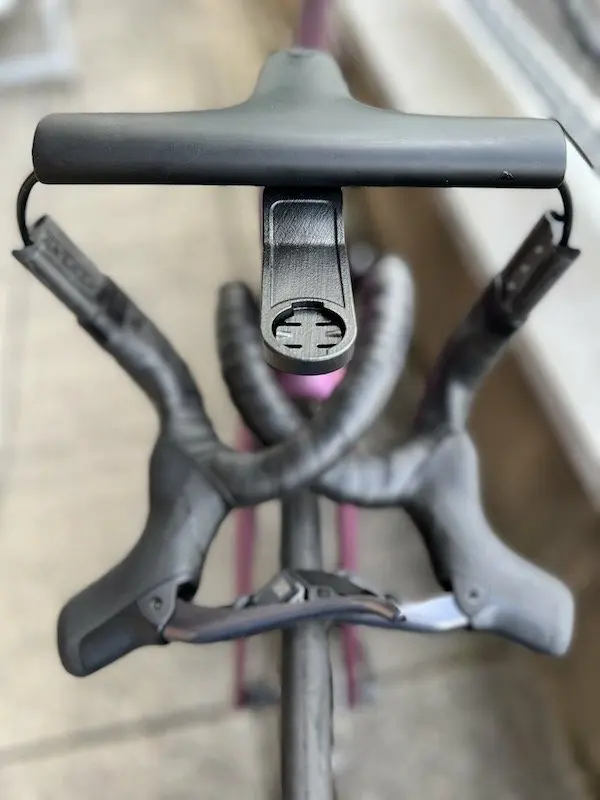
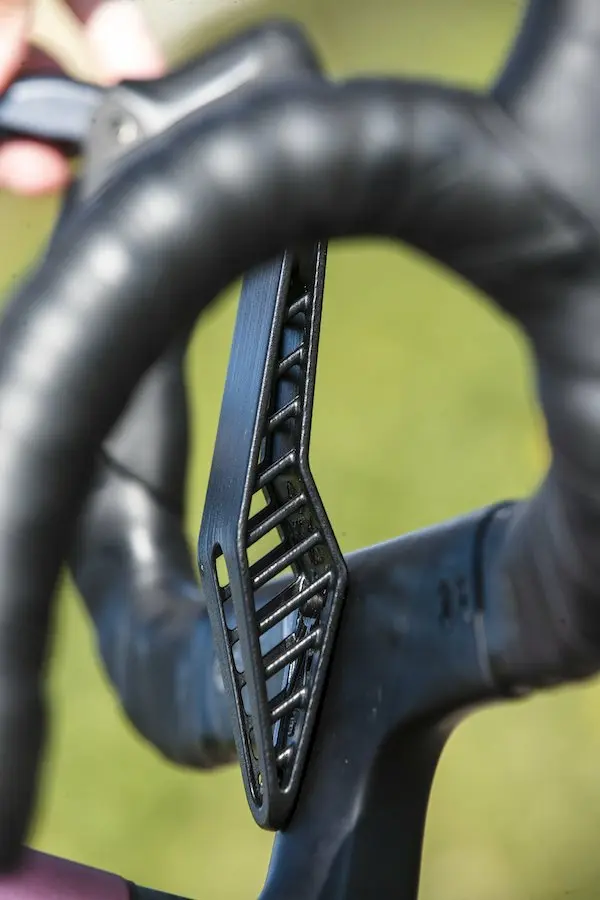
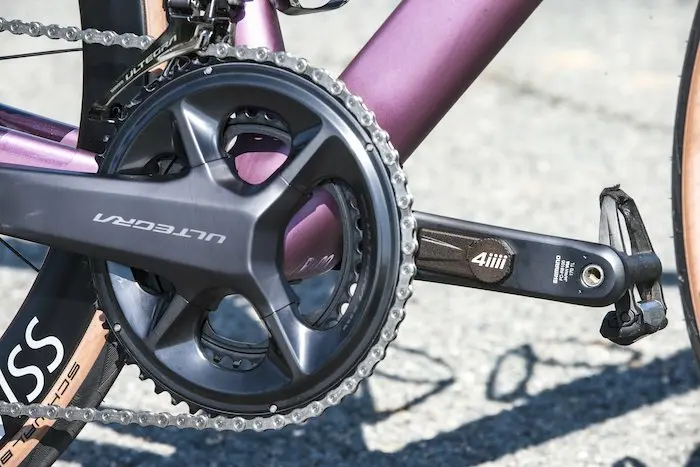
The Ultimate CF SLX 8 Di2 in our test comes with a light and stiff frame kit, using high-end carbon fiber that has been widely appreciated for several years across the Canyon range. It is equipped with a Shimano Ultegra Di2 12-speed groupset (with a 4iiii power meter), with performance almost equivalent to Dura-Ace; DT Swiss ARC 1400 wheels with 50 mm rims; Schwalbe Pro One tires; an Italia Boost Superflow saddle; a Canyon CP0018 cockpit; an in-house 100 g seatpost; and accessories such as a 3D-printed computer mount weighing 17 g, or two bottle cages weighing just 15 g. The complete bike in size XS, ready to ride with Dura-Ace pedals, weighs only 7.4 kg, which is very strong for the selling price and compared with the competition.
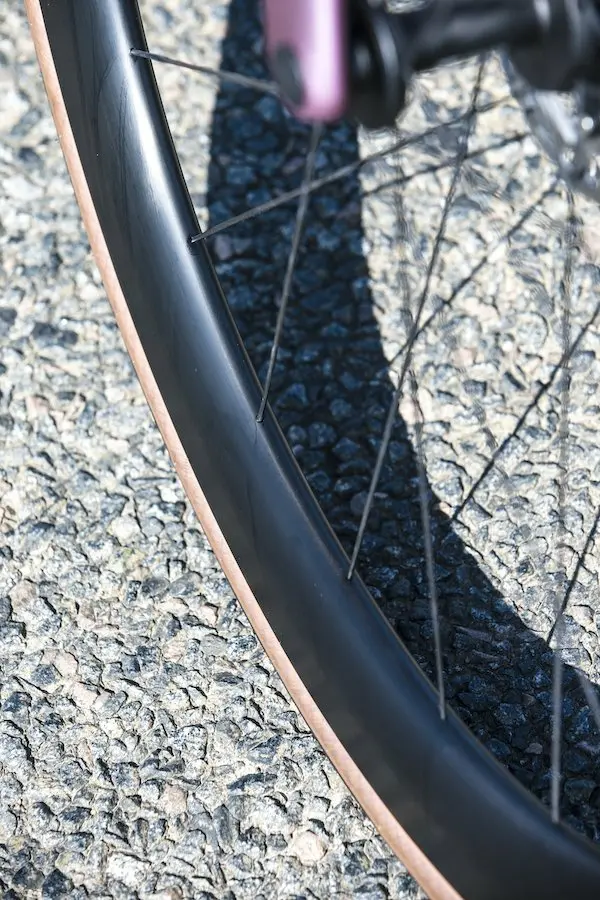
By comparison, the same bike in Dura-Ace Di2 with DT Swiss ARC 1100 wheels is announced at 400 g less, for 8699 €. And the Ultimate CFR, still with the same groupset and DT Swiss Mon Chasseral wheels, is 400 g lighter again, for 10499 €. It’s hard to do better on the market today.
Of course, Canyon’s direct-sales model makes such value for money possible. But it should be noted that this system still has some drawbacks, notably when it comes to specific fit needs (crank length or stem length) or gearing, which are easier to swap in a physical shop than remotely with the brand. In our case, for example, the size of the test bike is ideal, but we would have preferred 172.5 mm cranks instead of the 170 mm supplied as standard. Also, the 52-36 chainring combination is a bit “tight” for our riding. That said, these are very specific cases, and Canyon’s components are generally well chosen for frame size, and the range of sizes is wide enough that there are few problems in this area.
A playful, dynamic bike
On the road, the new Ultimate CF SLX has a lot going for it, especially when ridden energetically. Very stiff without being harsh, it shows plenty of dynamism in the frequent accelerations needed to leave urban areas and when tackling the small, leg-breaking bumps found early on our routes. The DT Swiss wheels match the frame perfectly and follow along without complaint, even when you push hard on the pedals or climb out of the saddle. At under 1500 g for the pair, they never feel hard to get moving, and they remain versatile on short climbs. Once rolling, the bike tracks straight and runs without any stray noise or sensation of drag. Inertia seems sufficient to maintain a good cruising speed despite a wind that is always present and never entirely favorable. The balance between the frame’s lightness and the wheel profile seems ideal here, at least on rolling routes with about 1000 m of elevation gain per 100 km.

On climbs, stiffness shines. You never feel you are losing efficiency, whatever your cadence. On truly demanding routes, with long climbs and steep gradients, the power meter supplied with the bike is a real advantage for managing your effort and not overusing very big gears. With a machine like this, you may be tempted to keep pushing as long as there is power left in your legs. On descents, you appreciate the precision of line choice allowed by the frame’s behavior and geometry. It’s sharp, crisp, and reassuring, and the bike doesn’t bounce on rough surfaces. While the fifth-generation Ultimate has made notable progress on rolling terrain, it stays playful through twisty sections and whenever you need to change pace. A treat for lively rides with friends, where you have fun wearing each other out at the tops of the climbs or sprinting for road signs. As for the groupset, it delivers in every situation, whether shifting on the fly, extreme cross-chaining, or braking at the limit. Very high-level stuff.
At the cockpit, the handlebar ergonomics are comfortable, with hands on top or on the brake hoods. As with all integrated cockpits of this type, the tilt cannot be adjusted, and some time is needed to get used to the position with hands on the drops. And as with the Aeroad, there is a fairly marked difference in handlebar stiffness between the “cocottes” (the upper sections) and the lower section. During hard sprints on the flat, the bar feels a bit flexible and in any case remains out of step with the bike’s overall stiffness.
Minor teething problems It is often through use that you discover a bike’s small flaws, and the new Canyon Ultimate is no exception. Nothing disqualifying, although some elements should be taken into account when choosing. 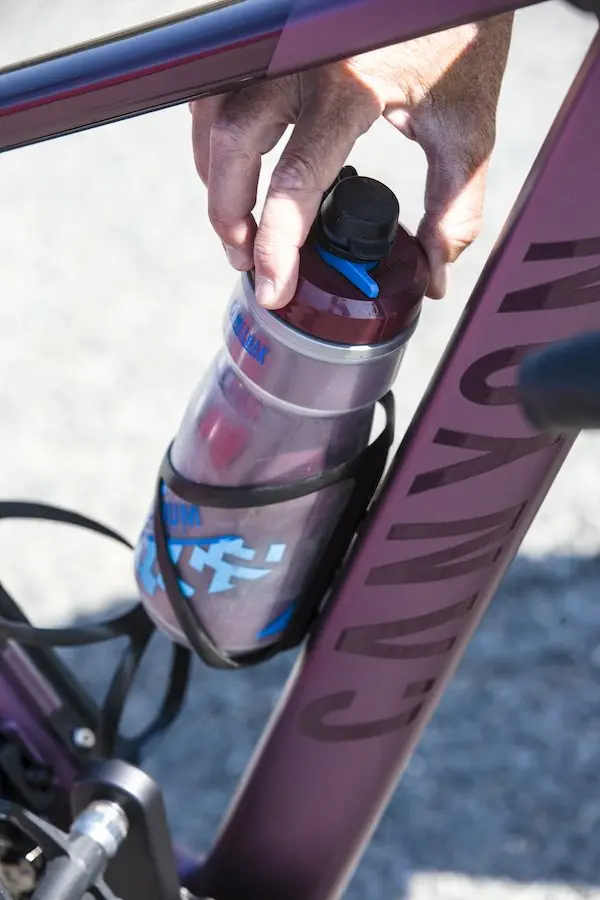 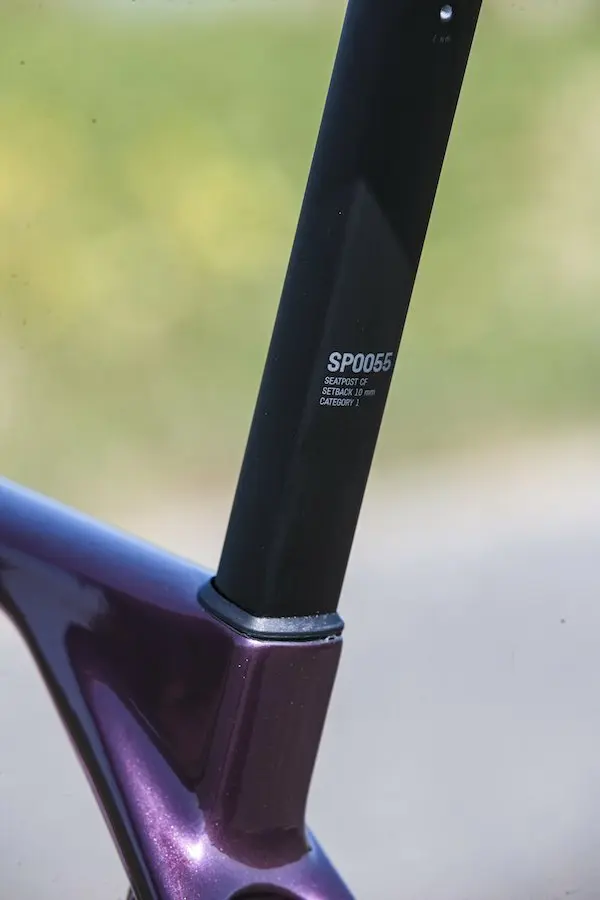
|

Our take on the new Canyon Ultimate CF SLX
The new Ultimate makes progress through small touches, without altering its original character. Stiff, lively, playful, and comfortable, it is the ideal compromise in many situations and lives up to its place in the Canyon range. The equipment is, as always, very well chosen by the German brand, for a mix of efficiency and durability without reaching crazy sums. At 6499 €, this Ultimate CF SLX is as capable as many competitors’ models that sell for almost twice as much.
The Canyon Ultimate CF SLX 8 Di2 in brief… Rating: ***** Pros: handling, weight-to-price ratio, equipment, number of sizes, bike supplied with a power meter Frame: Ultimate CF SLX Disc R100 – Fork: Ultimate Fork FK104 – Cockpit: Canyon Aerocockpit CP0018 – Brakes: Shimano Ultegra R8200 hydraulic 140/140 mm – Front derailleur: Shimano Ultegra R8200 Di2 12-speed – Rear derailleur: Shimano Ultegra R8200 Di2 12-speed – Shifters: Shimano Ultegra R8200 Di2 hydraulic – Cassette: Shimano Ultegra 11-30 – Chain: Shimano Ultegra 12-speed – Crankset: Shimano Ultegra 52/36 (with 4iiii power meter) – Wheels: DT Swiss ARC 1400 50 mm – Tires: Schwalbe Pro One Skin 700×25/28 – Saddle: Selle Italia SLR Boost Superflow – Seatpost: Canyon SP0055 – Weight: 7.150 kg in size XS without pedals – Number of sizes: 8 – Price: 6499 € Contact: www.canyon.com |
=> SEE ALSO: All our gear articles
Share the post "Review: The New Canyon Ultimate CF SLX"