Share the post "Giant unveils the new Propel, an even more aero and lighter bike"
Winner of several Tour de France stages, the new Giant Propel improves aerodynamics, efficiency, and adjustability.
Source: Press Release
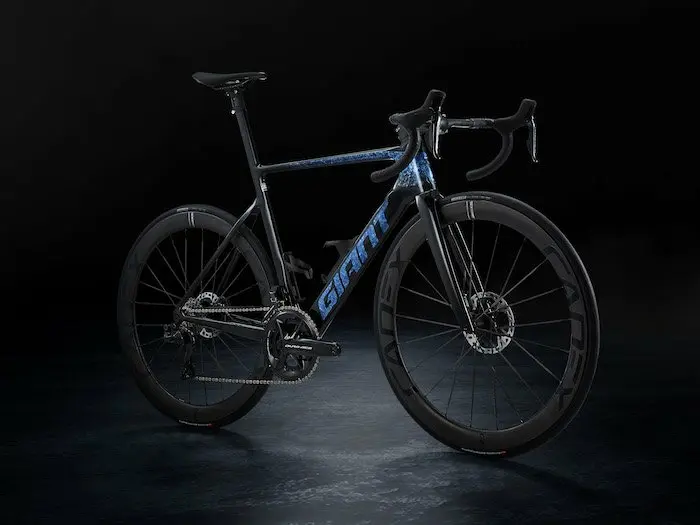
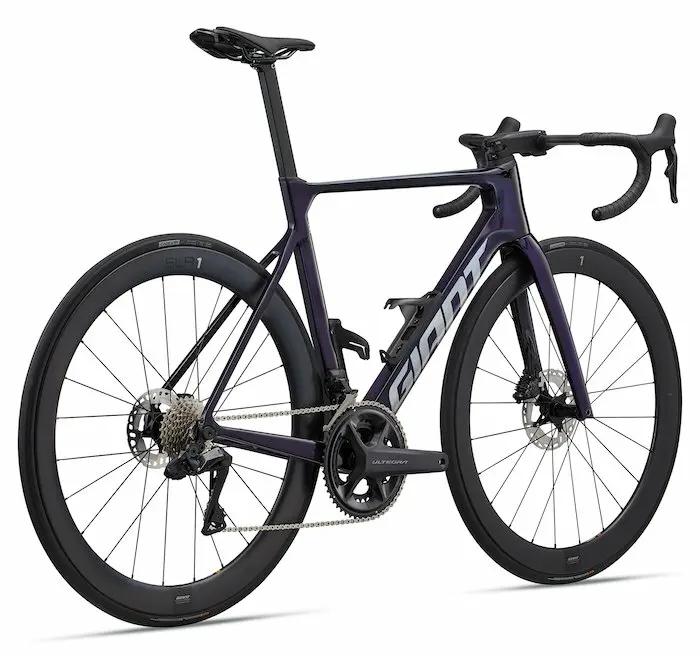
Giant, a global leader in the cycling industry, introduces the new Propel. Each version is designed on a composite frame with improved aerodynamics, adjustability, and efficiency compared to the previous range, making it a more versatile and competitive bike for performance-seeking cyclists. This new range consists of three series: Propel Advanced SL, Propel Advanced Pro, and Propel Advanced.
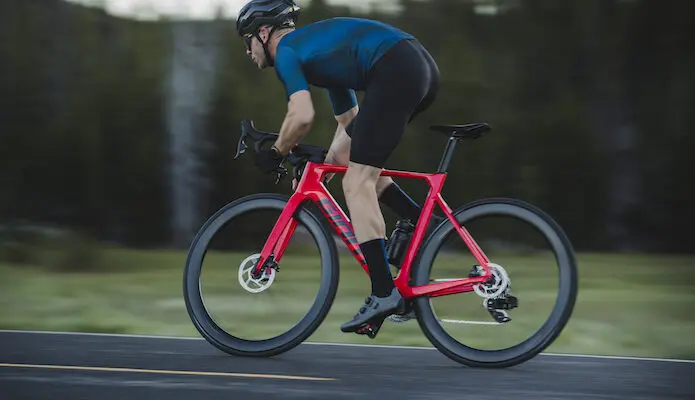
After years of research and development, followed by wind tunnel and real-world testing, the flagship of the new range, the Propel Advanced SL, was introduced to the world by Dylan Groenewegen, the BikeExchange Jayco team sprinter, when he won Stage 3 of the Tour de France in July. Thirteen days later, his teammate Michael Matthews proved that the new Propel was not only for sprinting. On the hilly profile of the fourteenth stage, his solo attack led him to a fantastic victory, proving that the new Propel was capable of much more than just sprinting.

For finishers like Groenewegen and Matthews, victory is often decided in those tense moments in the final kilometers. Positioning, attacking, countering. Elbowing, leaning into corners, relaunching. This is where the new Propel takes the reins of the peloton. Compared to its predecessor, it performs significantly better in aerodynamic tests, while the frame is lighter and stiffer.
Beyond its stiffness-to-weight ratio designed for victory, the new Propel is also engineered for dynamic rides with better control in varied situations. From smooth asphalt to rougher roads, from steep climbs to the steepest descents. Other improvements enhance the riding experience, such as thinner seatstays and the new Vector seatpost design. There are two versions: the integrated Vector seatpost on the Propel Advanced SL, and the adjustable Vector seatposts on the Propel Advanced Pro and Propel Advanced.
Aerodynamic Integration
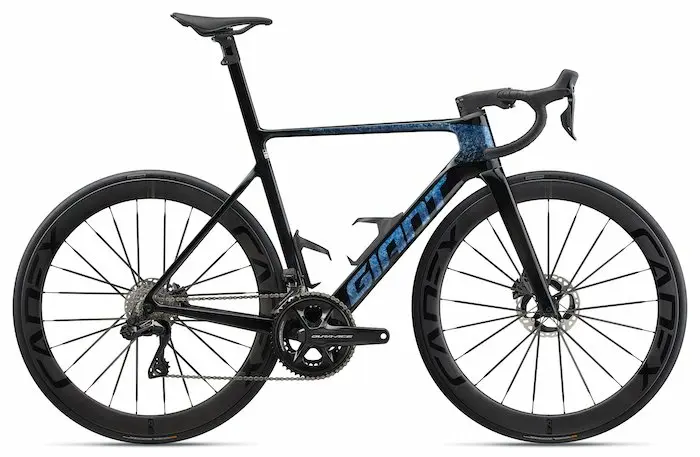
The philosophy behind the design of the new Propel is called Aerosystem Shaping. To develop the shapes of the tubes, angles, and junctions, the engineering team used computational fluid dynamics (CFD) airflow simulation software. This led to the use of truncated ellipse shapes in key areas of the frame such as the head tube, down tube, and seat tube.
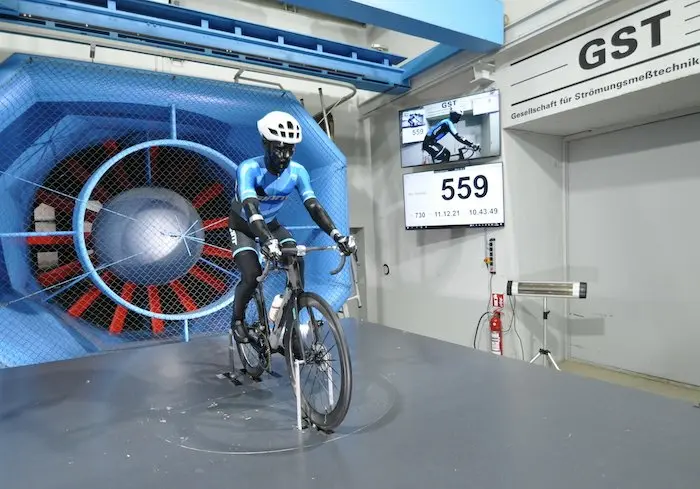
From there, the development team created the physical shapes. Working with renowned aerodynamicists at the GST wind tunnel in Immenstaad, Germany, to accurately simulate riding conditions, they used a dynamic mannequin to analyze the aerodynamics of the bike, as well as the cyclist/bike system. This is a process that Giant initiated over ten years ago when working on the first version of the Propel. While most bike manufacturers use a static mannequin, Giant engineers believe that only a dynamic mannequin could accurately reproduce the stresses experienced by a cyclist. Unlike a human, the mannequin can maintain the same position and perform precise and reproducible leg movements.
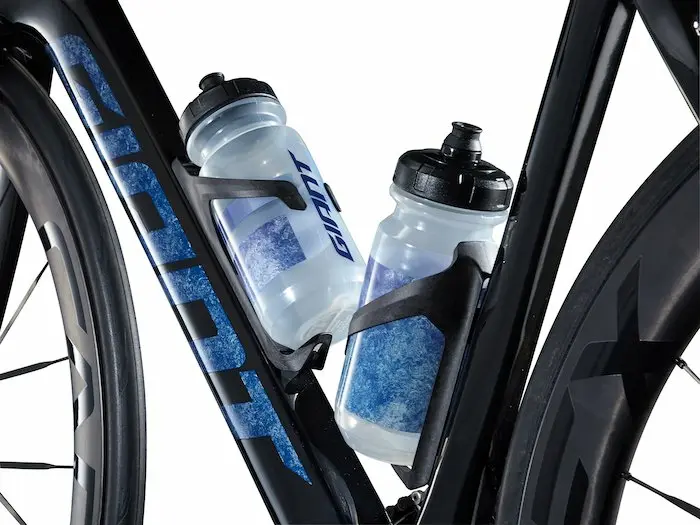
The frontal surfaces, where aerodynamics matter most, feature sculpted lines that transform into truncated ellipses to minimize drag. Following a holistic approach to aerodynamic design, Giant even went so far as to create two differentiated bottle cages: one for the down tube, and another for the seat tube.
Regarding aerodynamic gains, the frame wrote a page in history, but not the whole story. The new Contact Aero handlebar and stem also reduce drag, as do the new CADEX 50 wheels fitted with CADEX Aero tires. When comparing the new Propel to the previous generation, the aerodynamic improvement represents 6.21 watts. This is equivalent to a gain of 27 seconds over 40 km at 40 km/h.
Winning Efficiency
For competitors, nothing is more important than the power-to-weight ratio. Making the new Propel both stiffer, to improve power transfer, and lighter, was essential. Tests reveal that the new Propel has 9.9% higher frame stiffness compared to its predecessor. Pedaling stiffness is increased by 7.5%. The overall stiffness of the entire frame and fork is improved by 9.2%.
When you combine these figures with the total weight of the frameset, you get the magic number that reveals overall efficiency: the stiffness-to-weight ratio. In the case of the new Propel Advanced SL, reduced weight and increased stiffness translate into a 26.4% gain in overall efficiency.
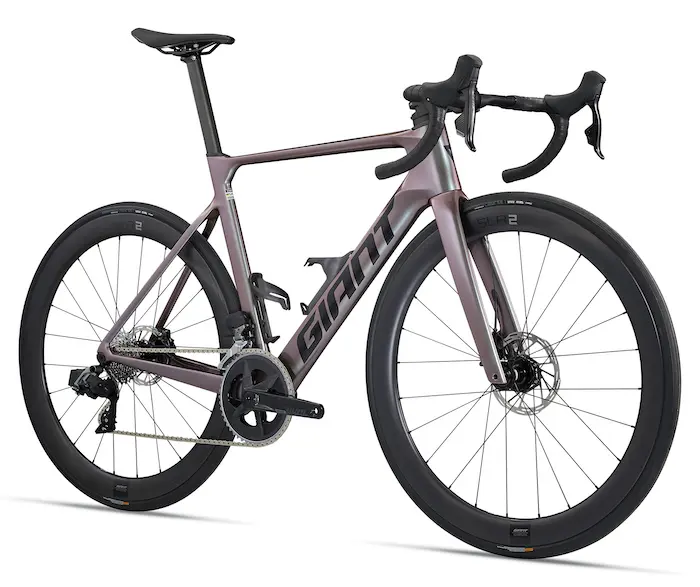
Most of the stiffness gains come from modifications made to the head tube, down tube, and bottom bracket shell area. But simply making a frameset ultra-stiff doesn’t necessarily make it faster. To optimize overall performance in real-world conditions, comfort and control also play a key role. For this reason, the rear triangle of the new Propel has also been redesigned to offer a more pleasant ride quality, making it a more versatile and higher-performing bike.
The seat tube, chainstays, and integrated seatpost have been redesigned, with thinner diameters compared to the previous generation. This new design helps reduce weight and also gives the new Propel better handling. Compared to the previous Propel Advanced SL, the new model has 85% more comfort in the rear triangle (with the new integrated seatpost), making it more versatile during long and hard days in the saddle, by reducing fatigue. The increased tire clearance also allows for the use of larger tire sizes (up to 30 mm) for an even smoother ride.
Easily Adjustable
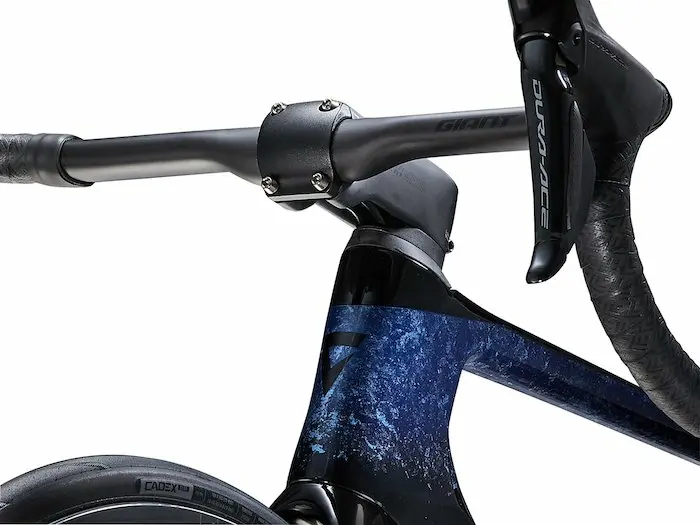
The cockpit has been completely redesigned to create an all-new Contact SLR Aero handlebar and stem assembly, which makes it easier to change components and adjust your position. This new OverDrive Aero assembly keeps cables and hoses out of the wind while avoiding the complexities associated with the full integration seen on many current aero bikes.
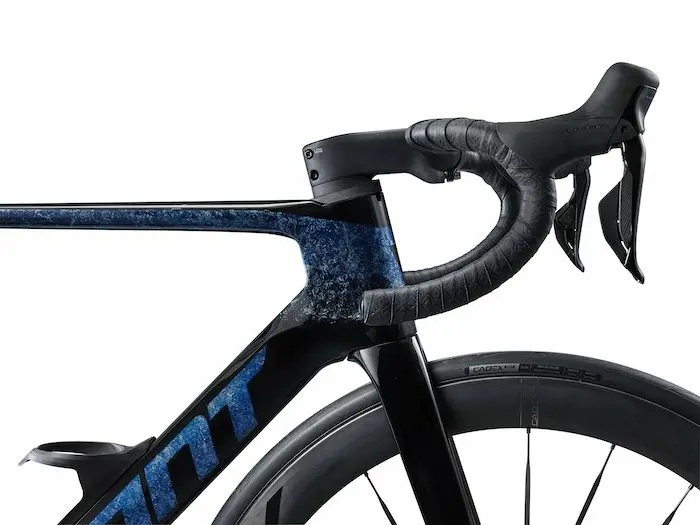
The new Contact SLR Aero carbon handlebar features a flattened top section to improve aerodynamics and hand comfort. It also has a deeper drop for increased control during sprints, cornering, and descents. The entire Propel range features the new OverDrive Aero assembly, which combines a D-shaped steerer tube with corresponding spacers for an internally routed and extremely dynamic and easy-to-maintain brake and derailleur cable system.
While the previous Propel cockpit routed cables and hoses over the stem and into the head tube behind the steerer tube, the cables and hoses of the new Propel pass through the handlebar, under the new Contact SLR Aero stem, and into the frame, in front of the D-shaped steerer tube. This protects the cables from the wind and allows for better adjustability.
From the Team BikeExchange Jayco sprinters to Olympic triathlon champion Kristian Blummenfelt and two-time Ironman 70.3 world champion Gustav Iden, both of whom use this bike for the Olympics or short-course formats, the new Propel brings victory closer. For sprinting, breaking away, or beating your personal best, the new Propel is designed to achieve ultimate speed.
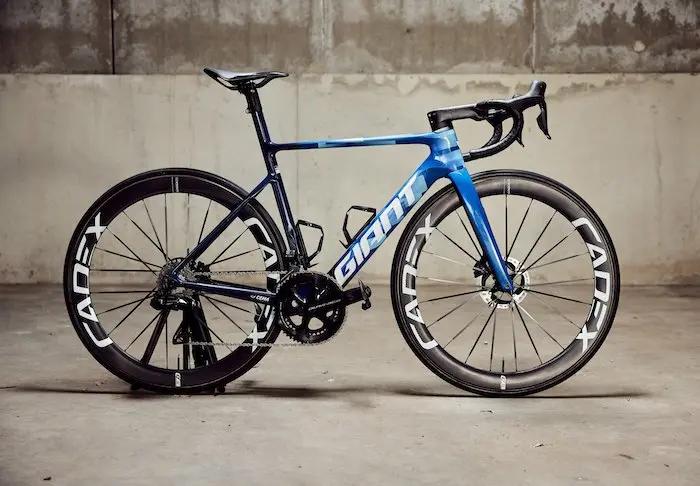
The Propel range:
Propel Advanced SL 0 Stardust color: €12,000
Build: CADEX 50 Ultra wheels and Dura-Ace Di2 groupset
Propel Advanced SL 1 Airglow color: €9,200
Build: CADEX 50 wheels and Sram Force eTap AXS groupset
Propel Advanced SL frameset Nebula or Swirly Galaxy color: €3,800
Propel Advanced Pro 0 AXS Black Currant color: €6,900
Build: Giant SLR 1 50 wheels and Sram Force eTap AXS groupset
Propel Advanced Pro 0 Di2 Black Currant color: €6,500
Build: Giant SLR 1 50 wheels and Shimano Ultegra Di2 groupset
Propel Advanced Pro 1 Phoenix Fire color: €5,600
Build: Giant SLR 1 50 wheels and Sram Rival eTap AXS groupset
Propel Advanced 1 Orion Nebula color: €4,700
Build: Giant SLR 2 50 wheels and Sram Rival eTap AXS groupset
Propel Advanced 2 Cobalt color: €3,000
Build: Giant P-A2 38 wheels and Shimano 105 groupset
More info: Giant Propel
=> SEE ALSO: All our New Products articles
Share the post "Giant unveils the new Propel, an even more aero and lighter bike"