Share the post "Review of the fi’zi:k Vento Argo R3 Adaptive Saddle"
At 3bikes.fr, we had already tested the first version of the fi’zi:k Vento Argo R3 saddle, followed by the Antares Versus Evo 00 Adaptive—a model with a different shape, but one that, most notably, introduced the Italian brand’s first-ever 3D-printed Adaptive technology for comfort. With the Vento Argo R3 Adaptive, fi’zi:k offers a versatile saddle with a short nose that provides access to this unique cushioning—one you’ll quickly find you can’t live without.
By Sébastien Argentin and Guillaume Judas – Photos: S.Argentin
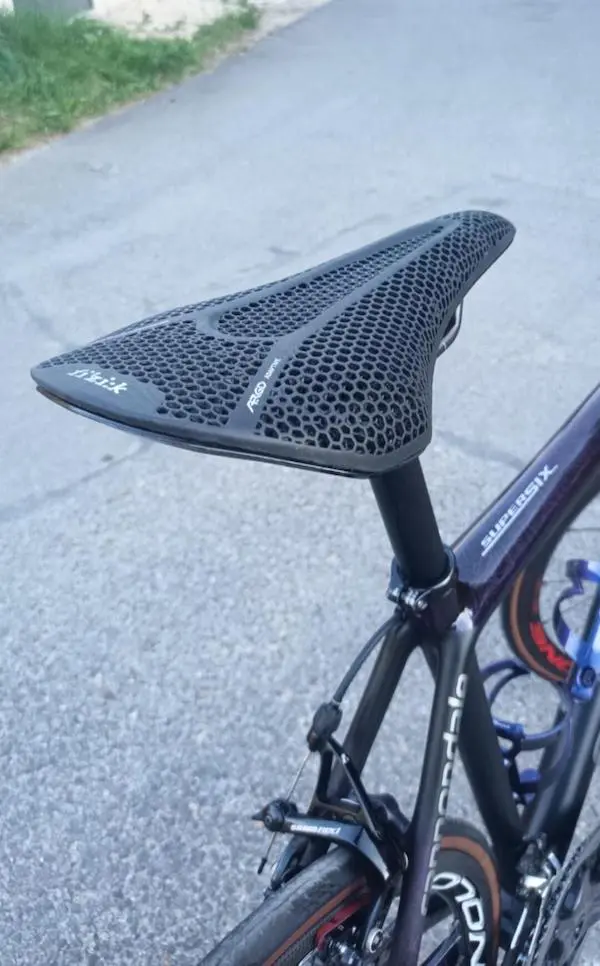
The fi'zi:k Vento Argo R3 Adaptive is a short saddle designed to promote comfort in an aggressive riding position by relieving pressure on soft tissues, and it features 3D-printed Adaptive technology. The R3 designation means it features hollow k’ium rails and a carbon-reinforced nylon shell. It retails for €259. The Vento Argo Adaptive is also available in an R1 version, with carbon rails, for about 40 euros more and weighing a few dozen grams less, and it comes in two widths: 140 mm, as in this test, or 150 mm.
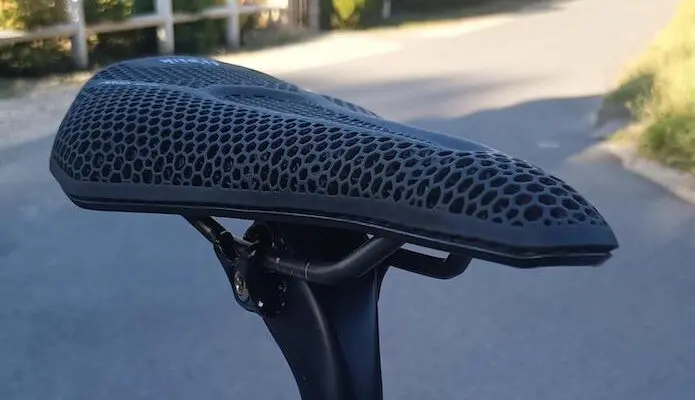
While it shares the dimensions and shape of the previously tested Vento Argo, the Adaptive model stands out thanks to its 3D-printed honeycomb lining with variable density—offering noticeably firmer support where it’s most needed and greater flexibility in the soft tissue areas. The central area, which replaces the recess found on the Vento Argo, is, for example, completely flexible and serves only to ensure stability while pedaling, thanks to the rough contact with the cycling shorts.
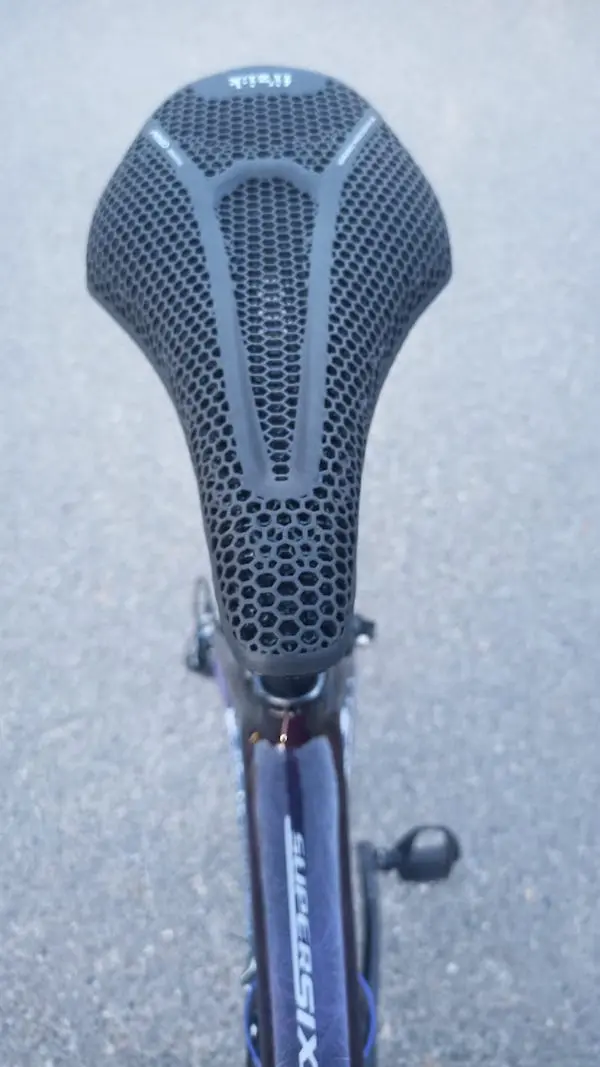
With a verified weight of 233 g, the Vento Argo R3 Adaptive isn’t the lightest on the market, but it has the advantage of making a technology that offers comfort and stability a bit more accessible—a technology found at much higher price points on certain competing models. The saddle is also made in Italy, which is a definite plus at a time when so many products and accessories come from the other side of the world.
Installing the fi'zi:k Vento Argo R3 Adaptive
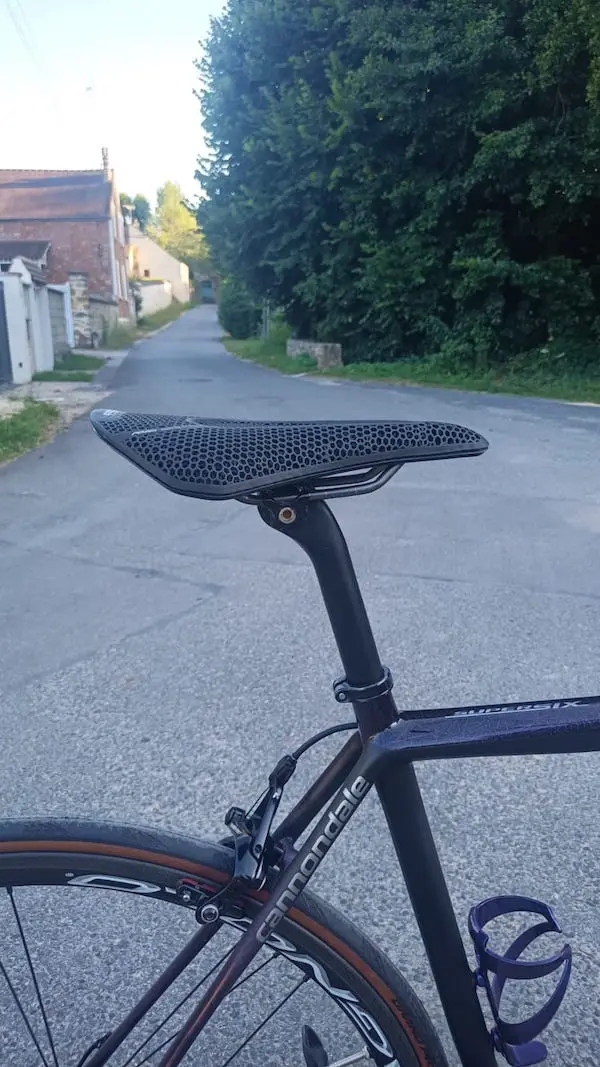
At first glance, the camber may seem less pronounced than on the traditional Argo. You might have some trouble getting used to the new position compared to the other saddle, especially in terms of height, since the cushioning here is slightly thicker, but this is offset by the fact that you sink into it a bit more. The k’ium rails are round, so they fit all seatposts on the market. When adjusting the setback, keep in mind that this is a short saddle (265 mm), and you can’t simply measure the distance between the saddle nose and the stem, for example, to find the ideal position if you’re coming from a more traditional saddle.
=> SEE ALSO: Review of the Specialized S-Works Power Mirror Saddle
High-End Style and Comfort for the fi'zi:k Vento Argo R3 Adaptive
From the moment you pick it up, you’ll appreciate the sophisticated, sturdy, and unique look of this saddle with its 3D texture. The whole thing feels very “high-end” and gives the bike a rather classy look. Right away, you can feel incredible comfort when sitting on it, as you sink into it gradually, much like a memory foam mattress. Once seated on the saddle, you really feel like you’re supported even more than usual (compared to the Vento Argo), with no hard spots. The slight differences in pressure between the right and left sides that you might sometimes feel in the seat are no longer noticeable, and you feel better aligned on the saddle. You don’t slide around on the saddle, which can sometimes be disorienting if you’re used to the opposite—for example, when shifting your weight slightly depending on your pace and the road’s profile. While riding, you don’t feel the rough, pitted texture of the road surface at all.
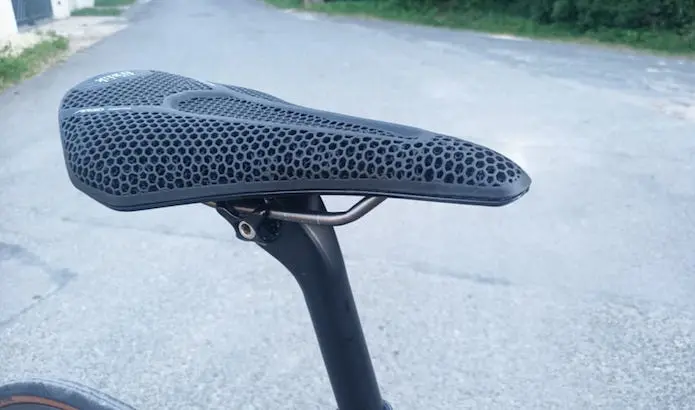
Riding at a very brisk pace while perched on the nose of the saddle is very comfortable. The sensations of compression and pressure are much less intense than usual. Small, successive adjustments to your position are quite easy to make, and it’s much better than when you’re locked into the traditional position, with the contact points firmly in place.
The saddle is truly comfortable. In fact, you forget you’re even sitting on it, which lets you feel great as you push hard. It’s a performance-oriented model, but with superior comfort thanks to this pressure adaptation based on the contact zones.
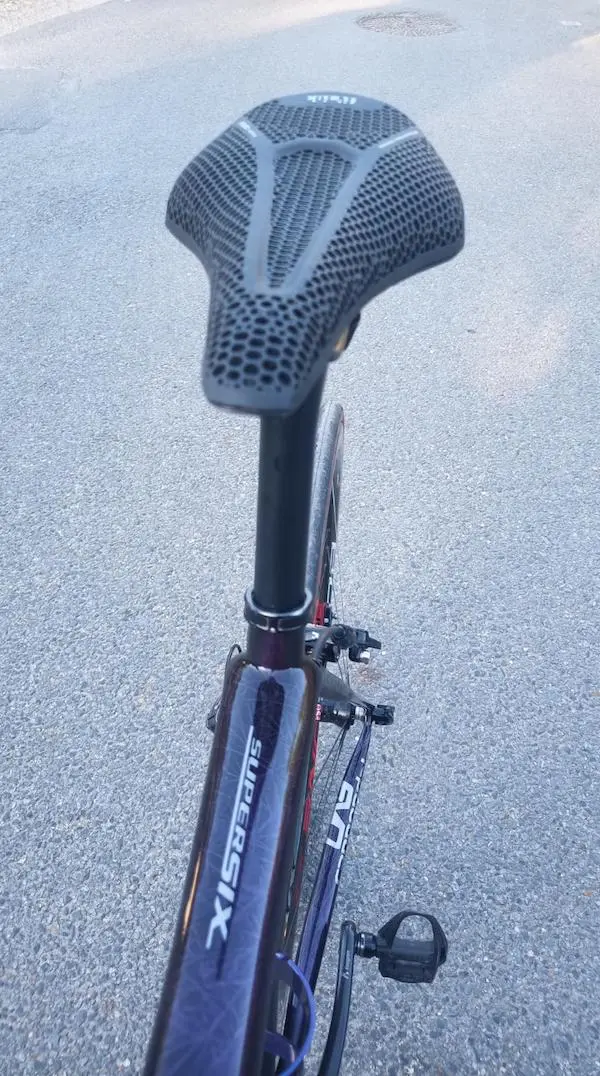
We don’t have enough experience yet to make a definitive assessment of this saddle’s durability, particularly regarding the fragility of the honeycomb cells. After several hundred kilometers, we haven’t encountered any issues, but it may still be too early to say that the Vento Argo Adaptive can hold up for several seasons without any problems. We also don’t know if the comfort level varies depending on the rider’s weight. At first glance, the density seems to adapt to body size—the heavier you are, the more you’ll sink into the saddle. But there’s no guarantee that a very light rider will experience the same “armchair” feeling while riding. Finally, the only minor drawback we’ve identified here concerns rides in the rain, since the saddle’s design itself allows a bit of water to seep in from below.
=> SEE ALSO: Buy the fi’zi:k Vento Argo R1 Adaptive saddle
Our take on the fi'zi:k Vento Argo R3 Adaptive saddle
Even though comfort on a saddle is a very personal matter, our overall assessment is very positive. The saddle looks great. It offers a high level of comfort without compromising performance. The positioning and fit are optimized, and we feel that the Vento Argo R3 Adaptive helps compensate for slight differences in weight distribution or positional asymmetries.
The fi'zi:k Vento Argo R3 Adaptive at a glance… Rating: ***** Pros: comfort, look, finish Cover and padding: Carbon Digital Light Synthesis 3D-printing technology – Shell: Carbon-reinforced nylon – Rail: k’ium 7×7 mm – Length: 265 mm – Width: 140 mm – Height at 75 mm width: 45.5 mm – Weight: 233 g – Price: €259 Contact: fizik.com |
=> SEE ALSO: All our Gear articles
Share the post "Review of the fi’zi:k Vento Argo R3 Adaptive Saddle"