Share the post "Amateur Cycling in Agony"
The Covid crisis has accelerated a phenomenon that has been underway for several years: amateur cycling, the classic, traditional kind, with village races, festival committees, prizes paid by merchants’ associations, and the bouquet of flowers presented by the camp queen – in short, real cycling as many of us knew it, is dying. Leisure-time competition is no longer popular, and the reasons are many.
By Guillaume Judas – Photos: depositphotos.com
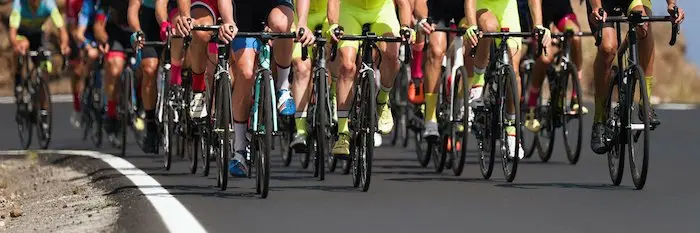
May and June should be rich months for cycling competitions. For decades, it was so, for generations of racers, whether they were young and ambitious, or older and relying on their experience. May truly launched the summer season for racers, whatever the category, with its long weekends and public holidays. June followed with the period of night races. Then it extended into July and August, in holiday destinations. It was not uncommon for a third-category racer to be able to string together 10 to 15 races per month in certain regions. Up to 20 for a “first cat” racer. Most towns and villages had their race at one time or another. And often with many people at the start, both racers and spectators. But that was before.
In 2022, the calendars of the FFC (the official federation) and UFOLEP and FSGT (the affiliated federations) are dangerously dwindling. In all regions, there is a decrease in the number of organizations, and also a decrease in the number of racers. The latter are becoming discouraged and questioning whether to continue their activity. There are weekends without races. Others where you have to travel more than 200 km by car to be able to enter. Licenses and entry fees are expensive. Travel even more so. And paradoxically, some events, those that resist the difficulties (hard-to-get authorizations, organization costs with money to be paid back to the federation, increasingly expensive insurance, volunteers needed to guard intersections who are increasingly difficult to recruit…) are canceled at the last minute, due to an insufficient number of entries. It’s a vicious circle.
Racers who are no longer racers
But where are all these racers? Cycling has had the wind in its sails since the pandemic, and it had already begun its revolution long before. On the roads, there are many riders, and they are well-equipped. A platform like Strava sees its number of subscribers grow rapidly every month. Indoor trainer cycling is a great success, whether for virtual races or events. Shops are doing good business, bikes are selling well, even at the very high end. If we stick to the realm of pure and hard competition, cycling is not doing so badly. At a high level, amateur cycling in France remains one of the best structured and most attractive in the world, with very challenging races that reveal the champions of tomorrow. Among the pros, there are no fewer than 11 French teams (in World Tour, Pro Teams, and Continental). And even if we are still waiting for a successor to Bernard Hinault for a Frenchman to win the Tour, France is one of the three best nations in the world if we combine the points of its representatives in the UCI ranking.
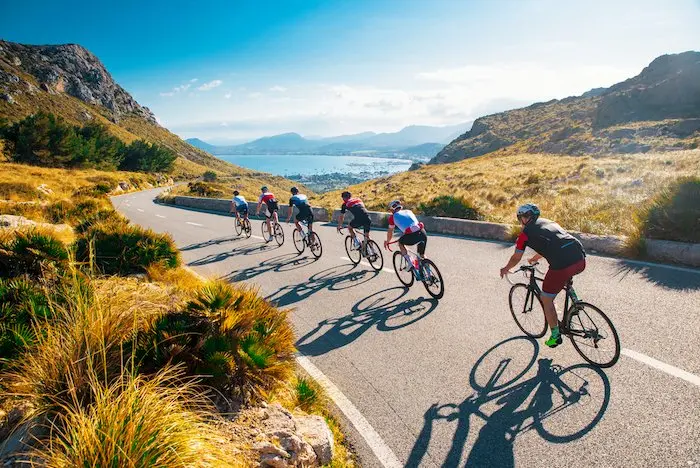
For how much longer? Because, at the base of the pyramid, the observation is clear: the number of truly active licensees is in freefall. There are fewer young people in the U15 and U17 races, and in the intermediate categories, those at the heart of the system, it’s a disaster. Many believe that the problem dates back to the late 90s, when the FFC decided to restructure the categories. This had the effect of professionalizing the activity of first-category amateurs by integrating them into serious structures, but also of artificially “promoting” with a points system racers who had neither the level nor the desire to leave their village races. For them, the constraints became too great, while at the same time, cycling had other things to offer, other practices. And if for a few years the departmental level races hid the disaster, with well-stocked pelotons of forty- and fifty-year-olds, at that level too, the curve of racers seems to be bending. UFOLEP, which for a long time brought together those disappointed by the FFC, suffers from the same observation. And for the affiliated federations too, the organizational difficulties are very real.
The amplifying role of the pandemic
All of this had been latent for several years, but the various lockdowns of the last two years, the cancellation and postponement of events in particular, have only accelerated the phenomenon. Riders have refocused on other activities. The Sunday race for dad or the youngest (or both at the same time) has become less essential for many families. The conservatism of the FFC in particular is being criticized. Some blame it for not having reformed in time, for not having anticipated societal changes. Others for not reacting to the increase in road insecurity, and to the very legitimate questions of parents regarding the risks incurred by young people in training. They are not wrong. Nevertheless, we can also observe a real withdrawal of many riders, who limit group outings. Training pelotons have been less numerous since the pandemic. Within groups or clubs that have been meeting at a fixed time for years, there are also fewer and fewer people.
The fact remains that organizing a race or a structured training session for a club amidst increasingly dense traffic, and on increasingly complex infrastructure, is also an increasingly significant challenge. In the Paris region, for example, a few closed-circuit events or those far out in the countryside still exist, but organizing in the city amidst roundabouts, speed bumps, and zigzagging through traffic islands has become almost impossible. Not to mention the dissatisfaction of residents, who are less and less willing to accept a road being closed for a few hours. That’s where we are. A kind of general weariness is setting in, and no one can predict what competitive cycling in France will look like in 10 years. While this will not prevent enthusiasts from riding for pleasure and health, it is necessary to find solutions, new formats, new challenges, so as not to dry up the pool of talent likely to reach the very highest level one day. All cycling stakeholders must get involved. Quickly.
=> SEE ALSO : All our Society articles

Share the post "Amateur Cycling in Agony"