Share the post "Chest Pain: When Should You Worry?"
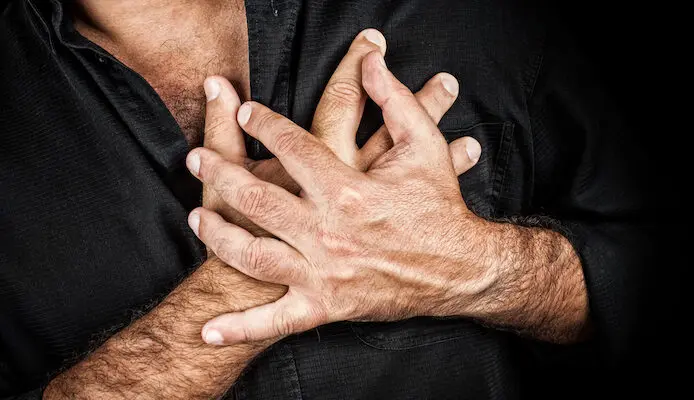
The recent cardiac arrest suffered by European cycling champion Sonny Colbrelli reminds us that a cyclist’s heart is often put to the test. And that it’s better to prevent than to wait until it’s too late. While caution is advised, today’s topic also answers many readers who have recently contacted us to try and understand the meaning of certain pains in the rib cage. And some are also wondering about the pains suffered by tennis player Rafael Nadal in the Indian Wells tournament final on Sunday, March 20. So, are these benign pains or more worrying symptoms?
By Jean-François Tatard – Photos: depositphotos.com
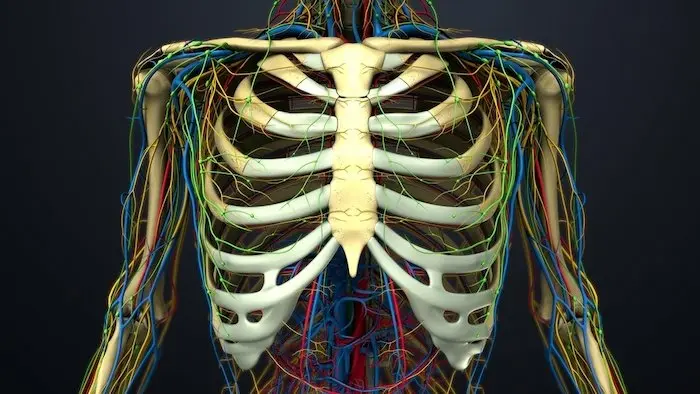
The rib cage is an anatomical area made up of the dorsal spine at the back, the ribs laterally, and the sternum at the front. Then, spinal and intercostal muscles ensure the stability and movements of this cage, which are intended for ventilatory movements. It is closed at the bottom by the diaphragm muscle, which isolates it from the abdomen.

Inside are the lungs and bronchi. And the pleura also surrounds this part of the respiratory system. The heart is also found there, itself surrounded by the pericardium and large vessels that indicate bilateral flows. As for the central part, it is called the mediastinum and it includes different vascular and nervous structures. The esophagus also passes through this part before crossing the diaphragmatic hiatus to connect with the stomach.
A complex system
The complexity of this anatomical part does not facilitate the doctor’s diagnosis in case of pain, whatever its virulence. Because it can very well originate in any of these structures. Nevertheless, if we exclude the rarest diseases related to this thoracic location, and if we are also athletes, we must make an effort to distinguish serious chest pains from benign pains.
Two recent examples have shown that one must remain cautious with the interpretation of this type of pain. This Monday, March 21, European champion Sonny Colbrelli suffered a cardiac arrest a few minutes after the finish of the first stage of the Tour of Catalonia, after taking second place in the sprint behind Michael Matthews. Fortunately, thanks to the rapid intervention of emergency services, he was resuscitated on site before being taken to the hospital where examinations were planned to determine the cause of this incident. As a reminder, approximately 50,000 sudden deaths occur each year in France, including 2,000 athletes, during and after exercise.
The day before, tennis champion Rafael Nadal lost the Indian Wells tournament final to Taylor Fritz, explaining that he had been bothered by quite violent chest pains that even disrupted his breathing. The intervention of his osteopath on the court caused incomprehension and unleashed conspiratorial discourse on social networks, with those who wanted to see it once again as a demonstration of the serious side effects of the Covid-19 vaccine. It was finally learned on March 22 that the Spanish champion was suffering from a fractured rib.
Désolé d'insister sur cette histoire de côte fissurée de Nadal, mais c'est tellement révélateur de la manière dont Facebook et Twitter propagent la désinformation sur les vaccins.
Les publications mensongères sont propulsées par les deux plateformes, qui les mettent en avant. pic.twitter.com/20RTzjH0th
— Raphael Grably (@GrablyR) March 23, 2022
Serious chest pains
Significant pains located in the chest can very well be related to many acute digestive, cardiovascular, respiratory, bone, or joint diseases. On the cardiovascular level, it can be a more or less complete and reversible obstruction of a heart artery or coronary artery, a heart rhythm disorder, an aneurysm rupture, or even pericardial involvement. All pains that occur in the chest and that occur during exertion, and that radiate into the left upper limb, but also the jaw or abdomen, are very, very suspicious. And it is difficult not to link them to a cardiovascular origin. A clinical examination is essential, and it is the only real way to differentiate between the various causes that can explain these pains. Even if it means planning additional examinations if necessary. You must not play with fire: these serious pains obviously imply stopping the effort and going to the emergency room! An electrocardiogram is immediately prescribed in this case, as well as a blood test to measure cardiac markers. Depending on the results of these initial examinations, a cardiac ultrasound may be prescribed, as well as a stress test or even a coronarography if there is still doubt.

Benign chest pains
The rib cage is also composed of several different structures. Benign pains can very well correspond to dorsal or intercostal muscle pains, to spinal, clavicular, pelvic, or other joint pains. They can come from the stomach or intestines, following gastric reflux for example. Or even chest pains after a bike fall, but also a rib fracture or cartilaginous trauma. We can also make the link with a bad position on the bike. A change in stem length or saddle setback. When alternating between bikes (road, mountain bike, time trial, etc.). Finally, we can also make a link with the famous side stitch, more familiar to runners and which is still difficult to explain despite our research.
Intercostal pain
The description of intercostal pain is difficult. The rib cage is made up of the 12 thoracic vertebrae at the back, the 12 pairs of ribs on the sides, and the sternum at the front. It is also important to remember that the main function of the rib cage is to protect the various vital organs such as the heart, lungs, esophagus, trachea, as well as part of the abdominal viscera. Finally, let’s not forget the intercostal nerve that runs in each intercostal space, i.e., between two ribs on the same side. We have 22 in total, 11 on each side. And their main function is to convey sensory and motor information from specific areas of the thoracic and abdominal wall. What we call intercostal pain or neuralgia is therefore the result of irritation of one of these intercostal nerves.
The main causes of intercostal pain are:
- A vertebral or costal blockage
- Osteoarthritis of the spine
- Pregnancy
- A past local trauma
- A dorsal disc herniation
Causes of intercostal pain requiring medical consultation are:
- A cardiopulmonary condition
- A vertebral fracture
- A rib fracture
- Referred pain from an internal organ
- A liver problem
- Stomach dysfunction
- A gallbladder issue
- etc.
The main symptoms of intercostal pain can be:
- Back pain that follows the path of an intercostal nerve
- A painful movement to perform
- Strenuous breathing
- A painful cough
To conclude
Most chest pains are fortunately not serious, but the only real advice we can give you at 3bikes.fr in case of unexplained, sharp, or persistent pain is to consult your doctor who will be perfectly able to take care of you. Caution is advised. And before considering treatment, you must understand the underlying cause.

Finally, in parallel with any conventional medication, complementary approaches such as muscle strengthening, but also physiotherapy, sophrology, or even acupuncture can be considered to prevent and improve quality of life.
=> SEE ALSO: All our Infirmary articles
Share the post "Chest Pain: When Should You Worry?"