Share the post "Retirement, or the start of a new life"
In France, the number of seniors participating in physical and sports activities seems to have been increasing for several years. While this situation is the result of several phenomena, what is also interesting to note is that an individual’s performance level can regain a sense of progression once retirement is achieved. Indeed, whether it was awaited, hoped for, or dreaded, it doesn’t matter. In our modern era, this shift towards a life with abundant free time seems to be a true eldorado for those who have managed to maintain a motivation that calls for athletic results.
By Jean-François Tatard – Photos: All rights reserved
While the unknown of a new retired life can generate its share of worries, being afraid of it is not necessarily bad news; it can even be a driving force to live it better. Abundant free time, no more rush hour traffic jams and torchlit night training sessions, no one to give you orders or keep you late at the office when you were ready to go train… On paper, retirement is a kind of eldorado, a haven of peace and freedom. From this perspective, some of you know how to enjoy it better than others. Indeed, most of the time when one retires, one goes from a structured time, punctuated by rituals, to an unstructured and completely empty time. It also means leaving a social identity and a relational network, which can often lead to isolation or loneliness. Retirement would therefore be, like other major life events, a leap into the unknown. With everything to invent! Or to reinvent!
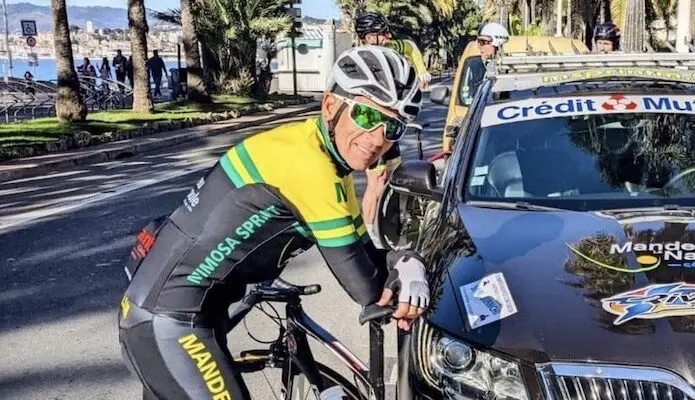
When we talk to Christian, this young retiree, a cycling fan who has managed to maintain the physical condition of a fit forty-something, he admits that the first days of retirement are unsettling and that he finds himself facing himself. It has been a long time since he had the opportunity to take so many initiatives, to make such important choices for his personal life, and to put his imagination to work…
Sorting between fantasies and reality
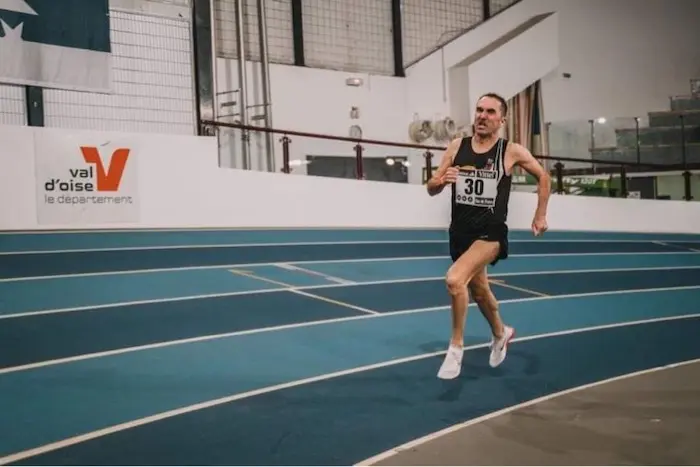
The fear of retirement often stems from the idea one has had of it for years. Do we project ourselves into an enticing future or do we have a repellent scenario in mind? Jeannot, 60, belonged to the first category, before his entourage got involved: “When I decided to retire, I was enthusiastic and had many projects in mind. But when I announced my decision to my entourage, some made me doubt by describing hell: I was going to be bored“… In reality, none of that is true – because Jeannot put into action his plans defined in secret for years. His retirement is consistent with what he had idealized. So much so that this first weekend of February 2022, Jeannot broke the French Indoor 800-meter record in the over 60 category. This positive outlook erases what has long been associated with entering old age.
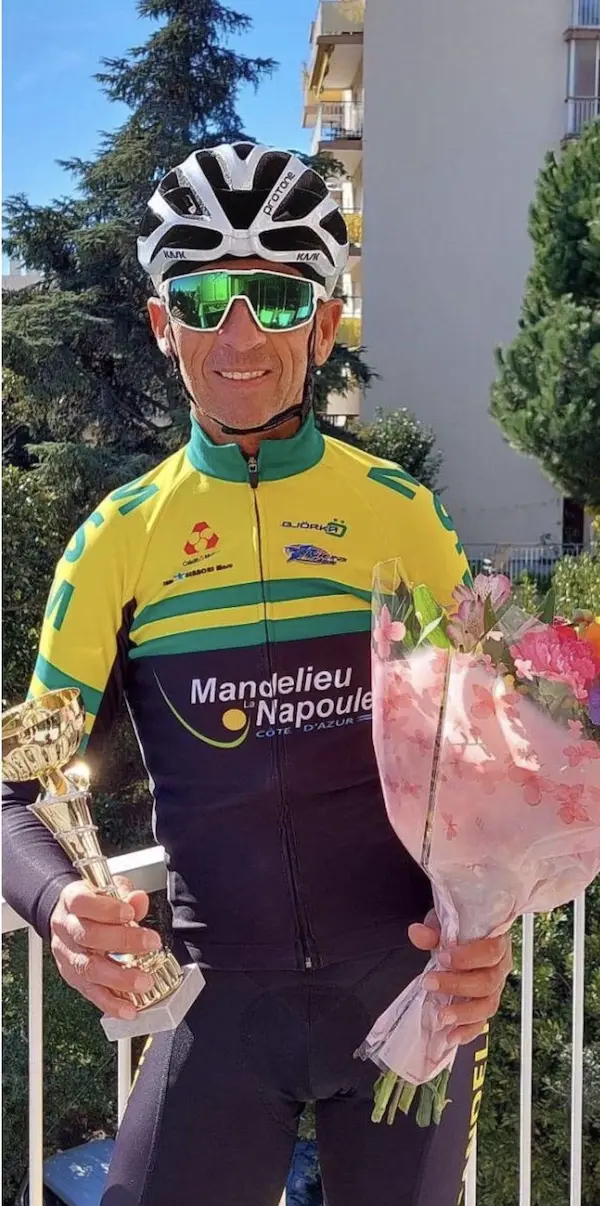
This is what Jeannot and Christian teach us here. The latter, winner last Sunday of the opening race of the cycling season, in the French Riviera region (and yes, it’s better to choose your place of residence well for this part of life), is that the vast majority of young retirees have a much longer period of time ahead of them than they think, before entering old age. Their improving results attest to this. They are better at 60 than they had been five or ten years earlier…
Preparing oneself
The secret to a happy retirement would therefore lie in good preparation… Without putting pressure on oneself! “It’s not shameful to have a good time, to enjoy life every day, to dare to take care of oneself,” remarks Christian. Most young retirees come out of a working life where they had to hang on, evolve, progress. Christian was a scooter courier in Paris and if he knows every detail of the Capital, for the last thirty years, he also had to face all the worst weather conditions we can imagine. Not to mention the risks associated with road hazards and the pressure from clients and bosses. But some then remain in this all-positive dynamic where retirement must be a successful journey. Of course, it is preferable to be active and not see time pass, but nothing obliges one to go all out like Christian and Jeannot in cycling or running.
In any case, they have the right to think about themselves. So, to hell with injunctions! What did Christian and Jeannot do? Let’s focus instead on the secret of their success… These two asked themselves deep down what they had always wanted to do and had never done! That’s what they asked themselves. Without worrying about what others thought and by protecting themselves from ready-made programs that some might have imagined for them. Because, indeed, the transition to retirement can be accompanied by a flood of requests to lend a hand here, look after grandchildren, watch the house, etc. “A retiree is not to be taxed and exploited at will,” emphasizes Jeannot! For example, when seniors are grandparents, their children sometimes tend to consider them permanently available. However, as Christian points out, it is important not to systematically prioritize services rendered over one’s own activities.
On the road to the unknown
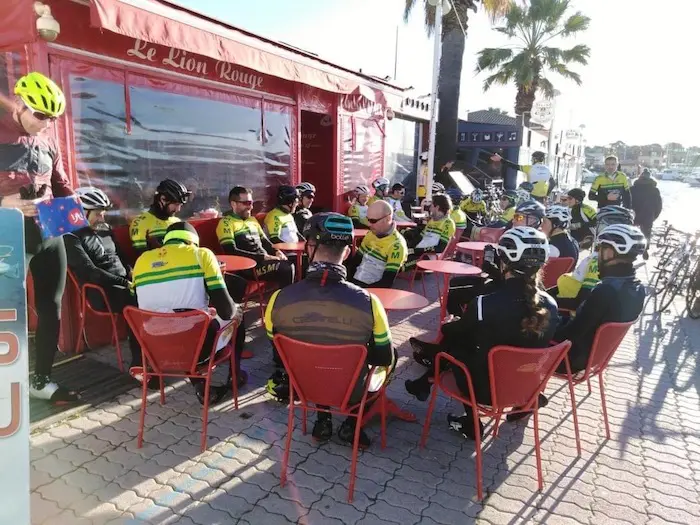
Experiment! Especially since retirement is the perfect opportunity to open up to new encounters and good surprises. Jeannot did some tests, for example. He had never trained twice a day when he was a carpenter. Because even if he could have organized himself that way thanks to his courage and waking up an hour earlier, in the medium term, the impact on fatigue would have been too detrimental. And with its share of injuries. So, without necessarily committing 200% right away, he gradually discovered new running training techniques. And with them: unsuspected aptitudes (a taste for general physical preparation, a gift for footwork, an attraction for capillarization jogs, etc.). This is how he understood that it was possible to relive a second life as an athlete. Finally, it’s the same for the cyclist Christian. Before, this Parisian by origin would go on training camps on the French Riviera for his cycling season preparation, at best one week in February. Since he retired, he has definitively settled there. And the roads he used to dream of have become his daily landscape. While he had always trained alone and at off-peak hours, he also embarked on something more convivial with group training sessions at the most enjoyable time of the day.
Finally choosing one’s rhythm
In active life, our natural biological clock is often sacrificed on the altar of family and professional obligations. The transition to retirement offers the opportunity to find a better adapted tempo, in line with one’s needs. No more painful 5 am wake-ups, quick lunches, and other long working days… With, very often, a positive impact on sleep, appetite, but also mood and morale, and therefore, obviously, as for our two retirement champions, a return to high-level sports performance! But on condition, of course, of accepting to slow down.
Because, physiologically, retirement age also corresponds to changes in the body. And you therefore need more time to do things. Jeannot thus points out that it is better to organize one’s schedule to avoid urgent and stressful situations. “Spare yourself the stress!” adds Christian. “We’ve given enough for 40 years.” Because, if you push the machine, as you did before, health problems are likely to appear or worsen. The management of health capital is, in fact, the underlying theme of this topic. “It’s about building your life project in phase with your values,” explains Christian. Of course, he won’t win a stage on the Tour de France. He knows that… But the management of his physiological heritage, as well as the associated lifestyle and the most appropriate training, will have an effect on his sports performance. And the free time his new life offers him allows him to optimize all the factors of this equation.
Accomplishment, it’s now!
From a spiritual point of view, Christian and Jeannot’s example puts into perspective that retirement is the ideal time to re-examine one’s existence and give new meaning to one’s life. For them, it’s sport. Cycling for one. Running for the other. But many seniors, like them, take advantage of the time they have to relive a dreamed or – at least – idealized life. Today, we meet many retirees like them who are in splendid shape. This opens minds. Enough to regain a social status, a chosen role in this new life, while definitively banishing the fear of isolation and the anxiety of emptiness. Long live retirement, right?
SEE ALSO: All our Coaching articles
Share the post "Retirement, or the start of a new life"