Share the post "Disc brakes: should you make the switch?"
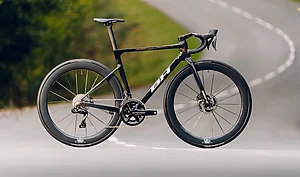
Although still in manufacturers’ catalogs, rim braking is no longer really popular with many frame manufacturers. Most new products are designed for disc braking, and even the wheel offering seems to be drying up. Switching from one system to another has the disadvantage of having to modify many accessories and habits. Things are not likely to reverse. Is this the right time for you to take the plunge and switch to disc braking?
By Guillaume Judas – Photos: ProCycleShot/Wouter Roosenboom
Some of the prohibitive flaws of early disc systems have been ironed out in recent years by the three major players in the equipment market: Shimano, Sram, and Campagnolo. With its DB system, Campagnolo installs a magnetic system behind the pads that promotes brake return and limits rubbing noises during accelerations or after heavy braking. Sram, with its HRD system, was the first brand to offer a contact point adjustment, to limit the lever’s dead travel before engaging the brake. Finally, with the very latest Dura-Ace and Ultegra 12-speed, Shimano offers a system with increased clearance between the pads and the rotors. These evolutions do not change all the specificities of disc braking, with an always present overweight, a precise adjustment, but an efficiency that is now undeniable.
A change that comes at a high price
The frame and fork are reinforced to accommodate the calipers, located near the wheel axle, and to withstand the braking forces. Nevertheless, at the high end, manufacturers manage to reduce the weight gain. But prices soar. The wheels are also specific, as they receive the rotors near the hubs. Here again, the forces exerted during braking require a stronger spoke lacing, with more spokes and/or a different spoke arrangement during assembly than for rim-brake wheels. Thru-axles replace quick releases, for greater rigidity and to limit rotor wobble within the very small space between the brake pads. Furthermore, the rims are widening to accommodate larger tires, which have the advantage of being more comfortable, ensuring better braking performance, and providing more comfort.
Modern groupsets are also designed for the disc system, with a modified chainline on the crankset, to best suit the wider rear wheel spacing. In terms of weight, a disc groupset weighs approximately 200 to 300 g more than its rim-brake equivalent. The gap is narrowing over the years, and a high-end disc bike now weighs only 300 to 400 g more than if it were equipped with rim brakes. If you choose to make the switch, you will need to buy not only a new groupset, but also a new frame, and consider replacing all your wheels, which can be very expensive if you own multiple pairs for different uses.
Increased safety depending on circumstances
Disc braking is powerful, progressive, and impervious to mud or moisture. This reduces braking distances, both in dry and wet conditions, while ensuring consistent deceleration, which can conversely be a problem with a traditional system when the rim heats up, the pads wear out, and the cable slackens. Pads and rotors are changed less often than rim pads, and carbon rims are not exposed during each braking.
However, the power of the braking can also exceed the grip capabilities of the tires in certain conditions. To remedy this, manufacturers can offer bikes with wider tires. Braking quality can be seriously altered on long descents by maintaining pressure on the rotors, which causes them to heat up. Rotors therefore do not solve the problem for those who are afraid of gaining speed on mountain descents, and it is better to adopt aggressive braking, slowing down very sharply at the entrance to curves and releasing the brakes on straight sections.

On the road, bikes are equipped with 140 or 160 mm rotors, which differ in terms of feel, power, and heat resistance. All these minor inconveniences are gradually being resolved with each generation of groupsets featuring this type of braking, whereas for rim brakes, the system is no longer evolving.
Maintaining the hydraulic system of disc brakes requires time and expertise. The advantage of this system lies in the fluid installed in the hoses, from the lever to the calipers, instead of a cable. This fluid, actuated by a master cylinder in the lever during braking, multiplies the force exerted by the fingers during braking. Hence, an impression of smoothness and consistency in braking. This system also has the advantage of facilitating the integration of cables or hoses into the cockpit and frame, as it is more flexible. However, it requires some precautions during wheel removal and transport, as its adjustment is finer.

A solution for the future
The advantages of disc braking are numerous, but not always justified on a bike intended for competition and performance, and because it makes the stock of spare wheels obsolete. However, it seems difficult to stop the evolution, and manufacturers and equipment suppliers prove to us every year that they are capable of gradually closing the weight gap between the two systems. Contrary to the most pessimistic forecasts, it is still possible to equip oneself with a rim-brake bike, and even to find spare parts (excluding current shortages due to the pandemic and the strong global demand for bike parts). But it is certain that this system will no longer evolve. So, if you need to change bikes, it is undoubtedly the time to take the plunge, even if the initial investment may seem significant. If your rim-brake bike is still good, push it to its limits for a while longer. However, it is not the time to reinvest in rim brakes.
=> SEE ALSO: All our Gear articles
Share the post "Disc brakes: should you make the switch?"