Share the post "Mood: The paradoxes of evolution"
We live in a society that plays with contradictions, that tells us that positive signs lie in the growth of our economy, and at the same time makes us feel guilty for the ecological impact we leave behind. Our favorite sport follows suit, with new products presented as indispensable but which at best complicate our lives, and at worst make us even more polluting. And we are all accomplices!
By Guillaume Judas – Photos: Piqsel.com / ProCycleShot / Wouter Roosenboom
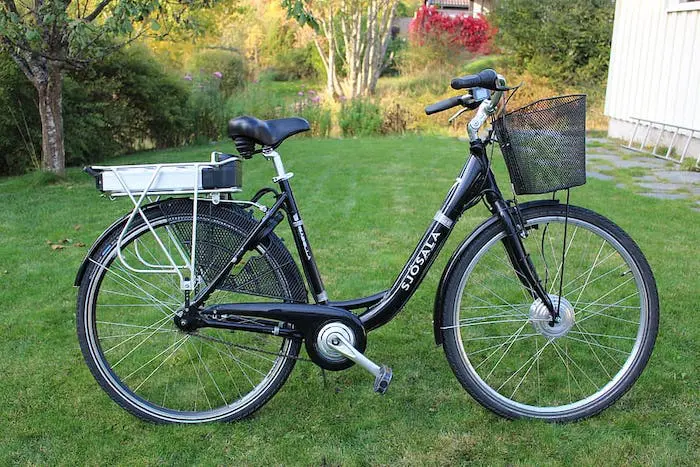
Along with technological progress, the pace of new developments in cycling is accelerating inexorably. It took more than 50 years (between the 1930s when the derailleur was invented and the 1980s with the appearance of clipless pedals) for the racing bicycle to take a big step forward. Then only a few years (about twenty) to go from five to ten cogs on the rear wheels, to abandon fine-tubed lugged steel frames for monocoque carbon, to relegate small flat rims to oblivion for carbon aero wheels, and to give up downtube shifters for electronic transmissions. Then the last ten years have seen the arrival of electric-assist bikes, first for the general public then for “athletes,” and finally disc brakes. We could still have believed in the altruism of the industry with technological progress for the well-being of the community until the appearance of e-bikes, supposedly to promote urban cycling and allow sedentary people to get a little exercise. But the proposal of this type of machine for recreational cycling makes us doubt the manufacturers’ laudable intentions.
Well, it’s true that it’s easier to make a passionate cyclist consume than a bike commuter. And that by carefully calculating the rhythm of new product presentations, manufacturers can hope for equipment renewal every three years. A good way to boost the growth – or keep afloat, let’s be understanding – of companies, which we are otherwise told is the only way to maintain our standard of living. By some miracle of communication systems, the market follows. And not just new products. Like diesel vehicles that have become difficult to sell since ecological morality accused fine particles of all evils, rim-brake bikes are soon being called relics to be thrown in the bin. A great deal, especially for frame, groupset, and wheel manufacturers, and for bike shops who, in addition to selling new bikes, will have to retrain as IT technicians for the maintenance of our machines.
Overhaul
Because obviously, these new technologies are not transparent about how we can maintain our bikes. Changing a brake cable (what?) at the last minute is over. To adjust a derailleur, you almost need an app, a recent smartphone, and a flawless Bluetooth connection. But also an email address, a password, and waiting for the system update to install. It doesn’t work? You have to call customer service, when it works, and when it’s willing to communicate in English, otherwise it “doesn’t understand the problem, your operating system must not be up to date.” What doesn’t always work for derailleurs is the same level with bike computers/GPS or connected indoor trainers. Ah! A real headache too for those who want to get into virtual cycling hoping to jump on their training device after a grueling day at work. Well no, sometimes it just won’t work!
It’s a headache for retailers too, overwhelmed by everything these new products imply. So they protect themselves. Be careful! Because the fluid needed for brake operation is corrosive, it is strongly advised not to handle it without solid training. Your bike leaves the specialist perfectly adjusted, but its proper functioning is only guaranteed if you don’t transport it in the trunk of your car. Moreover, wheel quick releases now require a wrench. If that’s not to discourage you from touching them… Gone are the days of tinkering alone in the garage in the evening (which was actually a real pleasure), or assembling a bike piece by piece. A bike must be checked and serviced like a car, there’s almost no choice anymore.

Disc brakes? They squeal, they rub (and sometimes they howl) and the efficiency is worse than with rim brakes, at least up to mid-range. The equipment we use is heavier, more complex, and less efficient than a few years ago, while being increasingly expensive. Very high-end bikes are very high-performance, but they now cost the price of a car. Many riders feel like they are regressing in their practice, being less free despite machines presented as more versatile, having worse and standardized bikes, and suffering all these constraints imposed by these new products. How far will we go? The bicycle is originally a simple, light, relatively inexpensive machine, easy to adjust and maintain. Too easy, in fact! Today it is sometimes as expensive as a motorcycle, and soon just as polluting, first because of the materials used (carbon is not particularly ecological, especially when it comes by boat from the other side of the world), then because of technologies involving materials that are again difficult to recycle (batteries for motors or derailleurs) and finally because it forces us to ride connected (we now know the enormous ecological impact of digital technology).
Responsible for our contradictions
Even though we know it, and are fully aware of being somewhat manipulated, we must admit that we like it. It’s hard to resist the idea of staying current, of doing without an electronic derailleur once you’ve tried it, of rejecting the idea of having 12 speeds at the back, or of being uninterested in a little boost from a motor in the bike to go anywhere or keep up with fitter friends. Aesthetically, it’s sometimes impossible to resist modern machines as much as those from the 80s. In a mix of nostalgia and a taste for novelty, we find what we praised ten years ago to be outdated, but strongly regret the sparkling chrome of our youth. This is also our paradox, we consumers, who have the power to influence the market with our choices, but who ultimately accept the discourse we are served, while agreeing to pay taxes to apologize for our time on earth. And it’s for our own good, we’re told!
=> SEE ALSO: All our CQFD articles
Share the post "Mood: The paradoxes of evolution"