Share the post "Long-term test of the Assioma Duo power meter pedals in Shimano version"
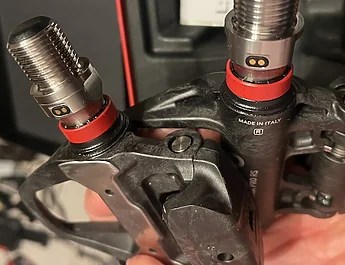
Already recognized for the quality of its power meter pedals, the Italian company Favero Electronics now offers a version of the Assioma Duo with a Shimano platform. While precision is still paramount, the system requires a wider stance than with cranks. Here is our initial assessment after 5000 km.
By David Polveroni – Photos: David Polveroni / All rights reserved
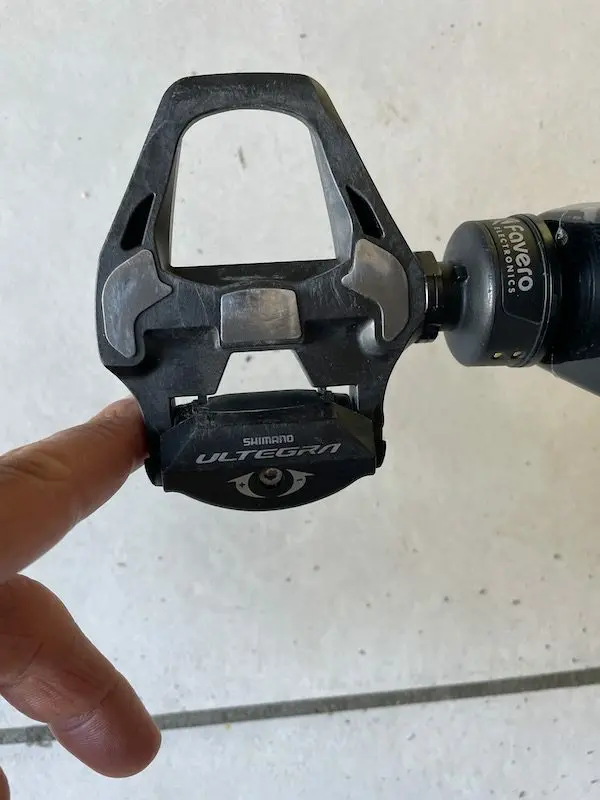
Shimano-compatible Assioma pedals were eagerly awaited by many users riding on the Japanese brand’s platform. The Italian company Favero Electronics, for whom we also tested the Look Kéo standard model, no longer needs to prove the precision and reliability of its sensor regarding the electronic part. These Shimano standard pedals use exactly the same technology. The system is filled with a two-component resin designed for maximum waterproofing and optimal shock resistance. This is important because pedals are particularly exposed in the event of a fall.
But in case of breakage, Favero offers retail sales of each component. Axles, bearings… And this has been the case since their first model. This helps combat product obsolescence, which is always good to know.
Review of the Assioma Duo
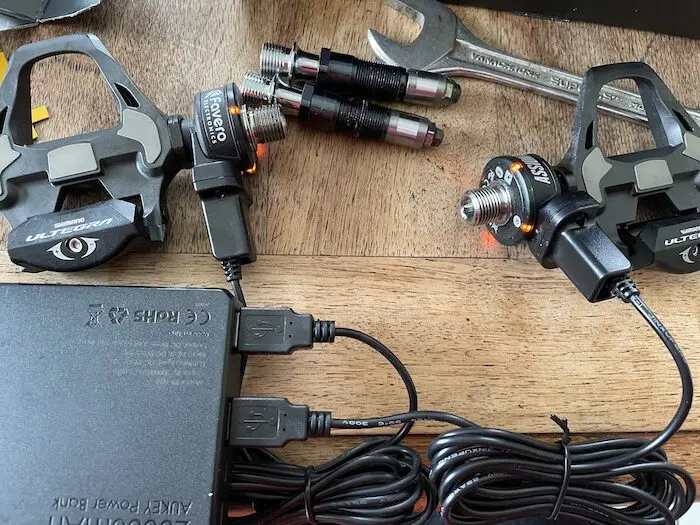
The Assioma power meter in this version retains the characteristics already noted on the Look Kéo version. Assioma pedals already allow easy transfer from one bike to another with a single wrench. Furthermore, the batteries allow for two very long weeks of training. With 50 hours of autonomy, there’s plenty of time. But in case of forgetting, the bike computer / head unit emits a notification when the battery is low, 8 hours before it goes into standby. Recharging is then done with a cable, as with a bike computer / head unit/GPS or Di2, EPS or eTap batteries. Finally, the Assioma features an electronic gyroscope system that normally calculates power more accurately than most sensors. The brand announces a precision of +/- 1%, which we have been able to validate compared to other sensors on the market.
These pedals are ANT+ compatible, and therefore work with most bike computers / head units on the market, and Bluetooth, which is practical for training with a compatible smart-trainer.
For operation, you need to install the Assioma app, available for any smartphone. It allows you to register the product, check the charge status, and also configure it, with the following information to specify:
– Define crank length (don’t forget to do this in the bike computer / head unit)
– Allow calibration (the entire procedure is linked in the app) and thus see any sensor drift over time.
– Convert the Uno model to Duo, or vice versa in case of after-sales service departure, for example. The Assioma Uno sensor consists of a single pedal that measures power from one side, the data is then estimated by multiplying the found value by two.
– Perform an Offset, with the crank arm vertical, without any load applied. This tells the system what the 0 value is. You can do it more simply with your bike computer / head unit, preferably before each ride, it’s quick.
The Shimano model in detail
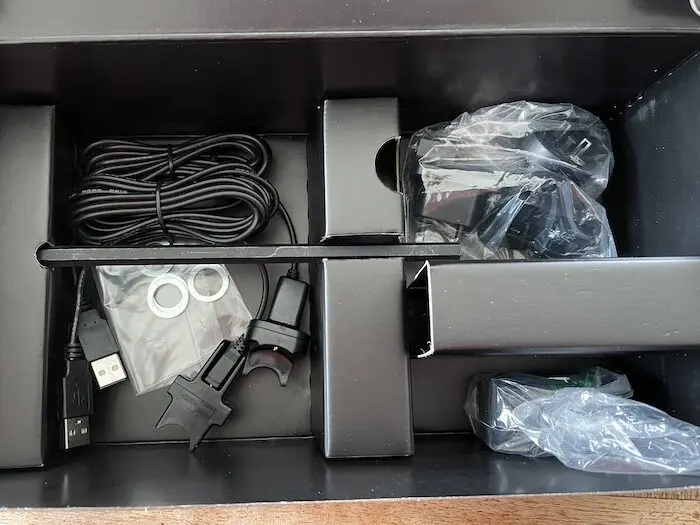
Upon unboxing – unlike the Duo model for Look pedals – you will only have the axles with sensors, as well as a wrench and the chargers corresponding to the pedals, as well as the explanatory manual. The price is €594. These axles are compatible with the following pedal bodies: Shimano® PD-R8000, PD-R7000, PD-6800, PD-R550 and PD-R540. So, you will either need to own one of these pairs of pedals, or acquire one. Ultegra pedals are €149 retail price. This brings the price of the pedals with the Ultegra body to €743. It should be noted that Assioma are not compatible with Dura-Ace pedals, as the body is thinner.
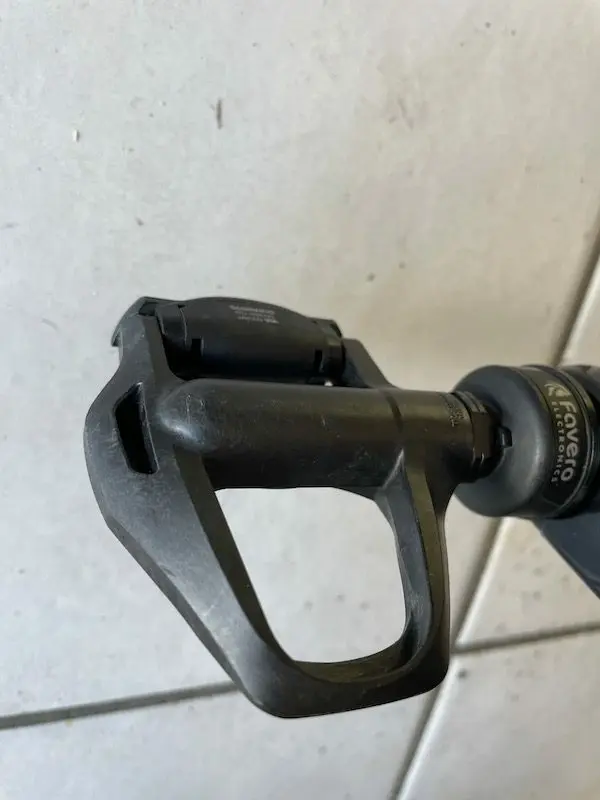
Since the axles are sold separately from the body, you must proceed with their installation, after having previously removed the old axles. Everything is very well explained in the manual. You just need a 17 mm and 19 mm open-end wrench, and turn in the right direction. It’s very simple and quick.
Shimano offers three types of cleats: fixed (red) / 2° of front float (blue) / 6° of front and rear float (yellow). The weight of the pair of pedals varies depending on the body adopted: we opted for the Ultegra version and the verified weight of the pair is 316 g in this configuration. The stack height, however, does not change: 15.3 mm.
We come to the point on which you must be extremely careful when purchasing: the Q-Factor. As a reminder, the Q-Factor is the distance between the center of the pedal and the crank arm. With this new Assioma Shimano, the Q-Factor goes from 52 mm on the R8000 model to 64 mm with the Assioma sensor. Multiplied by two, this means an increase in leg spacing of more than 2 cm. This will not suit everyone. Most pedals on the market offer a range between 50 and 54 mm, or even 56 mm with long axles. Only with Speedplay (now Wahoo) can you find the possibility of going up to 65 mm, like on the Assioma.
The Q-Factor is primarily a fixed standard that has become customary. However, optimally, it doesn’t suit everyone. If you pedal a bit “duck-footed,” or if you have wide hips, or even a lot of hip flexibility, you might prefer longer axles. The ideal is to try it out, but that’s not easy…
=> SEE ALSO : Buy Assioma Duo Shimano power meter pedal axles for €594
=> SEE ALSO : Buy Assioma Duo Look power meter pedals for €659.99
Personally, I am very adaptable in this regard, although I do have preferences. After a few weeks where my reference points were different, I had to adjust the cleat angle. I adapted well, and returning to a normal model ended up destabilizing me. However, right after testing the Speedplay Zero, the return to better foot stability is really noticeable. This is truly one of the strong points of the Shimano platform.
Be careful, because the longer Q-Factor also has another consequence. It happened to me twice that I hit the pedal on the ground by resuming pedaling too early in a roundabout. The pedal makes contact more quickly when you lean the bike.
Still very high-performance pedals
The Assioma Duo Shimano version offers very precise data in terms of “cycling dynamics”: they provide information on pushing phases (and peaks), time out of the saddle and power, time seated and power, left/right balance… But on the condition of having a bike computer / head unit that supports this data, which in my opinion is not useful for progression, but can highlight the onset of an injury or an imbalance. For the rest, the precision of the power data is still of a very high level, and today stands as a reference in this super competitive market.
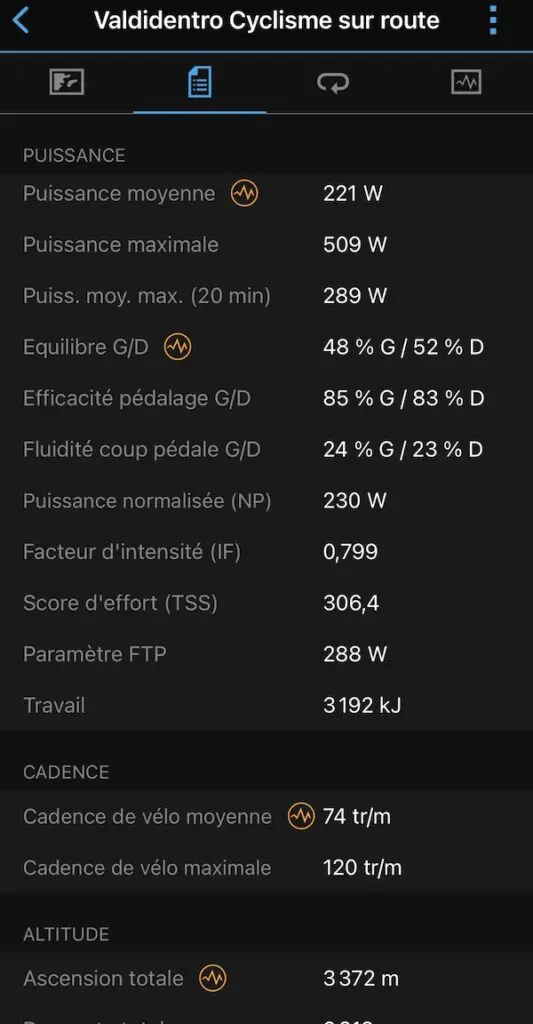
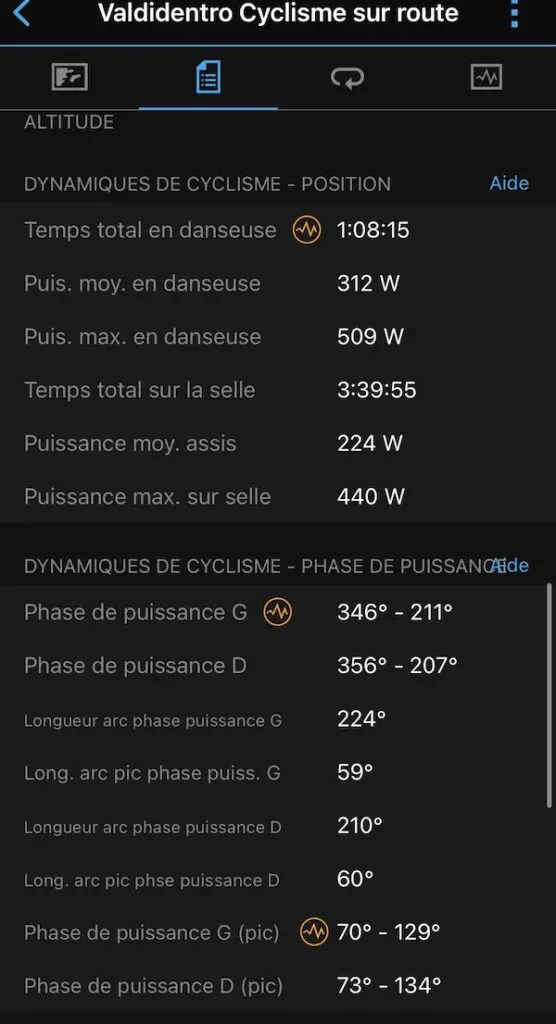
After these 5000 km, I had a small bearing issue before the Haute Route, with a part that had not been properly greased by Favero on the first versions. The operation is very simple to perform. Recently, I also have a slight play on the axle, for both right and left. I don’t recall encountering this problem on Dura-Ace pedals. It may be more frequent on Ultegra R8000 pedal bodies. To be continued.
The FAVERO ELECTRONICS ASSIOMA DUO SHIMANO pedals in brief… RATING: ***** PROS: Precision, After-sales service/communication, transfer from one bike to another, calibration, change bearings and components yourself, Shimano standard, autonomy, additional weight of only 67 g CONS: Q-Factor different from standards, higher price than Look models Power meter on left and right pedals PRICE: €695 CONTACT: cycling.favero.com |
Share the post "Long-term test of the Assioma Duo power meter pedals in Shimano version"