Share the post "How to turn pro: is there a typical path?"
Is there a well-defined path from the youth categories to one day become a cycling champion? Is there a straight and direct path that sometimes leads to the heights of the Tour de France? Or can one still live their dream later in life after following a path far from cycling traditions? Here are some answers.
By Jean-François Tatard – Photos: Flickr.com / wikimedia.commons / Twitter Jay Vine / All rights reserved
What you need to know first is that a brilliant rider rarely goes unnoticed. This talent is noticed, observed, or detected based on their visible performances by those who are interested. Starting with people on the side of the road, but also by clubs, coaches, people who read results, etc. If a junior in a regional team or an U23 rider in the first category has interesting potential, teams never delay in checking or having it checked if it is being exploited 100%. But it still happens – even today – that someone can be missed because the cyclist in question could not impress as they might have in another context or under different circumstances…
In this sense, have you ever heard of this 21-year-old New Zealand cyclist, apparently quite unknown in terms of results in the local races he participated in, who nevertheless landed his first pro contract after impressing the Dimension Data team on Zwift? Indeed, some time ago, Ollie Jones won a virtual race on the connected platform that pitted him against 9000 other cyclists. He thus became the first rider in history to pass detection tests through this means. More recently last winter, it was the turn of Australian Jay Vine to be selected to turn pro with the Alpecin-Fenix team by winning the Zwift Academy at the age of 25. A former mountain biker, he was then racing for a Continental team in his country, but struggled to truly stand out. However, from his very first race with Mathieu van der Poel’s team, he distinguished himself by taking second place in the Tour of Turkey, where he excelled on the mountain stage. Selected for the Vuelta a España, he was regularly in breakaways on hilly stages, and saw his contract extended for the next two seasons. His career was launched.
But more generally, between the day future champions were detected and the day they were called up for the first time to race the Tour de France with their team, several years sometimes passed. You have to be patient. The luck factor also has its importance, even if the notion of hard work should be at the top of the list among all the criteria necessary for the emergence of a pro rider.
This guy… No stage win, no combativity award, but definitely our hero of the day! 🙏 pic.twitter.com/5c7C8zF4Ba
— Alpecin – Premier Tech (@AlpecinPT) August 28, 2021
13-14 years old: among U15 riders, the potential to turn pro is almost undetectable
Depending on their profile and qualities, many had to wait a little longer to be sure they would succeed in making a career. At the opposite extreme, this was notably the case for Pascal Hervé in the 90s, who even waited until he was 30 to leave his job as a printer and ride the Tour with Richard Virenque. That was a particular case, I grant you, but more generally it is rarely decided before 18 or 19 years old, and thus after the junior categories.
15-16 years old: among U17 riders, morphological differences
Whether they are short or tall, it doesn’t matter. We know very well that at 15-16 years old, the potential champion may not have the physique they will have at 19-20 years old. If you look at David Gaudu at that age, he was no more substantial than a twig, and yet you know the rest. In this category, there are tall lads of 1.85m, and small chickens of 1.60m, riders of 75 kg and others barely 50 kg. It is therefore not uncommon to see riders dominate their category, then fall back into line a little later, when all their competitors have finished growing. Mentally, it can also be complicated to live in ease before facing better-equipped competition.
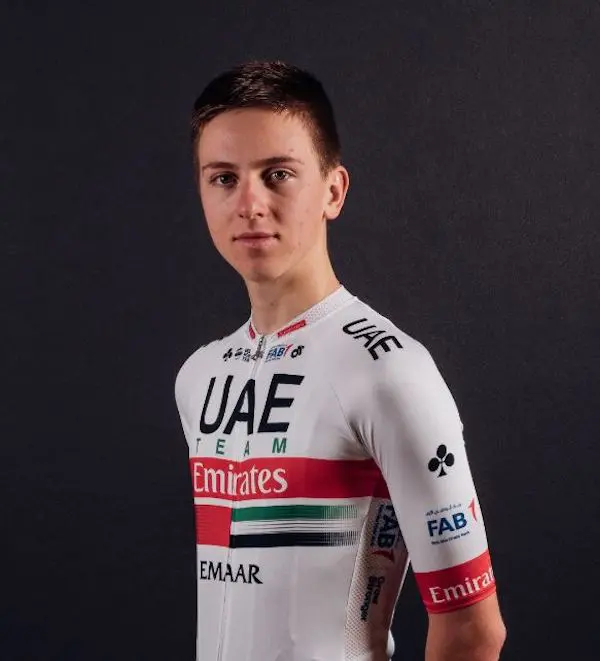
17-18 years old: among juniors, the hoped-for physique
Only once this stage is passed do other factors come into play. A rider’s physical development can thus quickly occur. Generally, this is around 17-18 years old at most. A first culling can then be considered by eliminating riders whose ability to repeat efforts proves limited. Or the opposite, truly complete for his age, the recent example of Remco Evenepoel makes us say that it is already possible in some cases to consider turning riders pro after this category.
Cycling is a complex sport in which there is no single truth.
19-20 years old: the associated mental aspect
It is during this period that the mental aspect takes over and can also ruin a rider’s career, if they are poorly prepared or poorly supported. Talent is no longer enough. Adulthood is reached, and only those with strong enough legs remain, the same ones who surely have a very bright future ahead of them. But cycling is so complex that there is no single truth and no one can be excluded from this demonstration. Perhaps with less talent and a lot of hard work, some will also make very good pros. That’s the goal…
Other paths are always possible
So, for those of you reading this, sorry to disappoint you, but most of the time, you will never achieve your dream of turning pro. Becoming a professional cyclist is not the result of an internal decision but rather the management of coincidences. It is indeed your desire and your will that will initiate the process, and yet you would be amazed at how demanding your entire approach can be. You can be incredibly precocious, and also incredibly performant by winning local races, but moving to the true professional level is an extremely difficult step, of which only very high-level riders can testify.
Word of mouth works quite well in talent detection. It remains a small world. We operate in a microcosm. Everything is known. But sometimes pure performance is no longer enough. In this sense, for some recruiters, it is also necessary to secure the aftermath. And also the psychological aspect. Wouldn’t a less talented rider who has diplomas and knows they will land on their feet in case of failure be in a more serene and therefore more performant state than a talented young person who prematurely dropped out of school? This also means that there is still room for atypical paths, for those who had other priorities than cycling in adolescence or early adulthood, but who end up revealing themselves through their performances and talent at one point or another. Mindsets seem to have evolved in cycling, even if we still witness the early emergence of exceptional riders. The truths of yesteryear seem to have been contradicted. So no, the straight path no longer exists, and more than ever the field of possibilities has opened up…
=> SEE ALSO: All our CQFD articles
See all our articlesSocietyShare the post "How to turn pro: is there a typical path?"