Share the post "At 40, anything is (still) possible"
When you’re passionate about sports, your “before 40” often rhymes with strength, success, energy, resistance to fatigue, and a peaceful life where everything is still possible. And yet, the best may still be yet to come…
By Jean-François Tatard – Photos: Pixabay.com, Flickr.com, Wikimedia Commons, Jeff Tatard
It’s clear that an older body cannot do the same things as a 20-year-old body. Because over time, we age and our bodies change.
During childhood, the human body grows and develops rapidly. Then, during adolescence, hormones such as testosterone and estrogen cause changes in body composition and proportions, reaching its final size and shape. Physiologically, the period between 15 and 30 years old is when the human body can indeed reach its highest level of performance.

So when we reach our 30s, things gradually begin to change. Over time, bones begin to lose density. The skeleton then becomes less resistant and the body more prone to injury. At the same time, muscle mass gradually decreases, leading to a decrease in overall body strength. The flexibility of joints and ligaments also decreases with age. This affects our range of motion, making the human body stiffer and certain movements much more difficult to perform. The cardiopulmonary system also changes. The lungs lose flexibility, while the heart’s muscle mass decreases. This reduces cardiopulmonary performance in terms of oxygen absorption and transport to muscles and organs. This change has a direct impact on the body’s endurance level and also results in longer recovery times.
If you watch high-level sports competitions on TV, regardless of the sport, you’ll notice that there are rarely athletes over 30 among the participants. But the good news is that this doesn’t mean that after 30, it’s all over for you. Quite the opposite…
Indeed, you only have to look at all those athletes who continue to perform after 40… and who sometimes even discover a new youth. Being 40 might even be the new prime of life – after spending 10 years trying to enjoy a form that we imagined to be more temporary than it actually is – we finally take the time to enjoy it. Could 40 then be the new 30?
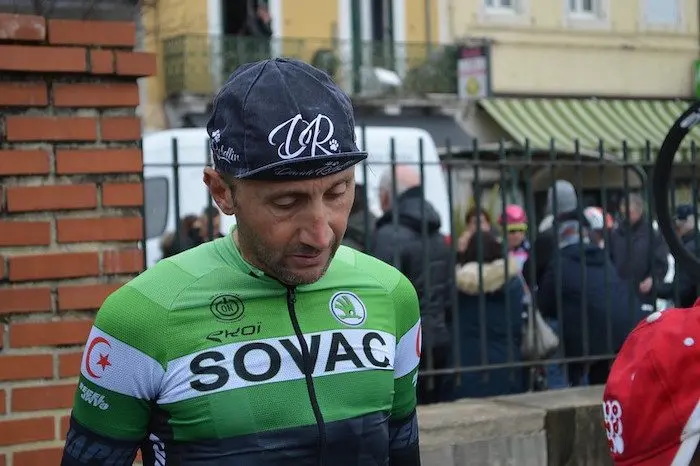
Autonomous and independent
Entering professional life is happening later and later. Indeed, it’s not uncommon to start working at 25. Not to mention that long period of internships and fixed-term contracts or often precarious contracts… While in our parents’ time, a career was generally well underway by 30, we are increasingly realizing that today we have to wait until our forties to really take off. As a result, we also gain financial independence later and later. This means we can live in a shared apartment at 30… Whereas at 40, a priori, we have finally finished paying off our student loan and can stop asking our parents to chip in for the latest Specialized frame.
40, the perfect age
At 40, we have often overcome the practical struggles of our thirties (settling down, earning a living, juggling jobs, managing young children…) without yet experiencing the existential anxieties of our fifties. Indeed, before, what Americans call the middle life crisis happened around 40. But at 40, we are freed from parental pressure, professional struggles… We assert ourselves, and we dare! It’s the right time to enjoy what we have and especially who we are.

40 years ago, the forties marked the entry into old age; people quietly waited to become grandparents, and sports were mostly watched on TV. Today, a 40-year-old man still feels strong, young, and, cherry on top, he has shed all his complexes. Life belongs to him. He used his thirties to finish building himself and learn to manage his work-life balance. At 40, he is finally seasoned. He has understood the workings of the system and realizes that he is ultimately only halfway through his life.
Finally, according to studies on the subject, there is one area that is not as affected by age as others. And it just so happens that this area is of particular interest to us. It’s endurance. Slow-twitch muscle fibers, known as type I, are less affected by age than fast-twitch type II fibers. Some muscles are largely composed of slow-twitch fibers, which are very fatigue-resistant and capable of sustaining effort over a long period. These are the fibers primarily used in endurance events, such as cycling, given that type II fibers used for explosive movements fatigue very quickly. Moreover, even if the cardiopulmonary system changes, it can nevertheless be particularly well trained in older individuals.
In reality, older endurance athletes even have a decisive advantage: experience. After years of training, they have developed practice-based strategies and know how to strike the right balance between their training and recovery periods. Experience allows them to choose the best way to adjust their physical efforts and know when to stop to avoid injury. This is done consciously and even more often unconsciously. Mental strength is also an important advantage gained through many years of training. It allows athletes to more easily endure intense physical efforts.
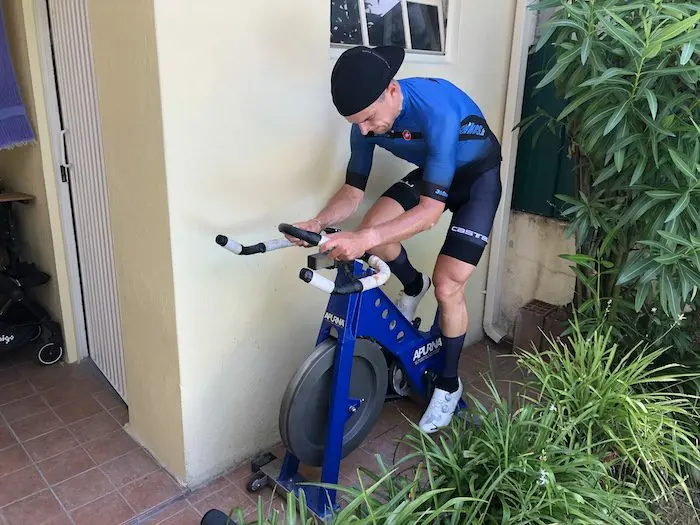
The rest of your life ahead of you
As you get older, progress may come slower, some workouts may seem harder, recovery may take a little longer, but anything is still possible. Age is just a number. So, even if biological changes occur in your body, it doesn’t mean you have to stop training. There’s no age limit to being fit. Start now, never stop. If you listen carefully to your body and are well aware of the increased risk of injury as you age, being 40 should be neither a problem nor an excuse…
=> SEE ALSO: All our MAG articles
Share the post "At 40, anything is (still) possible"