Share the post "Review of the Met Manta MIPS Helmet"
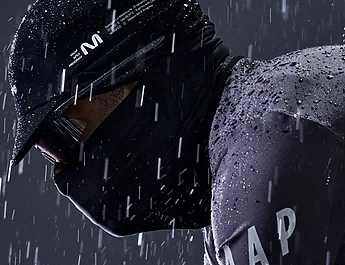
The Met Manta MIPS Aero Road helmet is designed to deliver the best possible aerodynamic performance while providing adequate ventilation and incorporating MIPS protection. This versatile helmet is sure to appeal above all to cyclists (in the broadest sense of the term) for whom every watt saved can ultimately tip the scales.
By Olivier Dulaurent – photos @3bikes.fr

First launched in 2015, the Met Manta family emphasizes aerodynamics. The new model we’re looking at here was previewed during the early-season races on the heads of Team Emirates UAE riders. Met has retained the recognizable, largely enclosed front section—as is typical of any aerodynamic helmet—from the two previous versions, with only slight modifications to the vents.
Aerodynamics, Ventilation, and Automotive Design
The main focus was on the rear, with a design that looks as if it came straight out of the world of auto racing and sports cars, resembling a true diffuser. This feature comes as no surprise, given that Met’s design director, Filippo Perini, has extensive experience in the automotive industry, notably as the former chief designer at Lamborghini.
It is therefore in this area that the new Manta has primarily sought to improve both ventilation and aerodynamics, while maintaining an attractive design.

By focusing on aerodynamics, the brand’s goal was to create a Manta with a lower profile than its predecessor, tapering into a tube-like shape at the rear. Probably due to Filippo Perrini’s past experience at Lamborghini, Met first sketched an aerodynamically improved design before creating 3D models, which were then validated in a wind tunnel.
Met tested its prototypes at various speeds (33 km/h, 50 km/h, and 88 km/h) and for two head positions: 77° (normal head position) and 65° (sprint position). According to the brand, the study resulted in an average reduction in aerodynamic drag of 4 watts in the standard head position and 3 watts in the sprint position. Met also cites this order of magnitude in terms of power to quantify its lead over competitors, without naming any specific brands.
While these figures may not seem enormous and won’t turn you into a future Tour de France winner, it’s important to keep in mind that the test compares the new Manta to its predecessor, which was already aerodynamically designed.

Similarly, to further highlight the gains in terms of watts saved, Canyon stated that the new Aeroad saves 4.4 watts compared to the previous version—which was itself more efficient than a lightweight frame designed purely for mountain riding. And for similar energy savings (4W vs. 4.4W), the costs involved are significantly lower in the case of a helmet.
These are the “marginal gains” so cherished by Team Sky in its heyday, which ultimately make a huge difference when everything is optimized: the helmet and frame, as mentioned, as well as the cyclist’s clothing and their position on the bike. The total energy savings of 20 to 30 watts or more are ultimately achieved “easily,” which clearly makes the difference between a cyclist you can keep up with and one you’ll be forced to let go.
Comfort, Safety, and Weight
Met also explains that, in addition to aerodynamic performance, ventilation has been improved. This time, no specific figures are given, though the challenge was certainly difficult to overcome, given the need to account for the introduction of the MIPS head protection system. In total, the 15 vents—8 of which are at the back—are designed to provide enough space for air to be channeled around the head and then directed toward the “exhaust.”

As for the adjustments at the back, there are numerous options, and special attention has been paid to occipital support, offering the possibility of a truly personalized fit: perfectly secure yet without any pressure points.
Still on the topic of comfort, the Fidlock magnetic buckle was particularly appreciated in use. With a simple “click,” the buckle closes with just one hand, and switching back to a standard system feels like a real step backward. Met also notes that this technology reduces the risk of skin pinching.
In terms of safety, while the MIPS technology has been well integrated, I didn’t push the test far enough to verify its effectiveness.
As for weight, at 249 g measured in size M, this is an impressive result, considering the added weight caused by the MIPS protection and the fact that an aero helmet inevitably weighs more than its vented counterpart.

On the road
Of course, it’s impossible to quantify the theoretical 4-watt gain on your own. This performance improvement is even supposed to increase as speed rises. Whether riding “fast” on flat terrain alone (say, 40–45 km/h) or even much faster on a descent (up to about 80 km/h during the test), the cyclist does not feel like they’re riding any faster with the Met Manta than with a more traditional, and therefore more open, model. However, it is indeed at high speeds (above 50 km/h) that a reduction in localized turbulence around the head can be observed. This sensation is inevitably the result of airflow that is less restricted around the head.
Furthermore, the same cyclist clearly notices that in cool weather, there is less airflow around the head. This is particularly noticeable when nature hasn’t blessed us with a full head of hair. And once again, it is indeed the “saved” airflow that delivers better aerodynamic performance.
It’s worth noting that it’s when weather conditions are cold to cool that the helmet’s benefits are fully realized, regardless of terrain (including mountainous terrain) and pace. In addition, there’s an often-overlooked benefit: the head is better protected from changing weather conditions—and, of course, from rain, which has been frequent during this gloomy summer that just won’t seem to end.
The Met Manta has been used in temperatures exceeding 30 degrees, even in the mountains. It is only under these extreme conditions—heat combined with a slow pace—that its overall design (few vents on the front) reveals its limitations. Conversely, even during a heat wave, as soon as the pace picks up, that drawback is forgotten, and the experience is similar to that of a more traditional model. Especially since the comfort, sweat absorption in the padding, and weight—as mentioned above—are among the best in the range of available models.

Ultimately, in practice, the Met Manta MIPS proves to be a nearly all-purpose helmet: it’s naturally in its element when the pace picks up—regardless of the temperature —but it doesn’t feel like a “pressure cooker” during climbs at around 10–15 km/h, provided, of course, that the temperature isn’t too high—a factor that’s partly subjective, depending on the rider’s ability to cope with the heat.
Thus, with its aerodynamic qualities, this helmet will be an asset wherever performance without sacrificing comfort is sought, except when the cyclist is riding in the high mountains during a heatwave. However, this generally does not apply to the majority of rides taken over the course of a year, and typically, owners of this type of helmet also have a “summer” model in their collection.
The Met Manta 3 at a glance… Rating: ***** Pros: comfort, weight, ventilation for an aero helmet, presumed aerodynamic qualities Adjustment system: Safe-T Advanced – Construction: In-Mold – Ventilation: 15 vents – Fidlock buckle – Certifications: CE, AS/NZS, US – Features: Dualgel Front Pad, carrying case, reflective sticker – Weight: 249 g verified (size M) – Price: €250 Contact: met-helmets.com |
=> SEE ALSO: All our Gear articles
Share the post "Review of the Met Manta MIPS Helmet"