Share the post "What separates an amateur from a pro on Strava?"
A few days ago, the biggest sporting event of 2021 began. The gathering of the greatest athletes from around the world, the culmination of 5 years of preparation. Strava, the social network for athletes, has put into perspective how professionals train, the paces they adopt, and the distance they cover, to find out what separates them from an ordinary Strava athlete.
Source: Press Release
Speed
In a Marathon, an amateur runner has only run 60% of the distance when professionals cross the finish line.
- On average on Strava, female athletes complete their marathon in 4 hours, 12 minutes, and 18 seconds, at an average pace of 5:59 min/km. The average qualifying time for women for the 2021 Olympic marathon is 2 hours, 29 minutes, and 30 seconds, an average pace of 3:33 min/km. This means that when the women participating in the Olympic Games cross the finish line, Strava athletes will be at an average of km 24.9.
- For men on Strava, the average men’s marathon time is 3 hours, 35 minutes, and 10 seconds, an average pace of 5:06 per km. The average qualifying time for professionals in the same marathon is 2 hours, 11 minutes, and 30 seconds, an average pace of 3:07 min/km. The observation is therefore very similar to that made for the women’s marathon: the average male Strava athlete would be at km 25.5, or about 60% of the distance, when the world’s best cross the finish line.
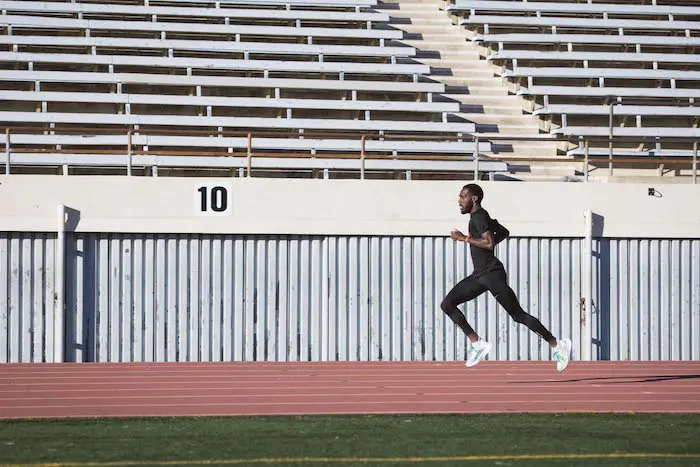
- Nikki Hiltz is an American 1500m runner who represented the United States team at the 2019 World Championships. Her personal best in the 1500m is 4:01.52, which translates to approximately 2:48 min/km. On Strava, an average run is 6:08 min/km, which would place Strava users nearly two full laps behind Nikki when she completed the 1500m.
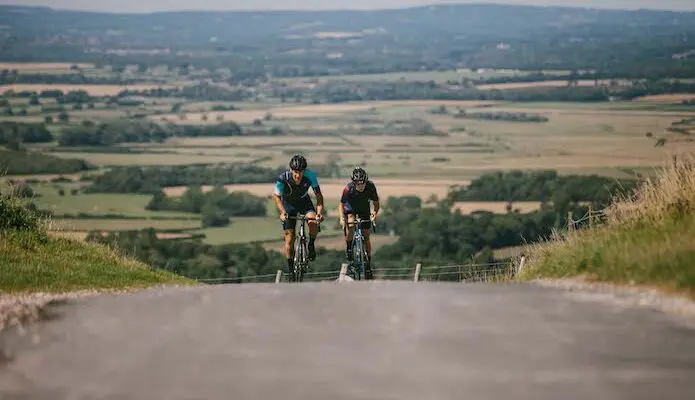
- Two-wheeled racing is a bit trickier to analyze. It’s rarely a sustained effort like running, so speed comparisons can be misleading. However, Strava looked at the average speed at which professionals train. Unsurprisingly, it’s high, as professional cyclists ride an average of 44% faster in training than amateur cyclists.
Training
The next logical question is: how do professional athletes get so fast? Strava looked at professional athlete data recorded during the first four months of the year, as many of them complete large training blocks before a summer of competitions. One thing is for sure, they train hard.
Running
- While most amateur athletes go for a run a few times a week and cover an average of 17.7 km, the average professional runner covers 93.3 km per week. This means that amateur runners achieve 19% of a pro’s weekly volume.
- It’s not surprising that a big training day for a professional athlete is much more than what most of us consider a long run or bike ride. For a professional runner, the average longest run during the first four months of 2021 was 32 km, compared to 12.8 km for an amateur. With the prospect of races and sporting events returning, this figure is likely to increase a bit.
- Professional cyclists rack up the kilometers: they cover an average of 415 km per week, compared to 72 km per week for the average cyclist. Amateur cyclists therefore achieve only 17% of the professionals’ volume.
- These same cyclists cover an average of 204 km per ride, compared to 72 km for amateur cyclists. It is interesting to note that the average longest activity for an amateur cyclist is the same as the average weekly mileage, suggesting that many amateur cyclists concentrate all their efforts on one big weekend ride.
To learn more: strava.com
=> SEE ALSO: All our MAG articles
Share the post "What separates an amateur from a pro on Strava?"