Share the post "First Ride Review: PRO Vibe Evo Cockpit"
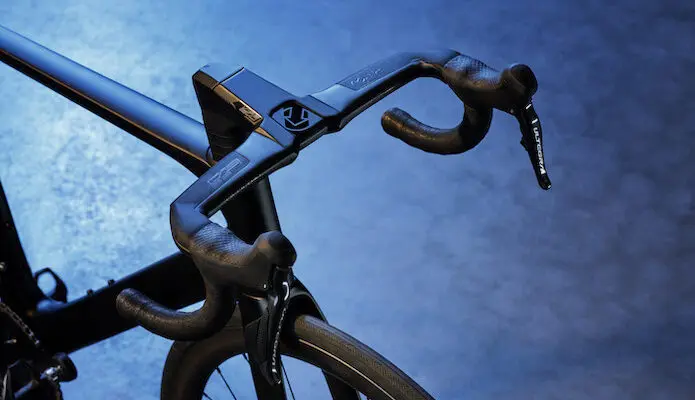
The accessories brand PRO is launching the Vibe Evo, a carbon monocoque handlebar that offers innovative and interesting integration and ergonomics. An ideal concept for cyclists or triathletes looking to upgrade their current machine. We have already tested it for you.
By Guillaume Judas – Photos: @3bikes.fr/PRO/DR
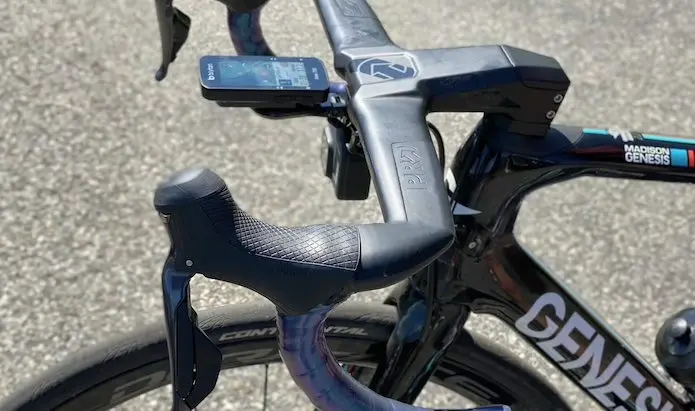
PRO offers saddles, seatposts, cockpits, and tools, for both road and off-road. The brand allows you to choose accessories with specific shapes and dimensions to optimize settings and refine your position and comfort on the bike. This customization is often necessary at a time when most bikes, from entry-level to high-end, are sold complete with standard peripherals. With models featuring aerodynamic shapes and various options for integrating brake hoses or derailleur cables, many brands offer their own monocoque handlebar system, often starting at a certain price point. This new PRO Vibe Evo carbon T700 cockpit is therefore primarily aimed at those who wish to install a first handlebar of this type as an aftermarket upgrade, to improve the aesthetics, aerodynamics, or ergonomics of their bike. Or who simply wish to benefit from additional functionalities. This high-end accessory also offers multiple compatibility options for integrated or semi-integrated cable and hose routing in the cockpit and frame.
Three lengths, three widths, and an adjustable stem angle
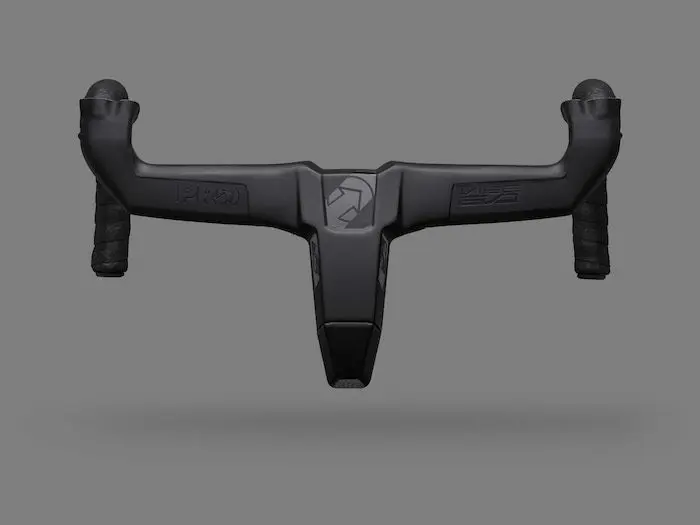
Thanks to a system of spacers between the stem clamp and the steerer tube, the PRO Vibe Evo can be positioned with an angle of +/- 2°, to refine the height position and especially to slightly compensate for the only three lengths currently available (105, 115, and 125 mm, associated with widths of 38, 40, and 42 cm).
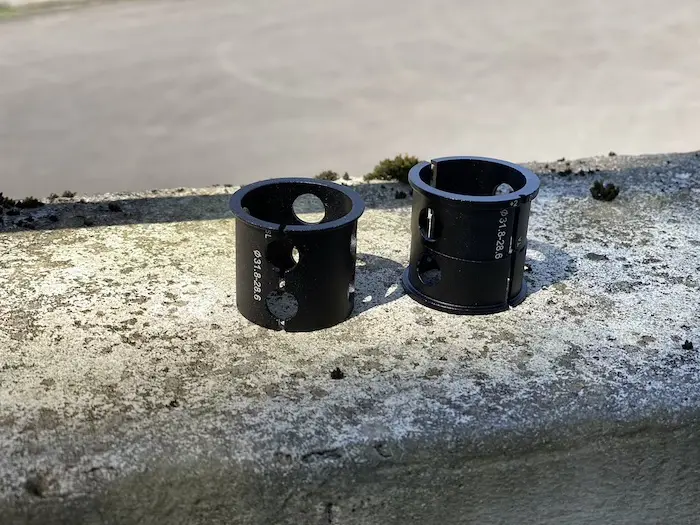
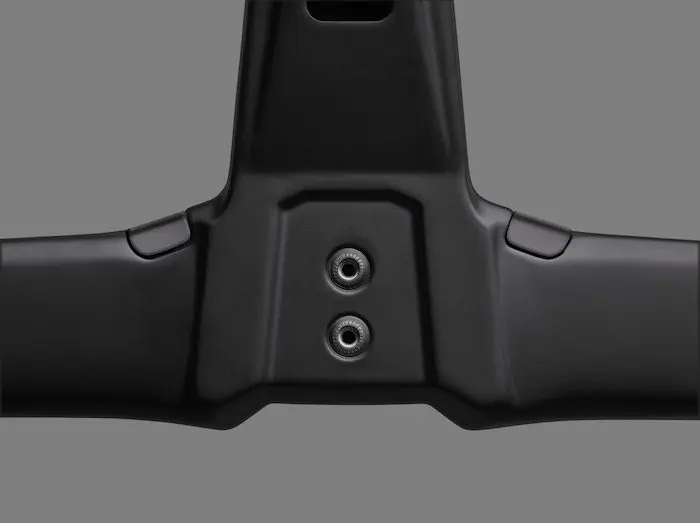
But PRO does not deny, for the future, offering other lengths, depending on the demand for this type of accessory. Among the other dimensions to remember, the drop (handlebar height) is 132 mm and the reach (depth) is 80 mm for the nine versions available in total. At the fork clamp, the fairly close placement of the two screws allows for adaptation if necessary on a steerer cut quite short. Finally, in terms of weight, the Vibe Evo starts at 390 g (manufacturer’s data) depending on its dimensions.
Two new hand positions
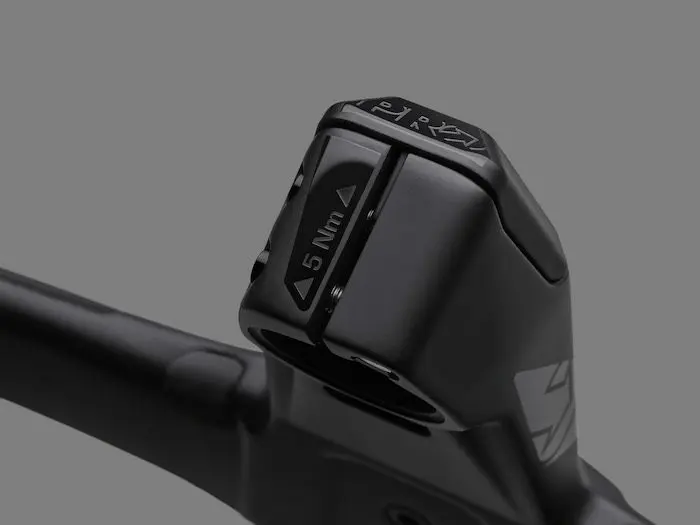
With an upper shape that seems sharply cut, the PRO Vibe Evo makes two additional hand positions more comfortable while riding. In addition to the traditional positions with hands on top, on the hoods, and in the drops, it promotes two additional positions, whether for climbing or for adopting an aerodynamic posture. The flat shape on top and the angular shape at the curve before the transition to the brake levers offer a wide and firm but relaxing grip when climbing, as we experienced on a mountain pass ascent. The flat shape of the upper part and the perfectly adapted transition to the lever positioning also offer a comfortable elbow placement in a speed-seeking position, with fingers resting on the hoods and forearms at 90°. Note that even if it is now prohibited by the UCI, a more tucked-in elbow position on top of the cockpit is also very comfortable.
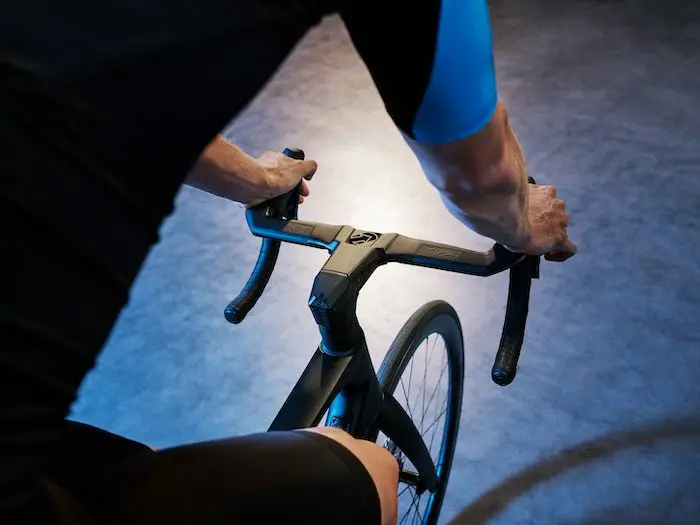
To combine comfort and aerodynamics, PRO opts for an adhesive rubber grip integrated into the shape of the upper part of the handlebar, which has the advantage of offering grip without altering the line and without affecting air penetration with an additional layer of tape. This grip extends to under the hoods of the levers, and can of course be changed if worn.
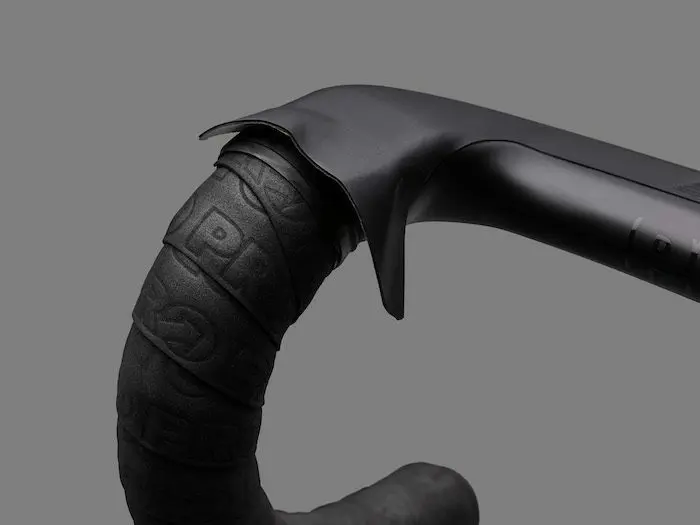
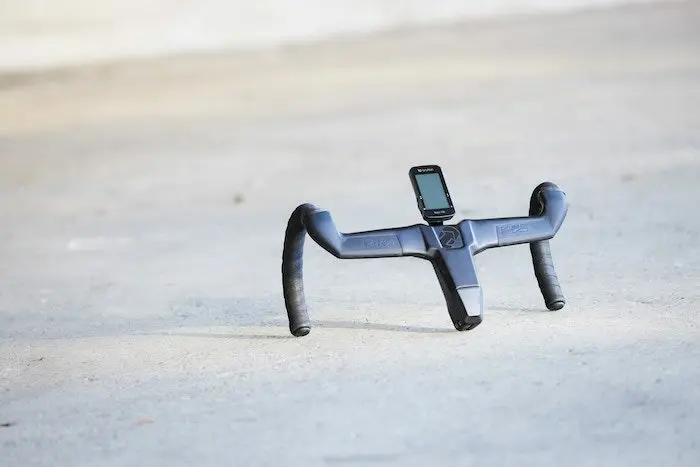
For the lower part of the handlebar, half a roll of bar tape is sufficient, but more importantly, PRO promises for this autumn the availability of ergonomic sleeves with a slightly ribbed texture and differentiated thicknesses for a comfortable hand position. These sleeves will simply replace the bar tape on the lower part of the cockpit.
Successful integration
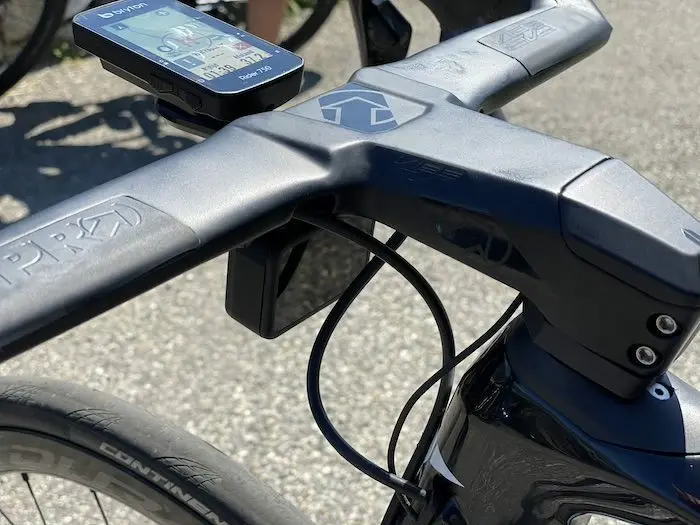
With the Vibe Evo, PRO offers several integration options, making it compatible with almost all bikes on the market. Brake cables or hoses, as well as derailleur cables or electric wires, first run from the levers to near the stem inside the handlebar, where they can exit in the case of a traditional setup. In this case, the Di2 electric wires can continue to run inside the stem to then pass near the steerer tube, with a junction box placed at the end of the lower part of the handlebar.
Total integration is also possible, of course, with all cables running into the stem, for compatibility with almost all integrated routing systems in the bike’s head tube. In this latter case, nothing protrudes, and the two orifices provided for the semi-integration described above are blocked by a cap or by satellite shift controls.
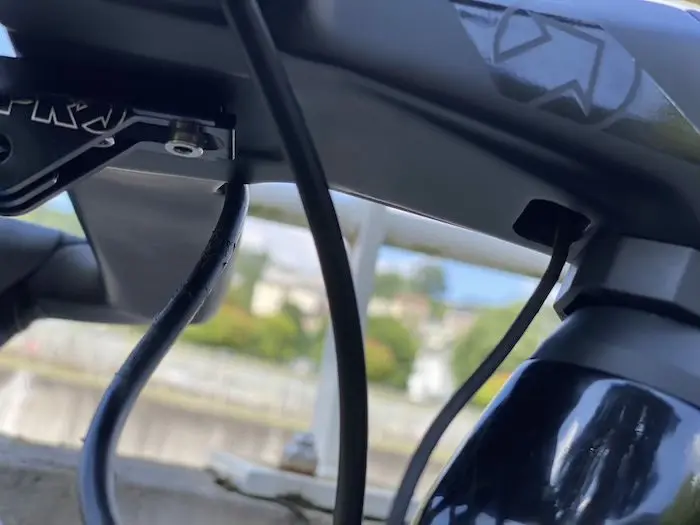
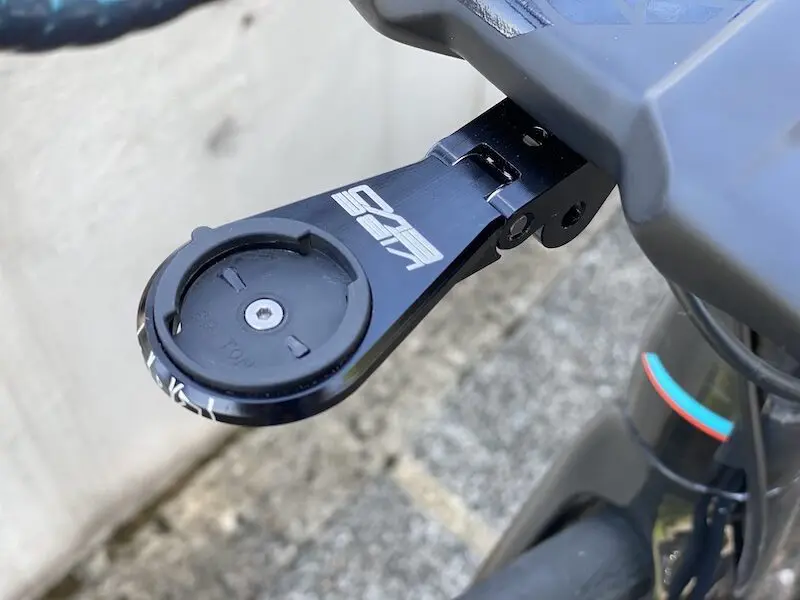
To complete the setup, a mount is provided for the bike computer/GPS (and/or with camera or light). There are two nuts under the wide, futuristic-looking stem and a firm aluminum support, to integrate the bike computer into the aerodynamic design of the cockpit.
Stiff and comfortable
From a purely dynamic standpoint, the PRO Vibe Evo is not lacking in stiffness, and can suit all body types without any problem. Regardless of hand position, you never feel the handlebar flex when riding out of the saddle or sprinting vigorously. On long descents, this firmness also ensures excellent control of trajectories and inspires confidence, even at speeds of 80 km/h.
In terms of comfort, the position with hands on top or on the corners is very pleasant on climbs. And it is even the most ergonomic of all the monocoque handlebars we have already tested. The upper part is not excessively wide, so it is possible to close your hands around the handlebar, with a fairly natural grip. The palms resting on the rubber grips do not slip, even with bare hands and in hot weather. And unlike traditional bar tape, there is no accumulation of sweat here. By gripping the handlebar by the “corners,” you feel like you breathe better by opening your rib cage, but without having to reach as far as the hoods. Note also that the more varied choice of hand positions has, for us, eliminated the appearance of certain tingling sensations, which usually occur after 2h30 or 3h of cycling.
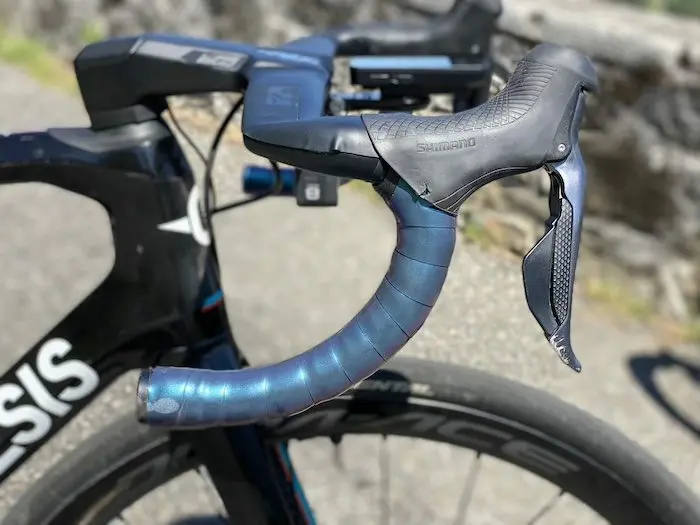
The other obvious advantage of the PRO Vibe Evo is found with the elbows resting on the upper part, with a flat back and forearms parallel to the ground. The position is easily maintained, while retaining good bike control thanks to the grips.
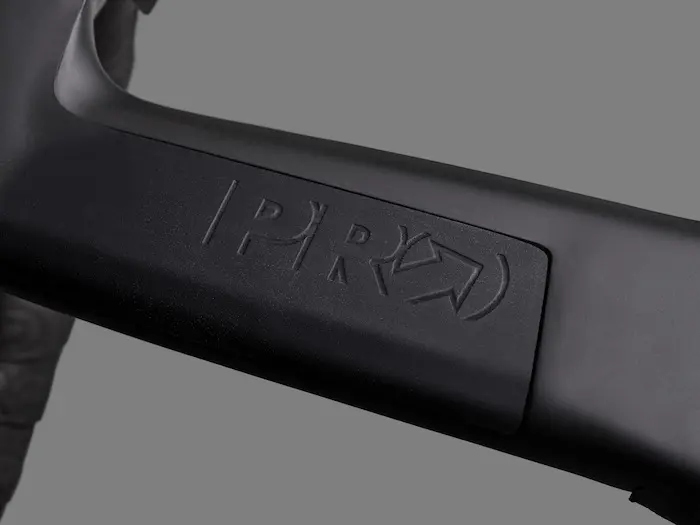
We are more divided, however, with hands in the drops, but this is mainly due to the very concept of the monocoque handlebar. It is indeed impossible to adjust the inclination of the lower part of the handlebar, and this depends on the head angle of the bike. The shape chosen by PRO also limits the possibilities for hand placement on the lower part. Finally, the dimensions of the Vibe Evo deviate from the now classic compact handlebars, with a difference between the upper and lower parts of 132 mm rather than the now usual 125 mm. A theoretical height that can be further accentuated with a small frame and a more open head angle.
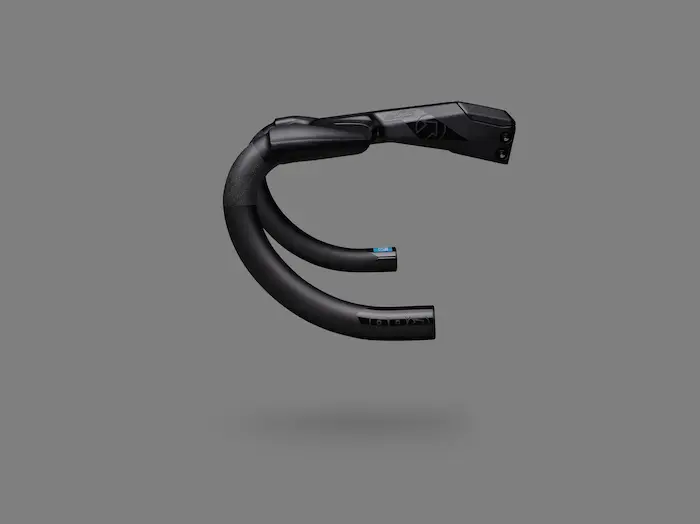
For now and as things stand, whether for the stem dimensions (only three lengths) or the shape of the lower part, the PRO Vibe Evo seems more suited to taller riders, with flexibility and large hands to reach the brake levers. And while it seems ideal for short-distance triathletes due to its aerodynamics and the positions it allows, note that it is not currently able to accommodate extensions.
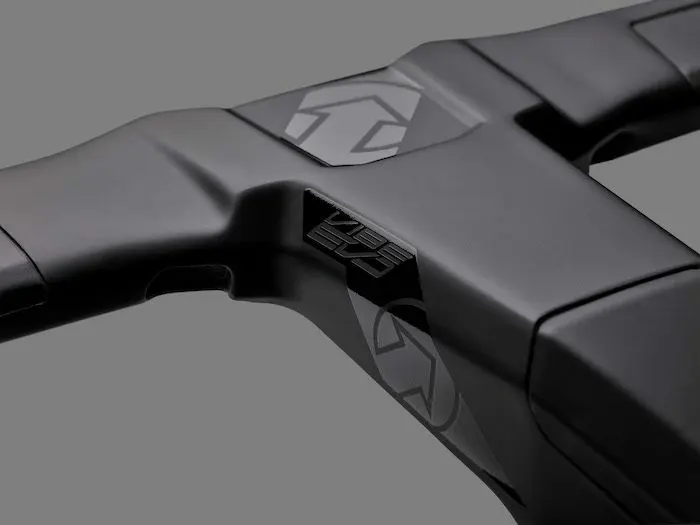
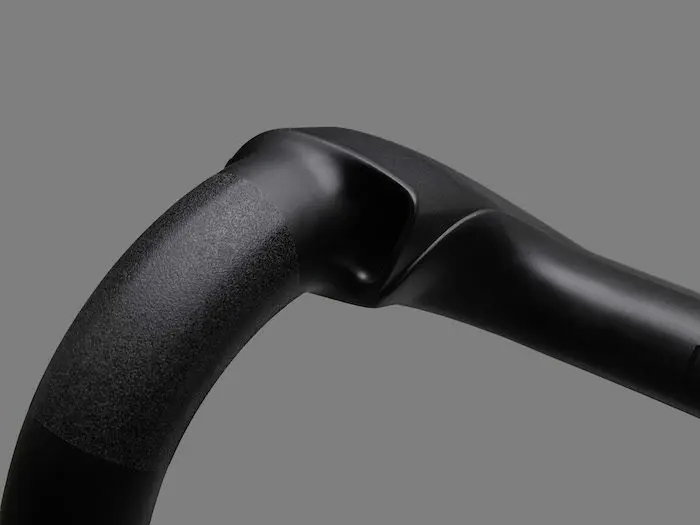
Overall, it remains a very interesting concept, particularly with the integration options, the grip system on the upper part, and a shape that promotes elbow support in a speed-seeking position. As for the price, it is certainly high, but rather in the lower range for this type of accessory compared to prices charged by competitors.
The PRO VIBE EVO in brief… Rating: ***** Pros: ergonomics with hands on top, multiple positions, interchangeable grips, aesthetics, integration Monocoque handlebar, all T700 carbon – Available in 38, 40, and 42 cm widths – Available in 105, 115, 125 mm lengths – Compatible with 1”1/8 or 1”1/4 steerer tubes – Adjustable stem angle of +/- 2° – Weight: from 390 g (manufacturer) – Price: €599 (Pro Vibe Evo) – Bike computer mount: €49 – Sleeves for lower part (available this autumn): €31 Contact: pro-bikegear.com |
=> SEE ALSO: All our Gear articles
Share the post "First Ride Review: PRO Vibe Evo Cockpit"