Share the post "How to avoid a side stitch"
Often unexpected, the appearance of pain or discomfort in the abdomen can impair performance or at least the enjoyment of playing sports. Let’s see how to avoid, and how to get rid of what is more commonly called “a side stitch”.
By Jean-François TATARD – Photos: Flickr.com, Pixabay.com, Jean-François Tatard
Imagine! Imagine that it’s “D-day”. You’ve been training scrupulously and precisely for three months. You’ve meticulously prepared your goal. You haven’t missed a single session. You’ve selected the most appropriate equipment for performance. You’ve taken care of your diet. You’re sharper than ever. And for a few days now, you’ve even felt like you’re growing wings thanks to the beneficial effect of supercompensation. In short, you’ve left nothing to chance and nothing can thwart your success. Yet! A small unexpected event! You’re surprised by a somewhat cumbersome colleague who will significantly disrupt the progress of your race…
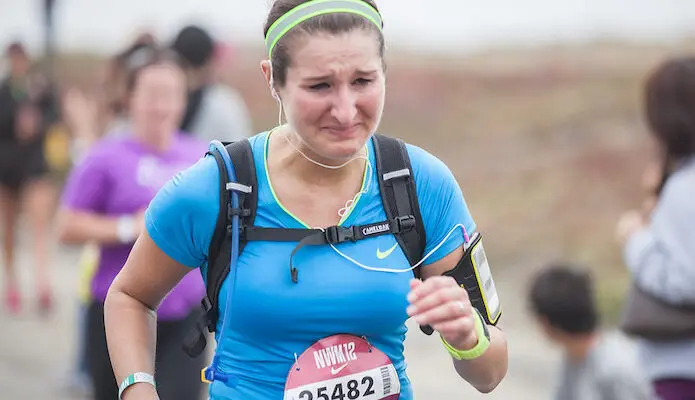
An acute pain in the abdomen mid-race… “No, not that!“, “But what did I do wrong?“, “Did I start too fast?“, “Did I breathe badly?“, “Was my breakfast too heavy?…”… All these questions running through your head and this pain that doesn’t disappear and forces you to drastically reduce your speed.
What is a side stitch?
It’s impossible to find a precise explanation. There are as many theories as there are scientists who have ventured to understand this phenomenon. But in fact, a side stitch is characterized by the appearance of localized pain under the ribs. It resembles a cramp in the diaphragm. Potentially this pain is caused by a lack of blood in this region. But of all, the most plausible explanation seems to me to be that of poor blood flow and poor oxygenation of the diaphragm.
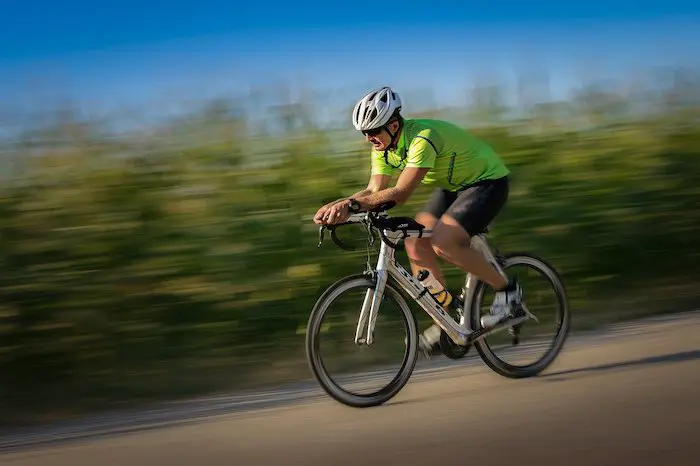
And yet, the diaphragm plays an essential role during breathing. Due to the shocks our body undergoes during running, our internal organs move with each stride, and our diaphragm with each inhalation and exhalation. This can cause tension in our body and cramps in the diaphragm can occur.
Still uncertain causes
Generally located on the left side, a side stitch does not only affect runners. All athletes practicing endurance disciplines can be victims. And despite extensive research, the causes favoring the appearance of pain remain unknown. Muscle cramps of the diaphragm, due to a lack of oxygenation during physical effort, have often been held responsible, but all studies on the subject prove that there is no increase in diaphragm spasms when a runner has a side stitch.

Two things we can be sure of
- Consuming foods rich in lipids and fiber promotes side stitches. It’s best to follow the famous “three-hour rule” to ensure proper digestion. Also, don’t overdo it with sugary drinks.
- Don’t forget to warm up. It should be progressive and prolonged. Especially in very cold weather and when you are a beginner.
How to get rid of a side stitch?
“Prevention is better than cure” as the saying goes. And the first technique is to effectively concentrate on your breathing. Avoid jerky inhalations and exhalations. Breathe as regularly as possible. And whatever the speed and intensity of the effort. Then, inhale and exhale air through the mouth, working the air column. Breathing should come from the belly and not the chest. And if the side stitch continues to be so bothersome, then press gently and progressively on the painful area. Then inhale as deeply as possible and hold your breath for two to three seconds. Then exhale the air for a prolonged period, keeping your mouth wide open. And then, if despite this, the side stitch persists, you can consider walking to regain a breathing rhythm as deep and regular as possible.
12 solutions to prevent or combat side stitches
|
More sport as therapy
The good news is that you won’t have to give up what you love to avoid side stitches. Beer, for example, you can continue to enjoy. In fact, the only thing you’ll need to increase if you still get side stitches is your sports practice. Indeed, regular training is the best way to prevent a side stitch. The more endurance you have, the less likely you are to suffer from a side stitch because it is by running that you train your diaphragm and respiratory muscles.
=> SEE ALSO: All our Coaching articles
Share the post "How to avoid a side stitch"