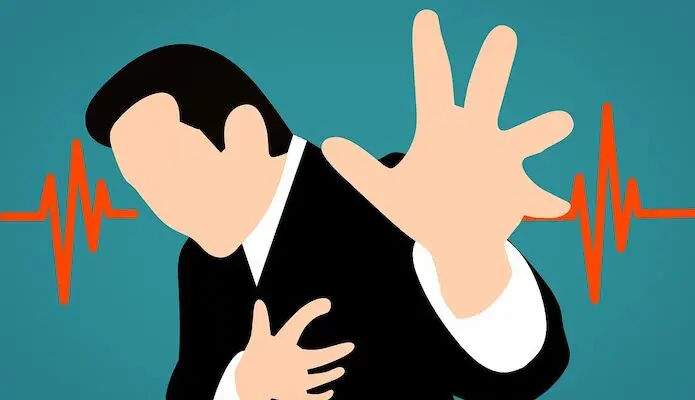
Share the post "Sudden cardiac death in athletes: why it happens and how to prevent it."
Last week, yet another seemingly healthy amateur cyclist died suddenly, a few hours after training. This terrible news reminds us that we are all vulnerable. More than a tribute to this loyal 3bikes reader, we would like to define recommendations and thus, we will try here to explain how these accidents, sometimes called “sudden death”, are possible and how to avoid them.
By Jean-François Tatard – Photos: Pixabay.com / Jeff Tatard
Sudden death is fortunately not as frequent as it seems, but it occurs in enough cases that we should highlight recommendations to prevent it. Each year, 50,000 French people are victims of an unexpected death with no warning signs. In 90% of cases, the cause is cardiovascular, with victims suffering from an underlying heart condition, with a silent and undiagnosed heart defect. Sudden adult death accounts for 5 to 10% of mortality causes and nearly half of cardiac deaths. It affects four men for every woman and half are under 65 years old. Sudden adult death occurs in less than an hour and without any particular symptoms.
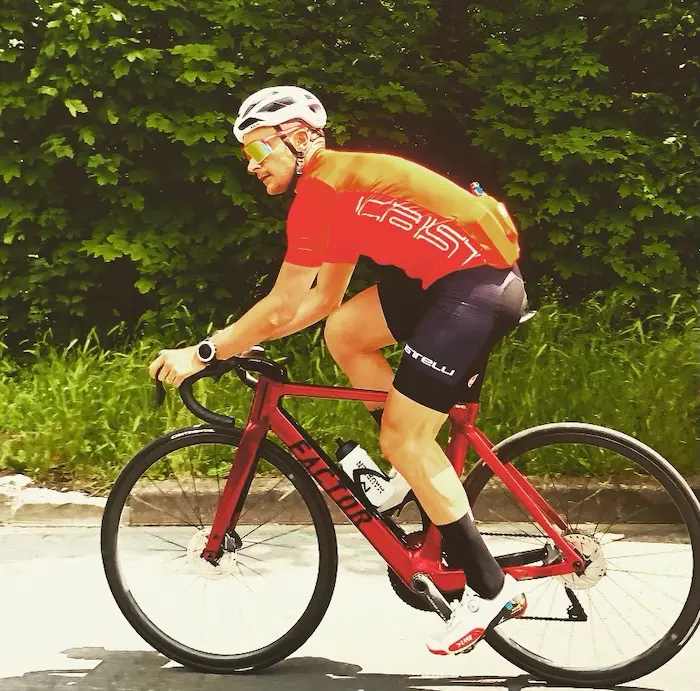
Among athletes, nearly 2000 cases of sudden death occur each year during exercise or in the hours that follow. Often, this makes headlines because the people are young and a priori in good health. It should be noted that only a few cases are related to doping, and most of the time, it has absolutely nothing to do with it.
Among the different forms of sudden death, cardiologists define two peaks. The first is before the age of 35, and in this case, it is often linked to a heart anomaly, more precisely an enlarged heart or what is also called the threat of “big heart”. For several years, various high-level sports authorities have developed their early detection system. This is also why every year young racers, like the Turgis brothers recently for example, have their authorization to practice their profession as professional cyclists withdrawn. Very effective screening tests have confirmed a major risk. And after 35 years of age, sudden death is mainly caused by a problem with the heart’s arteries, better known as a heart attack.
Most of the time, every sudden death is an undiagnosed heart patient. When you have risk factors, as we have already discussed on 3bikes.fr, you know that you need to have regular check-ups. Heart attacks often occur when resuming sports after a convalescence or after several months without exercising for other reasons. Victims resume too abruptly. As for the most evocative signs, we often find chest pain, shortness of breath with the impression that the heart is racing, or even loss of consciousness, a malaise. We tell you once again, we must take responsibility and not take the risk lightly. We must try to be as early as possible in detecting anomalies.
The origin of sudden death
In the case of sudden death, it is ventricular fibrillation, meaning that the heart rate suddenly becomes too fast, that it is no longer efficient enough to make the heart function properly and allow it to supply blood and oxygen to the various organs, including the brain.
Sudden death manifests itself with various immediate symptoms: sudden and rapid loss of consciousness, absence of a palpable pulse in the carotid artery or wrist, cessation of breathing.
For the victim to have a chance of survival (only 3% of cases), emergency services must be called immediately, cardiac massage started, and a defibrillator used to deliver an electric shock to make the heart beat normally again.
Risk factors
Certain factors can raise concerns about the risk of sudden death in adults: heart failure, a history of myocardial infarction less than one year ago, a genetic predisposition to heart rhythm disorders (tachycardia, bradycardia), smoking, high blood pressure, overweight, type 2 diabetes, or hypercholesterolemia.
But the triggering factors can be mixed, related to exceptional practice conditions, such as stress, cold, heat, fatigue, dietary disorders, dehydration, a viral illness, etc.
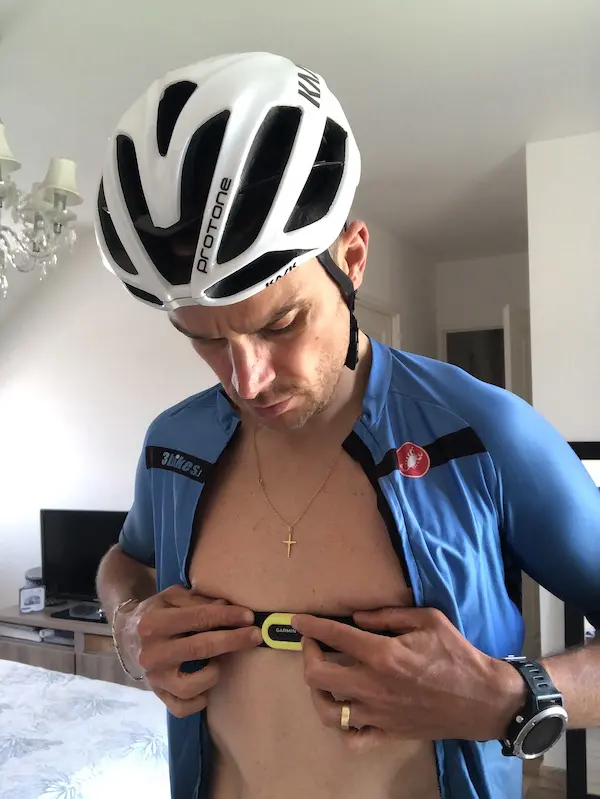
Caution is advised
So obviously, one cannot help but think of the risk incurred by certain amateur athletes who practice in an extreme, too intensive, unbalanced way, or without a training plan, those who are “always more” enthusiasts who allow themselves little or no recovery time, who neglect basic fitness preparation and who therefore over-solicit their cardio.
=> SEE ALSO : The praise of slowness
We are not doctors, but at 3bikes we have all practiced this sport intensely. And we probably still do… So experience tells us that we should have a resting electrocardiogram regularly. At least every two years. And probably even more regularly as we age. And then, we should prioritize endurance training when we get back on the bike. Don’t jump straight into interval training or sudden intensity exercises. This requires precautions. Invest in a heart rate monitor and do not exceed 60-70% of your MHR initially. And if you don’t know your precise heart potential, the “220 – age” theory works very well (Ex: 70% of 180 for a 40-year-old man is 126 beats/minute).
=> SEE ALSO : The importance of endurance
Among other recommendations, even for the most trained, don’t forget to ease off regularly, and for this, the “80-20” rule works very well: 80% of your time dedicated to low-intensity basic endurance, 20% of your time for higher intensities.
=> SEE ALSO : Polarized training
Always dedicate a good 10 minutes to warming up and a good 10 minutes to cooling down, even for a short workout. At the same time, avoid exercising while dehydrated, if you are sick or feverish, or in convalescence. These are basic rules, but often forgotten by hurried athletes.
Sudden death can therefore affect everyone, even the most experienced cyclists. So please, protect yourselves and be progressive! There are still plenty of beautiful rides to do…
=> SEE ALSO : All our Coaching articles
Share the post "Sudden cardiac death in athletes: why it happens and how to prevent it."