Share the post "Review of the Met Rivale MIPS Helmet"
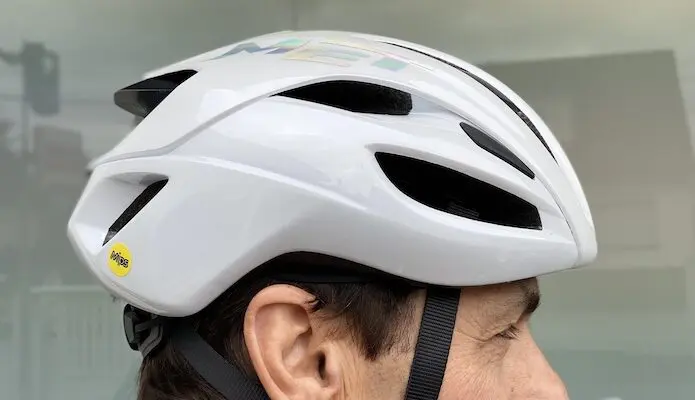
Offered at a relatively affordable price for this product category, the Met Rivale Mips helmet boasts numerous high-end features in terms of safety, comfort, and style. We were able to confirm this during a test that spanned nearly three months.
By Guillaume Judas – Photos: @3bikes.fr
=> SEE ALSO: Buy a Met Rivale
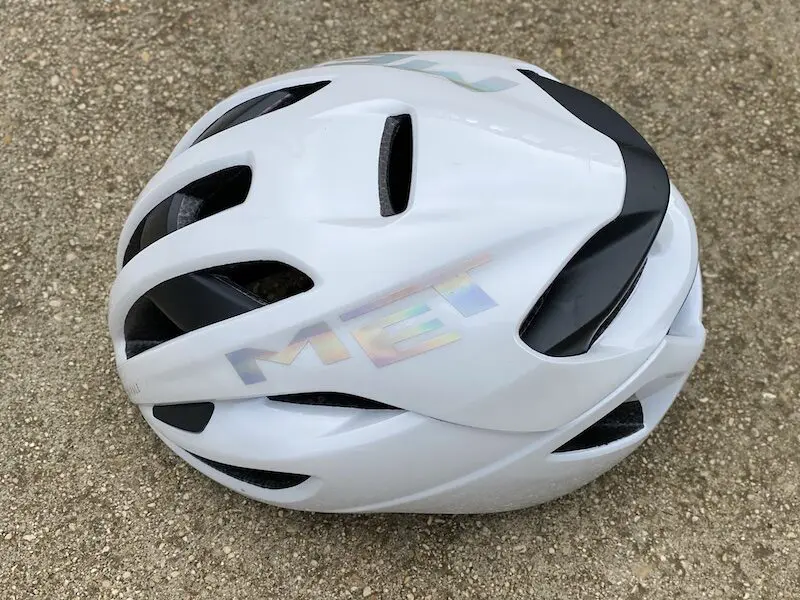
The Rivale is back in its new version, following the previous model, which was already widely acclaimed for its value for money. For this 2021 Rivale, the Italian brand Met has focused on style, comfort, and safety to give it all the features of a high-end model, but at a relatively affordable price of €150—and a non-MIPS version is also available for €20 less.
For those who aren’t yet familiar with it, Met has specialized in helmets for some thirty years and is present in the professional peloton with UAE Team Emirates, home to the most recent winner of the Tour de France (2020) and Liège–Bastogne–Liège (2021), Tadej Pogacar. The Rivale is positioned in the lineup just below the Trenta and Menta models used by the pros, and as a result, it benefits from the experience the Italian brand has gained at the highest level—first and foremost in safety, but also in comfort. Met also claims to have its own testing laboratory for safety tests, enabling it to exceed all European and American safety standards.
Since it’s also an accessory to match with your favorite outfits, the Rivale Mips is available in seven colors (and three sizes). We weighed our sample at 248 g in size M, which is quite impressive for this size, given the inclusion of the additional MIPS safety feature and at this price point.
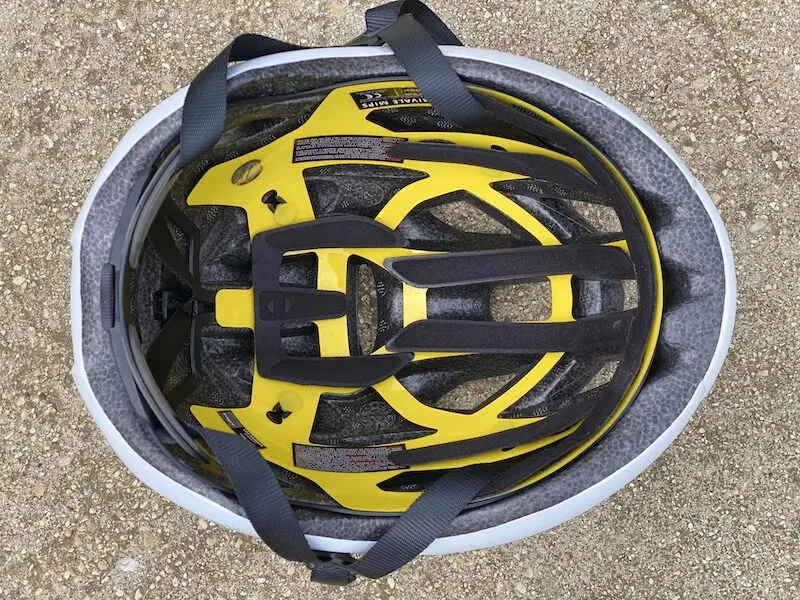
As a reminder, MIPS is an internal cage that supports the top of the head when putting on the helmet and allows for 10 to 15 mm of rotational movement in all directions in the event of an impact, thereby reducing the force of the impact and protecting the brain.
A Major Evolution
The new Rivale has evolved in terms of style and ventilation, now featuring 18 vents—which are quite wide and elongated at the front—to facilitate airflow, particularly due to the presence of MIPS beneath the shell (which effectively acts as an additional layer). These wide openings are very practical for storing sunglasses—for example, when you want to place them on top of the helmet during a hot climb…
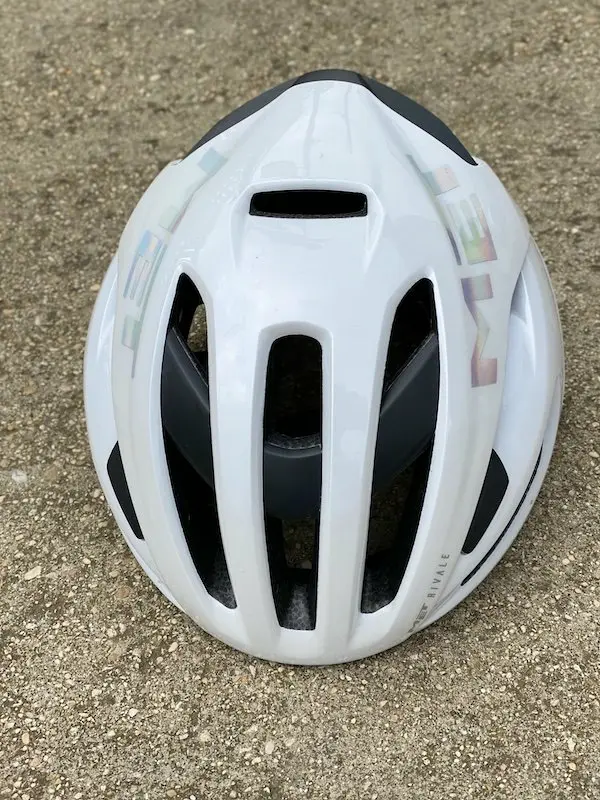
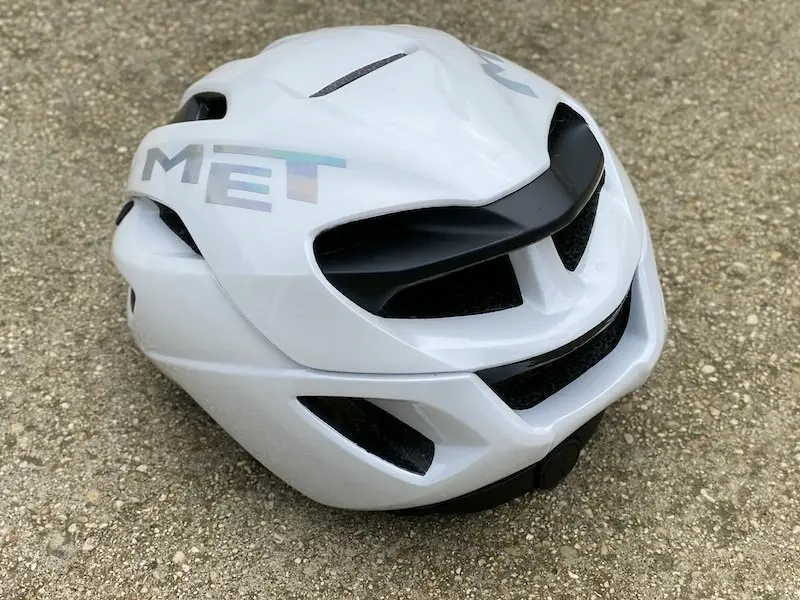
This airflow is then directed toward the rear via a large exhaust vent, which also contributes to the helmet’s aerodynamic profile. This system is very effective in hot weather, as we’ve seen, but it also helps keep insects out—which inevitably slip under the shell through the large front vents during spring rides.
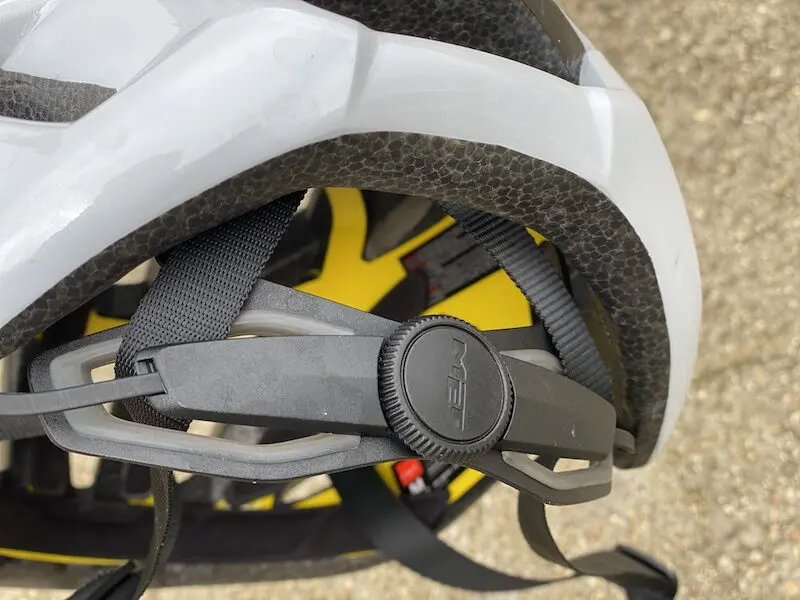
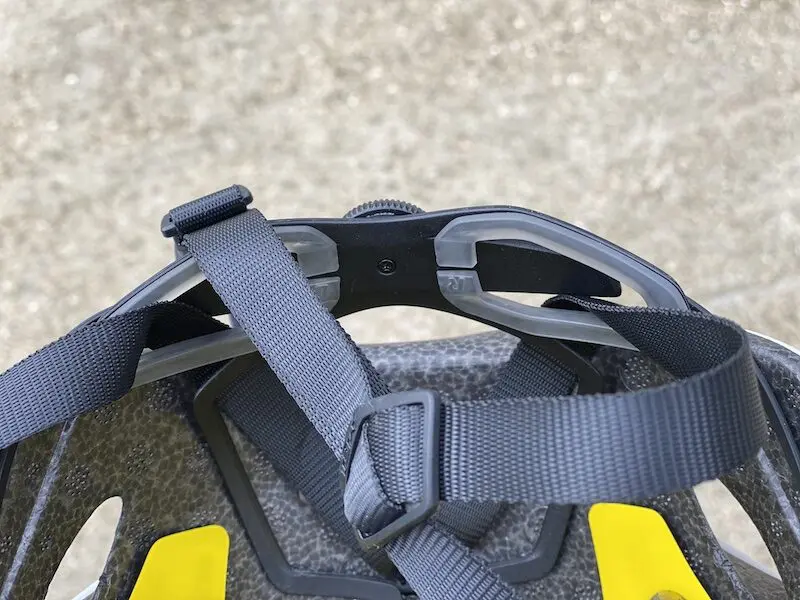
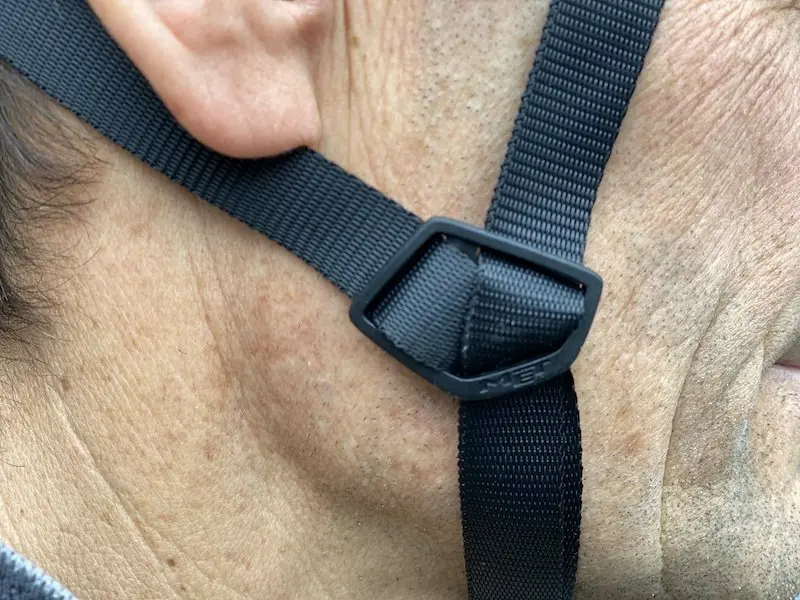
The fit is ensured by a 360° strap that wraps around the head, adjustable via a dial at the back—a system now found on virtually all helmets in higher price ranges. With the Met Rivale, the fit is progressive and distributes pressure evenly across the entire head, preventing any pressure points. The interior components are very well finished, further enhancing comfort by ensuring a smooth, pressure-free fit. As for the Air Mesh padding, there’s nothing to complain about in terms of comfort and sweat absorption—as far as possible. Of course, the padding is washable and retains its original shape.
Put to the Test
Tested in all conditions, the Met Rivale Mips proved to be comfortable and very breathable on hot days (up to 28°C). On colder rides, it worked well with a cap to block the wind, and even with a specialized beanie to protect the head and ears from sub-zero temperatures. The adjustment system adapted very well to these changes in thickness every time.
We were also able to test the helmet—and our tester would have gladly done without it—under extreme conditions, but for exactly what it’s designed to do: provide protection in the event of a fall! When he fell at 30 km/h and went over the handlebars, our tester hit the back of his head, damaging the rear of the helmet, but without feeling any impact on his skull. The helmet isn’t cracked on the inside, as the molded polycarbonate shell and the MIPS system provided our tester with perfect protection. He was even able to finish his ride without incident—which, of course, wouldn’t have been possible without a helmet, or with a lower-quality, poorly fitted model.
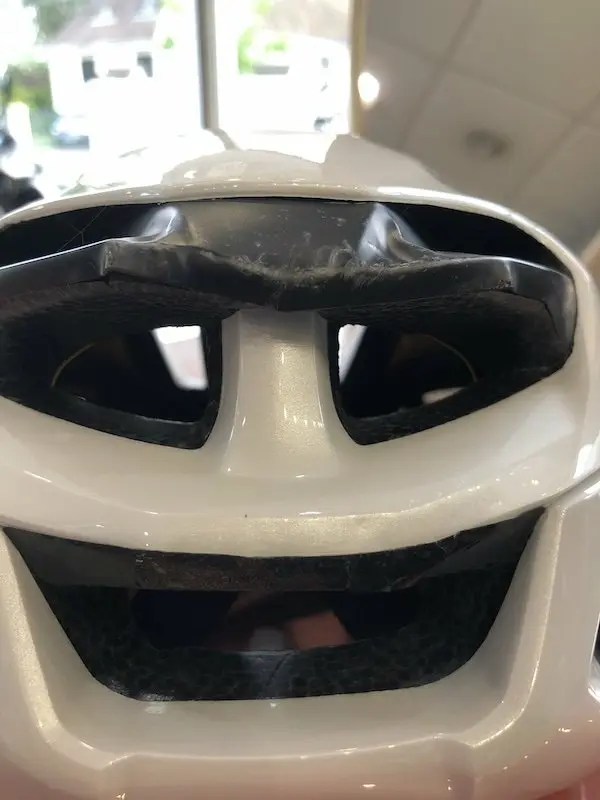
When choosing the Met Rivale, the practical question arises as to whether or not to opt for MIPS, since the model is available with or without this technology. Of course, other brands offer highly effective protection without this internal safety arch. Kask comes to mind, for example (which we were also able to test in a severe crash). The system adds a bit of weight and requires a specific design to ensure the helmet provides good ventilation, due to the extra layer of the internal frame. In the case of the Rivale MIPS, the integration is seamless, and we honestly see no reason to pass it up. It’s a helmet that offers great value for the price—it’s stylish, well-ventilated, comfortable, and therefore safe. These features even allowed riders from UAE Team Emirates to wear it during a stage of the 2020 Tour de France, instead of their usual Trenta.
=> SEE ALSO: Buy a MET Rivale
The MET RIVALE MIPS at a glance… Rating: ***** Pros: value for money, build quality, comfort, ventilation MIPS-C2® internal protection system – T Upsilon Fit System with 360° headband – designed for use with glasses – compatible with ponytails – 18 vents – gel padding on the retention system – Air Lite adjustment straps – reflective elements – Weight: 248 g in size M. Colors: 7 – Available in a non-MIPS version (€130) – Price: €150. Contact: met-helmets.com |
=> SEE ALSO: All our Gear articles
Share the post "Review of the Met Rivale MIPS Helmet"