Share the post "Specialized Roubaix Comp / Sram Rival eTap AXS Review"
On the occasion of the release of the new Sram Rival eTap AXS groupset, Specialized is offering three new models in its range, equipped with the manufacturer’s wireless 12-speed electronic drivetrain: the Tarmac, Aethos and Roubaix in Comp version, at €4999. By providing comfort, stability and efficiency, the Roubaix is the modern interpretation of the American brand’s Grand Touring bike.
By Guillaume Judas – Photos: @Billy Ceusters
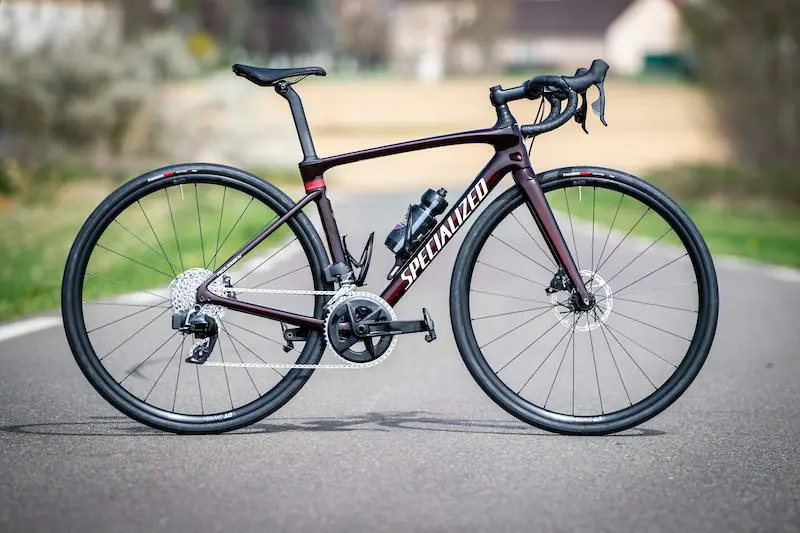
Presented two years ago, the latest version of the Roubaix is available in two frames with different carbon fiber levels, and several builds, from €2499 to €11,999. Only the two highest-end S-Works versions benefit from the Fact 11r carbon frame, while the Pro, Expert, Comp, Sport and Base versions are designed with the Fact 10r frame, a difference barely perceptible in terms of weight and stiffness on the road. The differences between each model therefore depend primarily on the equipment, drivetrain, wheels and a few features, such as those of the Future Shock front suspension system, an innovative concept that truly makes a difference in terms of comfort.
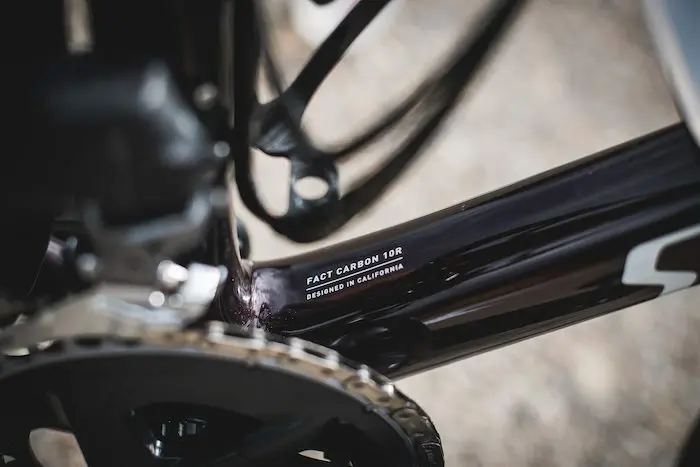
Positioned in the mid-range, the Roubaix Comp with the new Rival eTap AXS groupset benefits from all the features one can expect from a modern bike, with a stiff frame, tubes designed to limit aerodynamic drag, the same Future Shock 2.0 suspension as the more expensive models, and now a wireless 12-speed electronic drivetrain, with a very wide gear range. Available in eight sizes and two colors, it also benefits from superb finishing, commensurate with its Premium price. Ultimately, only its weight is not entirely correlated with what one might expect from a bike costing nearly €5000, at 8.750 kg in size 52 (9.1 kg ready to ride, with pedals, bottle cages and bike computer mount), but that’s the price for the embedded technology it benefits from.
Comfort as the objective
Developed with performance in mind, the Roubaix frame is, according to Specialized, more aerodynamic than a Tarmac SL6, with tube shapes validated in the brand’s Wind Tunnel in California. To optimize the weight, stiffness, and overall behavior of the frame, each size is designed independently of the others in terms of tube section, thickness, and the different layers of carbon applied, according to the Rider-First Engineered concept, to ensure that a size 49 bike, for example, offers exactly the same performance as a 61.
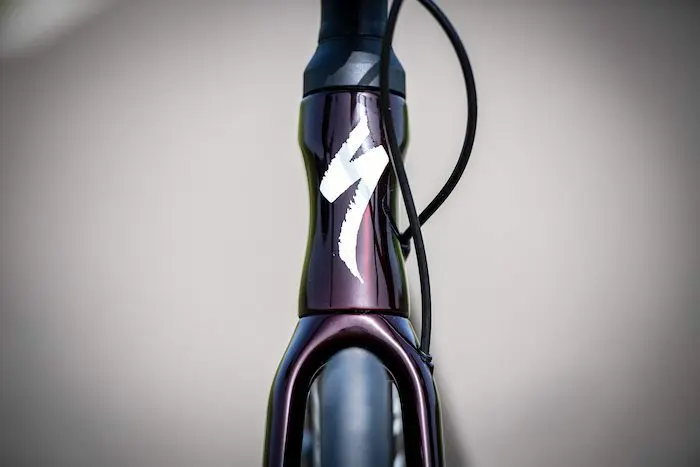
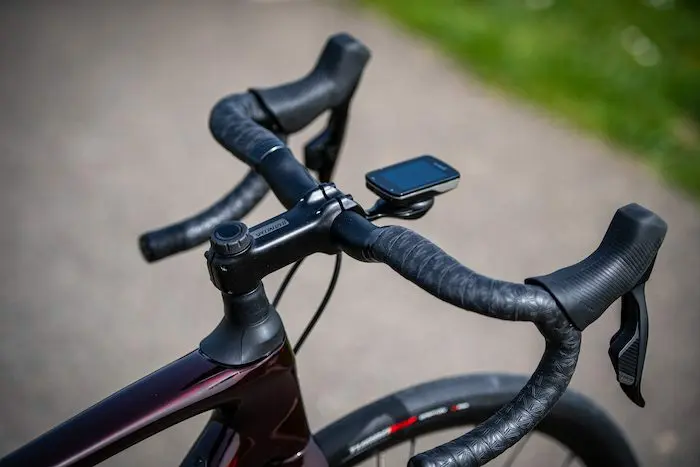
But where the Roubaix stands out from other frames of the same ilk, particularly the Tarmac, is in its specific features related to shock absorption, to offer more comfort. The Future Shock 2.0 suspension is positioned in the steerer tube, with an adjustable dial at the stem that allows for customizing compression while riding according to the terrain, while rebound is automatically managed by the hydraulic system.
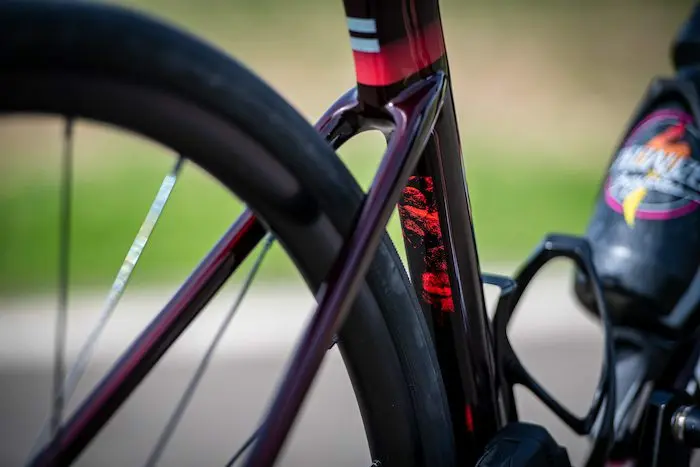
A concept that does not alter the bike’s efficiency and does not cause a pumping sensation, while improving control on very bad roads. It is complemented by a Pavé seatpost that provides slight longitudinal flex without adding weight, thanks to an ingenious clamping system placed quite low in the frame’s seat tube. Finally, with its 30 mm tire width, the Roubaix Comp further increases its damping capabilities. It can even accommodate tires up to 33 mm.
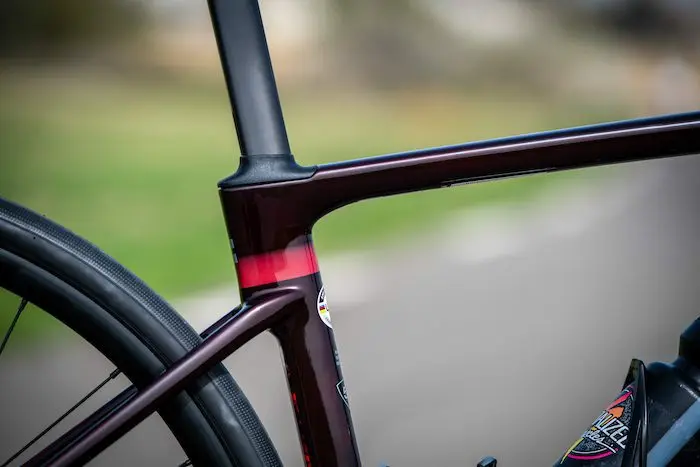
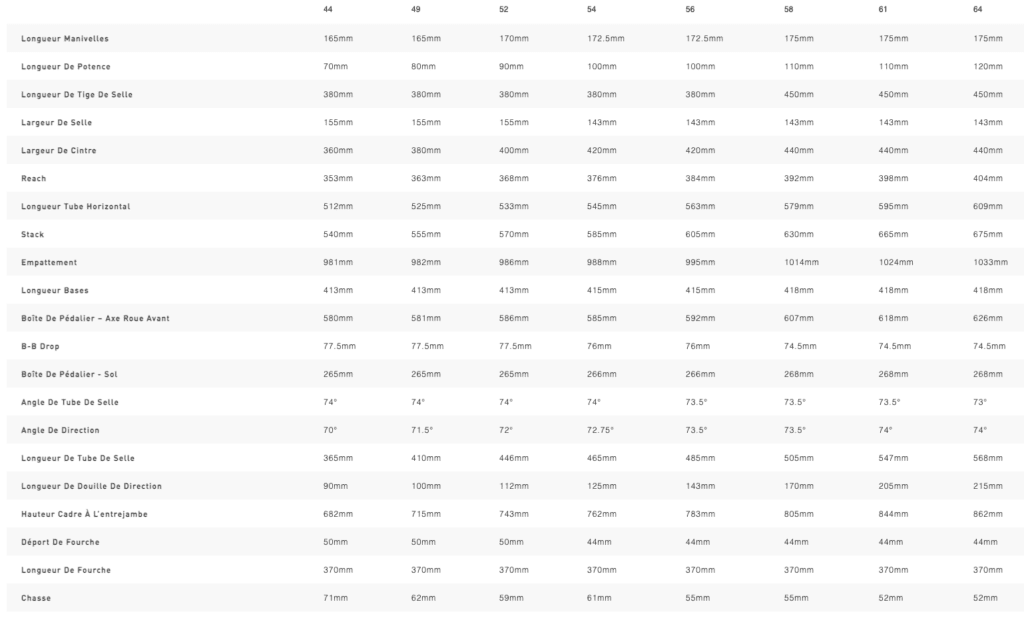
In terms of geometry, the Roubaix is close to the Tarmac, but with a 13 mm longer wheelbase in size 52, to offer more stability. The Future Shock system adds a good two centimeters to the cockpit height, which is itself raised by 1.5 cm with the Hover-shaped handlebars, to provide a more contemplative than aggressive riding posture.
Precision and reliability
=> To learn more: about the Sram Rival eTap AXS groupset
Equipped with the new Sram Rival groupset, the Roubaix Comp benefits from flawless operation, both in terms of shifting and braking. As the bike is designed for Grand Touring, it is offered with a wide range of 12-speed gears, with a 46 and 33 tooth double chainring, and a 10 to 36 tooth cassette. Enough to tackle almost any gradient, with a ratio of less than 1:1! It should be noted, however, that while gear changes are smooth, there are gaps in the gear range, particularly between the 13 and 15 tooth cogs, and then between the 15 and 17 tooth cogs, which proves quite annoying on flat terrain when maintaining a sustained pace.
=> SEE ALSO: 12 or 13 speeds, an update on new drivetrains
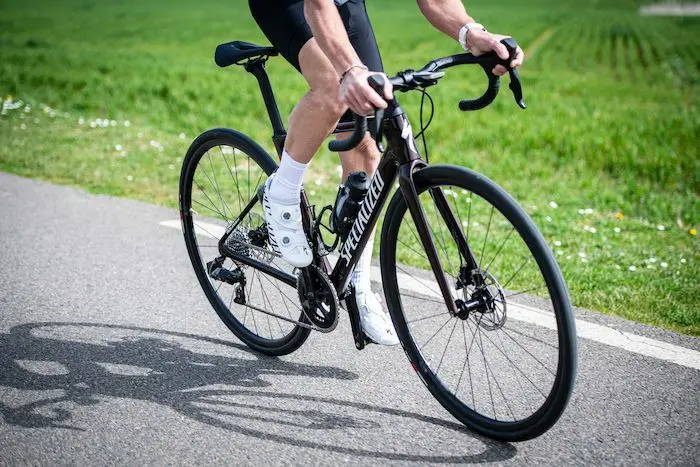
The braking, for its part, is effective and silent, and the grip comfort of the levers is, in our opinion, far superior to the other two Sram AXS groupsets.
=> SEE ALSO: Disc braking for road bikes
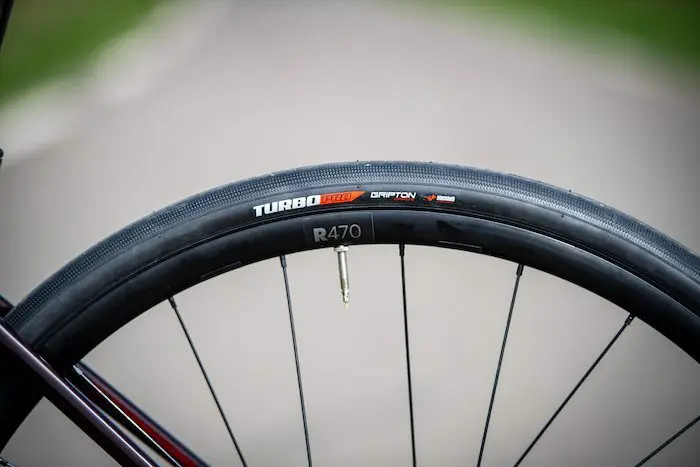
For the rest of the equipment, the Roubaix Comp comes with a robust and stiff, but quite heavy, pair of DT Swiss R470 wheels. The Specialized Turbo Pro 30 mm tire width setup follows the same philosophy, but also brings comfort and even more versatility to the bike, which can thus venture without too much trouble on really poorly surfaced roads.
The build is completed by a house-brand Body Geometry Power Sport saddle, which provides excellent comfort and very good pelvic support during intense effort, provided the perfect tilt adjustment is found, and by a Specialized Hover Comp raised handlebar that promotes a rather upright torso position. This part can be replaced if one wishes to use the bike in a more sporty context, to gain aerodynamics.
However, the Comp, like the entire Roubaix range for that matter, is rather intended for long distances or rough terrain, and the equipment chosen here by Specialized pushes the concept to its limits.
Extreme versatility
On the road, it takes little time to learn to master the adjustable suspension system depending on the circumstances, simply by turning the dial located on top of the stem. On descents and bumpy roads, cockpit vibrations are truly limited, and you gain comfort and, above all, control. By closing the system on climbs, you don’t feel any pumping effect, even if the suspension is never fully locked. It should be noted, however, that the bike feels livelier and laterally stiffer than when the suspension is set to its softest, with very direct steering despite a longer wheelbase than on a so-called “race” bike.

Vibration absorption is also very noticeable – but subtle – at the seatpost, but again without any perceived loss of pedaling energy. The system is in any case less destabilizing at first than, for example, the two-piece Canyon VCLS seatpost. The whole is complemented by wide, strong, and reassuring Turbo Pro tires in corners, which also contribute to this impression of constantly riding on a soft carpet.
It is nevertheless advisable to carefully consider the tire pressure if you have any desire to “push it”, especially on short climbs and false flats, so as not to feel the bike float laterally during power surges or when riding out of the saddle. With just under 6 bar, we personally chose the higher end of the inflation range for a 30 mm tire width.

On the flat, and regardless of the rather high cockpit position, the Roubaix Comp easily handles long rides at a steady tempo, where it never falters under the gearing. On descents, it demonstrates excellent stability, allowing you to let loose with full confidence. Obviously, it lags a bit on climbs compared to a high-end race bike, but primarily due to its weight, which makes it less nimble than a bike 2 kg lighter. But here, it’s primarily the rolling gear that shows some limitations, rather than the 500 g extra weight of the Rival groupset compared to a Sram Red. The gear ratios are, however, sufficient to get out of any situation, even with extreme cross-chaining on the large chainring and the last two or three largest cogs.
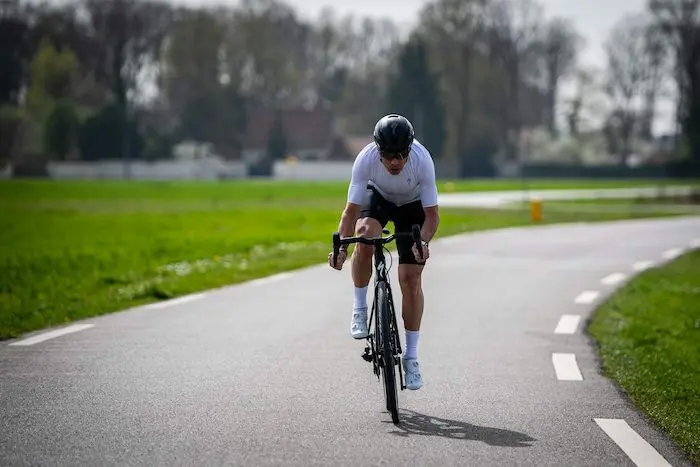
It is thus easy to determine what solutions could be used to make this bike more dynamic, with carbon wheels and thinner, lighter tires, for example. But that’s not the most important thing. Because the Roubaix in this Comp version is primarily aimed at those who do not necessarily have timed performance as their objective. Whether in terms of position or vibration filtering, it promotes great comfort, while keeping you connected to the road with a frame that remains stiff, with aerodynamic shapes and excellent rolling qualities. The groupset’s operation is perfect, surpassing all cable-actuated drivetrains on the market in terms of precision, fluidity, and silence. The two systems designed to dampen vibrations at the fork and seatpost are effective while providing just enough deformation to suspend body weight without feeling like you’re floating above the chassis. There are different ways to gain comfort, starting with mounting very large tires and inflating them to low pressure, as is the case with a cyclocross bike or even an MTB. These machines offer sensations that are too soft on the road, and even provide choppy pedaling. None of that with the Roubaix Comp, which offers the ideal balance between comfort and efficiency, for long distances or for racing with friends on Sundays, even if you have fragile vertebrae.
| The SPECIALIZED ROUBAIX COMP in brief… Rating: ***** PROS: stiffness, finish, suspension systems, groupset FRAME: Roubaix Fact 10r – FORK: Future Shock 2.0 – WHEELS: DT Swiss R470 – TIRES: Specialized Turbo Pro, 30 mm – CRANKSET: Sram Rival AXS 46-33 – CASSETTE: Sram Rival AXS 12s 10-36 – DERAILLEURS: Sram Rival eTap AXS – BRAKES: Sram Rival, 160 mm rotors – LEVERS: Sram Rival eTap AXS – HANDLEBAR: Specialized Hover Comp – STEM: Future Stem Pro – SEATPOST: S-Works Pavé – SADDLE: Body Geometry Power Sport – NUMBER OF SIZES: 8 – WEIGHT: 8.750 kg (without pedals) – PRICE: €4999
Contact: www.specialized.com |
=> SEE ALSO : All our Gear articles
Share the post "Specialized Roubaix Comp / Sram Rival eTap AXS Review"