Share the post "First Impressions of the Sigeyi AXO Power Meter"
Today, cycling with a power meter is still expensive. Even though major brands have set out to make this type of device more accessible, it’s still a challenge to achieve both accuracy and reliability. Nevertheless, smaller brands are making strides and making it possible to get familiar with power measurement at a lower cost. Take Sigeyi, for example, which offers a power meter for around €300 that we’ll be testing for you.
By David Polveroni – Photos: David Polveroni
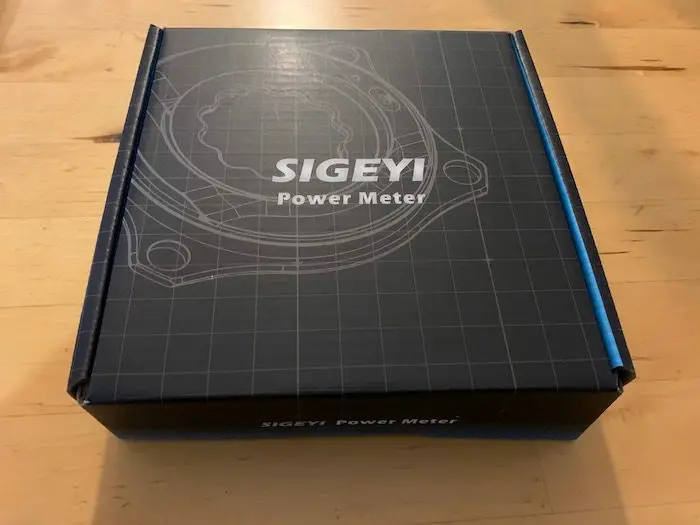
A few months after our long-term test of the Assioma Duo pedals, we’re putting the new Sigeyi power meter to the test. Sigeyi is a Chinese brand that has continuously refined its original model since 2015. This AXO sensor consists of a four- or five-arm star compatible with various cranksets, also available for mountain bikes. A wide range of combinations is possible depending on the cranksets you already own or plan to purchase. Two Shimano-compatible versions are also available, sold with Shimano 105, Ultegra, and Dura-Ace cranksets: the DLS (accuracy of +/- 2%, starting at 600 €) and the AX Power (accuracy of +/- 1.5%, priced at 1,100 € for the Dura-Ace version).
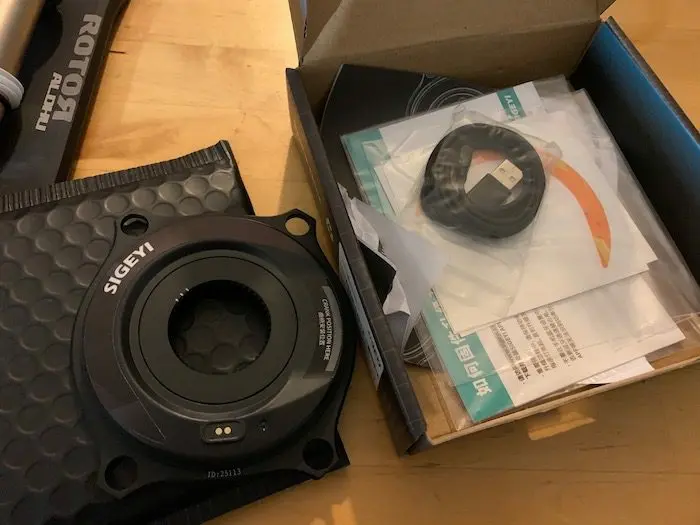
Simply make your selection on their website: https://www.sigeyishop.com
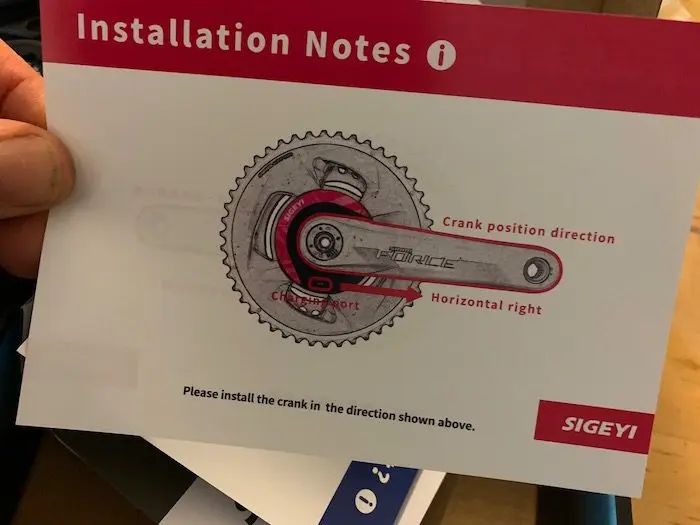
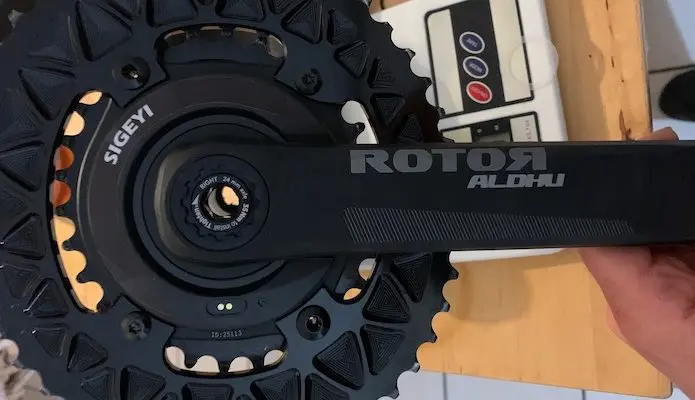
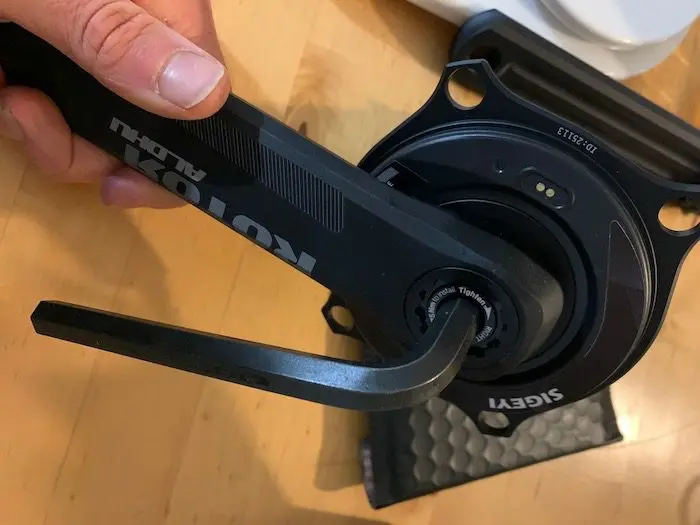
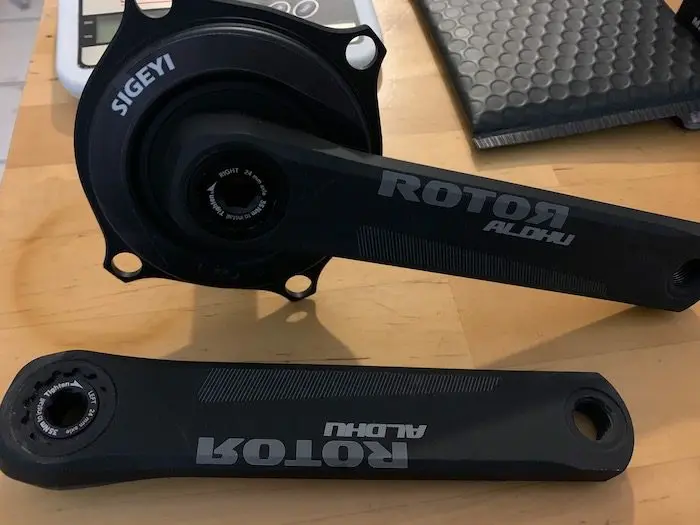
For our test, we used the Rotor Aldhu crankset provided by www.velo-perso.com. Installation is relatively easy for the AXO: a 10 mm hex wrench, tightening the star/right crank assembly to 35 Nm, and you’re all set.
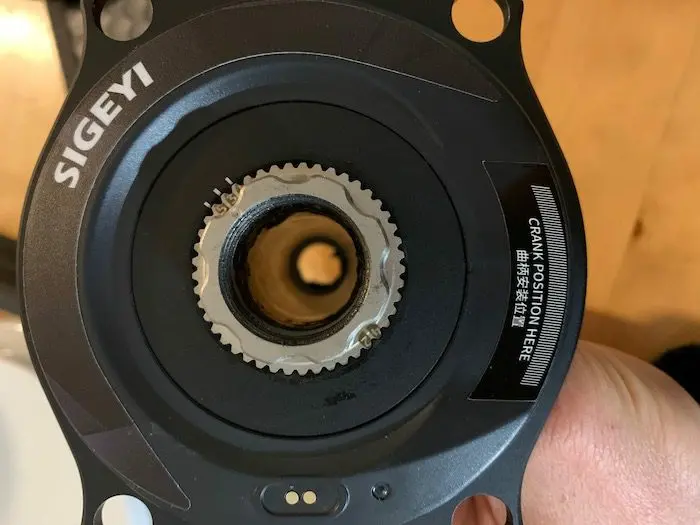
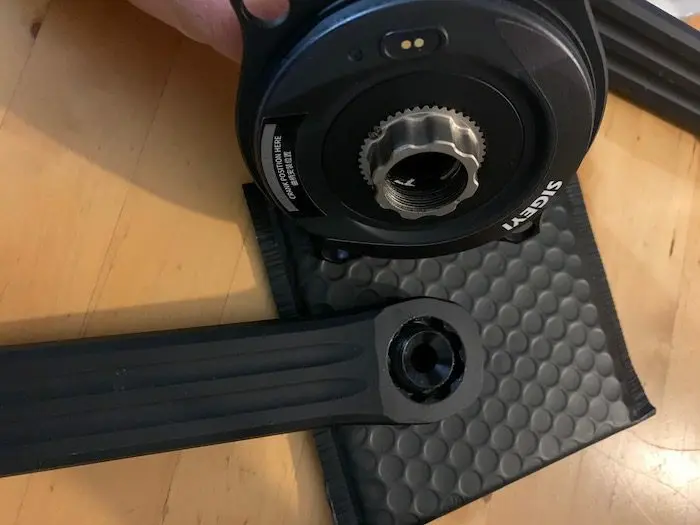
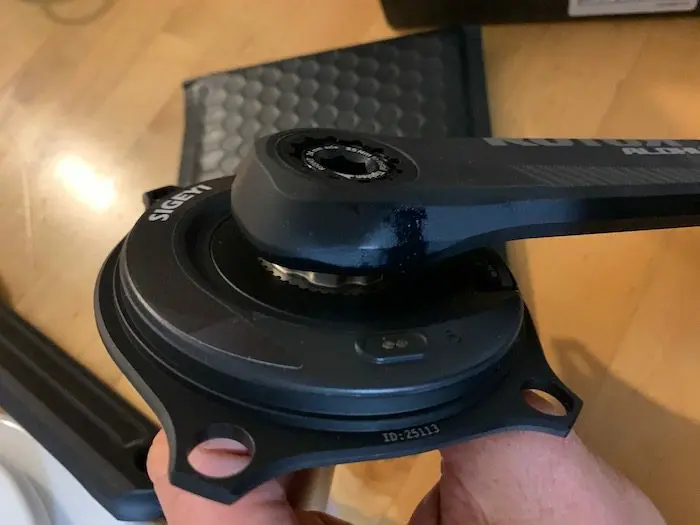
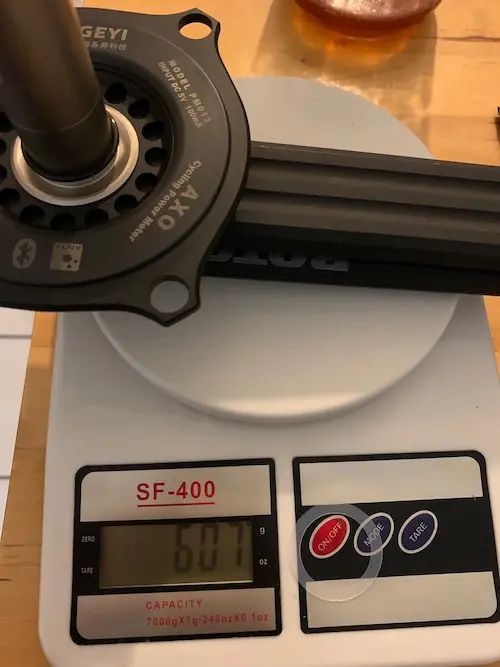
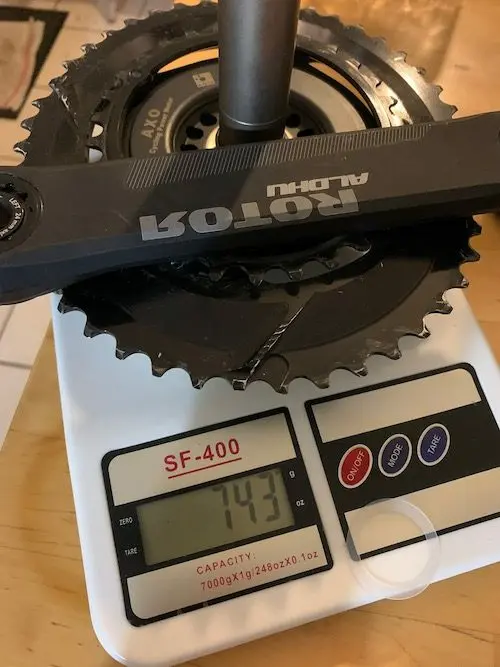
The set is very lightweight for a 24 mm model: 743 g with Absolute Black chainrings, which is about 30 grams heavier than a 24 mm SRM Origin. We opted for a 24 mm axle for the reliability of the bearings compared to a 30 mm axle.
Installation on the bike is also very simple (almost as easy as installing pedals for those who want to switch between bikes). You then need to download the app, available on Android and iOS, to ensure you have the latest update.
The AXO sensor is compatible with Bluetooth (a plus for fans of virtual platforms) and Ant+ connections. All that’s left is to pair it with your bike computer—a Garmin, in this case. The process is always very simple and pairs quickly.
The advertised accuracy for this model is ±1%, with left/right balance calculation and auto-zero.
Charging is done via a magnetic system similar to the latest Shimano model—it’s very close. The sensor has a battery life of 150 hours on paper, which is half that of a Shimano or four times that of the Assioma Duo, to continue the comparisons.
However, since we recharge our bike computers almost every day, a dedicated cyclist could get by with recharging just once every ten weeks… We’ll be putting the whole system to the test over the next few months, and we’ll be back soon with an initial comparison of the raw data. Our initial impressions so far are pretty good.
=> SEE ALSO: All our Gear articles
Share the post "First Impressions of the Sigeyi AXO Power Meter"