Share the post "Criteria for choosing a good electric road bike"
For the second part of our e-bike feature, after listing its advantages, let’s look at the different technologies available, with a question that constantly comes up: what is the best motor for an e-Road bike or electric-assist road bike? You will also find our selection of three models, available in several versions, chosen for their weight, appearance and handling, very similar to a classic bike.
By Jean-Yves Couput – Photos: @3bikes.fr / BH / Orbea / Cannondale
=> SEE ALSO: The advantages of electric road bikes
There was a time when Bosch sounded a bit like “refrigerator” or “moped.” Don’t see any malice in this last allusion; I don’t want to praise mopeds or throw a wet blanket on anything. The generic term was almost adopted. Then the competition arrived, with two major advantages up its sleeve: compactness and weight, just what was needed to disguise the subterfuge of assistance and make the beneficiary (or “cheater” for some purists) look more like a “real” cyclist. The motorization landscape quickly expanded, and we found ourselves with two distinct camps: the lightweights and the heavyweights. On the right side of the ring: Bosch, Shimano, Polini, Bafang; on the other side: E-bike Motion, and especially Fazua, quickly joined by Specialized and more recently by BH to reinforce the “lightweight” category.

Parameters to consider
When it comes to e-bike motorization, and to keep things from getting too complicated, there are a few important parameters to consider: the type of motor, the number of assistance modes, the torque, the maximum assistance level, the battery capacity, the noise generated by the motor, the type of battery, the motor decoupling, and the optimal operating cadence. Okay, we’re already getting complicated here… So, I suggest we make it simpler.
What makes a good motor for a cyclist who wants a little help with pedaling?
1. Assistance:
Generally, three modes are available to the cyclist, which we will refer to by the generic names Eco, Sport, and Turbo. These names speak for themselves and correspond to the level of assistance (additional power to that provided by the cyclist) supplied by the motor. Some models are sophisticated and have power sensors. Of course, the power supplied has consequences for battery autonomy and therefore the distance or elevation you can cover on a single charge.

Cadence is an important factor in motor efficiency, and many cyclists are unaware of the optimal way to pedal with an electric motor. For most of them, this cadence is between 75 and 100 pedal strokes per minute, so inquire before making your choice, because if you are not an experienced cyclist, it is sometimes complicated to maintain cadences of 85/90 rpm, especially on climbs. At least it requires some adjustments. In this respect, the E-bike Motion is more forgiving than most others.
Finally, the law limits the speed of an electric-assist bike to 25 km/h (+/- 10%). Some motors allow for an almost seamless transition, while others are not as subtle. This criterion plays a big role in the “natural” feel of the assistance, and the champions in this area are Specialized and Fazua.
=> SEE ALSO: Derestricting an electric bike now punishable by one year in prison
| ORBEA GAIN: A very comprehensive range
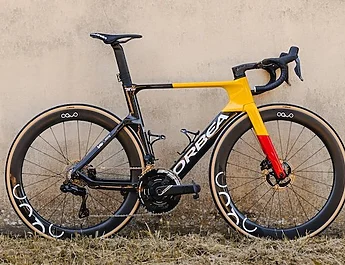
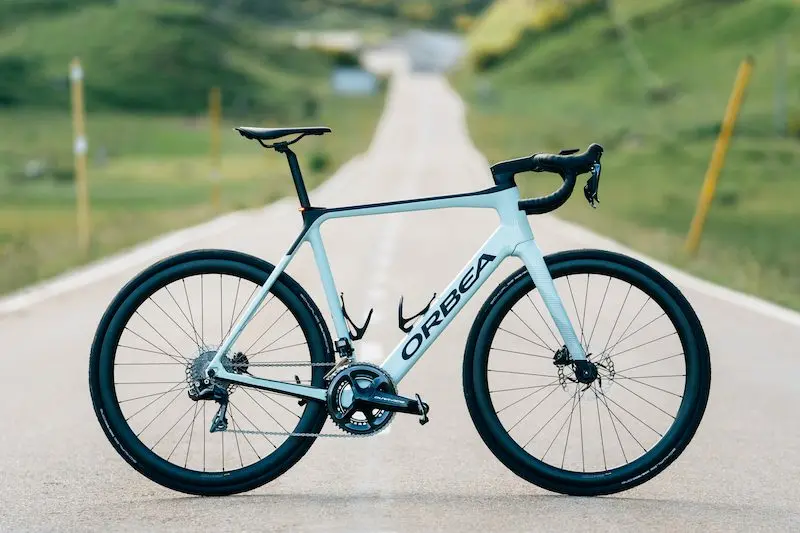
With the new E-Bike Motion X35 Plus motor, the new Orbea Gain offers smooth, balanced, and reliable assistance, sufficient depending on the chosen modes to improve your ride, but without doing all the work. The brand has applied a new algorithm for assistance to make the bike’s behavior as natural as possible, and especially to offer an almost invisible transition when it cuts out, around 25 km/h. The battery can be increased to 456 W/h with an additional battery. With its perfect integration, and even a clever integrated and discreet daytime lighting system at the front and rear, the Gain weighs between 11.6 and 12.6 kg for the carbon models, within a range that includes 12 bikes in total. Gain M10i – Shimano Dura-Ace Di2 – Orbea OC2 Carbon 42 mm wheels: €8999 Contact: orbea.com/Gain |
2. The overall weight of the bike:
In this area, one brand stands out: E-bike Motion, whose motor is housed in the rear wheel hub and holds the record for lightness, as bikes equipped with this motorization (for those with high-end equipment) weigh between 10 and 11 kg. Yes, you read that right. In the last century, these bikes would not have been ridiculous compared to 100% muscular machines.
The motor is not the only factor contributing to the weight; the battery also plays a very important role in this regard. This is why battery capacities are generally limited and rarely exceed 250 W/h, even if most systems allow for replacing it with a spare battery (but a backpack is mandatory and it doesn’t look very “cyclist-like”) or assisting the main battery when the latter is not removable with a battery that fits in a water bottle and connects to the system via a cable.
To conclude, if you are one of those cyclists who only want assistance for a boost on climbs and wish to pedal without assistance on false flats or flat terrain, avoid machines over 15 kg, as they will force you to keep the motor permanently active.
3. The dynamic behavior of the bike:
You’re a long-time cyclist, and you have good bike handling skills, as they say in the trade. You like a stable bike that, even if it has a bit of inertia, doesn’t make you feel like you’re doing a weightlifting session to throw it from side to side when you accelerate or ride out of the saddle. Nor do you want to correct “random” trajectories on winding descents. It is therefore important in these conditions to choose a machine whose center of gravity is placed low and centrally to achieve this natural behavior and handling. For two bikes of equivalent mass, the one whose motor-battery assembly weight is centered around the bottom bracket shell will have the best agility. To judge and compare, if you don’t have the opportunity to try the bike for an extended period, low-speed maneuverability exercises in a parking lot should already give you a good idea, as will riding hands-free.
| BH CORE: Up to 220 km of autonomy!
With a weight starting from 12.6 kg, the BH Core benefits from a construction type identical to that of the brand’s high-end road bikes, with the same level of integration and aerodynamic work on the tubes. Equipped with a perfectly integrated 540 W/h battery as standard, which already offers 165 km of autonomy, it can benefit from a traditional XPro battery that provides an additional 180 W/h, for a total of 220 km of autonomy. Unprecedented at this level! The other advantage of the BH Core is its extremely compact central motor, which offers natural pedaling sensations while lowering the bike’s center of gravity to maintain ideal maneuverability. Core Carbon Race 1.9 PRO – Shimano Dura-Ace Di2 – BH Evo C50 Carbon TR Wheels: €8999.90 Contact: bhbikes.com/Core |

4. Assistance controls:
The more visible, accessible, and automatically or, even better, manipulable without taking your eyes off the road these are, the better. In this respect, a control unit mounted on the handlebar will allow you to keep both hands on the cockpit, whereas controls integrated into the top tube will force the cyclist to let go of one hand, and often to look down. Double risk…
Most of the time, the controls also provide a reading of the remaining battery life. Be careful, however, because like many electronic devices, the bars or percentages indicated seem to drop faster during the last 50% than during the first.
5. Autonomy:
This is an essential point for electric-assist bike users. Let’s be clear, don’t expect to have enough autonomy to avoid recharging after every use. Or else, you don’t ride much. If that’s the case, there will be much better choices for you than a sporty electric-assist road bike.

The autonomies offered range from 250W/h for Fazua and E-bike Motion to a little over 600W/h for some Bosch models, and even 720W/h for BH. Shimano is in between with 500W/h. Specialized, for its part, has opted for a 320W/h battery which, like E-bike Motion, can be supplemented by an additional battery that fits in a bottle cage, offering an extra 250W/h.
If you are a cyclist who has opted for an electric-assist bike for intermittent help, such as on the most difficult climbs, with such capacities you can go very, very far. I personally have ridden nearly 250 km and 3500 m of elevation gain on hilly terrain on a single 250 W/h charge. If, on the other hand, you are on an alpine route, with passes where you are constantly engaged on slopes of 8% or more, do not expect to do more than 2500 m of elevation gain. These conditions are energy-intensive… even without a motor!
6. Aesthetics:
A thorny subject, this one. Yes, let’s admit it, we cyclists love beautiful things, those that appeal to our senses. We like to turn our heads to admire ourselves in shop windows, we like to compliment each other on our machines, we like to show off our veined legs like a thoroughbred’s, we like to wear “S” when we’re a “M”. A road bike must have a pedigree. A road bike must be sleek.
| CANNONDALE SUPERSIX EVO NEO: Very similar to the SuperSix Evo
Visually and in terms of behavior, very similar to its “muscular” SuperSix Evo counterpart, the Cannondale SuperSix Evo Neo starts at 11.3 kg for the high-end model, and up to just over 12.5 kg for its most accessible version. It’s a sporty and minimalist bike with its E-Bike Motion X35 motor located in the rear hub, which provides smooth assistance but with maximum torque around 16 to 18 km/h, which is ideal for tackling the steepest slopes without having to dig deep into your reserves. The stated autonomy of just over 100 km with a 250 W/h battery is compensated by a light weight that should allow you to do without assistance in many situations. SuperSix Evo Neo 1 – Shimano Dura-Ace Di2 – HollowGram 45 KNOT Wheels – Price: €9499 Contact: cannondale.com/SuperSix Evo Neo |

We are fortunate because in recent years, the unsightly power bumps have disappeared from our electrified machines. Gone are the blocks popularized by Bosch and clipped onto the down tube that pointed you out. The battery is now integrated. The down tubes show a slightly more generous waistline, but visually acceptable.
If, however, you are looking for the greatest possible discretion and still don’t fully embrace the little boost, your champion will be the E-bike Motion with its motor integrated into the rear wheel hub, only detectable by “wheel suckers.” We are getting closer to generally accepted beauty standards.
7. Connectivity:
Some systems offer a few bonuses. Applications, for example, allow you to set the assistance according to personal criteria. Specialized, BH, or Shimano, for example, offer the possibility of choosing both the maximum power delivered and the percentage of assistance delivered in addition to your muscular power. You can, for example, customize your motor so that it does not provide more than 50% additional power, with a maximum power limit that you set yourself. If you ride with a muscular power of 100 watts, the motor will add 50 watts. If, on the other hand, you ride by providing 150 watts, the motor will assist you with an additional 75 watts, for a total of 225 watts. But if you have set the motor not to exceed 200 watts of assistance, it will not provide you with 75 watts, but just 50 watts.

The settings are infinite and offer great possibilities for those who wish to use the bike as a training tool. For those of you who are less concerned with progress but want more peace of mind, it is also possible to enter the route into the application and let the assistance manage itself automatically to ensure you don’t run out of power before returning home, which of course is at the top of a nice hill.
On the E-bike Motion side, it is possible to connect the assistance to the heart rate monitor and adjust the intervention and level of assistance according to heart rate. This is another interesting function for better controlling one’s effort, whether for the athlete seeking progress or for the cyclist who does not wish to exceed significant effort thresholds for medical reasons.
Finally, Shimano, with its STEPS E8000 system, offers integration with Di2 controls. It is therefore possible to control the motor and assistance from the brake and gear shift controls, which makes it, if not the most visually integrated, the most technologically integrated.
8. Tomorrow:
We are only at the very beginning of electric-assist bikes, and these machines will become increasingly sophisticated. Mechanical, electronic, biomechanical, and physiological parameters will soon be fully taken into account by the artificial intelligence of these systems. Some will see this as a reason to start cycling, others will reject these developments. However, they will be inevitable, will make our sport a less exclusive practice, and we can only rejoice in that.
The e-bike lexicon
- Watts
This refers to the power supplied by the motor. The same watts are used to express the power supplied by the cyclist. With a 250-watt motor, a fit cyclist capable of supplying 250 watts of power for an hour can theoretically compete with a pro on a mountain climb by supplying 500 watts by combining their power with that of the motor.
- Watt-hours
This refers to the battery capacity, in layman’s terms, the size of the tank. Capacities range from 250Wh to 720Wh, plus the possibility of equipping additional batteries.
- Torque
More technical, the torque value will determine the mechanical power of the motor, quantified in Newton-meters. This is where it gets technical… but know that the higher the torque, the more powerful the motor. Imagine the difference in power felt by a Diesel engine compared to a gasoline engine, especially at low RPMs.
- Assistance Level
The types of assistance available to you. Generally three in number, sometimes supplemented by walk assist next to the bike. These levels are controlled by a console, either positioned on the handlebar, integrated into the frame, or integrated into traditional gear shift controls.
- Autonomy
Depending on the brand, this is expressed in kilometers or elevation gain.
- Optimal cadence
This is the optimal operating window of the motor, expressed in revolutions per minute. As with car engines, there is an optimal operating range where the motor delivers its full performance without overworking.
- Charging time
Often overlooked, this criterion indicates the recharge time of your battery. This criterion is important if you wish to travel long distances with your bike. Most chargers offer a charging time of 3 to 3.5 hours for a full charge from 0 to 100%, some have managed to reduce this duration to about 2.5 hours. Note that charging from 0 to 80% generally takes barely more than half the time required for 0 to 100%.
=> SEE ALSO: All our Gear articles
Share the post "Criteria for choosing a good electric road bike"