Share the post "What pedaling cadence for returning to riding?"
For many, the beginning of December marks the time for a real return to cycling training. And this is even more true this year with the (gradual) lifting of lockdown. It has long been said that the return to the roads should be done on a small gear, spinning. What is the reality? Should you force yourself to ride for several weeks on the small chainring? Not so sure…
By Guillaume Judas – Photos: Sporful, Pixabay.com, Pxhere.com
Being able to ride with a good pedaling cadence, or more precisely having a good cadence reserve, is generally an advantage when you are in shape. We know that the key to performance in cycling is the power you are able to develop. Power is the product of the force exerted on the pedals multiplied by the speed at which you turn them. You can therefore generate power either by exerting a lot of force with little cadence, or with little force and a lot of cadence. The right balance depends on several factors, including your cardiovascular capacity and your technique. However, you may be physically limited when it comes to gaining strength, whereas it seems simpler to progress technically by improving the quality of your pedaling motion.
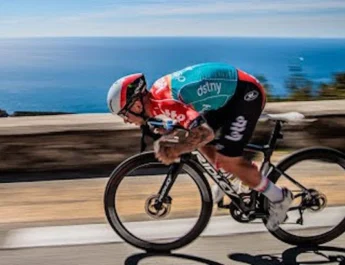
To ride fast, you need to know how to apply both force and cadence. The two are inseparable, as shown by the pedaling cadences of track pursuiters, who develop enormous levels of power over a few minutes, turning their legs above 110 revolutions per minute. In competition, all brief and violent efforts are more effective by suddenly accelerating the cadence, which allows for greater reactivity and, above all, preserves the muscles for subsequent efforts.
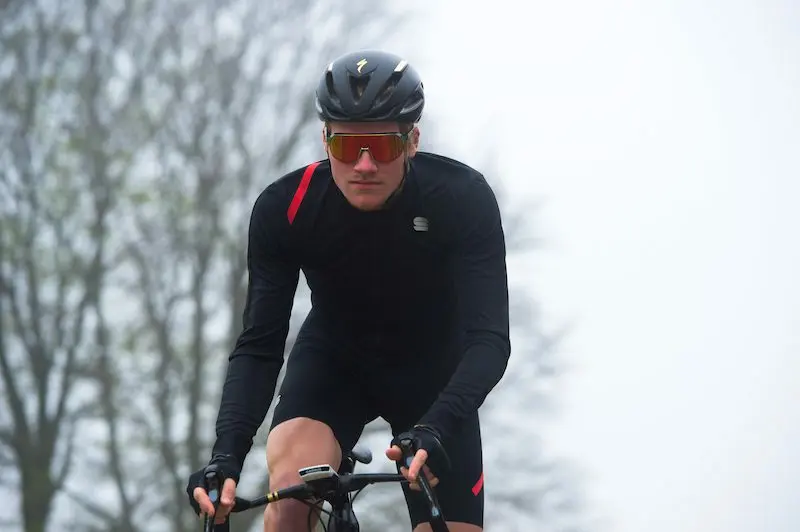
Various studies show that the highest power levels are achieved with a high pedaling frequency, but this does not mean that a high cadence is the most efficient at all intensity levels. A constantly high cadence would even be counterproductive in terms of fatigue and efficiency. From an energy expenditure perspective alone, a cyclist would be most economical at relatively low pedaling cadences. This is why, instinctively, the longer the effort and the more it needs to be managed over time, the more you adopt a reasonable pedaling cadence, around 80 rpm on the flat, and around 60 rpm uphill.
It should be added that pedaling cadence also depends on the fitness level. Thus, an untrained body struggles to maintain a high cadence, both in terms of motor skills and cardiovascular capacity. In other words, if you spin while out of shape, you get out of breath and don’t make progress.
This is why resuming regular training is not the best time to spin and work on pedaling cadence. You first need to get back to basics, re-establish your body on your machine, make it your own, rework a clean and economical pedal stroke, regain strength, and improve your proprioception. Only then will it be time to spin, not as an end in itself, but with the idea of eventually being able to express high levels of power when necessary. Thus, you don’t improve pedaling cadence by riding all the time at 90 rpm, which has long been considered the “optimal” cadence on the flat, but rather by performing specific exercises at a higher cadence, interspersed with calmer moments where you ride in a “comfort zone,” more around 75 to 80 rpm.
In practice
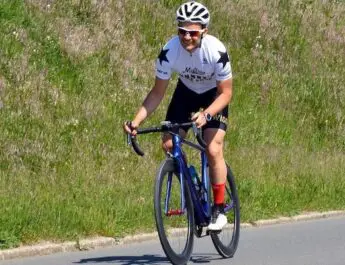
During the first rides, the goal is to re-establish the basics and rework a clean and economical pedal stroke. Therefore, ride at a comfortable pedaling frequency (between 70 and 80 rpm on the flat), on the large chainring as much as possible, and spin the pedals, focusing on good technique. Remember to apply sufficient pressure during the push, but especially to pull with your opposite foot, so that it does not act as dead weight during the circular motion around the bottom bracket. Stay seated as often as possible and try to keep your pelvis as stable as possible on the saddle.
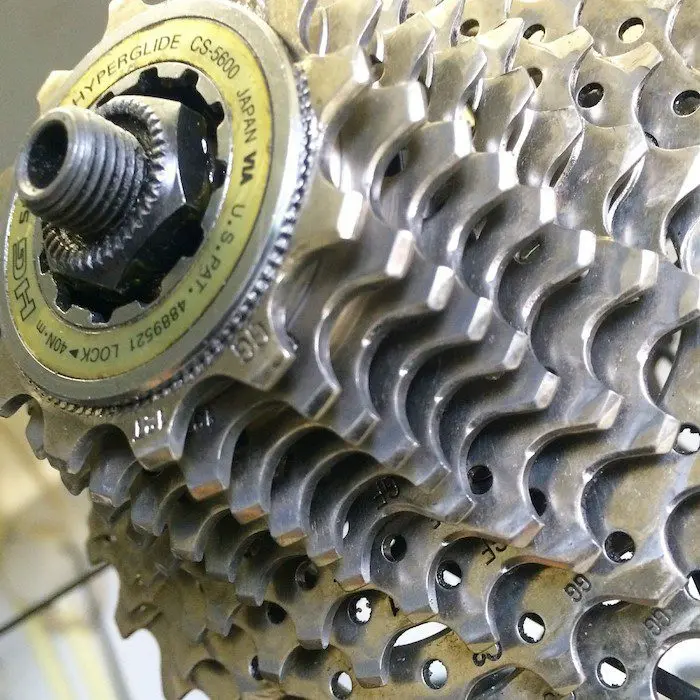
This work should ideally be supplemented by exercises aimed at strengthening the abdominals and core in general. Also think about the upper body, and shoulders in particular, which must be strong to transfer maximum force to the pedals. An improvement in athletic qualities will help you avoid excessive swaying and establish your stability on the bike, even later during more intense efforts.
On climbs, maintain your posture, continue to spin, and you can even further decrease your pedaling frequency to work on sub-maximal strength, but monitor your heart rate monitor to stay in the endurance zone.
After about ten rides, you can start to lighten the gear on the flat, while maintaining the same pace. This means that you will, in sequences, slightly increase your cadence. On descents, let your cadence go, while remaining stable on your machine. Then you can tackle specific exercises, which will consist, first on the flat to prevent your heart rate from soaring, of performing sequences of 5 or 10 minutes above 100 rpm, interspersed with calmer periods at 80 rpm. These exercises will come at the same time as an increase in the duration and difficulty of rides, and the introduction of sessions dedicated to threshold or MAP work, for example.
You will quickly realize that your ability to ride with velocity is intact after this preparatory work, and that it can even be better, since you did not start training with imprecise movements.
What about fixed gear?
Long considered the miracle solution for learning to spin the legs, fixed-gear riding in winter has gone out of fashion, except perhaps for some pros (who cut very little and are well-trained all year round) and for those who practice track cycling, of course.
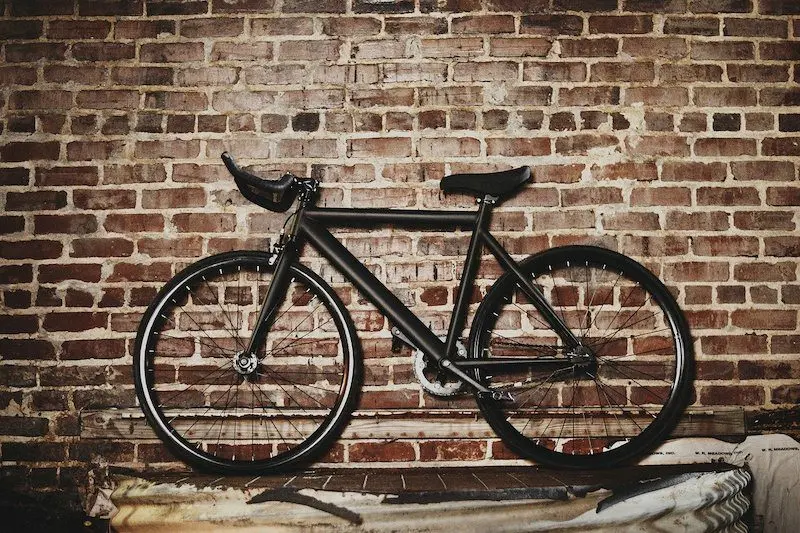
Fixed gear on the road naturally forces you to turn your legs according to the speed of the bike and the chosen gear ratio. However, fixed gear facilitates the upward movement of the leg opposite the push, by a simple inertia effect. You turn your legs out of obligation, but you don’t necessarily work on the economy of the pedal stroke with a freewheel. In terms of muscular coordination, this work is therefore not what is sought here, especially if you are a purely amateur cyclist or a beginner, who goes through regular phases of training and detraining.
The ideal complement for working on velocity
You are all familiar with the advantages of the indoor trainer today, whether for winter practice when outdoor conditions are bad or it gets dark early, or for being able to perform quality sessions in a minimum of time.
=> SEE ALSO : To find an indoor trainer, click HERE
Modern indoor trainers with a fixed position are accessible to everyone. But something is missing compared to actual road use, which concerns core work. It is indeed with your core that you balance the bike outdoors, and that you steer your machine more or less. The pedal stroke is therefore not perfectly worked on the indoor trainer, unless you use rollers. In this specific case, you quickly realize if your pedal stroke is jerky or not, and regular practice allows for a noticeable improvement on this point.
If you are lucky enough to own a roller indoor trainer, it is an ideal tool for improving your velocity, with short exercises at high pedaling frequency, and whose benefits are quickly transferable to the road.
=> SEE ALSO : Saris Training Rollers indoor trainer at €223.99
=> SEE ALSO : LifeLine RT-01 roller indoor trainer at €109.99
=> SEE ALSO : Tacx Antares Professional T1000 roller indoor trainer
=> SEE ALSO : All our Coaching articles
Share the post "What pedaling cadence for returning to riding?"