Share the post "What heart rate for winter training?"
During the winter period, it is usually advisable to train at low intensity and monitor your heart rate in order to build a solid foundation for the next season. A classic but effective method, however, challenged by new technologies and knowledge from sports disciplines other than cycling or triathlon.
By Guillaume Judas – Photos: Santini, La Passione, Assos/DR
Traditionally, winter training is broken down into three phases: a first phase dedicated to regeneration after a long series of events or repeated intensities, a second phase dedicated to long, low-intensity endurance work, and finally a third phase with the gradual introduction of efforts similar to those encountered in competition to prepare for the start of the following season.
A relatively low intensity, especially since after a period of rest or voluntary detraining, the heart rate tends to rise quickly at the slightest difficulty. The goal of this type of training is also to accumulate volume, and therefore to manage the effort to gradually access all the desired physiological adaptations. Certain activities other than cycling, interesting to practice in winter, such as running, swimming, cross-country skiing, or team sports deserve particular monitoring because they solicit several muscle groups and can prove to be quite costly in terms of energy expenditure. If you are not an experienced runner, walking can be an interesting alternative to ensure you stay in the right heart rate zone.
=> SEE ALSO:
- Polar GPS and heart rate monitors
- Garmin GPS and heart rate monitors
- Bryton GPS and heart rate monitors
- Sigma GPS and heart rate monitors

A solid base
Many athletes mistakenly believe that too low an intensity is a waste of time. This type of profile is mainly found among those who start an endurance sport late, and who want to make up for lost time. They think that “if it doesn’t hurt“, they are not progressing. They are seen doing 14 km/h jogs, Zwift races at an average of 160 beats per minute for an hour, or rides at an average of 34 km/h from the start. However, this type of “intermediate” intensity brings nothing but fatigue. A lack of freshness then detrimental for recovery and for the physical and psychological availability to perform the intensities truly interesting for progression and performance.
This basic endurance should therefore not be neglected, whatever your level, and for all the reasons mentioned above. It is the foundation of your season, and even of your sporting career if one considers the interest of alternating periods of poor form and great form to progress in the long term.
However, there are many demands today for those who do not like to indulge in this type of monotonous and tedious preparation. We understand them all the more easily as the success of a season also depends on the degree of motivation accumulated in the previous months. The winter period is therefore also ideal for varying sports practices.
Reverse planning
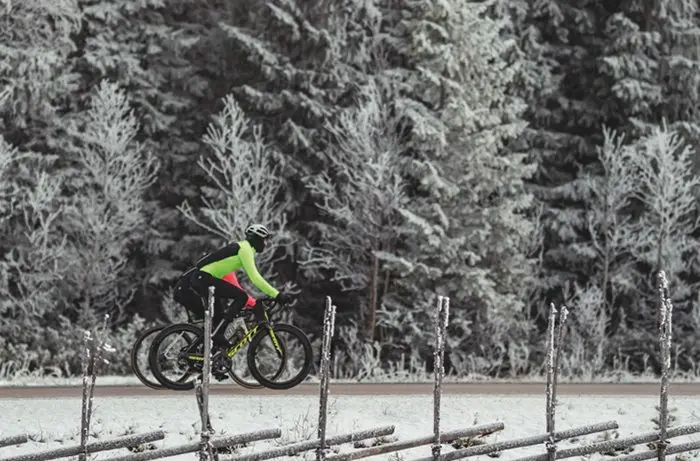
Beyond the use of a tool like Zwift which offers more or less difficult virtual routes and which sometimes represent a real challenge, or even competitions accessible all year round, this principle of basic endurance is however challenged by other sports disciplines such as running or swimming, or even by cyclocross practice which nevertheless allows riders like Mathieu van der Poel or Wout van Aert to perform all year round on the road. We are then talking about training with so-called reverse planning, which consists of placing very intense exercises very early in the preparation, and scheduling the maximum volume rather at the end of the period.
This type of training has two advantages: first, it allows you to start with short sessions that can be easily performed indoors, which avoids certain weather-related constraints, and then it allows you to chain intensities away from competitions, thus without accumulating too much fatigue. In addition, this type of programming allows for better progression in the increase of work loads, at least when endurance work must be carried out on the basis of long distances, such as 200 km events, for example.
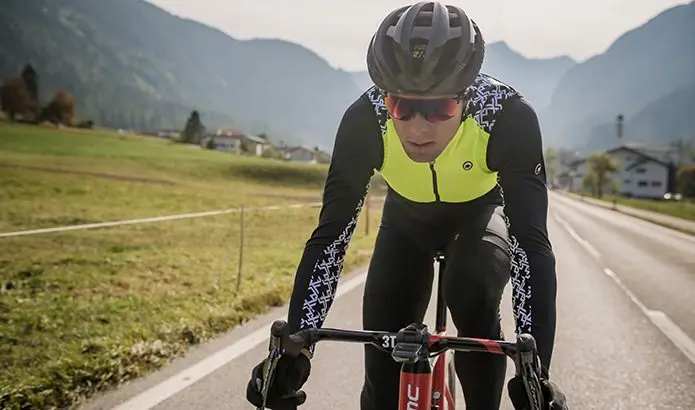
Reverse planning is therefore more particularly aimed at experienced athletes, who have several years of training behind them, and who quickly regain an excellent basic level even after a break. They will in any case go through a short recovery period that allows them to reconnect with effort, with basic endurance, and before starting intensities. This type of training with intensities programmed very early is not suitable for purely amateur athletes who need longer periods of adaptation to assimilate training loads.
A little variety
What this method teaches us is that it is probably an exaggeration to spend several months training at very low intensity, and that interspersing endurance training with a few short and very intense efforts that raise the heart rate close to its maximum is interesting for maintaining strength and power.
The winter period is therefore ideal for working on your athletic abilities, such as maximum strength, motor coordination, speed or flexibility, in addition to basic endurance. Short, intense and spaced efforts which, if performed in a good state of freshness, will ideally complement the endurance base of your season.
=> SEE ALSO: All our Coaching articles
Share the post "What heart rate for winter training?"