Share the post "Once again, athletes are the forgotten ones of the lockdown"
Share the publication “Once again, athletes are the forgotten ones of the lockdown”
After a first lockdown period where regular or occasional athletes seen running in the streets were singled out and accused of being selfish, we will have to deal with this second wave and a new lockdown that we cannot imagine lasting only four weeks. Leaving home to exercise will once again be very limited (one hour within a one-kilometer radius), even though large stores and public transport remain open. An absurd decision for the mental and physical health of millions of French people.
By the editorial staff – Photos: Pixnio.com, PxHere.com, CC0 Public Domain, JFT / DR
Should all these experienced runners, as well as those temporarily initiated, be singled out on the pretext that they would not be participating in the Nation’s effort to fight against Covid-19? In any case, by resuming the exit modalities of the first lockdown for athletes with the one-kilometer and one-hour maximum rule, the government seems to disregard the mental and physical health of millions of French people who regularly practice sports, despite this second wave that we saw coming as early as July.
Gyms, weight rooms, dance studios, and swimming pools are closed (except for schoolchildren). As for cycling, its practice will be severely limited by this absurd 1-kilometer limit around the home. However, this is an improvement compared to Act 1 of the lockdown, where some Prefects had even prohibited it, supported in this by the recommendations of the French Cycling Federation. What an irony!At the same time, to support the economy, the government encourages the population to continue working (teleworking is not always accessible for all professions), leaves public transport open, and especially many large stores. Our compatriots must therefore work and consume, but avoid all forms of leisure, even those intended to keep them in good health.
However, many doctors and epidemiologists emphasize the importance of physical activity for strengthening immune defenses against a pandemic. Many specialists also warn about the risks of collateral damage related to possible depressions, malaise, and suicides as a result of a lockdown.
Sports practice must, of course, be supervised during a pandemic, but should be encouraged to strengthen the morale and health of the population, as is done in other countries such as Germany or Belgium.
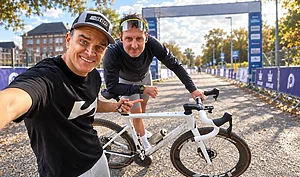
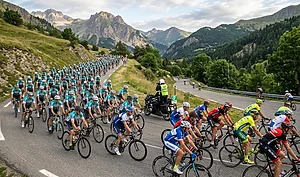
Regarding cycling, there are approximately 3.6 million regular sports cyclists in France (at least once a week, not counting utility cycling). 92% of these cyclists practice cycling independently, without a club and without being licensed. The government’s decision to stick to this absurd rule is therefore not understood, even if it has the advantage of falling in autumn, and not in spring.

Of course, there is still the option of riding on an indoor trainer, even if the practice is not always satisfactory.
Why running?
Did you know that normally, almost 1 in 4 French people run? Yes, that’s almost 14 million more or less regular joggers or runners, while others swim, play football, hit a racket, cycle, lift weights, and a whole host of other sports activities that occupy leisure time and fuel a need for exercise. Due to the lockdown, swimming pools, gyms, collective sports fields, stadiums, and tennis courts are closed.
In France, 34 million people over 15 years old declared practicing a physical or sports activity at least once a week in 2010 (Source: crdla-sport.franceolympique.com). During lockdown, when only running is clearly allowed (along with walking), and always within a one-kilometer radius of home and for a maximum of one hour, how do you think half of French people can maintain a minimum level of fitness, even as they are mocked by the other half, who are more accustomed to a chips-beer-Netflix diet than to a healthy lifestyle?

In this very particular period, this problem should not be taken lightly. It is not just a selfish act to exercise and go running outdoors. Experts recommend it, as a sedentary lifestyle is one of the main scourges of our society, far more so than Covid-19. Physical activity is recommended by cardiologists, and even by most doctors who believe that there are always more advantages than disadvantages to being active, even at high doses. Moreover, the WHO itself recommends occasional jogging or, for the more experienced, continuing to practice a sport even if it requires greater intensity. Without going as far as problems related to exercise addiction, we must not deny the inequalities faced during lockdown.
A break that is not experienced in the same way when you live in a house in the countryside with 2000 m2 of land, or in a 12 m2 maid’s room under the roofs of Paris, or even five people in an apartment in a 15-story tower in Saint-Denis. For many, the daily one-hour outing to sweat a little is essential for maintaining good mental health, quite simply.
A few months ago, we published an article on exercise addiction. If we are honest with ourselves, we all know that we are sports addicts. Addicted to endurance sports, cycling, running, or triathlon. Tobacco shops – which supply other addicts whose health is more threatened than that of athletes – are not closed.

So, amateur athletes will once again have to grin and bear it for several weeks, go running for no more than an hour within a one-kilometer radius of their home, respecting #socialdistancing and not forgetting to bring the famous attestation. They will also avoid overdoing it, and simply maintain their fitness. The most motivated, best-equipped, and wealthiest cyclists will be able to use Zwift with a smart indoor trainer.
However, clubs, associations, organizers, and doctors will have to count the sacrifices of this second lockdown, and with them not only an entire sports economy, but also the deleterious effects on the health of a part of the population, the one that until now had been spared by a sedentary lifestyle and all its consequences.
=> SEE ALSO: All our Mag articles
Share the post "Once again, athletes are the forgotten ones of the lockdown"