Share the post "Long-Term Test: Roval Rapide CLX Wheels"
Since this summer, Roval has revised part of its wheel range (disc brakes only) and now offers the Rapide CLX, with rim height and width that differ between the front and rear wheels. The result on the road is exciting, as we were able to confirm after a test of more than 3000 km.
By Guillaume Judas – Photos: @3bikes.fr/DR
Although Roval is now tied to Specialized, that wasn’t always the case. The California brand today takes care to clearly distinguish the two entities, first because the two brands have separate development teams, and also so as not to discourage potential buyers of its wheels who ride a bike from another label. Roval wheels compete directly with widely renowned products on the market, and they also offer good value for money.
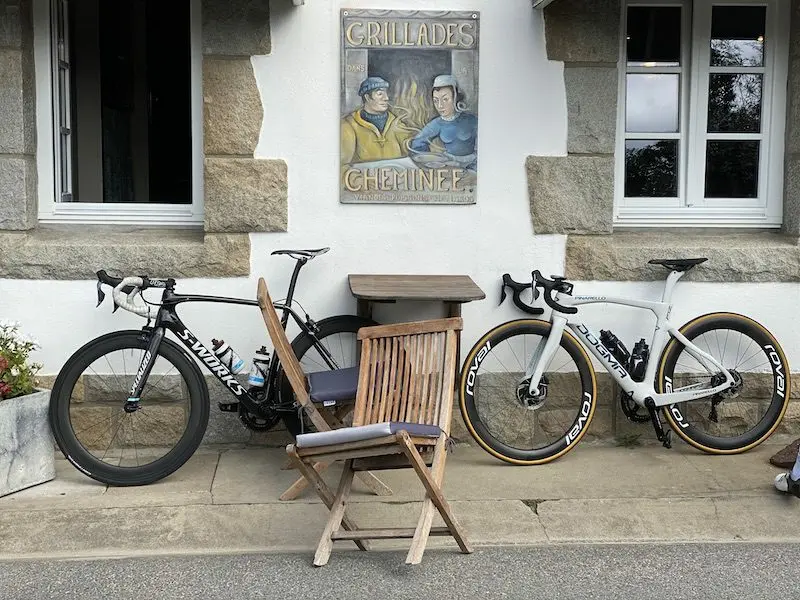
The Roval story actually begins in the 1980s, in the hands of a French craftsman. Claude Lehanneur developed small-batch wheels distinguished by original technical solutions and a focus above all on balanced handling. Smooth, well finished, and already built with few spokes (for the time), Roval road and mountain bike wheels found some success among enthusiasts of beautiful equipment with a certain nonconformist streak. Specialized bought the brand in 2005 and began developing wheels to be fitted to its complete bike range. Fifteen years later, Roval has become a reference brand, alongside Campagnolo, Fulcrum, Shimano, Mavic, Enve, DT Swiss, Corima, and Zipp, and the Alpinist CLX and Rapide CLX are its latest flagships for road.
A differentiated profile
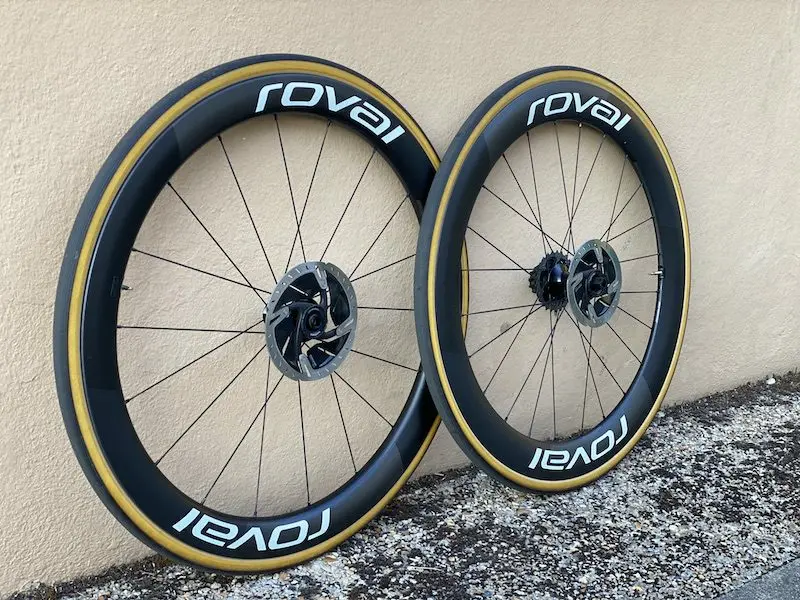
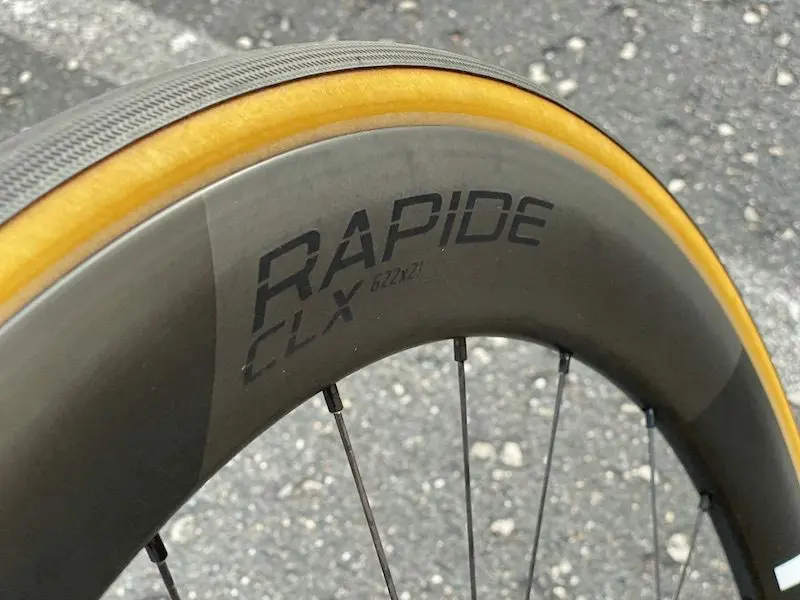
To succeed the CLX 50 and CLX 64 they replace in the range, the Rapide CLX feature differentiated rim height and width. The original solution aims to improve aerodynamics and handling, especially when it’s very windy. The rear wheel measures 60 mm high with an overall width of 30.7 mm, while the front wheel is 51 mm high and 35 mm wide. This external width doesn’t change the internal width of the two rims, which is 21 mm. So, mounted on the Rapide, a 700×26 tire such as the Turbo Cotton has an actual width of 28.5 mm, which remains narrower than the front rim.
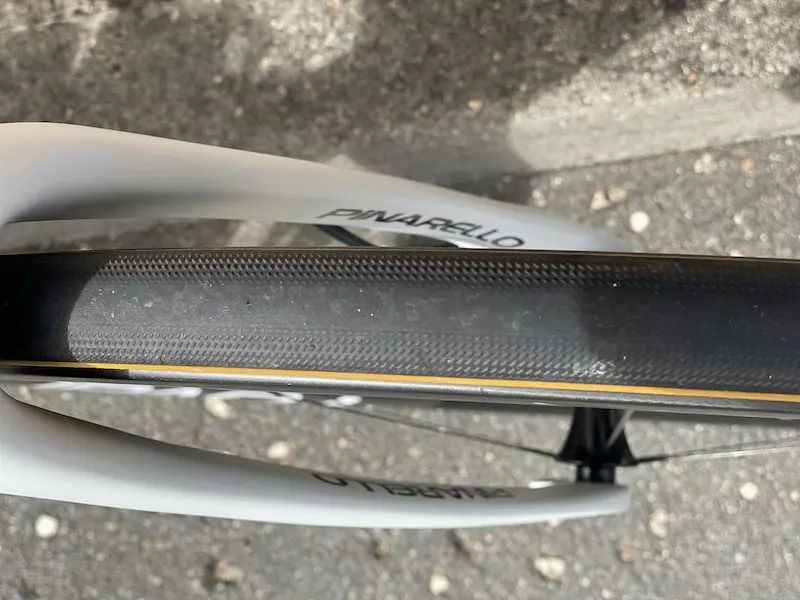
Visually surprising as it may be, this widening brings several benefits. First, with a tire narrower than the rim, aerodynamic drag is lower and airflow spreads better around the rim, then around the frame tubes. Second, the tire sits in a more open shape, which allows lower inflation pressures without the sidewalls deforming and affecting the bike’s handling, especially when standing on the pedals or changing line. Finally, the very wide profile gives the rim a pronounced U shape, which makes the front wheel less sensitive to crosswind gusts and so improves control of the bike in those conditions.
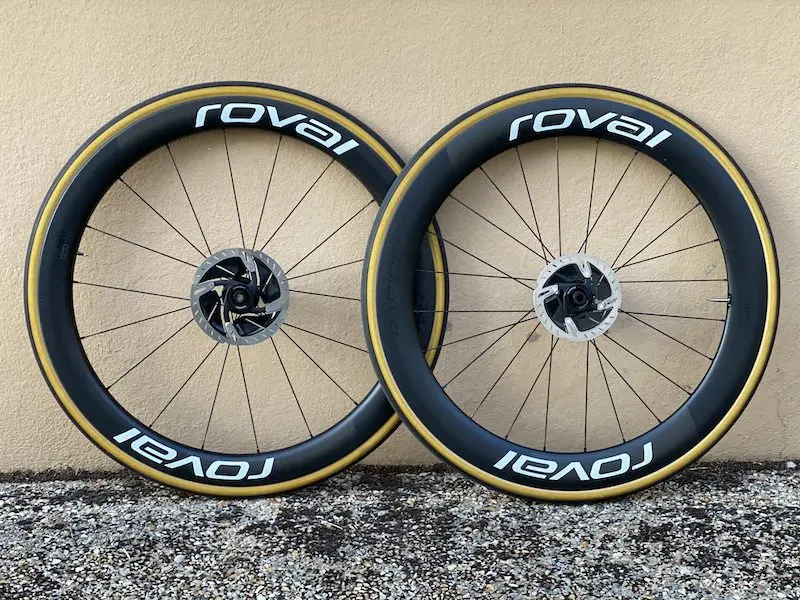
These design options were only possible thanks to disc braking, because such a width would not be compatible with traditional brake calipers.
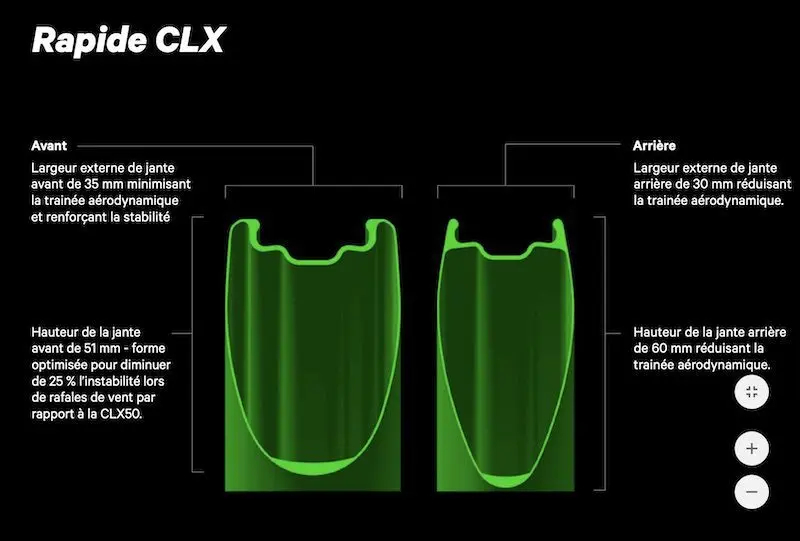
The rear wheel is taller and wider than the front because it doesn’t face the same constraints. Since part of the wheel is hidden by the seat tube, it’s the rear section (the part furthest back on the bike) that has to contend with aerodynamic constraints, even though they are much smaller than at the front. So a taller profile with a more closed U shape suits it best, all the more so because the rear wheel has less influence on steering, and a tall rim helps build speed when the wind blows from three-quarters, thanks to a “sail” effect.
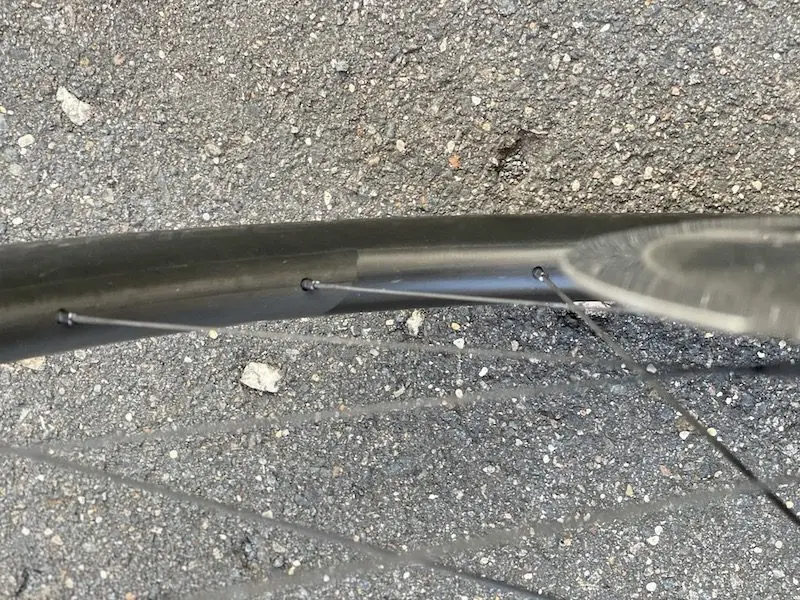
This original compromise is also paired with a construction focused on saving weight. With disc braking, Roval was able to rework the shape of the rim hooks, since they no longer have to withstand brake heat from pads. On the Rapide CLX, there is therefore a gap between the rim edges and the hooks, which keeps the wheels’ weight down to 1407 g (verified). And that’s for deep-rim clincher wheels, which is extremely impressive when the competition typically sits between 1500 and 1600 g.
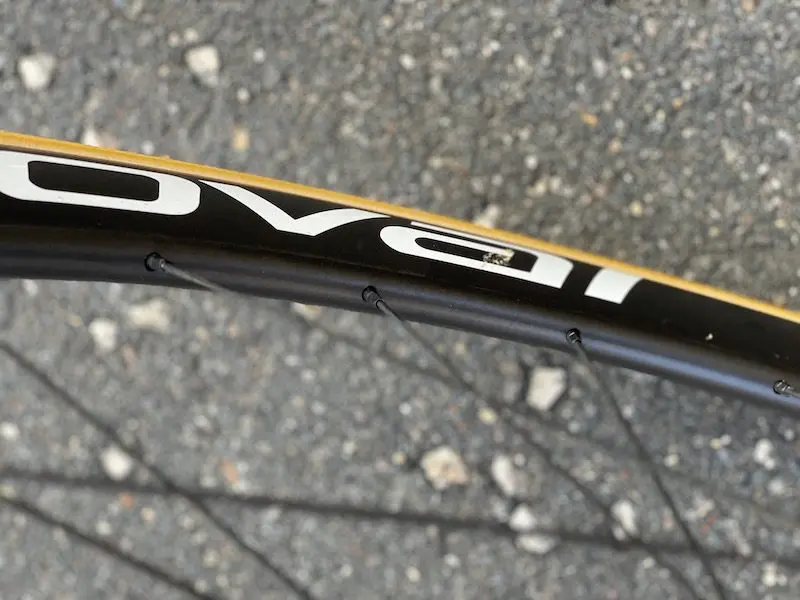
As you’ve probably gathered, the Roval Rapide CLX are not offered as tubulars and are not Tubeless-compatible, in order to save weight, since Tubeless requires a specific sealing system. That’s quite surprising given that Specialized also offers high-performing Tubeless tires. But that hasn’t stopped the Deceuninck – Quick-Step and Bora – Hansgrohe pros from racing and winning with the new Alpinist CLX and Rapide CLX, on clinchers.
Minus the ceramic bearings
Compared with the previous CLX 50 and 64, the Rapide CLX are offered at the same price of 2398 €, improve on the rims as seen above, but lose the Ceramic Speed bearings, which are replaced by “simple” sealed radial bearings.
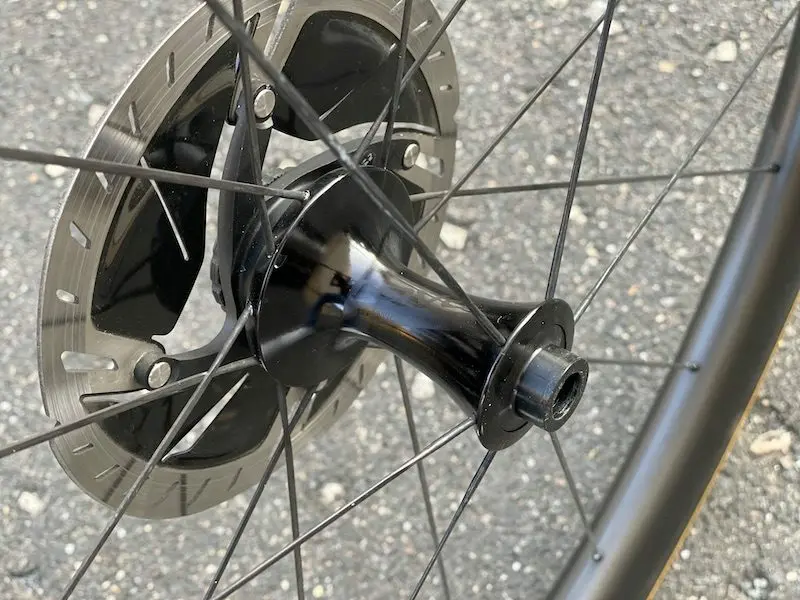
The wheels use Roval AeroFlange hubs with a DT Swiss EXP freehub body mechanism, with DT Aerolite spokes (18 at the front, 24 at the rear) and external nipples. On the front wheel, there are 6 radial spokes on the right side, and 12 two-cross spokes on the disc side. On the rear wheel, there are 8 two-cross spokes on the disc side, and 16 two-cross spokes on the drivetrain side. The wheels attach to the frame with a 142/12 thru-axle at the rear and a 100/12 thru-axle at the front.
Sporty versatility
What strikes you first is the comfort of the Rapide CLX, despite their tall profile. Relative comfort, true, but keep in mind these are high-end wheels designed for performance. During our first ride with the Specialized Tarmac SL7 test bike, the first few pedal strokes had surprised us on that front, but we didn’t yet know whether it came from the whole bike. A more complete test with another bike confirms this trait, and not only thanks to the Specialized Turbo Cotton tires. We also fitted the wheels with Michelin Power Road tires, and the finding is the same: up to 7 bar, the contact with the road is rather soft and less harsh than, for example, with Fulcrum Racing Speed 40s.
Vibration filtering which, while not necessarily reaching the level of rims designed for gravel or for tires 32 mm and wider, gives excellent traction on gravelly surfaces, whether seated or standing on the pedals. A plus for efficiency, for sure.
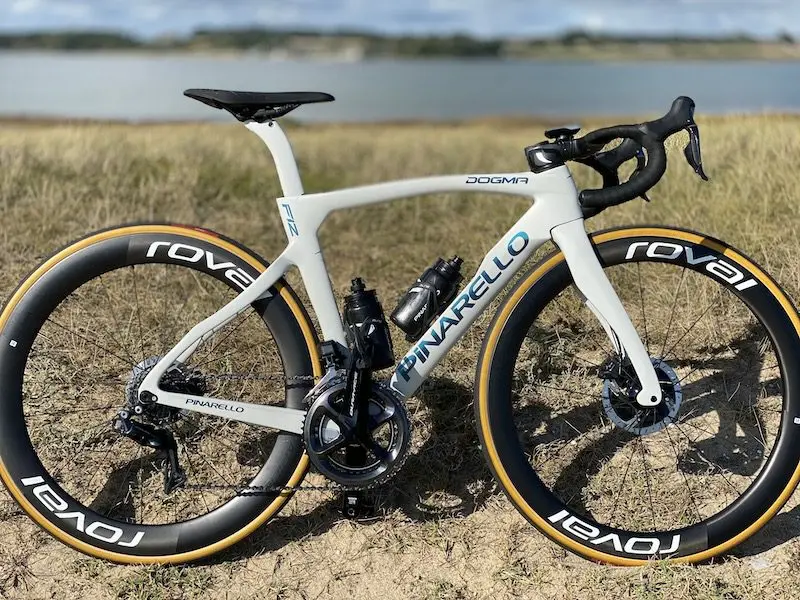
Tested on some very windy days and on the coast, the Roval Rapide CLX also live up to their designers’ intentions, with surprisingly good handling for this type of product. Of course, with a rider weight under 60 kg and gusts of 40 to 50 km/h, you have to hold the handlebars firmly and avoid letting go with both hands. Nevertheless, the bike’s drift in the wind always stays predictable and above all gradual. You don’t feel any whiplash that could cause a swerve, and you realize that this ease of handling helps save energy on a long ride. You come home less “broken” and worn out after a good ride than with wheels in the same category, even though, once again, these are performance wheels. In terms of handling, in our view the Rapide CLX are as easy as 40 mm wheels.
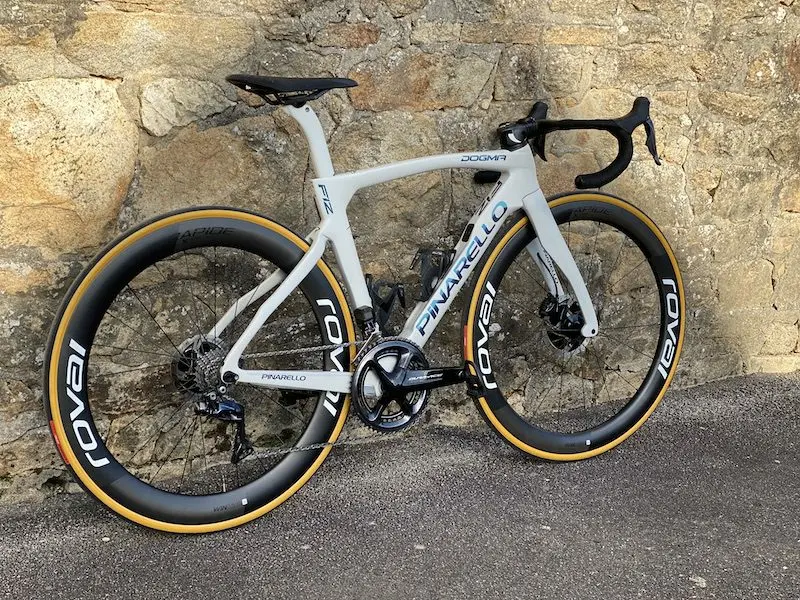
Their very competitive weight is of course an asset when accelerating, getting back up to speed, or climbing. As long as the bike is well matched in stiffness to the wheels, the whole setup feels sharp on the road and never seems to come apart. Even on long, steep climbs, if you keep a steady pace, the Rapide CLX are never a handicap. The rim height, especially at the front, calls for excellent upper-body coordination when standing, which makes them necessarily a bit more demanding at low speeds than low-profile wheels.
On the flat, the inertia effect is a little less noticeable than with heavier wheels. But the timed tests confirm that these are fast wheels, which help raise the average speed of rides or of particular segments. Into a headwind, you can fight it as well as with any wheel model, but as soon as the wind comes a bit from the side, you feel a little push from behind that makes it easier to regain speed.
Timed tests confirm that these are fast wheels, which help raise the average speed of rides or of particular segments.
In terms of pure stiffness, disc braking takes away a point of comparison, since there are no brake pads for the rims to occasionally rub against. Yet, without the wheels ever feeling stiff or fully locked laterally, hard accelerations and shifts of weight never give the impression that they might flex. Again, consistency with the frame matters a lot in terms of feel and efficiency, and it would be a shame to fit the Rapide CLX to a bike that doesn’t match up.
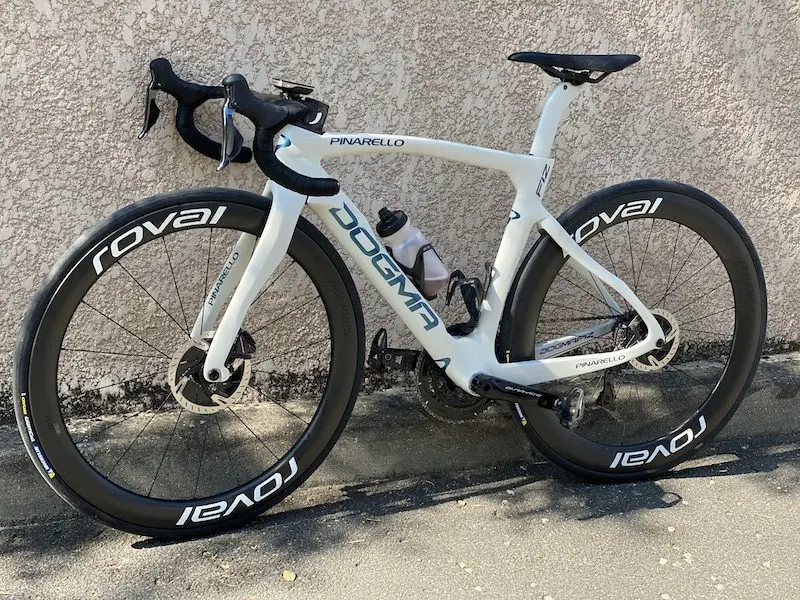
After more than 3000 km of testing, the wheels haven’t budged and still look as splendid as ever. A more rigorous inspection shows no play at all in the bearings and a freehub body in perfect condition. We did notice, however, that the hub bearings feel a bit rough, at least when turned by hand, which warrants monitoring. They are in any case clearly less smooth than the Ceramic Speed bearings fitted to the previous CLX.
In the end, with the Rapide CLX, Roval manages to combine several characteristics that are seemingly contradictory: aerodynamics, stiffness, lightness, comfort, and very good handling for this type of wheel. Great versatility, although of course you need to ride hard to fully appreciate them. In this regard, they turn out to be at least on a par with very high-end wheels from the competition, which are most often sold for more.
| ROVAL RAPIDE CLX |
| Rating: ***** Pros: versatility, weight, handling, aerodynamics, efficiency, comfort, value for money compared with the competition Rim type: clincher (with inner tube) – Rims: carbon – Braking: disc – Rim height: 51 mm (front), 60 mm (rear) – Rim width: 21 mm internal, 35 mm external (front), 30.7 mm (rear) – Spoke pattern: Radial/2-cross (2:1) – Spoke count: 18 (front), 24 (rear) – Spoke type: DT Swiss Aerolite T-head – Nipple type: DT Swiss ProLock hex – Hubs: Roval AeroFlange Disc, Centerlock, sealed radial bearings – Freehub body: HG/XRD – Internal mechanism: DT Swiss EXP – Assembly method: hand-built – Accessories: Padded Roval wheel bags. Available in two finishes: with white decals or Stealth Weight: 1407 g per pair (653 g front, 754 g rear) |
| Contact: specialized.com |
=> SEE ALSO: All our gear articles
Share the post "Long-Term Test: Roval Rapide CLX Wheels"