
Share the post "Learning to develop a champion’s mindset"
How to strengthen your mental game and become a champion, at least in the sense that you will set achievable goals and reach them? First, by being positive and regaining self-confidence. The method? Follow the guide.
By Jean-François Tatard – Photos: Pixabay.com, Frédéric Poirier, Jean-François Tatard, 3bikes.fr
It’s the last Sunday of September 2015. This Sunday afternoon marks the end of summer, but this day will especially mark the history of cycling and the World Championships…
Until then, the mischievous Peter Sagan had mostly accustomed us to some antics that made him endearing. Even if sportingly he had accumulated places of honor (11 Top 5s and 5 second places in the Tour that year) or at best won second-tier races, we were waiting for more concrete proofs of his talent. This time it would be! The day the Slovak showed that he was much more than a sympathetic clown. Literally, he treated us to a show on the asphalt of Richmond, USA. He put on a show, as usual. Perhaps we can even speak of a One Man Show given his national team only had three members. By pedaling, against the best riders in the world, he made the difference in the penultimate difficulty of the course, 2.7 km from the finish. I don’t know how… The Tinkoff-Saxo team rider then resisted the peloton to win solo, with a three-second lead.
But what made the difference? And what if, in the end, it was “mental strength” that differentiated this champion from all the others? What if, ultimately, we all started with the same weapons and it was mostly about sowing and cultivating a winner’s mindset? Yes, but how? How do you develop la grinta?
A training logic
A training logic, but mental training. Thus, mental preparation is in no way magic or positivism. When preparing for an event, you must treat it as real training in which you will have to invest yourself. It’s not just about reading a book on the subject and thinking that’s enough. Not at all, it requires motivation and investment. Your mental training must be regular, because it is through regularity that you will strengthen your qualities and be able to put them to use in situations automatically, with ease and serenity. What will also make the difference is the quality of your investment in this mental work.
The right to succeed
Giving yourself the right to succeed is not just for others. You too can perform. You too have the right to achieve goals, to obtain a fabulous result. Stop thinking that you don’t have the means to succeed and dare to grant yourself this right, even for a few moments…

Free yourself from the gaze of others. Don’t dwell on prejudices that have stuck with you since childhood (you were afraid to go to the board and speak in front of the whole class) and don’t keep a bad image of yourself (like thinking your office colleagues are better than you). These others who evaluate us, judge us, tell us that we should have done this or that, as well as the gaze of some who destabilize us, prevent us from giving our best and make us doubt. It is this doubt that is our worst enemy. We must try to break free from the dictates and fear of others, and impose our style with tact and diplomacy. But I assure you, and this is what’s crazy, others are also afraid. Don’t keep a bad image of yourself.
Surround yourself well
Negative people are toxic. Flee them! Surround yourself with positive people. Don’t burden yourself with limiting external words. Listen to words that uplift you. Prioritize people who also give you la grinta.
You also shouldn’t be afraid to give yourself time. We live in a society where we want everything, right away, and if possible without effort. Mistake! You have to give yourself time. Time to invest in yourself and take care of yourself. Knowing that the time each person needs to achieve their goals is different from one person to another.
Give yourself the right to fail
You must also take into account the fact that you may not succeed in achieving your goals. Look at Mathieu Van der Poel last year at the Road World Championships, defeat is also part of the game. If you don’t accept the idea that you can fail, you can’t win. Integrating this eventuality is essential for success.
As the race approaches, one should ask the question: “How would I like it to unfold?”
Our thought system generally leads us to anticipate events negatively. We often tell ourselves that things will go wrong, never the opposite. Whereas as the race approaches, we should ask ourselves the question: how would I like it to unfold?
Paralyzing dogma = in the trash!
Performance is what we’re looking for! Being mentally strong is fundamental to becoming a champion. And that involves self-esteem, self-confidence, motivation, concentration, determination, and all these important qualities. Furthermore, you can’t be good at everything!
Also, like Sagan or Van der Poel in another register, you must distinguish between “specific self-confidence” (“I am a good rider”) and “global self-confidence” (“I am a good rider and, generally speaking, better than a large average”). Do you know Pareto’s law? 80% of your time should be spent on your strengths. You strengthen them! That also strengthens morale and mental game. And the remaining 20% is spent working on areas for improvement. No more! You avoid frustration. And you maintain self-confidence.
Debriefing
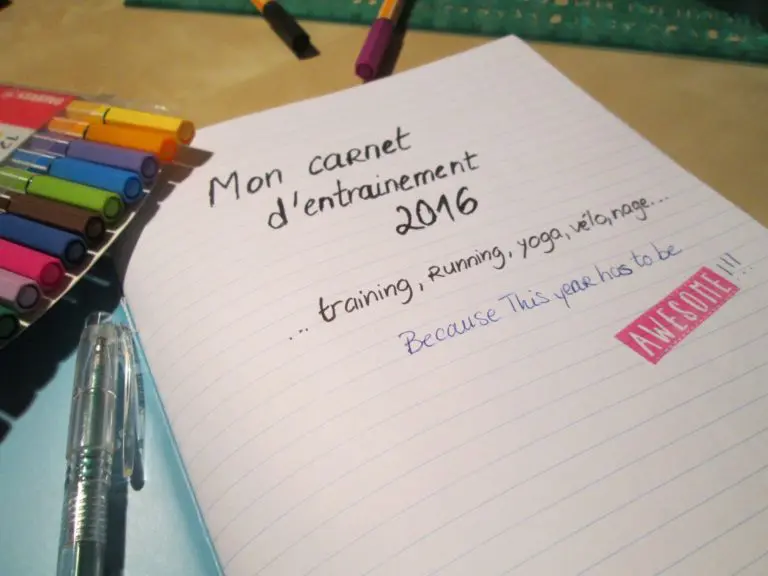
Debriefing is essential! And I’m not just talking about my article. Debriefing encourages taking a step back! So, to be effective, I suggest you write down what you do. Either in a notebook, or in a planner, or in an Excel file! Writing it down makes positive points and areas for improvement obvious. And reviewing it regularly allows you to visualize progress. So you need to be precise. Make things measurable. Be positive. Be factual. Be balanced between positive points and areas for improvement. Include the key moments of the situation, those moments that positively or negatively shifted the situation. It should include solutions and a plan to integrate into your race or training program. This feedback doesn’t necessarily need to be long to be effective. If you’ve never done it before, a short review of the day tonight in a notebook before going to bed will be your first step on the path that built all champions.
=> SEE ALSO: All our Coaching articles
Share the post "Learning to develop a champion’s mindset"