Share the post "Shin splints"
Whether you’re a Sunday cyclist or a top-level athlete, injuries spare no one. They make us sad and grumpy and each deserves an explanatory sheet in the 5W1H format. The idea behind this series of short articles is to better understand them, adopt the right behaviors to avoid them, and the proper conduct for better recovery.
I thus propose to cover each time, in the form of the “5W1H” (What, Who, Where, When, How, Why) and in as many articles as there are most recurrent injuries in cycling and triathlon, all possibilities of frustration linked to forced rest.
After the knee, the clavicle, saddle sores, spinal pain, iliac artery endofibrosis, Achilles tendonitis, compartment syndrome, carpal tunnel syndrome, head trauma and digestive disorders, today I offer you an explanatory sheet – still using the 5W1H approach – this time for shin splints.
By Jean-François Tatard – Photos: Jean-François Tatard, Instagram/Nacer Bouhanni, Wikipedia
WHAT?
Shin splints are a degenerative inflammation that affects the periosteum. And the periosteum is the membrane that covers the bone surface. Not necessarily only that of the tibia. Even if quite immediately when we talk about shin splints, we think exclusively of the tibia. In fact, this surface is also present elsewhere. As for this inflammation, it is characterized by localized, but diffuse, pain on the inner side of the tibia or femur, which is therefore the most frequently affected bone. Because indeed, tibial periostitis is the most common.
Once the diagnosis is established, appropriate treatment must be followed quickly so that the condition does not complicate into a stress fracture.
WHO?
Who is the primary audience concerned? Shin splints are a condition that affects athletes, especially runners. But not only… All practices involving jumping are most at risk. So even cyclists in lockdown who enjoyed jumping rope have exposed themselves to it.
WHERE?
While shin splints are in the majority of cases located in the tibia, the diagnosis of the condition is essentially clinical. Thus, it will be necessary to knock on the radiologist’s door. But unfortunately, X-rays are quite often normal. In its oldest form, a small opacity can be found in the painful area. Additional examinations can be performed to rule out other probable causes of the pain. They also make it possible to detect serious pathologies. And once the treatment is completed, the opinion of a sports doctor is required before resuming sports training. Sometimes the latter will even redirect us to a rheumatologist.
WHEN?
Despite their inert appearance, our bones are living tissues subjected to the test of time! In this case, they too face aging. And the risks of fractures, tumors, and infections.
Practicing a new sport, wearing inappropriate shoes, or poor movement harmony can all cause shin splints. The pain caused by this pathology can be extremely sharp, making it debilitating.
HOW?
Complete cessation of sports activity is mandatory in the case of shin splints. The duration of this periostitis is highly variable, from a few weeks to several years.
Complete cessation of sports activity is mandatory in the case of shin splints.
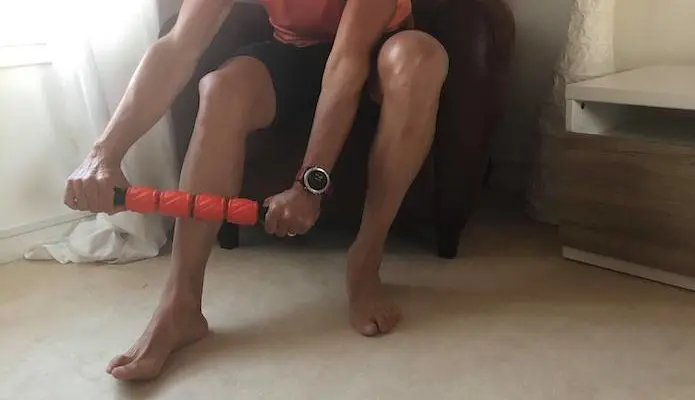
It is possible to initially resort to icing the painful area for ten or fifteen minutes. This will help to alleviate the pain. The icing technique can be repeated 3 times a day. It can also be followed by the local application of Voltaren or another NSAID-type anti-inflammatory. Then other avenues are possible. You can start by consulting a doctor. But even better: a sports doctor. He will redirect you to a podiatrist or a chiropractor who will define the extent of the pathology. The doctor will associate appropriate care and the physiotherapist will have you do appropriate exercises to restore the normal functioning of this part of the body. In practice, physiotherapy sessions, if your organization allows it, are often quite essential to accelerate the healing process.
WHY?
Shin splints are considered an overuse injury. In fact, repeated and excessive traction in the tibial area can cause pain directly on the tibia or in the adjacent muscles. It can occur when you suddenly increase the intensity or overload your training volume.
Why a podiatrist in this shin splint story? Because the use of a plantar orthosis will correct imbalances. And gentle and progressive stretching of the Achilles tendon and calf will also significantly relieve the pain.
Another very simple cause: the quality of your shoes. Indeed, shoes must be adapted to the effort. The practice of sports activities, whether running, strengthening exercises or general physical preparation that will complement your cycling or triathlon activity, should be favored on soft ground and not on ground that is too hard or too soft. We come back to it, but good hydration, an adapted lifestyle and especially progressive physical training significantly minimize the risk of this injury appearing. In short: “listen to your body and the warning signs that come with it!”
CONCLUSION
In the next explanatory sheet, I propose to conclude the series of 12 sports pathologies associated with a 5W1H explanation with plantar fasciitis.
=> SEE ALSO: All our Infirmary articles
=> SEE ALSO: All our Coaching articles
Share the post "Shin splints"