Share the post "Starting cycling after 40"
Nothing is ever finished. No age to discover your calling. No age either to start a physical activity, and even more specifically cycling… Thus, it could have been a delayed “adolescent crisis” but at 40, one often experiences another crisis. That of awareness. It’s time to choose the life you’ve always wanted… to ride a bike! Ride, yes, but not at any price!
By Jean-François Tatard – Photos: Frédéric Poirier, Pixabay.com
Proceed in stages. First, may it bring you even more happiness and satisfaction in your already busy or not-so-busy life… and may it also last! And as long-lasting as life will allow you years to pedal on roads and trails.
The method for getting into cycling
- THE MEDICAL CERTIFICATE
If you are not used to seeing a doctor, this time, a small test for non-contraindication is welcome. In fact, more than welcome, except for cycling tours, a medical certificate is mandatory to participate in any other competition, whether official in a federation or a sportive. The federation will not issue you a license and/or the organizer will not give you a bib number if you do not present it.
It will just be a matter of validating whether your physical condition allows for excluding any doubt. An electrocardiogram or a stress test at the general practitioner’s allows for checking your health status and ensuring there is no risk in practicing sports regularly. At 40 and over, you’re no longer brand new, and you might be carrying the weight of a few years of all kinds of excesses. It’s a good time to take control of yourself, but it’s also logical to check that you risk nothing by putting in the necessary efforts to become an athlete.
- THE EQUIPMENT
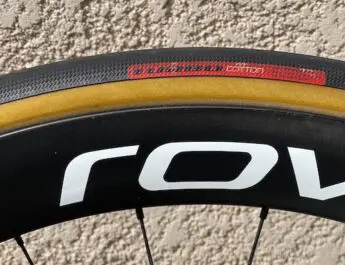
Here’s a topic that will continue to fuel your favorite website. And on this subject, it can be said that since the bicycle existed, there have always been enormous advancements in equipment. Equipment allows everyone, from the novice to the most experienced, to ride with ever-increasing efficiency, comfort, and safety.
- THE CHOICE
The choice of bike and/or other equipment is guided by several parameters. Firstly, based on budget. From 7 or 800 € to over 10,000 €, there’s something for every budget, and naturally, you can’t expect the same results from equipment depending on the amount invested. However, know that with a new bike worth around 2000 €, you already have access to a decent, reliable machine, capable of accompanying you for many years on your numerous adventures.
The choice also depends on the terrain you wish to venture into: mountain biking, gravel, mountain, time trials, or the most universal, road. The rider’s build also counts for a lot. In all cases, you need to get help, and shop salespeople are increasingly well-trained to assist you.
Progressive
Be humble! Even if it means reducing or readapting. If you need to increase the duration from one ride to the next: do it in fifteen-minute increments. No more! But to start, don’t be frustrated: 1 hour of cycling right away is already very good to begin with. And even if you already have a sports background and enjoy effort: progressiveness is key.
Some advice
Initially, it’s not a bad idea to alternate rest days. It’s a good way to increase the duration of training sessions without generating too much excessive fatigue or bad sensations during effort.
Don’t fall into the trap of the same route. You need to diversify the terrain and change circuits to break the routine and maintain the desire to go back. You also need to keep the surprise of discoveries for yourself, and that means exploring new playgrounds as regularly as possible.
It’s also not certain that an iPhone playlist is a good idea. It biases the perception of effort. It’s dangerous because you don’t hear what’s happening around you, exposing you to accidents, and it doesn’t allow you to properly get used to your new ride. We often envy the Tour de France riders and all riders who seem to move with ease. I did write “who seem“. But rest assured, everyone suffers on a bike. Don’t expect to always feel good. However, you will eventually tame this zone of discomfort. We will then speak of “good sensations“. And that doesn’t happen overnight. You are not asked to ride every day. In fact, that would be counterproductive. Furthermore, only regularity pays off. The good starting base, my forty-something friends, would be 3 weekly sessions.
We often envy the Tour de France riders and all riders who seem to move with ease. But rest assured, everyone suffers on a bike.
If you are a true beginner, know that climbs are not the only difficulties you may encounter on a route. Wind is the cyclist’s primary enemy. You will quickly realize this. So rather than skipping your ride on very windy days, learn to decipher weather forecasts instead. As much as possible, start with a headwind to try to return with a tailwind. Not only will this allow you to manage the end of your rides more easily, but you will also finish on a good note, with good sensations that will make you want to start again on subsequent days.
Example beginner program
Allow three months to learn to ride for extended periods if you’re starting from scratch. Three months alternating every other day: one day cycling, one day rest. And by increasing the ride duration in 15-minute increments, but it’s unnecessary to aim too big and too long to start. Repeated rides of 2 to 2.5 hours are better than one long session per weekend. Then keep it simple and effective. Once you are able to ride 80 or 100 km without stopping to rest your legs or simulate a flat tire, you will optimize the organization and structure of your weekly training program. Thus, you will break down the week into three fundamental sessions:
1 – 1h30 slowly. Low breathlessness, or let’s say it’s still possible to talk. In short: It’s a leisurely ride!
2 – 2h with 30 minutes at higher intensity. We’re talking about 30 minutes within an overall volume of intensities, but nothing prevents you from breaking them down into intervals. For example, 6x5min or 4x7min or even 3x10min during which you will perform sessions at 85-90% of your maximum heart rate, alternated with recovery phases at 50% of your MHR.
3 – A long ride that you will adjust based on your desire and motivation. From 80-90 km to over 120 once you’ve gotten into the rhythm of pedaling.
The takeaway
It’s never too late to start the life you’ve always dreamed of. It’s never too late to fulfill yourself, and more precisely, to fulfill yourself through cycling. The rule is simply to be as clear as possible with yourself, and once you have aligned body and mind: to respect deadlines and not put the cart before the horse. And who knows? Maybe see you this summer at the summit of Mont Ventoux or Alpe d’Huez?
=> SEE ALSO : All our Coaching articles
Share the post "Starting cycling after 40"